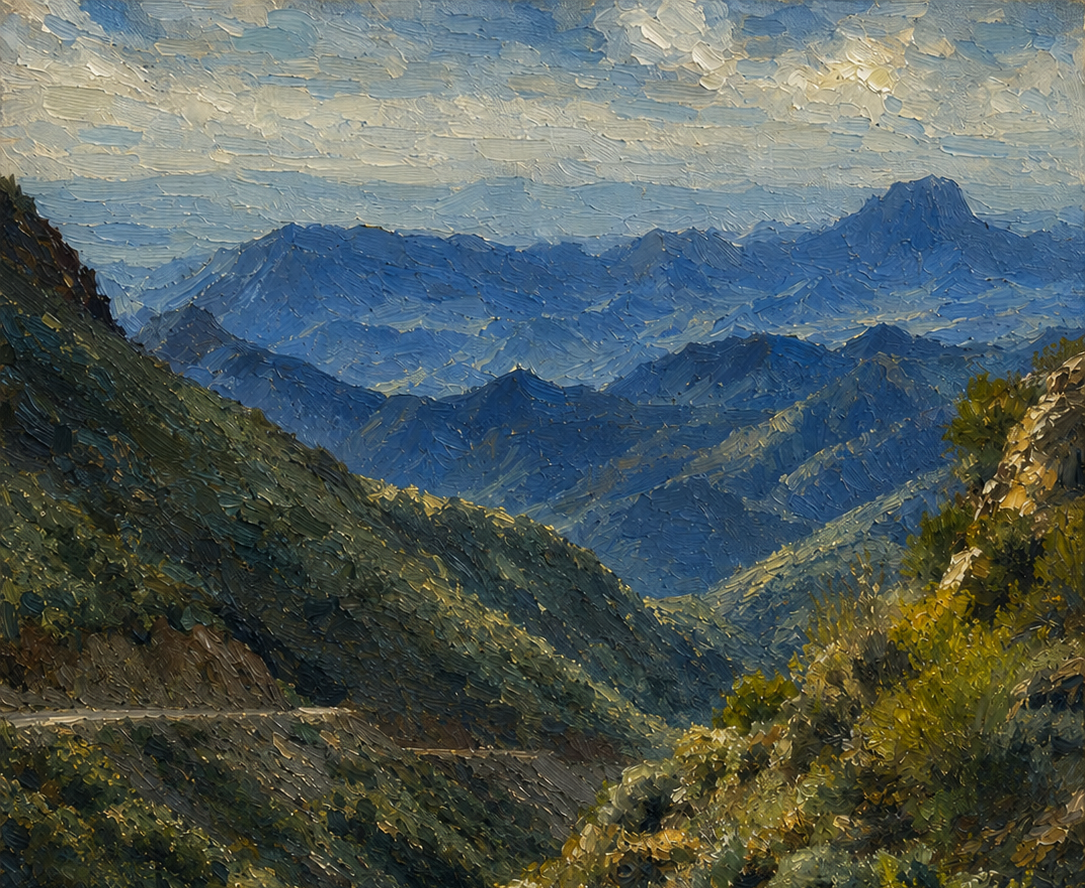
《悵然是夢》
《迎賓閣》開啟了遺民孤獨,《再寫杜蘭朵》繼承了文化孤獨,《老布》捎來了遠方孤獨。老布初登場,不以斷魂拳的姿態走上拳擊擂臺,而是以護照黑白相片出現在加護病房,接受一紙託孤,這將信任推向極致。懷典母親早逝且父親病危,律師見證下,臨終託孤:「將你……託付給他。」託孤者意識到自己肉體即將消亡,來不及陪伴餘生,無法安排未來,只能將最珍貴的託付出去。老布允諾當時,懷典想必不知;不問代價不推辭,難得此份願意,更勝千言萬語。最初的這聲 Oukei,值得後記。
初讀《老布》,Oukei 只是波爾人的口頭語,輕如英文的 OK;再讀慢慢發現,它是老布的精神。接受沉重的託孤,Oukei。懷典求助大學學費,Oukei。農場層出不窮的問題,Oukei。最後敗局已定,仍然自己舉起手,Oukei。不再是輕便的口頭禪,而是真實的重量:我承擔,所以我承受;我承受,所以我無悔。
而懷典,孤兒早已注定的他,漂泊無從歸屬,流落不知歸處,蒼茫只有遠方。艾興朵夫筆下的山林、月光與漂泊,不只是背景,更是懷典精神的故鄉。客旅山林與月光、孤獨飄零向遠方,懷典是開普宇宙的孤兒,更是德國浪漫派的遺民。肉身與靈魂永遠在路上尋覓,悲乎尋覓不可得,哀哉永恆渴望。懷典孑然無依,獨自承受生命,這份承受與老布並無不同。
老布為何堅持懷典來看拳賽呢?這原因,故事初寫時尚未深思熟慮,僅僅強調老布的榮光情節;重讀卻又發現,故事或許無意說出了答案:為了懷典再次見到亡故的父親,也讓老布重逢闊別多年的知己。懷典父親活在夢幻拳的拳法裡,幻影刺、夢斷直皆是夢幻拳的殺招;故人拳法再現,當夢幻拳與斷魂拳合而為一,他鄉接壤故鄉,寤寐以求的遠方終於抵達。然而,遠方在抵達當下,不再是遠方,遠方在更遠天涯。夢幻拳既名夢幻,悵然是夢。
小霸王不是老布的一生之敵,終極對手是歲月,且老布注定敗北。最後的這聲 Oukei,或許是明知不敵卻奮戰之,或許是奮戰之後不定勝負,向命運說我還行;又或許這搶奪判決權的動作本身,是老布畢生沉默換來的出口。最後的這聲 Oukei,如同舒曼終曲升 F 大調,不是凱旋歸來,而是穿越黑暗,仍願意相信光明。然而,光明並不能留住歲月,只能照亮歲月。
懷典的亡父夢幻拳,魂夢沉醉的幻影,夢醒時分的忽然,拳法本身就是夢;懷典則是月光清輝下綻放的花朵,夢啊,夢著詩人的夢。夢回前塵更前,詩向遠方更遠,艾興朵夫十二首詩,對應拳擊十二回合;往事在時空裂縫,回憶在拳起拳落,《老布》其實不寫拳擊,寫的是父子。真正斷開父子的不是生死,而是歲月。
獨自撐過拳賽是老布的 Oukei,獨自啟程遠方是懷典的 Oukei;前者用肉身,後者用回憶。用回憶哀悼逐漸老去的肉身,這就是我所寄託的《老布》。
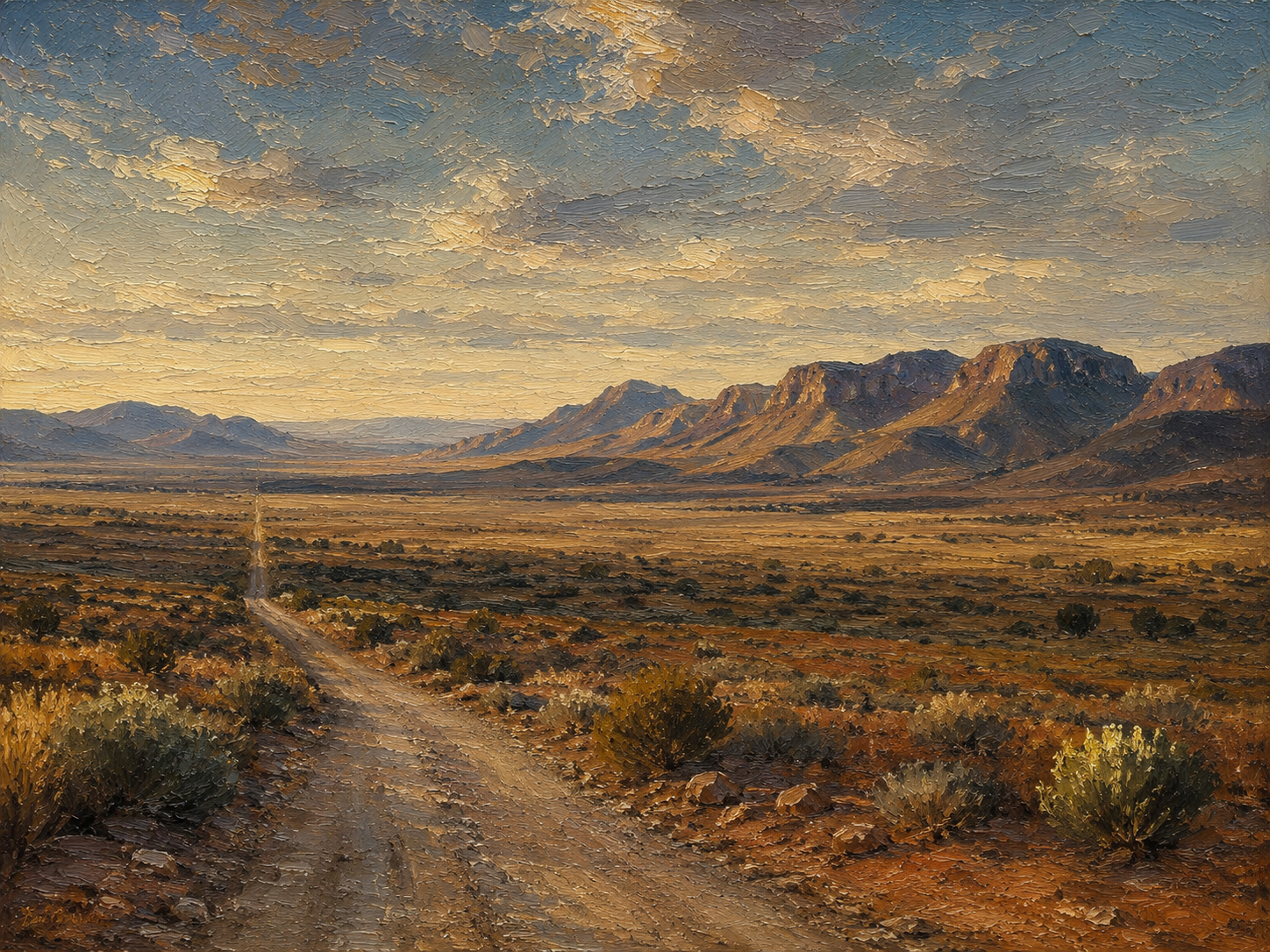
A Dream of Lingering Sorrow
The Welcome Pavilion opened with the loneliness of the remnant. Turandot, Once More inherited the loneliness of culture. Kobus brought the loneliness of distance.
Kobus first enters the story not beneath the lights of a boxing ring, in the stance of the Soul-Severing Fist, but as a black-and-white passport photograph beside an intensive care bed — a single sheet of paper that entrusts an orphan, pushing trust to its furthest limit. Huaidians mother had died young; his father lay dying. Before a lawyer as witness, the final entrustment was made: "I leave him... in your care." A man who knows his body is about to fail has no time left to accompany the years ahead, no power left to arrange the future. All that remains is to place what is most precious into anothers hands. When Kobus gave his word, Huaidian could not have understood what it meant. He asked no price and offered no refusal. That simple willingness said more than a thousand words ever could. This first Oukei already contains an afterword of its own.
On first reading Kobus, "Oukei" seemed no more than a Boer colloquialism, as light as the English "OK." Only on rereading does it reveal itself as Kobuss very spirit. Accepting the lifelong charge of an orphan — Oukei. Huaidian asking for university fees — Oukei. The endless troubles of the farm — Oukei. And at the end, when defeat was already certain, still raising his own hand — Oukei. No longer a light colloquialism, but real weight: I take it on, therefore I bear it; I bear it, therefore I have no regret.
And Huaidian—for whom the orphans fate was long foreordained—drifts without belonging, wanders with no home to return to, facing a vast desolation where only the far horizon remains. The forests, the moonlight, and the wandering that fill Eichendorffs poetry are not mere backdrops; they are the spiritual homeland of Huaidian. A traveller among woodland boughs and moonlit skies, a solitary soul forever adrift toward the far horizon, Huaidian is not only an orphan of the Cape Universe, but a remnant of German Romanticism. Body and soul remain forever upon the road, searching for what can never quite be found. Tragic is the search without fulfilment; sorrowful the longing that knows no end. Alone in the world, Huaidian bears the weight of life by himself. In that quiet endurance, he is no different from Kobus.
Why did Kobus insist that Huaidian come to watch the fight? When the story was first written, the reason had not been fully considered — it was meant only to underline Kobuss moment of glory. Rereading, one discovers that the story may have answered the question without intending to: so that Huaidian might see his late father once more, and so that Kobus might be reunited with a friend long parted from him. Huaidians father lives on inside the Dream Fist — Phantom Thrust and Dreams End Straight are among its deadliest strikes. When the old friends fist reappears, when Dream Fist and Soul-Severing Fist become one, the foreign land touches the homeland, and the distant place so long sought in waking and in sleep is, at last, reached. The moment it is reached, it is distant no longer — true distance always lies one horizon further. It is no accident that it is called the Dream Fist. It is, after all, only a dream of sorrow.
The Worcester Warlord was never Kobuss greatest opponent. His true adversary was Time. Against that enemy, defeat had always been certain. Yet that final Oukei may mean this: to fight on despite knowing victory is impossible. Or perhaps it is the quiet declaration made after the struggle, before judgement is passed — I am still standing. Or perhaps the very act of raising his own hand, claiming the verdict before anyone else could pronounce it, was the single outlet earned by a lifetime of silence. That last Oukei is like Schumanns closing modulation into F-sharp major. It is not the music of triumphant return. It is the passage through darkness while still choosing to believe in light.
Yet light cannot preserve time. It can only illuminate it.
The Dream Fist inherited from Huaidians late father is itself woven of dreams: phantom forms that intoxicate the soul, sudden awakenings that arrive the instant the dream dissolves. The art itself is a dream. Huaidian, meanwhile, is a flower unfolding beneath the moons quiet radiance —
dreaming,
the poets dream.
The farther memory journeys into the past, the farther poetry reaches into the distance. Eichendorffs twelve poems correspond to the twelve rounds of the fight. The past survives in the fissures of time; memory rises and falls with every blow exchanged. Kobus is not, in truth, a novel about boxing. It is a novel about a father and his son. What finally separates them is not death. It is time.
To endure the entire fight alone — that is Kobuss Oukei. To set out alone toward a distant land — that is Huaidians. The one bears his burden in the flesh. The other bears his in memory.
To mourn the body, gradually yielding to age, through the endurance of memory — that is what I entrusted to Kobus.
河水再流:
Oukei老布





限會員,要發表迴響,請先登入
 1樓. lillian2026/08/11 07:05
深河寫老布 擂臺上的情景真是細膩
拳法 腳步 心境 ~淋漓盡致
讓人眼花撩亂 目不暇給~
平日不看拳賽 真是大開眼界了!
而擂臺下的臨終託孤的描述
則又是另一種 高妙的投射與隱喻啊~
驚艷!
謝謝細讀,也謝謝喜歡。我自己其實也不常看拳擊,寫老布時反而是跟著人物一路走進擂臺,慢慢才發現拳法之外,想寫的是人與人的託付,以及歲月留下的痕跡。至於藝術歌曲與拳擊,則是聯想的結果。 深河 於 2026/08/12 03:26回覆


