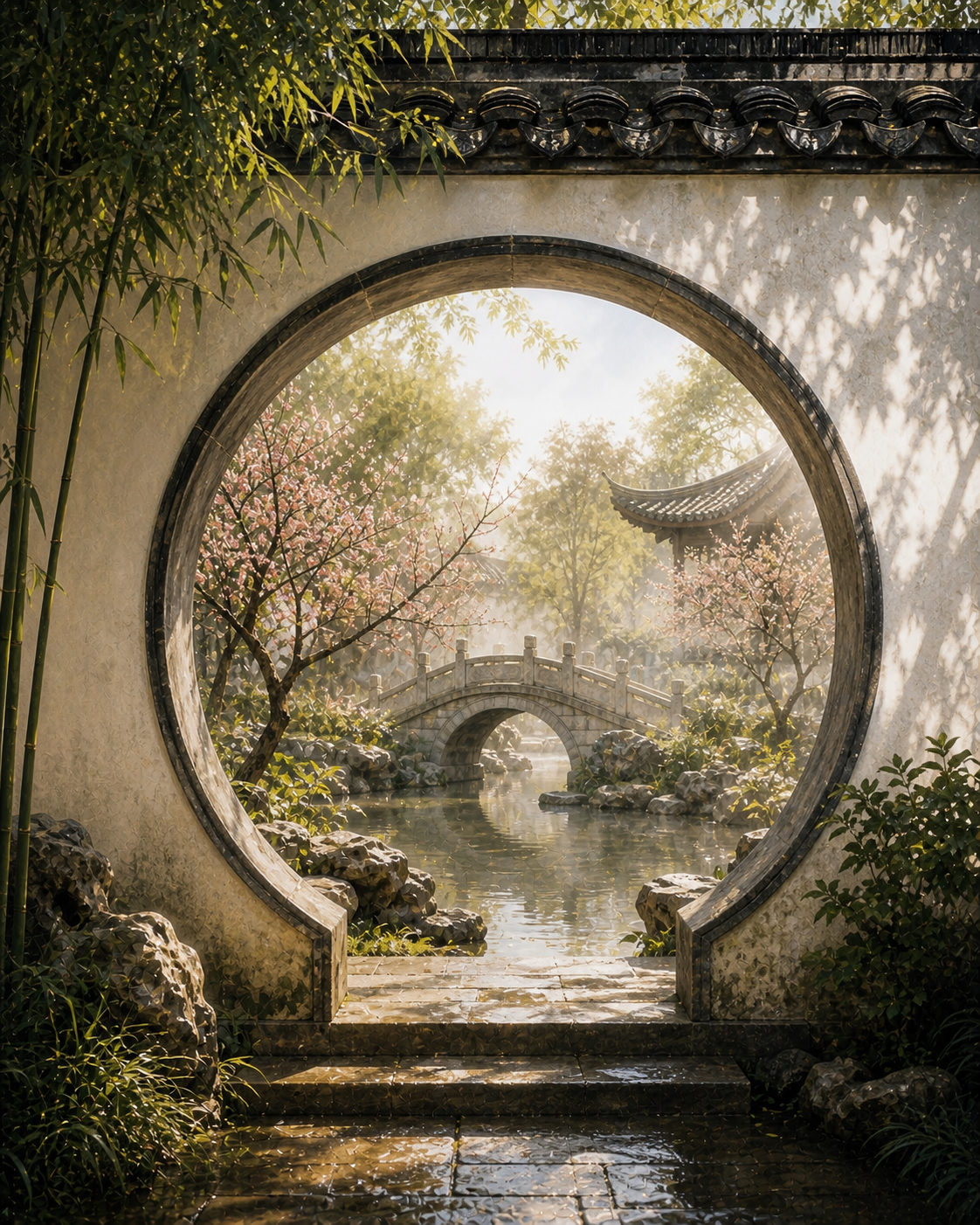
《情字之前》
《迎賓閣》若用悼念書寫遺民孤獨,《再寫杜蘭朵》則用藝術燃燒生命。《再寫杜蘭朵》從構思到終篇,僅用三天,譯稿若非完成數年之前,三天絕不可能。思緒不停奔馳,時而凝思自己是袁承墨,濃墨揮毫蘇體,漢字賦予情感;時而想像自己是無名氏,柔情難捨兩女,真心盡付詠歎。思緒停下當時,平生首次耗盡。歌劇、漢譯、書法、回憶,洋洋灑灑成篇。作品趨近完成,筆者也祭獻了自我。
重讀《再寫杜蘭朵》赫然發現,承墨是開普宇宙的首位遺民。自己儘管承認外邦,然而他書寫蘇體,情感徹底故國。離散在茫茫宇宙,流落於莽莽開普,所以他書寫了故鄉:飛白是時間的裂,留白是空間的縫;時空裂縫處,隱藏孤獨。思念曲折了歲月,回憶捏造了故鄉,筆畫停頓處,迸出鄉愁。承墨是離散的遺民,蘇體是他對故國的悼念,詠詩嘉禮皆是他對故國的情懷。對承墨而言,始終他不曾重返故國,只讓筆下重返故人。
《再寫杜蘭朵》將戲劇曲折全留給漢字,拆解漢字猶如過關斬將,以「敗」甫始,注定了此劇無人得勝,以「詩」收束,總結了此篇核心謎底。《再寫杜蘭朵》最終沒有落在凱旋的高潮,而是定錨於回憶初見,我在寫詩。杜蘭朵公主的三道謎題,固然精彩,情為何物才是此劇真正謎題。情為何物啊?公主步步緊逼,柳兒絕命唱出:情深深,藏方寸,未說與何人。每聽此曲,黯然總為情傷,深情乃詩也,追憶方知情深。情之所至,不分性別,無論國籍,不殊藝術形式,只有一往情深。
嘉禮的布偶,頭髮散落,金鳳將墜。
詠詩的指針,磨損嚴重,黑膠將毀。
承墨的毛筆,飛白殘缺,筆勢將頹。
多情是我作繭自縛,無情是我踉蹌欲醉……
謎題三道雖破解,輸贏卻為誰?
究竟是誰凱旋?
真正的情,不以勝負為終點。《再寫杜蘭朵》試圖一往情深,深情於橫豎撇捺勾點之間,漢字磨穿鐵硯。寫情繪景,不僅重現歌劇杜蘭朵止於大師停筆處,更為情字竭盡藝術。情字之前,無人凱旋;藝術竭其所能,只為情深,情深自然有詩。當藝術為生命耗盡,未完成停在托斯卡尼尼放下指揮棒那刻,追悼大師與柳兒,敬深情。
詩,左言右寺,沉默合謀千言,即將胡言亂語;塔寺本應莊嚴,卻要斷壁圮落……寒山寺、靈隱寺、櫳翠庵、萬佛閣……殘破中。又是寸,虛筆至此,凌亂最後方寸,力竭橫豎皆駑頓,末後這點墨罄……
我在寫詩……
在寫詩……
寫詩……
詩……
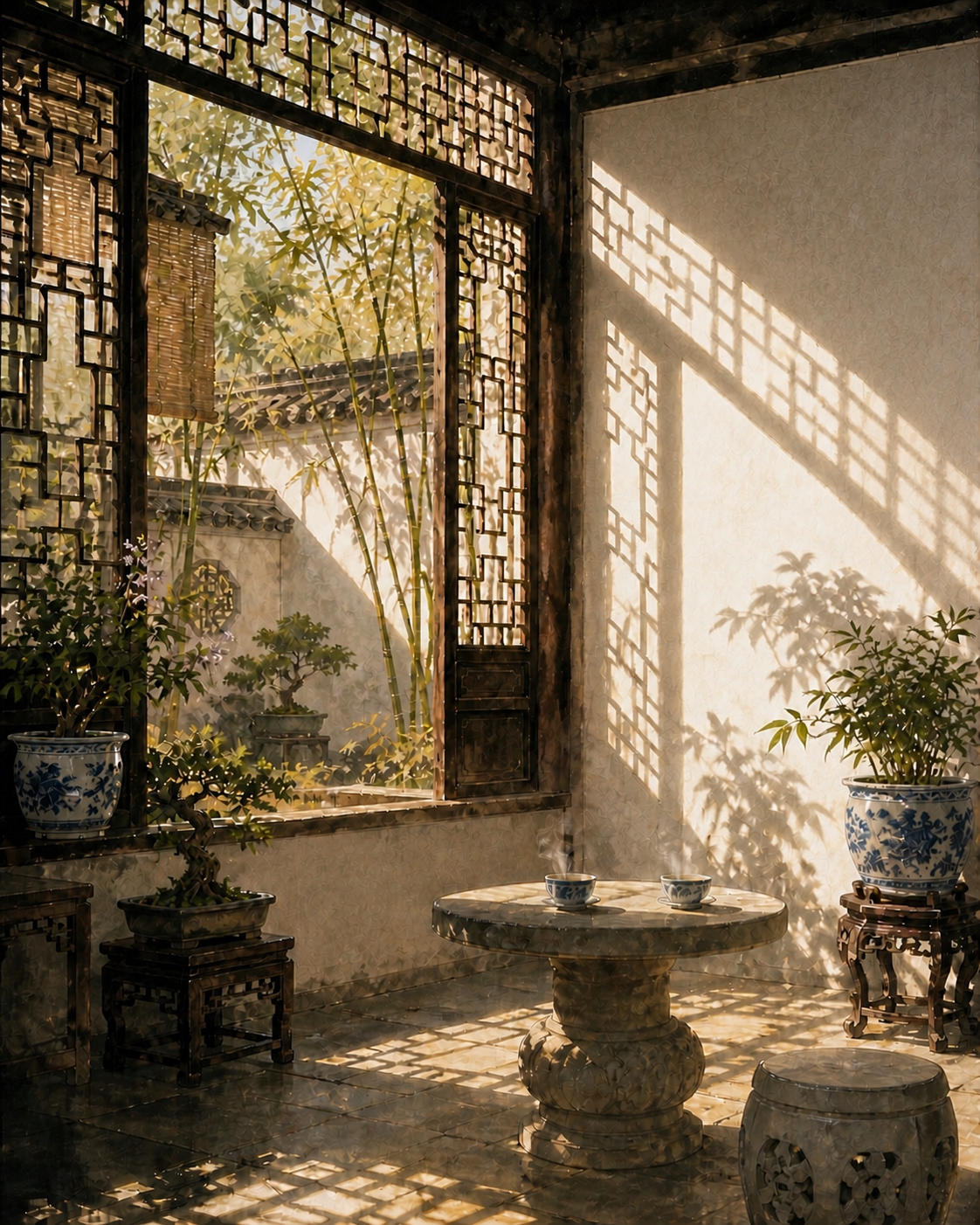
Before the Character for Love
If The Welcome Pavilion mourns the loneliness of the remnant, Turandot, Once More is a work in which art consumes a life. From conception to final line it took only three days — impossible, had the translations not already been completed years before. My thoughts ran without rest. At one moment I became Yuan Chengmo, grinding dense ink and writing in the Su style, letting the characters carry emotion; at another I was the Unknown Prince, unable to relinquish either woman, pouring an undivided heart into every aria. When at last the thought came to rest, I found myself, for the first time in my life, entirely spent. Opera, translation, calligraphy, memory — all poured into the work until the pages stood complete. As the work neared its end, the writer, too, had offered himself up.
Rereading Turandot, Once More, I suddenly saw it: Chengmo is the first remnant of the Cape Universe. Though he calls himself a stranger to this land, everything he writes remains faithful to the old country. Dispersed across an immeasurable universe, cast upon the wild expanse of the Cape, he writes a homeland into being — flying white is the fracture of time, empty space is the seam of place; within those fissures of time and space, solitude quietly hides. Longing bends the years; memory fabricates the homeland anew; where the brush pauses, homesickness breaks through. Chengmo is a remnant in diaspora. The Su style is his mourning for the country he left; Yongshi and Jiali are themselves the shape of that same devotion. For Chengmo never truly returns to his homeland — he only lets the brush return to the people of the past.
Turandot, Once More leaves every dramatic turn to the Chinese characters themselves. To dismantle each character is to pass through a trial. It begins with 敗 — defeat — foretelling from its very first stroke that no one in this drama shall triumph; it closes with 詩 — poetry — revealing at last the riddle at the heart of the piece. The work refuses the climax of victory, anchoring itself instead in the memory of a first meeting:
I am writing poetry.
Princess Turandots three riddles are brilliant, yet the true riddle of this opera is this:
What is love?
As the Princess presses forward step by step, Liù answers with her life:
Love runs deep,
hidden in the smallest chamber of the heart,
never spoken to anyone.
Whenever I hear this aria, sorrow returns with it. Deep feeling is itself poetry; only in remembrance do we know how deep. Where love reaches, gender dissolves, nations fall silent, and art forgets its own boundaries — only love, undivided, remains.
Jialis puppet — hair undone, the golden phoenix about to fall.
Yongshis needle — worn thin, the record nearing silence.
Chengmos brush — flying white broken, the stroke about to collapse.
To love too much is to spin oneself into a cocoon. To love past feeling is to stagger, numb and drunk on grief… The three riddles are solved — yet who has won? Who, in the end, is triumphant?
True feeling never takes victory as its end. Turandot, Once More strives only toward an unreserved depth — a depth ground into every stroke of the brush, every horizontal and vertical, every dot and hook, until the iron inkstone itself is worn through. To paint feeling and scene is not merely to re-enact Turandot stopped at the point where the Maestro laid down his pen, but to exhaust art itself for the sake of a single character: love. Before the character for love, no one triumphs. Art spends all it possesses only for the depth of feeling — and where feeling is deep, poetry rises of its own accord. When art has consumed an entire life, the unfinished work halts forever at the instant Toscanini lowered his baton — mourning both the Maestro and Liù, in homage to profound feeling.
Poetry: the radical for speech beside the radical for temple. Silence conspires with a thousand unspoken words, on the verge of wild, incoherent speech; the pagoda that should stand in solemn majesty is already ruined walls… Hanshan Temple, Lingyin Temple, Longcui Nunnery, the Pavilion of Ten Thousand Buddhas… all falling into ruin. Then comes the final stroke — faltering, reaching toward that last small chamber of the heart, where everything falls into disorder; every horizontal and vertical exhausted and blunt, and with this last drop, the ink runs dry…
I am writing poetry…
am writing poetry…
writing poetry…
poetry…
河水再流:
再寫杜蘭朵
杜蘭朵公主(歌劇譯本)


限會員,要發表迴響,請先登入
 1樓. lillian2026/08/09 07:20也許 多少可以體會.....
深河所言“一往情深”.....
若就中文的“文字領域”來說
可從最近的一系列大作窺見並感受一二
作者對人物的刻劃 背景的觀察
事物的細緻描述 諸如此類 等等
就像文中栩栩如生 歷盡千帆的“劇中人”....
不止詞藻優美清麗 最難能可貴的
更是依舊保有一顆純真悲憫的心
還有對生命的熱情!
深河先生 才華橫溢
謝謝精彩分享
系列大作 工程浩大
恭喜 恭喜 辛苦了!Lillian提到「一往情深」,我特別有感。這幾篇小說寫到最後,我愈來愈覺得,文字終究只是工具,真正留下來的,應是人的情感與生命的關懷。
筆下的人物,有的孤獨,有的漂泊,有的執著,有的失落;只是陪著他們走完一段路,盡力把他們寫得真一些。
感謝lillian一路閱讀,從文字讀出這份心意。🙏
深河 於 2026/08/10 04:00回覆


