《滄海曾經》
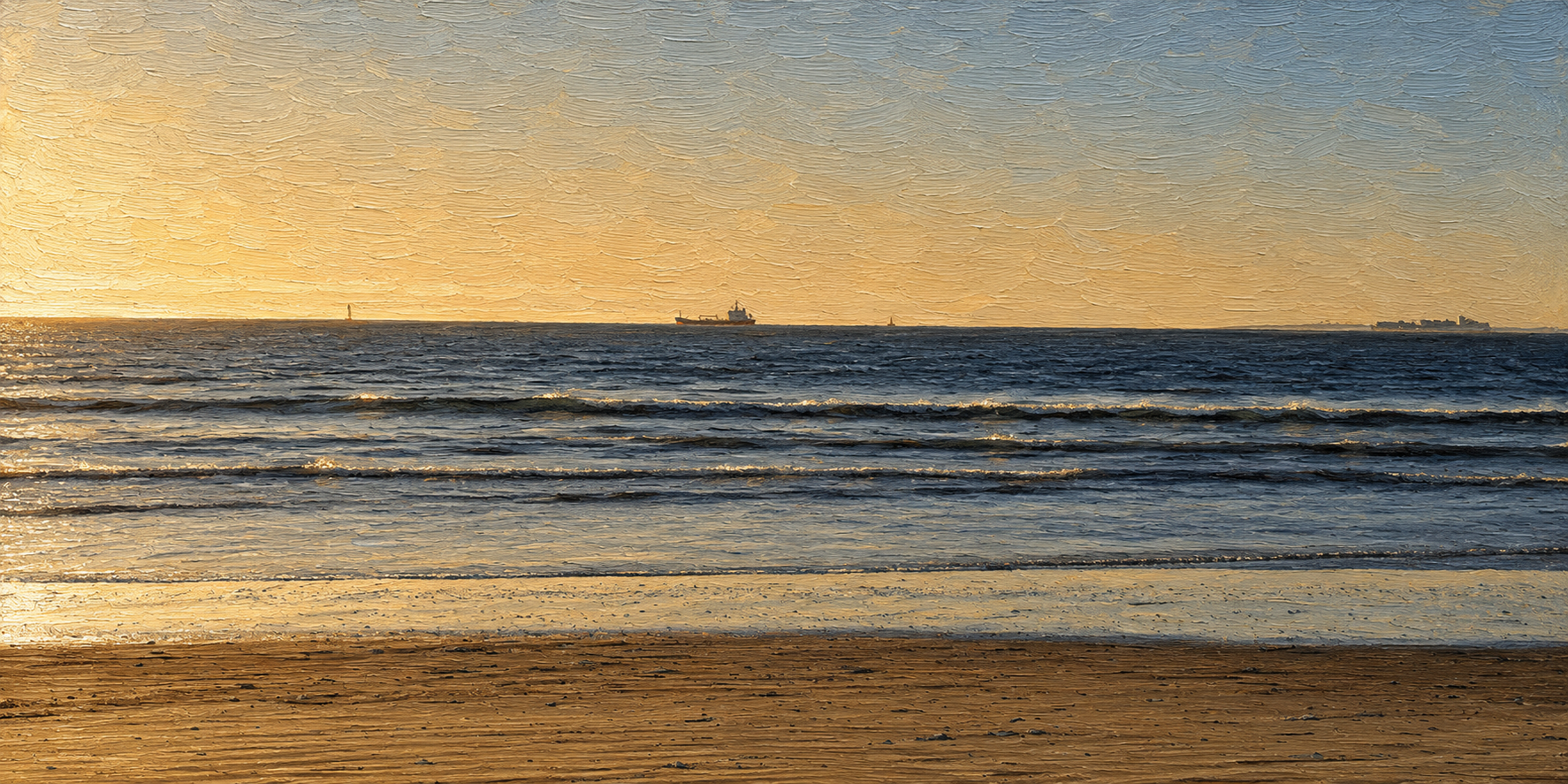
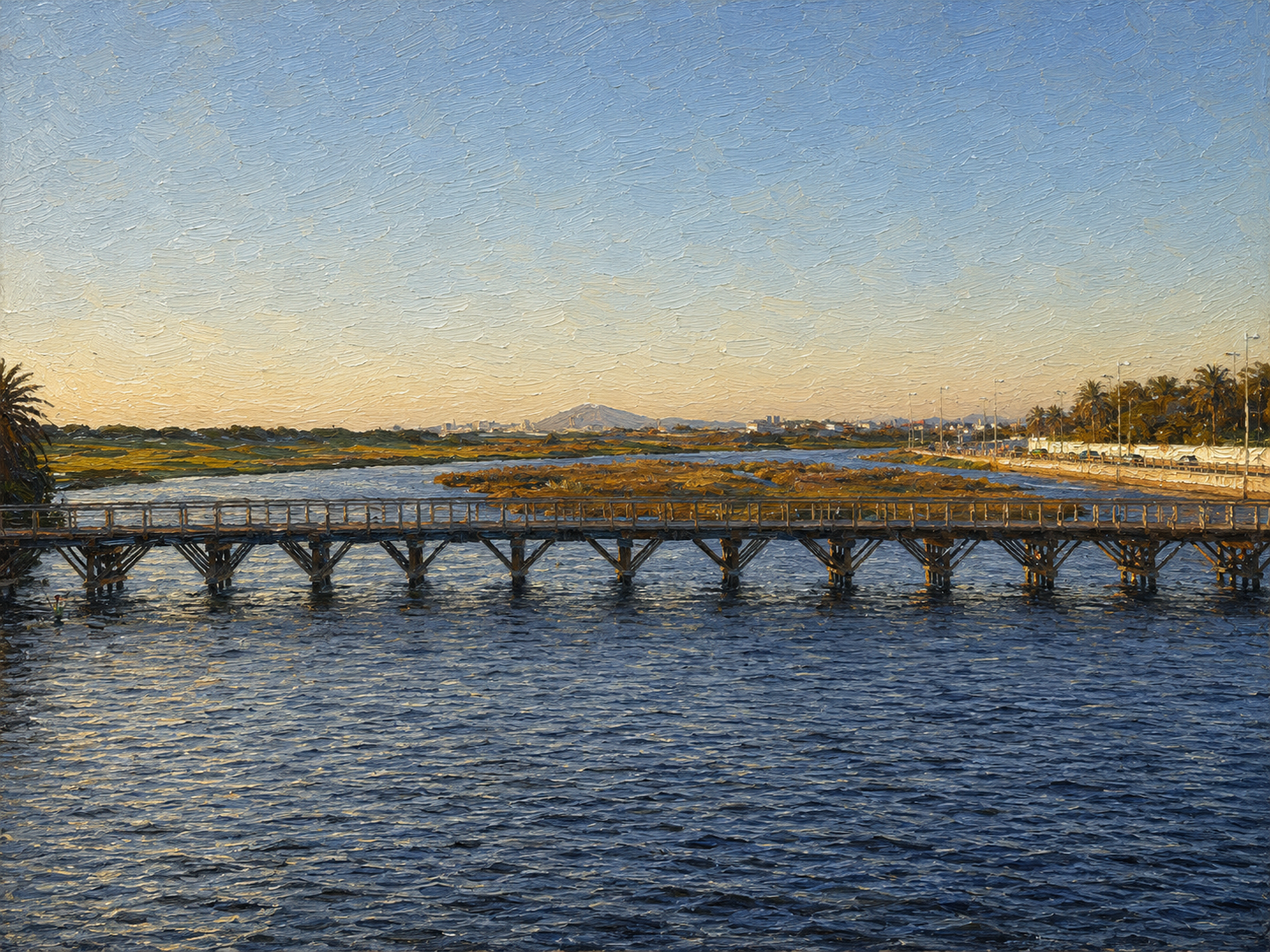
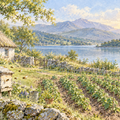
《將臨》幾乎捨棄了傳統小說的情節推展,只有啟川這位業餘畫家,九度重訪舊地,拿起畫筆只為亡妻雅彤;每畫一次,執念便放下一分。悼念倘若是光,追憶則是影,光影旋起忽滅。橋跨深河燈塔外,海落斜陽桌山前,我讓啟川試畫九次,不斷趨近,遲乎永遠一步。隱喻再以數學,讓透視法解構風景,數學在此不計算,而是用來書寫悲傷。透視法、相似形、漸近線,都指向同一事實:悲傷可以無限趨近,終究無法吻合;而藝術,恰好誕生於這道裂縫。
然而,藝術以有限趨近無限,其起點便註定焦慮。若問啟川究竟畫了什麼,啟川不僅畫了木橋深河,更將焦慮每次紀錄下來。焦慮中多少「無彩」的感嘆:第一次是情感太濃,追趕太急;第二次刻意抽離情感,生命反倒失色;第三次是技巧精準,意義反而流失;第四次執意完美,不能雲淡風輕;第五次回憶洶湧,難以沉默;第六次情緒潰決,只剩宣洩。第七次虛畫,方知多情也是執念。第八次天地介入,自我放下控制,無彩轉為精彩!
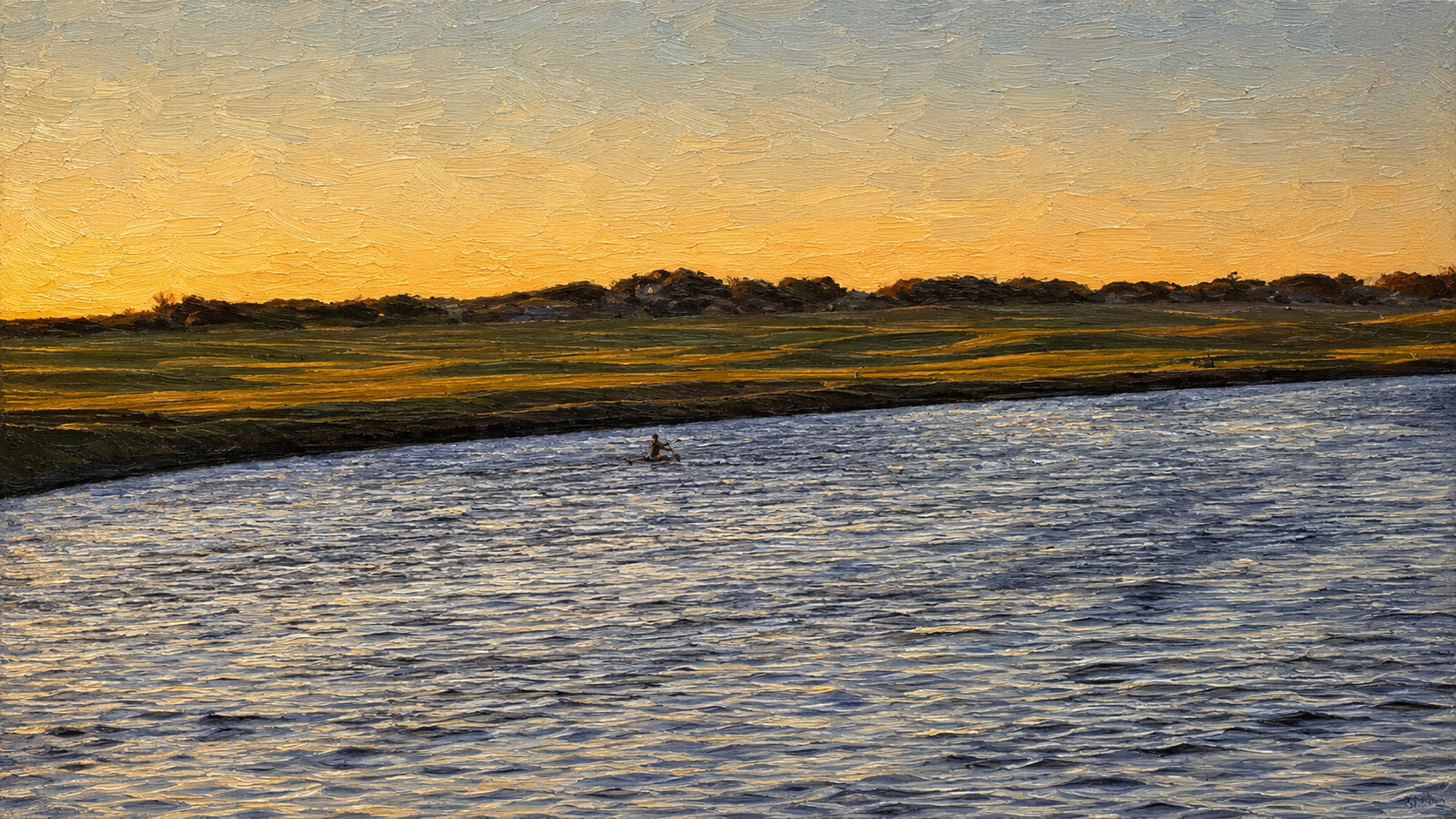
至於第九次,啟川以何風格究竟畫出何物,本文始終不說,只寫木橋深河在濛霧茫茫中,且將歲月共時,暫與造化並存,從畫外融入畫內,執念止息,終與萬物同軌跡。之後,連精彩都消失了。藝術,有限趨近無限,然而無限不可得,終究回歸有限,認清有限。
認清有限的藝術家,莫如莫內。莫內曾告訴自己,凡是宣稱作品完成的畫家,皆過於自負。所謂完成,意味作品完整完美。莫內日復一日埋首畫中,絲毫感受不到進展;所謂作畫,只是不斷摸索、反覆嘗試,成果依然寥寥。若以莫內的完成看待藝術,每件作品都未完成。而未完成,遲乎永遠一步,正是從無限退一步退回有限,不再苛求完美,不再妄言超越。
啟川的每幅畫伴隨雅彤的箴言,聲音迴盪耳邊:
「啟川,語言的水氣是發音,語言的雲朵是感情。」
重讀雅彤這句箴言,方知啟川不僅畫風景,更畫了放下的雲。
即將飄零,萬般思緒;灑落滿地,難捨足跡。
雲隨風去,就此別離;但願珍惜,滄海曾經。
漂泊這朵雲兒,將離終臨,將臨終離。
Once the Sea Had Been
Advent: The Nearing almost abandons the conventional advance of plot. There is only Qichuan, an amateur painter, who returns nine times to the same place and takes up his brush for no one but his late wife, Yatong. With each painting, a little more of his attachment is laid down. If mourning is light, then remembrance is shadow; light and shadow rise and vanish in turn. Beyond the wooden bridge that spans the Deep River and its lighthouse, before Table Mountain where the sea receives the slanting sun, I let Qichuan try nine times, approaching without cease, always one eternal step behind. The metaphor is carried further by mathematics: perspective dismantles the landscape. Here mathematics does not calculate; it is used to write grief. Perspective, similar figures, the asymptote — all point to the same fact: sorrow may approach infinitely, yet it can never coincide with what it seeks. And art is born precisely within that fissure.
Yet when the finite reaches toward the infinite, anxiety is written into it from the very beginning. If one asks what Qichuan truly painted, the answer is not only the wooden bridge and the river, but the anxiety of each attempt, recorded canvas by canvas. How many times the cry rises from that anxiety: No colour! — the first attempt, feeling too dense, the pursuit too urgent; the second, emotion deliberately withdrawn, only for life itself to lose its hue; the third, technique precise, meaning slipping quietly away; the fourth, captive to perfection, unable to let the cloud pass lightly; the fifth, memory surging until silence is no longer possible; the sixth, feeling breaking its banks, leaving nothing but release. The seventh, painted almost into emptiness, teaches him that even deep devotion is still a form of attachment. Only on the eighth, when the landscape itself begins to answer him and he lets go of control, does what had seemed colourless quietly become luminous.
As for the ninth, in what style Qichuan painted, or what he finally rendered, the text never says. It records only the wooden bridge and the river dissolving into boundless mist, where for a moment he shares time with the years themselves, exists briefly alongside creation, steps from outside the painting into its very heart. His attachment comes to rest, and at last he moves along the same trajectory as all things. After that, even brilliance disappears. Art forever approaches the infinite by means of the finite; yet the infinite cannot be possessed, and so it returns, in the end, to the finite — and learns, at last, to recognise it.
No artist understood that finitude more clearly than Monet. He once told himself that any painter who declares a work finished is terribly arrogant — for to call it finished is to claim it complete, perfect. Day after day he buried himself in his canvases, sensing no real progress; to paint was only to keep searching, to try and try again, the harvest always meagre. If art is measured by Monets sense of completion, then every work remains unfinished. And to remain unfinished — forever one step behind — is precisely to take that step back from the infinite into the finite: no longer demanding perfection, no longer presuming to transcend.
Every painting of Qichuans carries Yatongs words, echoing in his ear:
“Qichuan, the moisture of language is its sound; the clouds of language are its feeling.”
Only in rereading this maxim of hers does one understand: Qichuan painted not only the landscape. He painted the cloud that learns, at last, to let go.
About to drift away, ten thousand thoughts;
scattered across the earth, footprints hard to leave.
The cloud departs with the wind, and here we part;
may we cherish what once had been.
This wandering cloud — departing, it finally nears; nearing, it finally departs.
河水再流:




限會員,要發表迴響,請先登入


