《最終的凌風翼》
今年四月份,心思整整放在處女作《長機的賦別》,這部長篇落在長機史瓦特上校卸下人生各種責任,準備從大化的升降線起飛,最後消失在時光盡頭。但我捨不得,捨不得史瓦特上校,遂取幾筆性情,再次賦予肉身,成為《迎賓閣》中的維斯特上校。
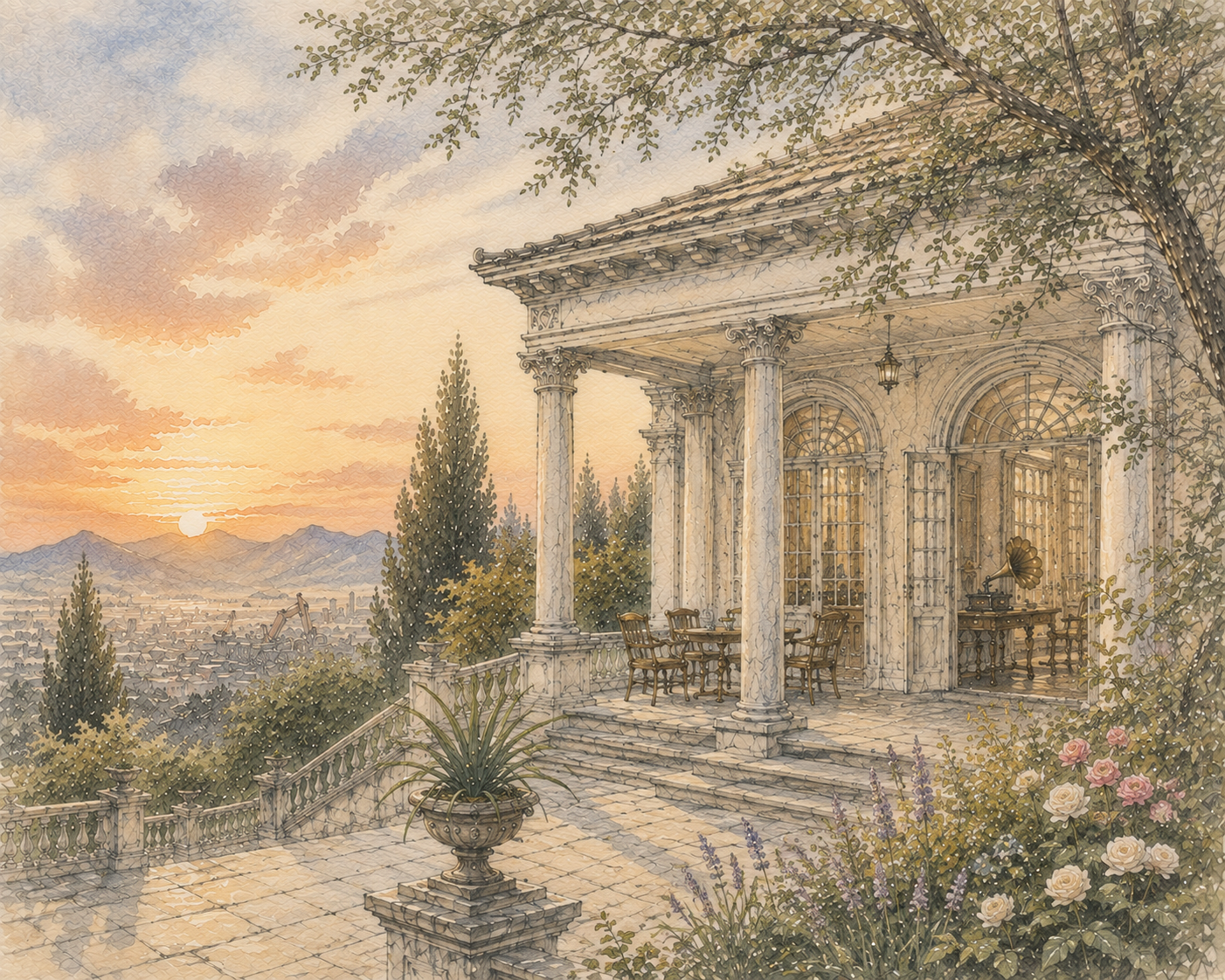
《迎賓閣》只寫某日斜坡的午後,故人重逢於象徵意義的府宅,共聽何日君再來,共同守護《阿伊達》,回首歲月,旗幟同升同落。此篇有別於系列其他作品,不寫技藝,只寫情誼;不寫個人成敗,但寫共同失去。
相隔三月再讀《迎賓閣》,筆觸淡淡惆悵,而惆悵始於今宵離別後,既知重逢遙遙無期,忍把歌再唱。我將維斯特上校寄託為忠實友人,見證了昔日光輝,看清了人走茶涼,讓他在審問室中死守機密,卻不敵自己人猜忌。最是艱難苦困,猶自哼唱《伊果王子》,思緒假借回憶化身凌風翼,復見故國廣袤大地;又與《拿布果》中「思緒飛翔」遙相呼應,同樣寄託著流亡者對故土的眷戀。遙寄遠方,遙想山河,緬懷更嚮往,失落更感傷。
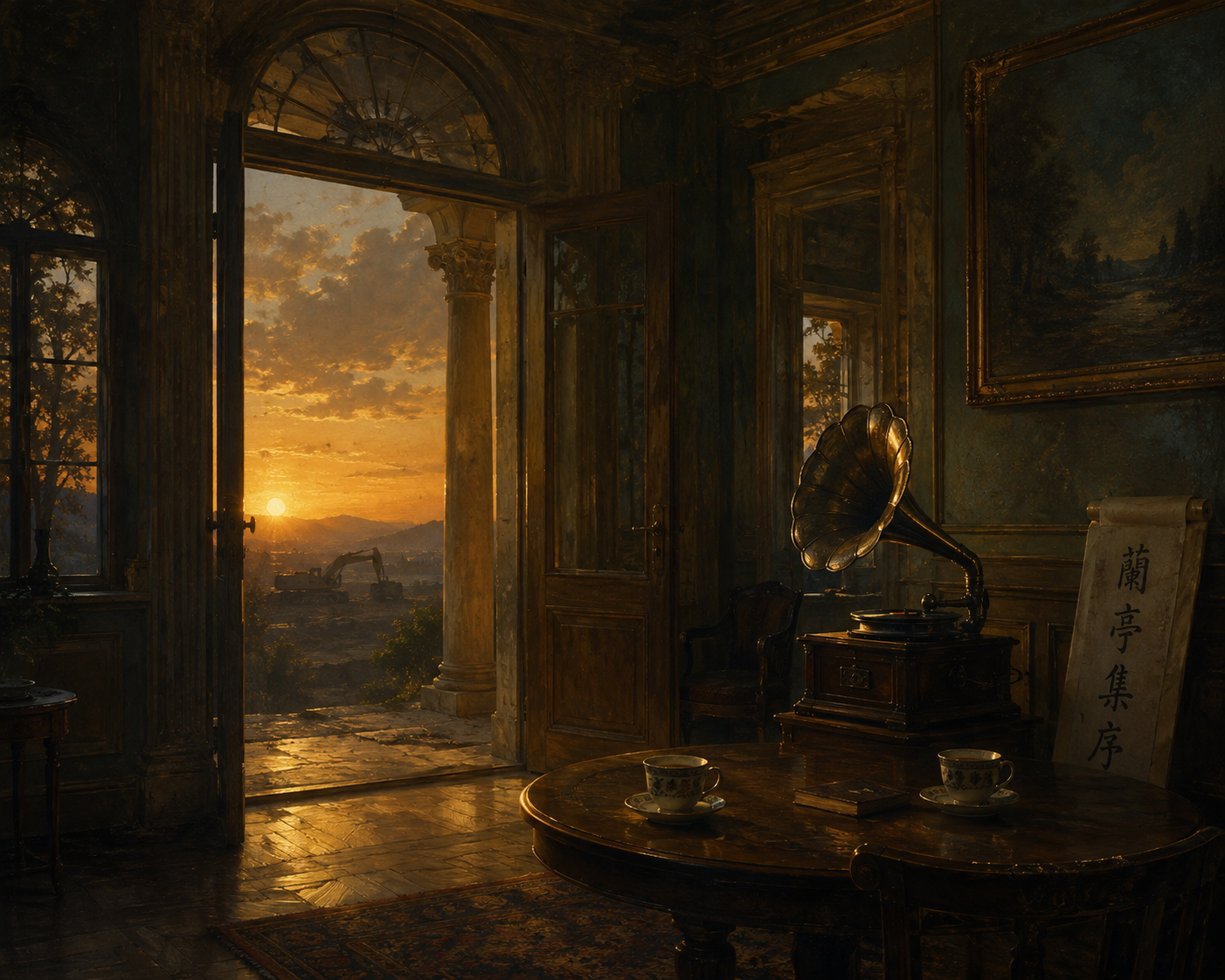
老管家是系列全篇的特殊人物,只有他無名無姓,品茗寫書法,黑膠聽歌劇,來無影去無蹤。如果維斯特上校是緘默機密的武將,老管家則是堅守蘭亭的文人,更是承受歷史到最後的孤臣孽子。面對不可逆轉的無能為力,只能在無人看見的門後,唯獨在《阿伊達》墓室的賦別終曲,揮淚釋放苦痛。我讓老管家隱身於蘭亭集序,讓他屢次提及我家主人,總將自己放到最低。老管家真正展現自己,只在捨棄歷史包袱,斷然與上校從過去撤離,將撤離當作前進。
《迎賓閣》從相見歡到終須別,真正送別的,不只是迎賓閣。推土機最終那景寥寥幾句,初寫痛心再讀心痛,分不清隱喻抑或現實。《迎賓閣》的主角是人也是物,物去人非,巨變忽然之間,滄桑彷彿萬年。揮別從此去,何日君再來?同作逐臣君更遠,青山萬里一孤舟。
《迎賓閣》沒有宏大敘事,只有對話藏機鋒,感慨望前塵。重讀或許發現,這篇書寫歷史的遺民孤獨,開普宇宙繼此篇之後,多了某些世界漸漸消失的遺民。遺民本身就是悼念,悼念不復存在的年代:總有人願意忠誠、願意守護,願意記得彼此。這份願意,許我稱之為最終的凌風翼。
The Final Wing Upon the Wind
This April, my thoughts belonged almost entirely to my first long work, The Leads Farewell. That novel settles upon Colonel Swart as he lays down every burden of a lifetime, preparing to lift from the runway of the Great Transformation, and finally vanishing at the far edge of time. Yet I could not bear to lose him. I took a few strokes of his temperament and gave them flesh once more, and so he became Colonel Verster in The Welcome Pavilion.
The Welcome Pavilion unfolds over a single afternoon on a hillside: old friends reunite in a house heavy with symbolic weight, listen together to What Day Will See You Return, keep faith together with Aida, and look back across the years while their flags rise and fall as one. Unlike the rest of the series, this piece speaks not of craft but of fellowship; not of one mans triumph or defeat, but of a loss held in common.
Returning to The Welcome Pavilion three months later, I find the prose touched with a quiet melancholy—a melancholy that begins only after tonights farewell, once one already knows that reunion lies beyond all reach, and yet still cannot help but sing the song again. I entrusted Colonel Verster as the loyal friend who had witnessed former glory and seen, with clear eyes, how quickly the tea grows cold once people are gone. I placed him in the interrogation room, guarding his secrets to the last, only to fall victim to the suspicion of his own side. In the hardest extremity, he goes on humming Prince Igor; his thoughts, borne upon memory, take the shape of the Wing upon the Wind, beholding once more the vast earth of his homeland. The image echoes, across an ocean, the "flying thoughts" of Nabucco—the same exiles longing for a lost native ground. Sent out toward distant realms, imagining mountains and rivers never to be touched again: the more one remembers, the deeper the longing; the greater the loss, the sharper the grief.
The Old Butler is the one figure without a name in the entire cycle. He alone tastes tea, practises calligraphy, listens to opera on vinyl, arriving without a shadow and departing without a trace. If Colonel Verster is the silent soldier entrusted with secrets, the Old Butler is the man of letters who keeps faith with the Preface to the Orchid Pavilion—the last, solitary loyalist left to carry history to its very end. Faced with what can never be undone, he has only one refuge: behind a door no one sees, and only during the final farewell duet in the tomb scene of Aida does he let himself weep. I hid him inside the Orchid Pavilion Preface, having him speak always of "my master," never of himself, placing himself lowest of all. He shows his true self only once—when he casts aside the burden of history and withdraws with the Colonel from the past, turning that very retreat into a way forward.
From joyful reunion to the final parting, what The Welcome Pavilion truly bids farewell to is more than the pavilion itself. The closing image of the bulldozer, rendered in only a few spare lines, brought an ache when first written and a deeper ache on rereading—even now I cannot say where metaphor ends and reality begins. The true protagonist of this piece is both person and place; when the place is gone, the people scatter with it, and an upheaval that arrives in an instant carries the weight of ten thousand years.
Farewell, then—what day, what day will see you again?
Fellow exiles now, you journey further still;
Ten thousand miles of green hills, and one lone boat.
The Welcome Pavilion offers no grand narrative—only conversation that conceals its own sharp edges, only quiet reflection cast toward vanished days. Rereading it, I come to understand that this is the piece in which the Cape Universe first discovers the loneliness of the remnant. From here on, the Cape Universe gradually fills with such remnants—souls left behind as an entire world slowly disappears. To be a remnant is, in itself, an act of mourning: mourning an age that no longer exists, an age when people were still willing to remain faithful, willing to keep watch, willing to remember one another.
This willingness—I have come to call it the Final Wing Upon the Wind.
河水再流:
迎賓閣
長機的賦別


限會員,要發表迴響,請先登入


