《路途上的穀神星》
— 初寫於2010年,潤飾於2026年 —
山後第一大城沃斯特(Worcester)之前下N1接R43直駛,路旁兩邊水池與葡萄園相間,可視山陵起伏。行駛二十餘里見R301招牌處,往左跨越山脈則返回山前小鎮威靈頓(Wellington),直走則更入山後,通往城鎮希利斯(Ceres)。我將車停在R301招牌處幾秒,決定捨直取左。過了兩個葡萄園後,路徑開始窄小,越過溪澗處,僅能單向通行。
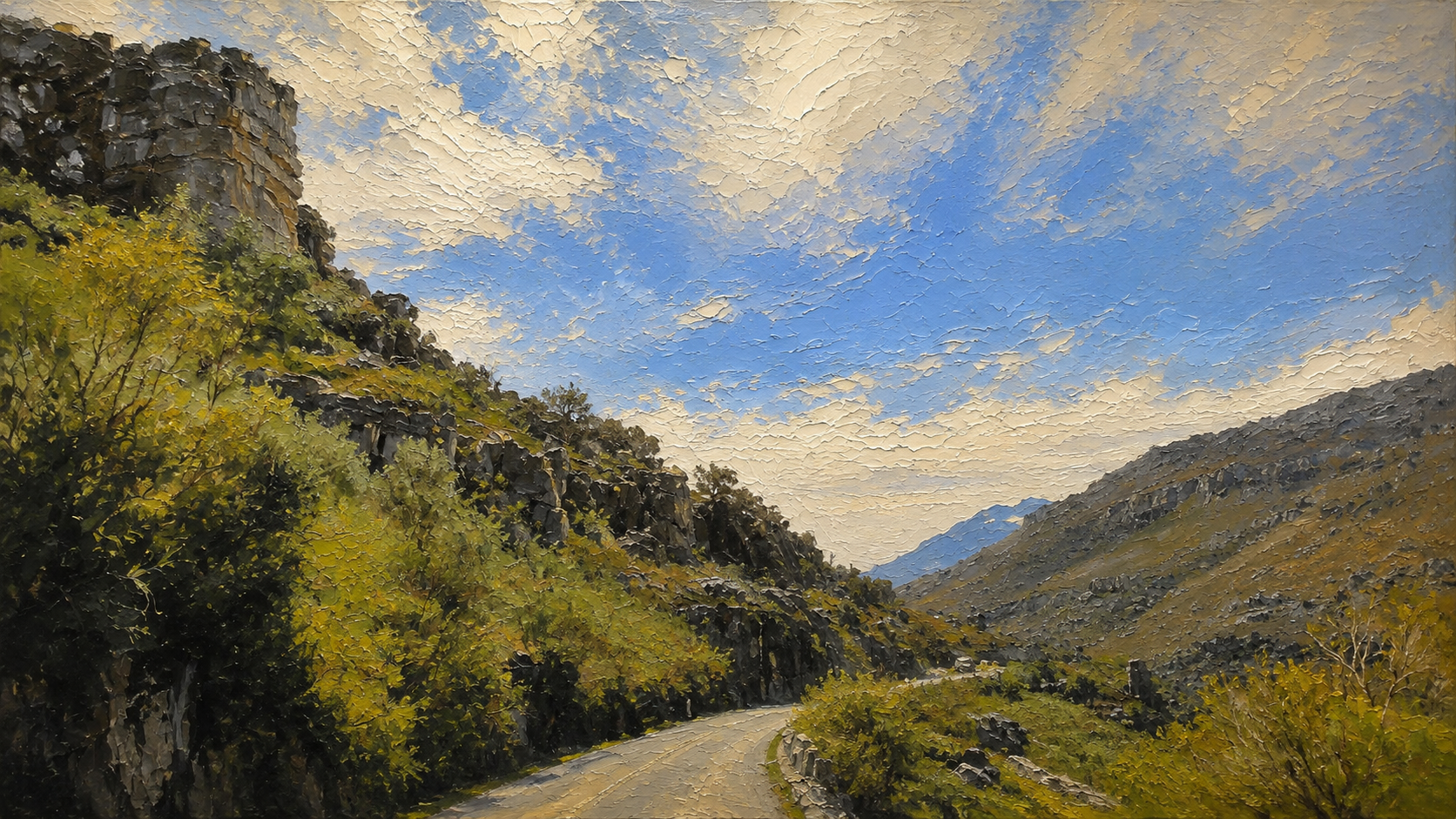
地勢開始攀高,山壁岩石陵角分明,大小不一的石塊散落山坡,路隨峰轉迴繞,岩石堆疊間幾許蔥綠,蔥綠中金橘野花,野花繃滿崖壁。岩與花,一深一淺、一剛一柔,而陽光與陰影賦予岩石層次更立體,峰迴轉角瞥見驚奇。溪水流過石床隆隆敲響了石頭每道縫隙,低落起伏間翻白,湧起也濺灑一次次難捨,潺潺不絕於耳。路徑窄小,崖邊沒有欄杆保護,卻見錐形石塊每隔幾尺沿路攤開,路與景十分融合,除了前後起坡處可見幾根電線桿,再難見到人工殘留痕跡。
攀坡漸陡,迂迴更甚,望見標誌山道名稱Bainskloof Pass,二十餘里過了最後山坳,遂近威靈頓鎮,復見葡園翠綠與大地遼闊。不再往前,取山坳較寬處折回,復入山中。紙上地圖顯示山脈名為Limietberg,意為Mountain of Limits,極限之山,我更願意稱之為「極限峰」。自問穿越極限之後,究竟夫復何求?
沿路返回,不禁莞爾,駕駛有何痴也?何故穿越山前山後,只為目睹極限。銜接省道R43之前,橋邊拍下遠山幾張,稍喘口氣喝點水。極限峰矗立眼前,想起菜根譚兩句話:「醲肥辛甘非真味,真味只是淡;神奇卓異非至人,至人只是常。」淡與常,考驗著人生可能的極限。「吾寧悃悃款款朴以忠乎?將送往勞來斯無窮乎?寧誅鋤草茅以力耕乎?將游大人以成名乎?」屈原〈卜居〉中的自問數句,試探自身存在與價值的極限。何故穿越山前山後?屈大夫在兩千年前就看透了滑稽的遊戲,而我呢?四問在穿梭山脈之間試探,天地只有溪水潺潺。
繼續省道R43莫約三十公里直達希利斯(Ceres),路沿峰迴漸轉,山道標誌曰Michell’s Pass,又見石塊林立山頭,稍佇取景後加滿油上路,見路標指往柑橘鎮(Citrusdal)遂依指標左轉,路程百餘里。隨著R303公路起坡,地勢漸升,換檔推進,油門不能催,沿途果園一座座,數不清的翠綠。行駛過城鎮這座,翠綠的神秘面紗,今日卸下可能否?
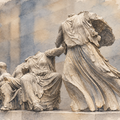
希利斯(Ceres)是羅馬神話中主司農業與豐收的穀神,與希臘神話的Demeter對應,是為大地之母,天帝朱庇特之妻。朱庇特與穀神生下波瑟芬妮(Persephone),掌上明珠所到之處鮮花盛開,充滿旺盛生機。包括太陽神阿波羅(Apollo)在內,諸神競相追逐波瑟芬妮。有女如此多嬌,但使諸神競折腰。諸神的腰雖然折斷了,誰也不得波瑟芬妮青睞。然而天生多嬌,注定多難,穀神的獨生女也躲不過命運的糾纏。一日突然捲起黑霧,西西里島的埃特納火山(Etna)噴出一陣風,剎那間奔出強健黑馬,說時快那時快,冥王(Pluto)擄走了正醉心賞花的波瑟芬妮,大地裂開又縫合,來無影去無蹤。
穀神眾裡尋她,女兒不知淪落天涯何處。四處探聽卻無神知曉,最終從太陽神得到消息。冥王黑煙竄起,天地黑暗就算剎那間,也逃不過太陽神的注視。得知真相,大地之母憤怒在天帝前告了冥王一狀。「你的混帳兄弟搶走我的寶貝女兒,這筆帳你怎麼說?」家務事講不清,萬能的朱庇特也無能為力,沉默以對。大地之母傷心欲絕,憤怒之餘卸下神職,放縱大地乾涸、任由草木凋謝。日子一天天,沒有穀神的大地長不出稻穗金麥,寒冬淒風苦雨,大地寸草不生。朱庇特不再視若無睹,親自出面斡旋。冥王於是答應妻子半年居住冥界,半年回到人間。女兒歸來,穀神喜出望外,大地恢復生機;女兒遠離,穀神悲痛欲絕,大地失去活力。四時於是嬗遞,天地為戲臺,重逢別離一幕幕,諸神不殊凡人也。
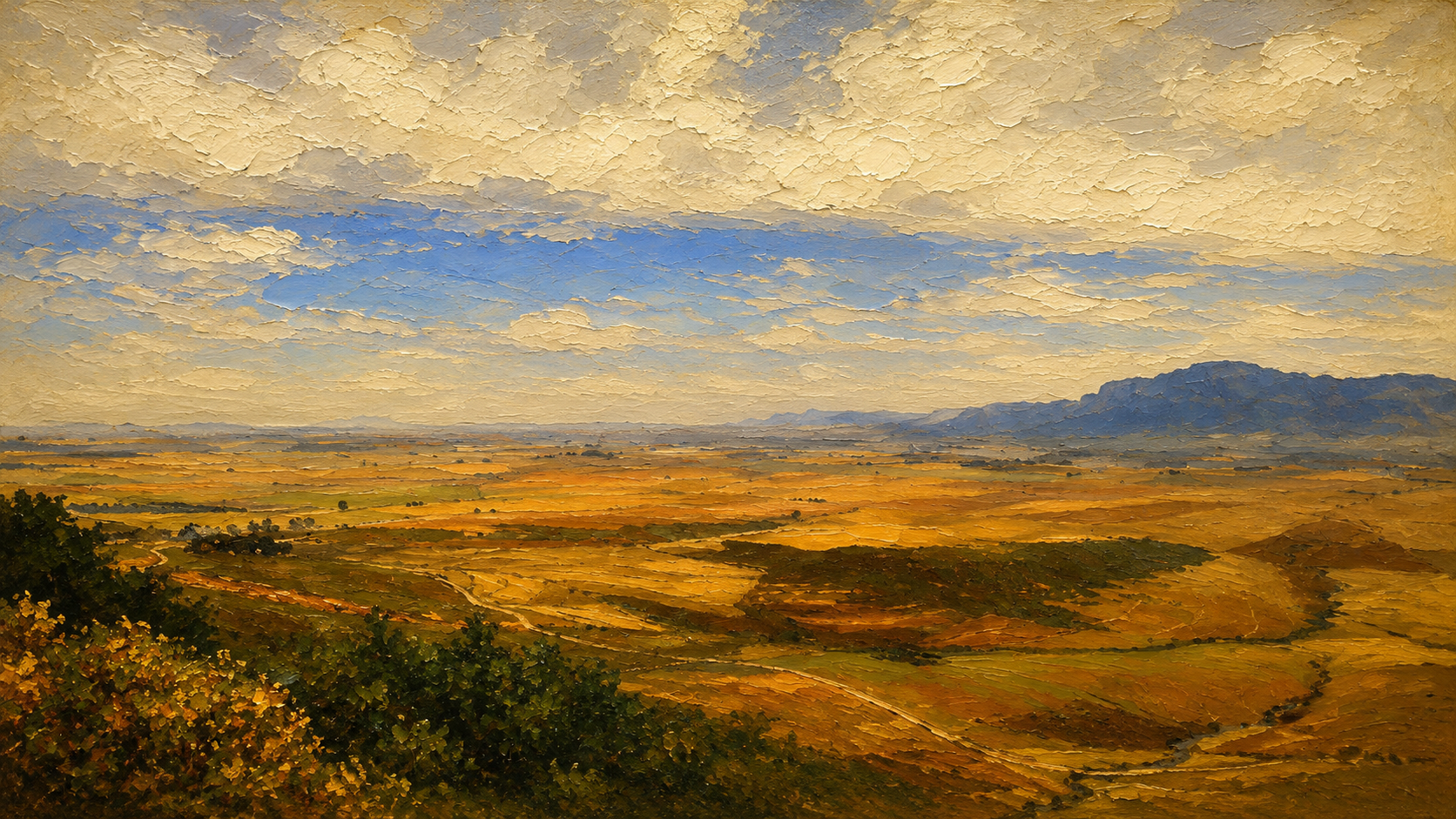
放眼望去,翠綠田野中清水幾塘,應是久別乍逢的喜極而泣!看啊,大地之女留下芳蹤,足印踏過一畝畝果樹結實累累。這兒的葡萄園漸少了,果園變多了。南非果汁有個品牌,名稱正是Ceres,我最愛喝「山谷奧秘」(Secrets of the Valley),酸酸甜甜,好像葡萄又似櫻桃,小紅梅微微清香。每飲山谷奧秘,彷彿也品嚐了諸神悲歡。
沿路不少果園標誌,都是Dutoit,如此熟悉。幾番聯想,這才想起果菜市場蘋果一箱箱,多數掛著Dutoit的大名,真是後知後覺。搜尋網路才知道Dutoit原來是Gysbert du Toit的姓氏,誅鋤草茅以力耕,一百多年前在此奠基水果產業,後人更將祖業發揚光大,如今成為外銷主力。我想,Dutoit應是穀神的女兒吧!
沿著省道R303開始爬坡,幾個蜿蜒後在山道Gydo’s Pass遙望群峰接壤的城鎮希利斯(Ceres)。凝望許久,想起了白遼士(Berlioz)的一首詠歎調 O blonde Cérès:
喔 散發金黃的穀神啊
當妳用鮮活翠綠的華麗
點綴了休耕的大地
帶來多少歡喜
老農與牧童的感激
祈得了妳的賜予
妳答允的富饒寬裕
喔 散發金黃的穀神啊
當妳用鮮活翠綠的華麗
點綴了休耕的大地
帶來多少歡喜
小鳥羞怯停佇
小羊玩耍嬉戲
平原微風徐徐
吹來鬆軟氣息
唱著妳的恩賜
沃饒的穀神啊
當妳用鮮活翠綠的華麗
點綴了休耕的大地
帶來多少歡喜
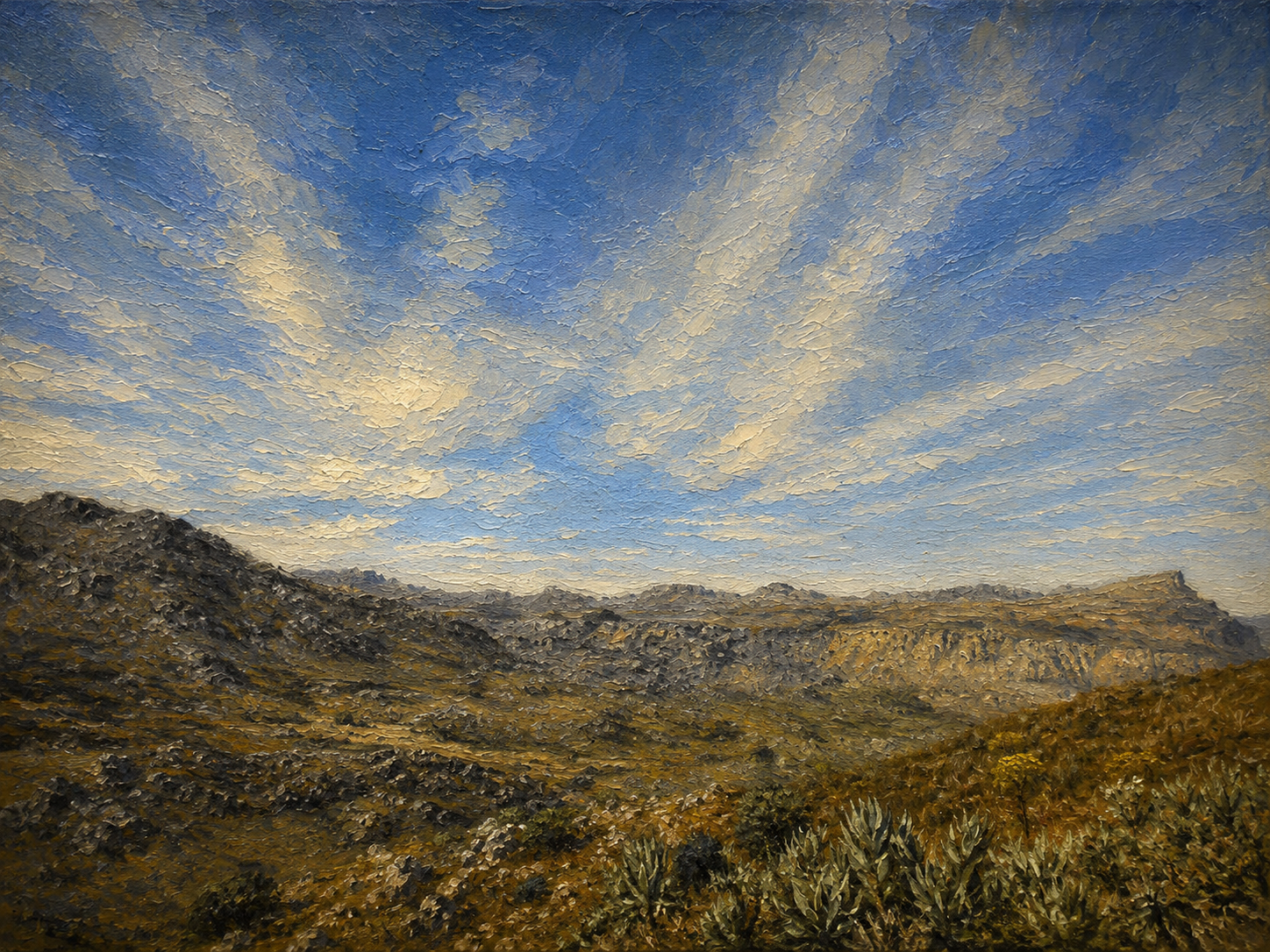
第一次行駛在省道R303的公路上,道路兩邊仍是Dutoit的天下,幾乎每隔幾公里就能看見泛藍水塘,天空飄來幾朵白雲,希利斯鎮漸行漸遠,而我照著地圖更向北行。莫約80公里後路漸狹窄,果園翠綠逝去遠方,石頭層疊的山脈逐一浮現,山愈來愈荒。路的柏油面開始消失,黃土碎石取而代之,車輪與砂礫激烈摩擦,底盤傳來上下起伏的震動,顛簸搖晃,短短數里變化巨大。山水原本秀麗,荒嶺轉眼消蝕,車後碎石路揚起塵沙滾滾。末段這等路況,地圖並未註記,始料未及。人車蒼茫天地,行駛荒涼孤獨。崩亂散落的岩石是流動的水啊,碎石山稜是浪的波峰線,任我奔騰於將碎未碎的浪潮。
亂石交錯的山陵,歲月在此山崩地裂,興許冥王不會出現。這念頭才剛起,「不是迷倒諸神的穀神之女,」另個念頭自我揶揄,「只是痴人。」
路況不明,地勢險惡,風吹來涼意,一陣冷顫。不能踩緊油門,只能緩緩前進,專心凝神,防止陷落路面窪坑,避開大石不能壞了車輪。穀神之希利斯鎮遠在百里,無人聽見我被冥王擄走的哭嚎。於是一路顛簸,短短二十里路竟費了一小時,雙腳在離合器與煞車之間換來換去,頻頻換檔調整節奏,手心額頭均冒冷汗,七分刺激三分恐懼,正是箇中滋味。
山路荒涼,再行數里後轉個峰迴,竟見翠綠一片,幾戶人家散落眼前。翠綠給予希望,心知柑橘鎮(Citrusdal)不遠了,還是不能踩緊油門。崎嶇山路起了變化,漸漸出現柏油,恢復平坦。駛出,見村落中心稀疏人群,越過兩個十字路口銜接國道七號,此時才真正放心。
遂沿國道七號往南而歸,在接口處停下遙望遠山,方才從彼邊下山的,短短二十里路的荒涼與孤獨,嘆口氣,深山遺棄歲月。
這兒地勢依舊起伏,最後上坡而下時,忽見平原遼闊,一掃跋涉之苦。天高地遠,騁目而望,淡綠柔柔地混和了金黃,美好如此愜意。大自然的風兒吹過,將這片青綠濃於橙橘的景致送入心中,視野無盡快意無窮。爾後回憶,此番印象抹不去,留著再探荒嶺。
喔 散發金黃的穀神啊
當妳用鮮活翠綠的華麗
點綴了休耕的大地
帶來多少歡喜
又是春歸,老農與牧童的歡喜我是體會不到的,此身不過起伏蜿蜒道路上,稍稍停佇的過客,恣意捕捉初見穀神的感動。極目馳騁,我向自然敞開心胸,讚嘆眼前的金黃空曠。Eenkekuil是這區的名字,開普敦最大的牧場與穀倉,自然也是牛奶與起司的最大生產地。我不知道每天喝的牛奶是否來自此區,我只知道鮮奶的風味,來自回憶中這片遼闊。我在此處停留一段時間,靜靜凝望,只是凝望。
沿著國道七號踏上歸途,近兩小時的車程回到近郊,夕落已黃昏。再遠的奔波跋涉,再美的沿路風景,終究要回歸到家的擁抱。山谷收留的荒涼與孤獨,平原釋放的金黃與翠綠,都融入家的溫暖。飽餐一頓稍做休息,酣夢中滿天星斗,穀神星忽隱忽現。
Ceres Along the Way
— First Written in 2010, Revised in 2026 —
Leaving the N1 just before Worcester, the first great town beyond the mountains, I followed the R43. Farm dams and vineyards alternated on either side of the road, and low ridgelines rose and fell along the horizon. After some twenty kilometres I reached the sign for the R301: a left turn would carry me back across the range to the town of Wellington on the near side of the mountains, while the road straight ahead ran deeper inland, toward the town of Ceres. I stopped beside the sign for a few seconds, then gave up the straight road and took the left.
Beyond two vineyards the road narrowed quickly; at the stream crossing, only one car could pass at a time.
The land began to climb. The rock faces rose sharp and angular, stones of every size lay scattered down the slopes, and the road wound round as the peaks turned. Among the piled rocks came patches of green, and in the green, wild flowers of orange-gold stretched taut across the cliffs. Rock and blossom—one dark, one light; one hard, one tender—while sunlight and shadow gave the stone an ever deeper relief, and every turning of the road held its own surprise. The stream rushed over its rocky bed, drumming into every crevice of the stones, breaking white as it fell and rose, splashing out one reluctant parting after another, its murmur never leaving the ear. The road was narrow and the cliff edge bare of guardrails, yet conical stones stood spaced every few feet along the wayside, road and landscape made one. Apart from a few power poles near the steeper climbs, scarcely a trace of human workmanship remained.
The climb steepened; the bends grew tighter. A sign gave the pass its name: Bainskloof Pass. Twenty-odd kilometres on, past the last saddle, Wellington drew near below, and once more the green of vineyards opened onto the breadth of the land. I went no farther. At a wider point on the saddle I turned around and went back into the mountains. My paper map marked the range as Limietberg—Mountain of Limits—though I preferred a name of my own: Limit Peak. And I asked myself: once one has crossed the limits, what more is there to seek?
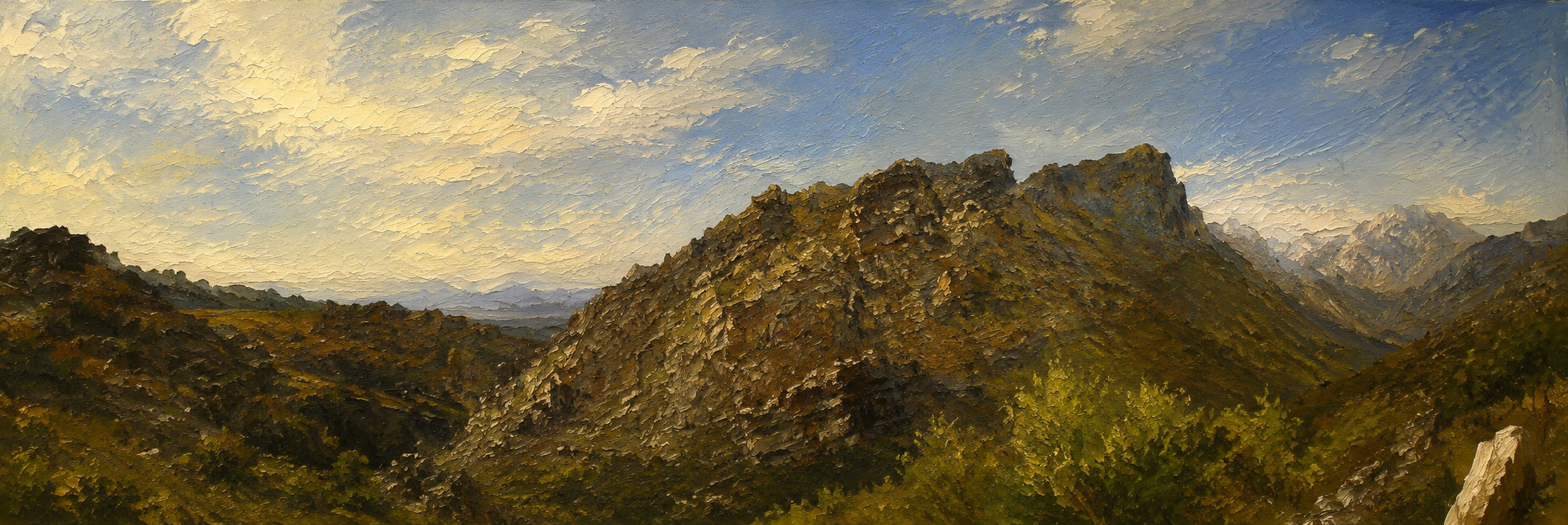
On the road back I could not help smiling. What folly is this drivers—to cross from one side of a mountain to the other, only to look upon a limit? Before rejoining the R43 I stopped by the bridge to photograph the far ranges, caught my breath, drank some water. Limit Peak stood before me, and two lines from the Caigentan came to mind: "Rich flavours are not the true taste; the true taste is plain. The extraordinary man is not the perfected man; the perfected man is ordinary." The plain and the ordinary: these test the furthest limits a life can reach. "Shall I remain honest, simple and true? Or wear out my days in endless courtesies? Shall I clear the weeds and till by my own labour? Or court the great in pursuit of a name?" With these questions in Divination, Qu Yuan probed the limits of a lifes own worth. Why cross from one side of the mountains to the other? Qu Yuan had seen through this absurd little game two thousand years ago—and I? His four questions rode with me through the passes, while heaven and earth answered only with the murmuring of the stream.
Another thirty kilometres along the R43 led straight to Ceres, the road turning fold after fold through the peaks. A sign named the pass: Michells Pass. Jagged stones crowded the ridges once more. I paused briefly for a photograph, filled the tank, and drove on. A sign pointed left for Citrusdal; I followed it, with a hundred-odd kilometres ahead. As the R303 began to climb, the land lifted steadily; I worked up through the gears, never urging the throttle, while orchard after orchard unfolded along the way, green beyond counting. Having driven through the town itself, I wondered: would the green unveil its secret today?
Ceres, who gives the town its name, is the Roman goddess of agriculture and the harvest, counterpart of the Greek Demeter—Great Mother of the earth and wife of Jupiter, king of the gods. To Jupiter and the goddess was born Persephone, a beloved daughter at whose presence flowers burst into bloom and life quickened everywhere. The gods—Apollo the sun god among them—vied in pursuit of her. Beauty enough to bring the gods to their knees—yet on their knees, not one of them won her heart. But beauty so given is trouble foretold, and even the only daughter of the Earth Mother could not slip the coils of fate. One day, without warning, a black mist rolled up. A gust burst from Mount Etna in Sicily, and in an instant powerful black horses charged forth. Swifter than the telling, Pluto, lord of the underworld, seized Persephone as she wandered rapt among the flowers. The earth split open and closed again—come without shadow, gone without trace.
Ceres searched and searched; her daughter had vanished none knew where. She asked in every quarter, and no god could tell her, until at last word came from the sun god. Plutos black smoke had darkened heaven and earth for barely an instant—but even an instant could not escape the suns gaze. Learning the truth, the Great Mother stormed before Jupiter with her charge against the lord of the dead: "That scoundrel brother of yours has stolen my precious daughter—now, how do you propose to settle this account?" A family quarrel admits no judgment; almighty Jupiter was powerless, and answered with silence. Heartbroken, the Great Mother laid down her divine office, abandoning the earth to drought, leaving the trees and grasses to wither as they would. Day upon day, the land without Ceres brought forth no rice, no golden wheat; a bitter winter of cold winds and relentless rain left not a blade of grass alive. At last Jupiter could look away no longer and came forward himself to mediate. Pluto agreed: his wife would dwell half the year in the underworld and half the year in the world above. When the daughter returned, Ceres rejoiced and the earth revived; when the daughter departed, the mother grieved and the land lost its life. So the seasons began their turning—heaven and earth for a stage, reunion and parting scene upon scene—for the gods, in the end, are not so different from ourselves.
Looking out, I saw ponds of clear water scattered through the green fields—tears of joy, surely, at a reunion long deferred. And look: the daughter of the earth had left her traces here; wherever her feet had passed, the orchards stood heavy with fruit. The vineyards were thinning now; the orchards multiplied. One of South Africas fruit juices bears the very name of the town—Ceres. My favourite is Secrets of the Valley: sweet and tart at once, like grape yet like cherry, with a faint scent of little red plums. With every sip of the valleys secret, I seem to taste the joys and sorrows of the gods.
Along the road, orchard after orchard bore the same sign: Dutoit—so strangely familiar. A few turns of memory, and it came to me at last: the crates of apples in the produce market, most of them stamped with the great name of Dutoit. Slow of me, not to have seen it sooner. A search told me that Dutoit was the family name of Gysbert du Toit, who—clearing the weeds and tilling by his own labour—laid the foundations of the fruit industry here more than a century ago. His descendants carried the inheritance further still, until it became a mainstay of the countrys exports. And I thought: surely Dutoit must be a daughter of Ceres.
The R303 climbed on. After a run of switchbacks I reached Gydos Pass and looked out at the town of Ceres resting where the peaks joined. I gazed a long while, and an aria of Berlioz came back to me—O blonde Cérès:
when you adorn the fallow earth
with the living splendour of green,
how much joy you bring.
The old farmer and the shepherd boy
give thanks for your gifts,
for the abundance you promised.
O golden Ceres,
when you adorn the fallow earth
with the living splendour of green,
how much joy you bring.
Birds pause in quiet shyness;
lambs play upon the fields;
a soft breeze crosses the plain,
bringing a breath of softness,
singing of your gifts.
O bountiful Ceres,
when you adorn the fallow earth
with the living splendour of green,
how much joy you bring.
It was my first time on the R303. The roadside still belonged to Dutoit; every few kilometres another blue farm dam appeared, and a few white clouds drifted overhead. The town of Ceres fell farther and farther behind as I followed the map northward. After some eighty kilometres the road narrowed. The green of the orchards slipped away into the distance; mountains of layered stone rose one after another, and the land grew wilder as it went. The tarred surface gave out, and yellow earth and loose gravel took its place. The wheels ground hard against the grit; the undercarriage shuddered over every rise and hollow; within a few short kilometres the country had changed utterly. The landscape had been graceful; the barren ridges ate it away in a moment, and dust boiled up off the gravel behind the car. Nothing on the map had marked the state of this final stretch—I had not looked for it. Alone with the car beneath an immense sky: driving through desolation and solitude. The tumbled, scattered rocks were water in motion; the gravel ridgelines were the crests of waves; and I surged on through a tide forever on the verge of breaking.
Amid these criss-crossed hills of broken stone, where the ages themselves had split the mountains, perhaps Pluto would not appear. The thought had barely risen when another answered, mocking: "You are no daughter of Ceres, beguiler of gods—only a fool."
The road was uncertain, the country harsh; a chill came in on the wind, and a shiver ran through me. There was no pressing the throttle here—only a slow creeping forward, every nerve gathered, watching for potholes, steering wide of stones that could ruin a wheel. Ceres, town of the goddess, lay a hundred kilometres behind; no one would hear my cries if Pluto carried me off. So the journey jolted on: a short twenty kilometres devoured a full hour, my feet shuttling between clutch and brake, shifting gear after gear to bargain a rhythm with the road, sweat gathering in my palms and on my brow. Seven parts exhilaration, three parts fear—that was the true taste of it.
The mountain road ran desolate. A few kilometres more, one more bend—and suddenly a sweep of green, a scatter of farmhouses before my eyes. The green gave hope; Citrusdal could not be far. Still I kept off the throttle. Then the rough track changed: tar returned by degrees, and the road ran smooth again. Coming out, I passed the thin crowds of the village centre, crossed two intersections, and joined the N7. Only then did my heart truly settle.
So I turned south on the N7 for home. At the junction I stopped and looked back at the far mountains—it was from there I had just come down. Twenty short kilometres of desolation and solitude. I let out a breath: the deep mountains abandon the years.
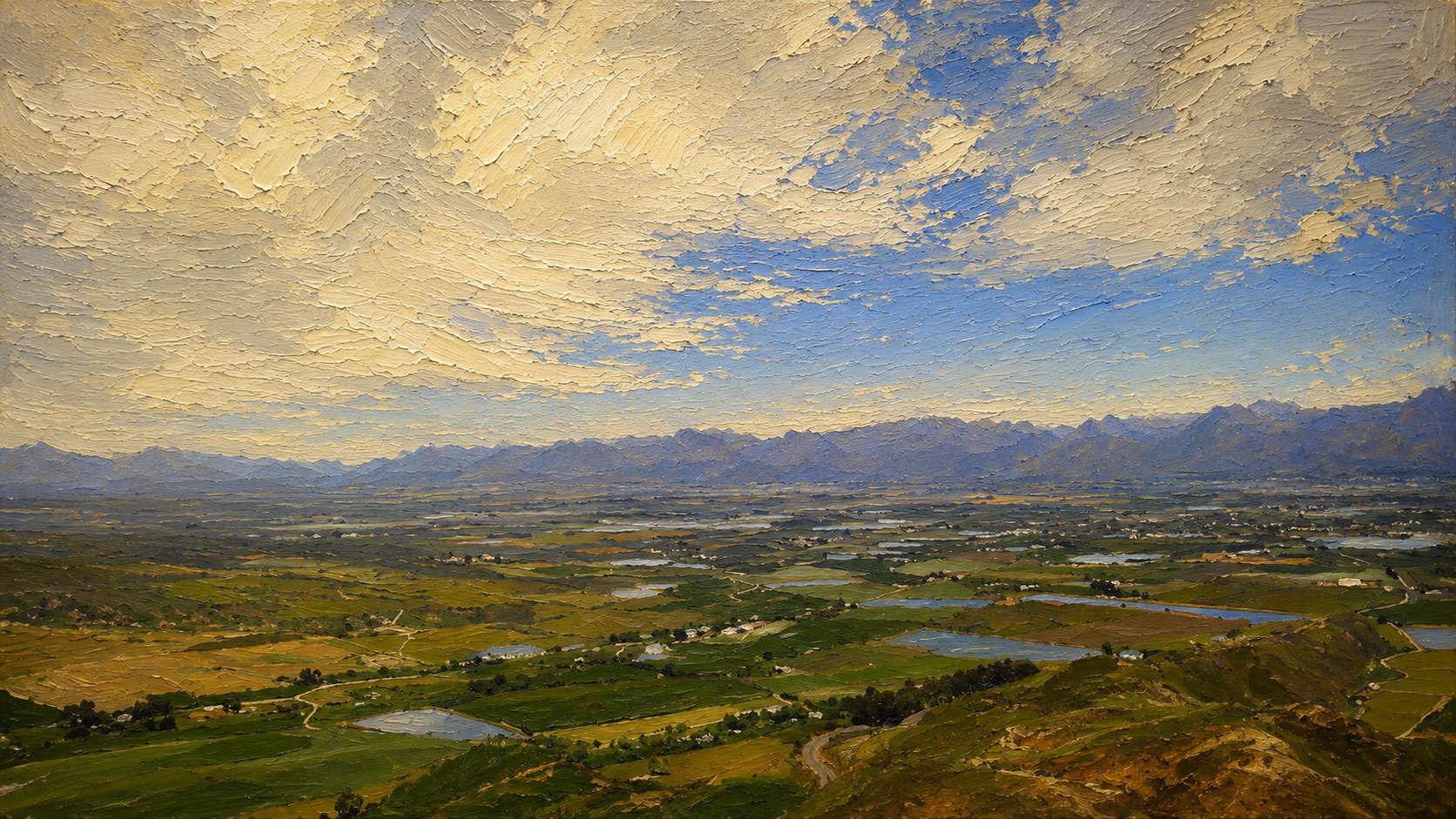
The land still rose and fell, but cresting the last hill and coming down, I found the plains flung wide before me, and the weariness of the trek fell away at a stroke. Sky high, earth far; I let my gaze run. Pale green mingled softly into gold—so lovely, so much at ease. The wind of the open country blew past, carrying that landscape—green deepening past orange—straight into the heart: sight without end, delight without bound. In whatever remembering comes after, this impression will not fade; I leave it in keeping, for another journey into the wild hills.
when you adorn the fallow earth
with the living splendour of green,
how much joy you bring.
Spring had come round again. The joy of the old farmer and the shepherd boy was never mine to know: this self of mine is no more than a traveller pausing a moment on a winding, rising road, catching as it can the wonder of first meeting the goddess. I let my eyes run to the horizon, opened my heart to the land, and marvelled at the golden spaciousness before me. Eenkekuil is the name of this district—the greatest pastureland and granary of the Cape, and so too its greatest source of milk and cheese. Whether the milk I drink each day comes from here, I cannot say; I only know that the flavour of fresh milk carries this vastness held in memory. I stayed there a long while, quietly gazing—only gazing.
Then the N7, and the road home. Nearly two hours driving brought me back to the outskirts; the sun had set, and dusk had come. However far the journey, however beautiful the road, all travel returns at last to the embrace of home. The desolation and solitude the valleys had taken in, the gold and green the plains had set free—all dissolved into the warmth of home. Supper, a little rest; and in deep sleep, beneath a sky full of stars, the star Ceres flickered—now hidden, now shining.


限會員,要發表迴響,請先登入
 2樓. 海天一景2026/07/18 07:26
很寫實,比照片還逼真!
-
1樓. 海天一景2026/07/18 07:24您畫得真棒!很寫實,比照片還逼真!這些圖片是我下達指令給AI,原來照片轉換過來的。 深河 於 2026/07/18 14:24回覆


