《翻嶺淚》
— 初寫於2010年;潤飾於2026年 —
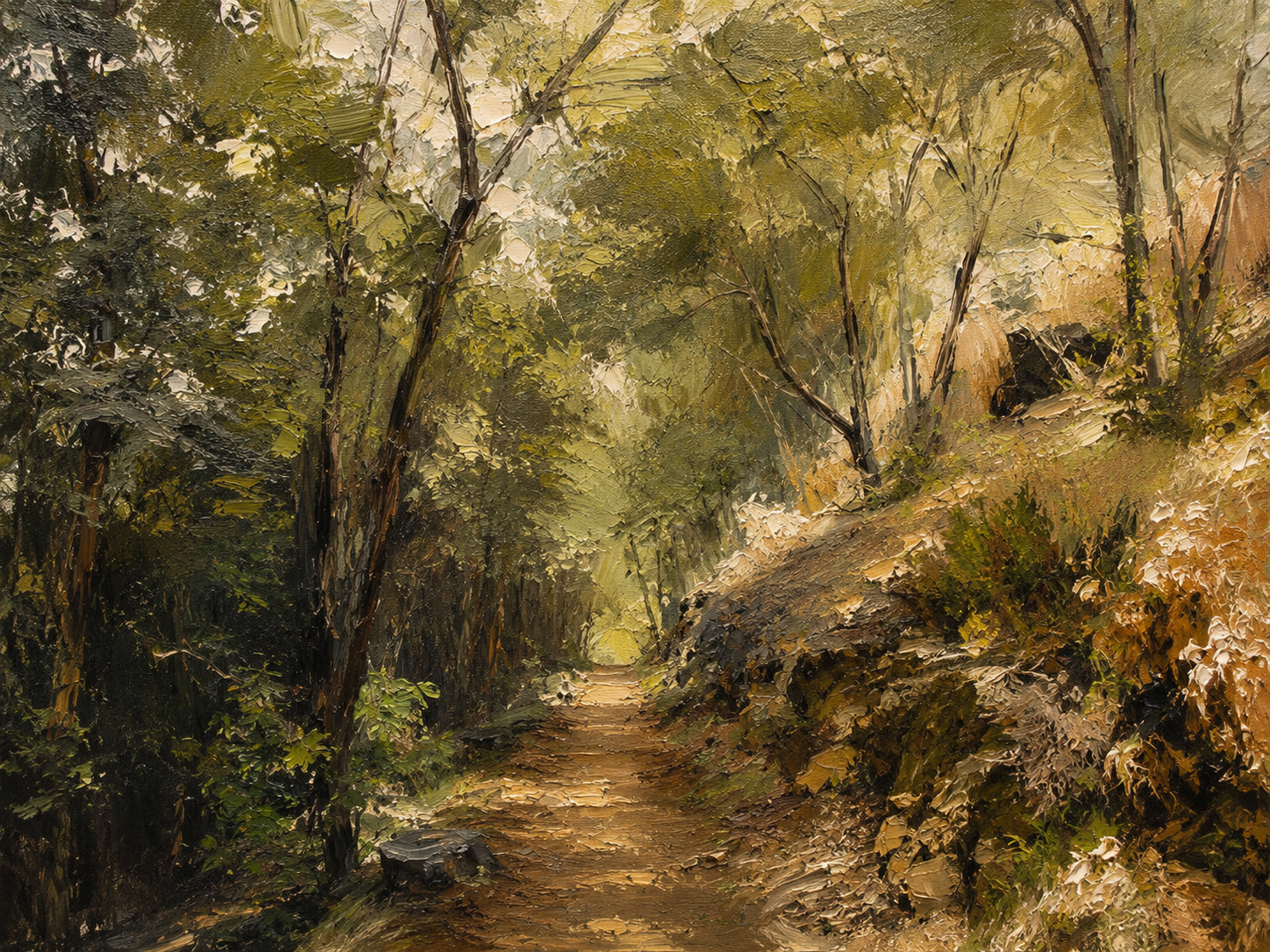
我走上獨自探索的路,不知欲向何方,而林徑唯有一條,遂尋著腳下褐土小路,走向幽靜。剛才一路上坡,每步跨越,試著逃脫地心引力的羈絆;如今平緩向前,每步踏出,朝向林深不知處的喜悅前進。木頭棧道在腳下向前延伸,一階階堆砌一步步,參天的濃密樹林步履而過。層層疊疊綠蔭中恣灑的溫暖晨光,金黃與翠綠隨著微風,勾染一幅印象,深藏心底的印象。棧道也有盡頭,盡頭處亂石堆疊,奔馳著小瀑,水量不多卻傳來轟隆轟隆的聲響。山澗不知流來何處,也不知逝去何方。我曾坐著,默視流水濺濕山岩,風泉滿清聽。掬一把清泉,冷冽,洗淨跋涉的容顏。
再次林蔭棧道,腳步停留在一處休息,此處類似八卦陣行,最初有此設計不知為何,迥然有別於歐洲也不太非洲,形狀卻是熟悉。莫非是野餐區(Picnic Area)?來時曾問旅人魔鬼峰如何前去,他告訴我一路走向野餐區,捨棧道往上步往。定神找到路標,野餐區前棧道前確實有綠苔斑駁的石塊,箭頭指上,寫著紐蘭谿壑(Newlands Ravine)。於是捨了棧道,隨意散落的岩石迎接我,自然湊成階階石梯。樹蔭更濃,綠意更深,寂寞更靜。心跳加快了,呼吸急促了,手足攀爬石堆,仔細辨尋方位,隨著小徑之形向上,慢慢樹林漸少,野花漸多,不知名的種類到處都是,心知已近山巔。
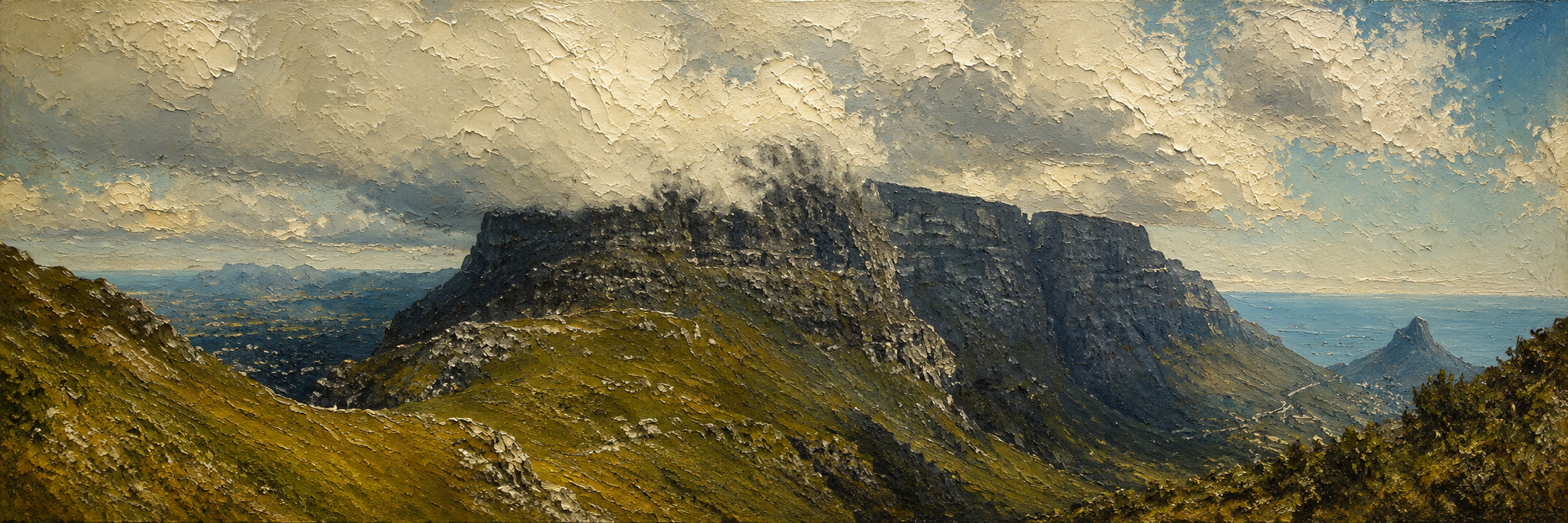
回眸來時的路徑不復辨晰,蔥鬱只有樹林一片。開普平原的遼闊一覽無遺,往南順著山脈延伸,目光凝視更遠的好望角,往東視野則停留跨不過的極限之巔。往西數尺,幾步之遙,桌山矗立眼前,獅頭山之後眺見大西洋深遠。向北,無疑是魔鬼峰的背面,雲霧飄渺間。山水俯仰所見,人生未料在此,匆匆十餘年。
谷壑逝浮雲,曾流翻嶺淚。
不僅是即逝的浮雲,人在跨越人生關嶺、驀見不同景色,也會流下悄然淚水。
我在桌山東嶺與魔鬼峰前的鞍帶地區,停留不短時間,凝視著桌山平生最近距離,望見壯麗花海前所未見。依稀記得,抵達山鞍已過午時,山風吹來微薄春寒,飄渺雲霧啊,繚繞雙眼,隱沒花叢的來時路早不復見。必須撥開層層茂密的野花,才能緩緩向前。腳下高低不平的岩塊突兀貧瘠沙地,眼前是結實剛硬、不畏困苦環境的株株野花。清香與色澤與平地無異,生命力卻更旺盛。下山後搜尋網路才知野花統稱芬博斯(Fynbos),這是全世界六大花國之中,獨屬南非開普地區的特有花種。芬博斯以生命力強韌為世人欣賞,對環境不貪求、不苛求、不強求;隨遇而安,是以樂天知命。南非國花「帝王花」(King Protea),正屬此類。
芬博斯生命力強,存活期也長,其他花類望塵莫及。瀏覽維基百科發現芬博斯還有特殊本領:不但藉由蟻類傳遞種子,更藉由熱火溫度使種子發芽。這也能解釋他們為何硬厚,不似平地鮮花的嬌弱,蘊藏其中的種子熬過焚熱,進而新生發芽。浴火重生的芬博斯是花類中的鳳凰。佇立桌山鞍帶的我,走過芬博斯花海,是該慶幸:神鳥自古不得見,神花當時在眼前。飄渺煙靄,神花隨清風搖擺晃動,我的心也一樣啊!
淵明先生採菊東籬下,悠然見南山,而我賞花放逐中,悠然見桌山。近距離如此望見桌山,沒有身在此山的遺憾,只有心神舒暢的快感。低頭賞花,抬頭望山,身沒雲間,踽踽獨行。
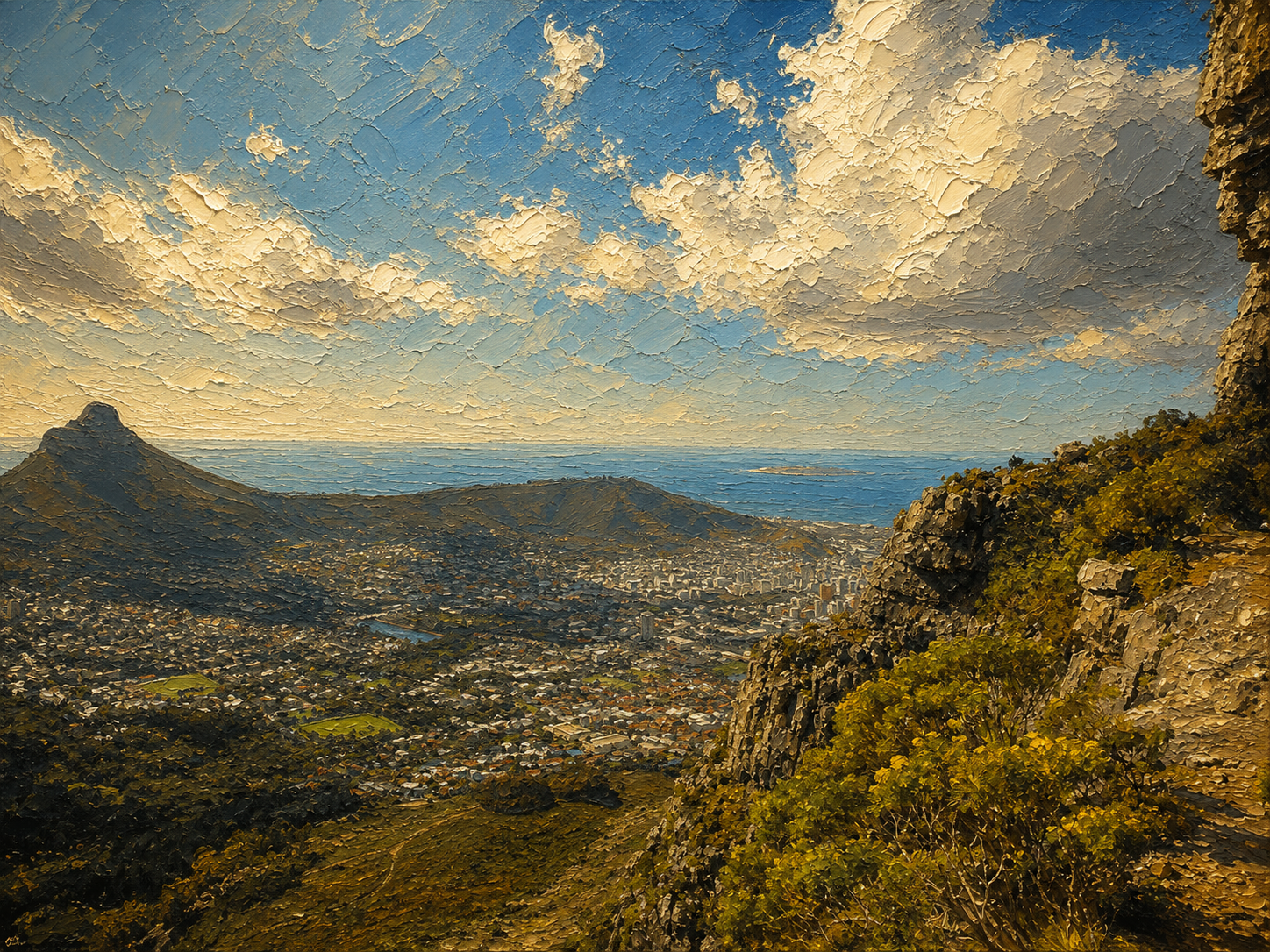
走向魔鬼峰,找到碎石道,鼓起勇氣再次舉步向上,走過一階又一階,時而轉身望向桌山,端倪山景在光影中變化。愈上視野愈寬,復見山脈綿延盡處,好望角尚在遠方更南,從這角度捕捉群山在兩大洋相會。鞍帶出發,腳程莫約半小時,抵達魔鬼峰巔,俯瞰底下開普敦城市區,粼光閃閃中羅賓孤島,曼德拉曾在此處關禁。
過申時,須下山,心中盤算是否循著原路回程。為了捕捉多一點風景,內心冒險精神卻蠢蠢欲動,遂繞遠路自山鞍從魔鬼峰背面走向正面,踏著最高沿線走過峭壁,再順著之字路型而下。峭壁路段最是驚險,懸崖側邊只能小心翼翼側身緩緩向前,下回知道要避開,不能再走此路。一路東南,莫約半時辰,抵達來時的國王碉堡。於是下坡返回羅德紀念堂,酉時太陽迅速落下大西洋,桌山東嶺已無夕照,逐漸轉黑,而我抓住最後暮色,駕車駛離。
四個時辰的腳程,身體相當疲累,心靈卻是充沛。轉眼半年已過,半年間偶然踏上羅德紀念堂的健行步道,僅僅流連於山腰景色,未再深入其中。這段期間職場發生戲劇性的變化,世界既然不因我的想法而改變,面對種種不能改變也只能汲取芬博斯三不精神:不貪求、不苛求、不強求。
曾經的我走上獨自探索的路,不知欲向何方,而林徑唯有一條。隱逸林中無榮辱,道義路上無炎涼,菜根譚也指出一條路途。許我在隱逸林中不忘道義路,但無榮辱、亦無炎涼。
Tears Crossing the Ridge
— First written in 2010; revised in 2026 —
The laughter of children before the Kings Blockhouse gradually faded.
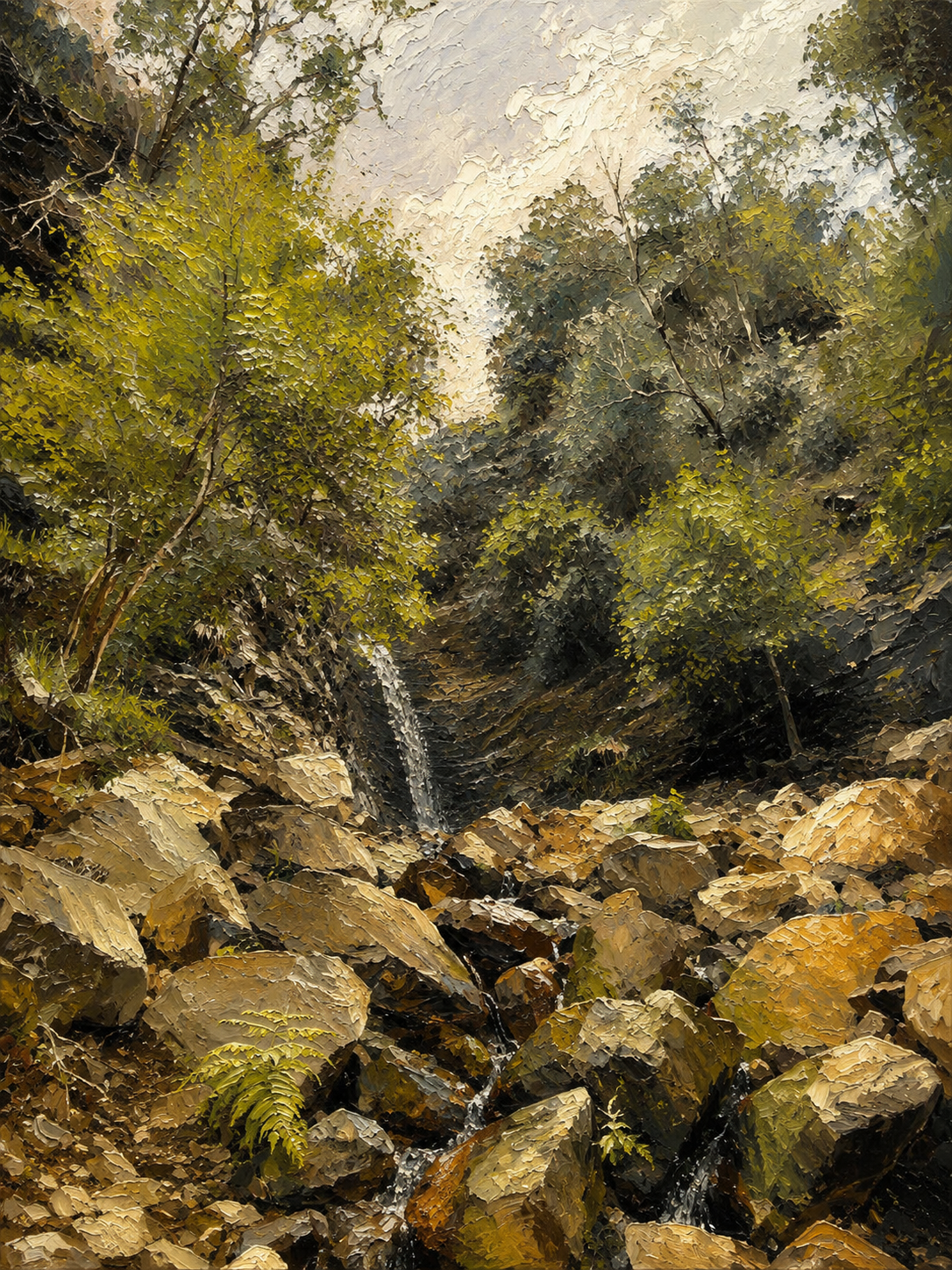
I set out on a path of my own exploring, not knowing where it would lead; and there was only one trail through the woods, so I followed the red-brown earth underfoot toward the quiet. A little earlier the way had been all uphill, each step a try at slipping gravitys hold; now the ground ran level, and each step went forward toward the joy hidden in the unknown depths of the forest. The wooden boardwalk stretched on beneath my feet, stair laid upon stair, step after step, and the towering, close-grown trees passed by my stride. Warm morning light spilled through the layered green; gold and emerald, stirred by the breeze, painted an impression—an impression stored deep in the heart. The boardwalk, too, had its end, and at the end lay tumbled rocks with a small cascade racing over them, slight in volume yet sending up a rolling rumble. The mountain stream came from no knowing where, and went no knowing where. I sat there once, watching the water splash the rock wet, wind and spring filling the ear with clear listening. I cupped a handful of the spring—cold, piercing—and washed the journey from my face.
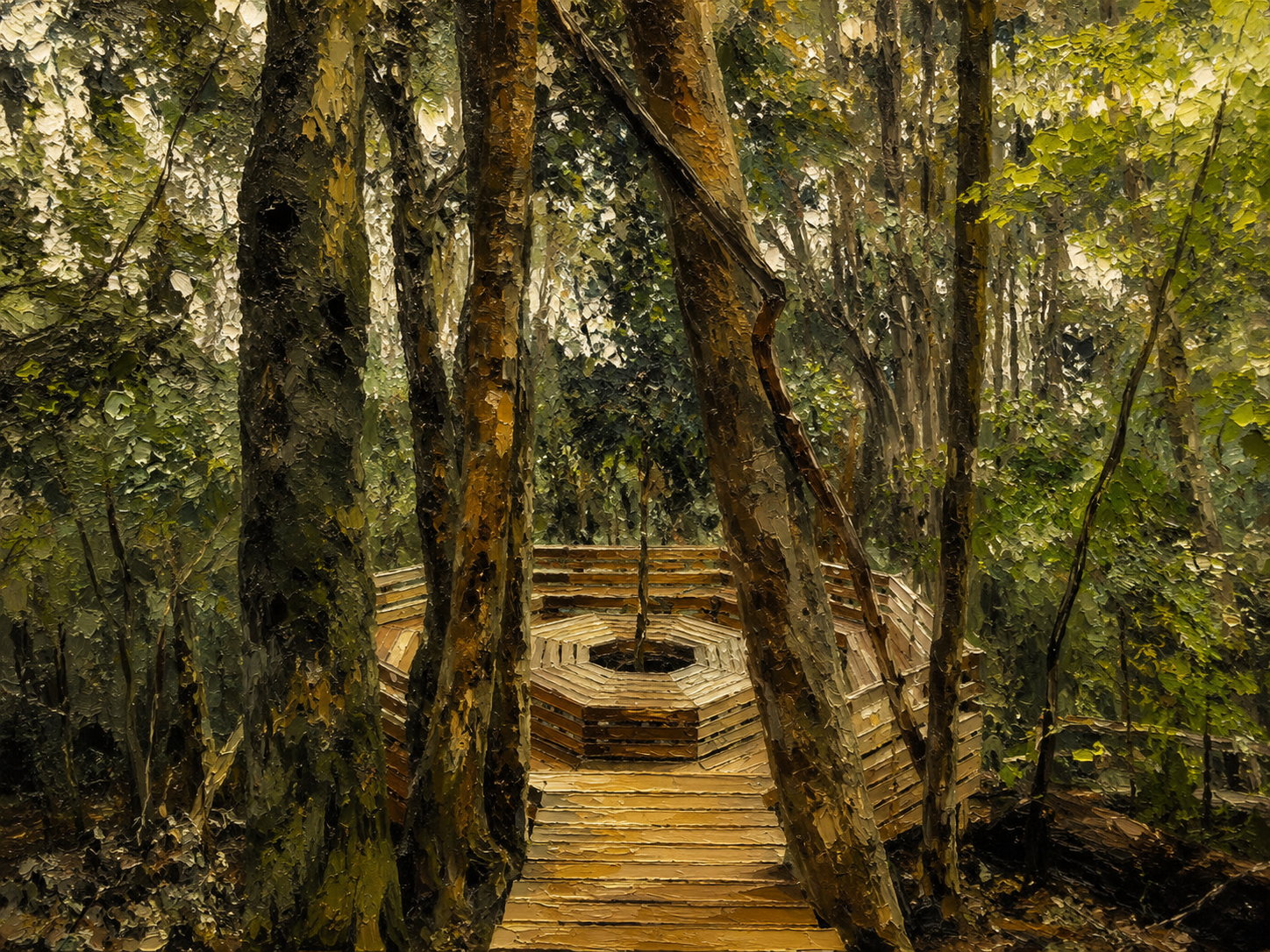
Back on the shaded boardwalk, my steps paused at a resting place. It was laid out like a bagua—the eight-sided figure of an older cosmology I knew—neither European nor quite African, yet the shape was familiar. Could this be the Picnic Area? On the way in I had asked a traveller how to reach Devils Peak; he told me to walk as far as the picnic area, then leave the boardwalk and climb. I steadied myself and found the sign: before the picnic area, beside the boardwalk, there was indeed a stone mottled with green moss, its arrow pointing up, reading Newlands Ravine. So I left the boardwalk, and scattered rocks came out to meet me, falling naturally into a stair of stone. The shade grew thicker, the green deeper, the solitude stiller. My heart quickened; my breath came short. Hands and feet worked over the rocks, searching out my bearings, following the shape of the track upward. Slowly the trees thinned and the wildflowers multiplied—nameless kinds on every side—and I knew the crest was near.
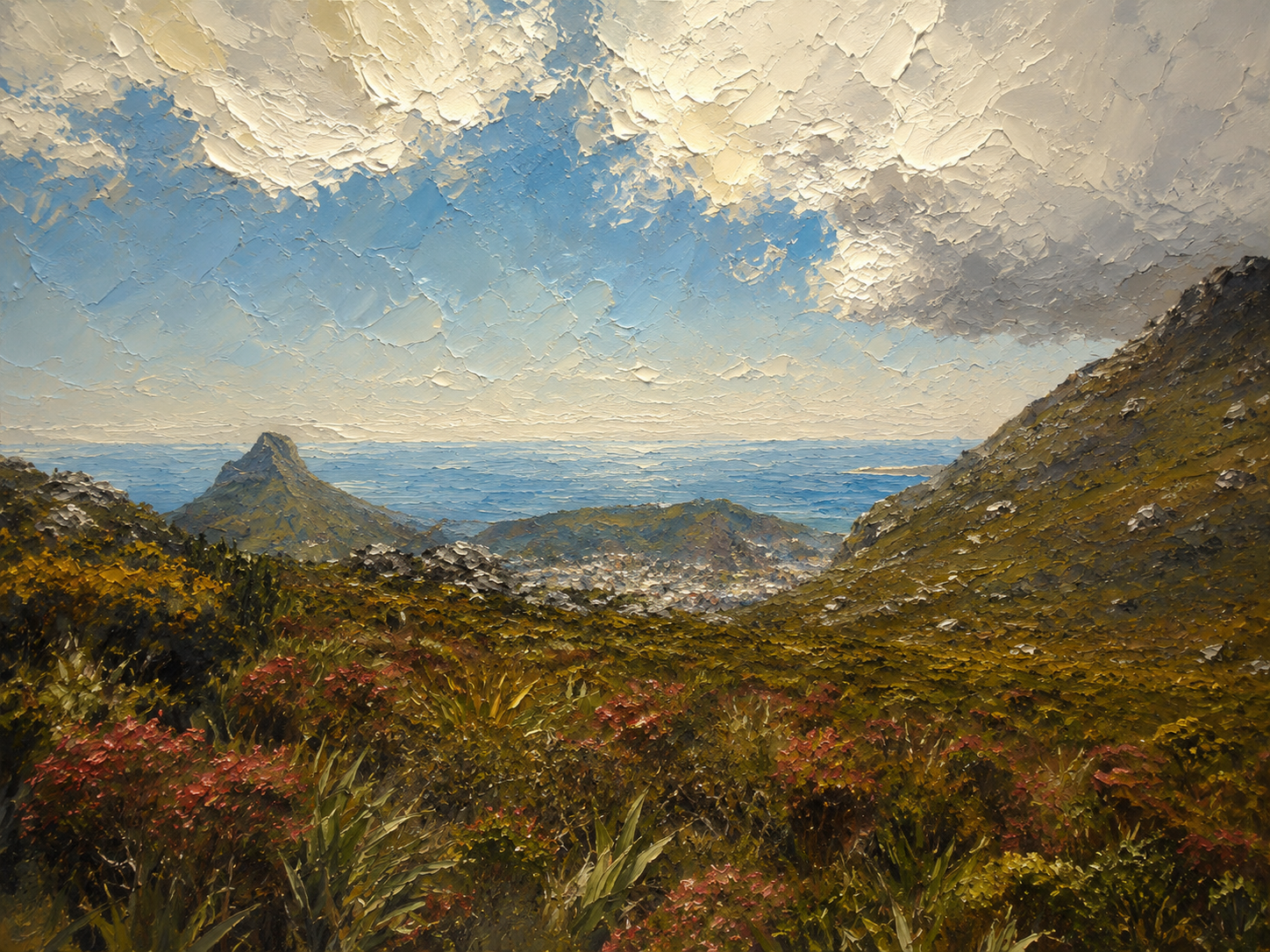
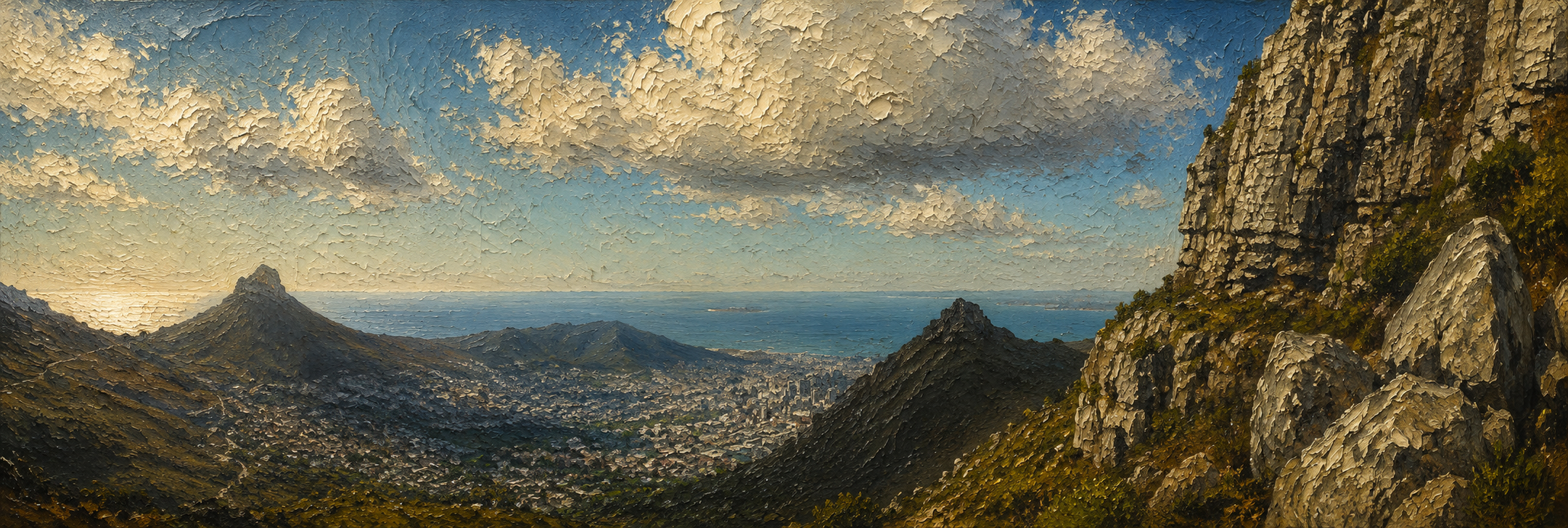
Looking back, the path I had come by could no longer be made out: only woods, one unbroken green. The breadth of the Cape Flats lay open below. Southward, along the running spine of the range, my gaze went on toward the far Cape of Good Hope; eastward it stopped at Limit Peak—the ridge I had once named, and could not cross. A few paces west—steps away—Table Mountain stood before me, and beyond Lions Head, the deep reach of the Atlantic. To the north, unmistakably, the back of Devils Peak, in drifting cloud. Hills and waters, taken in at one lift and fall of the eyes; a life, unforeseen, come to rest here—ten-odd years, so swiftly gone.
their traces leave the hills and waters drunk;
down through the ravines the floating clouds flow on,
as tears once flowed in crossing of the ridge.
It is not only the passing clouds. Crossing one of lifes ridges, suddenly beholding a landscape never seen before, we too will shed our quiet tears.
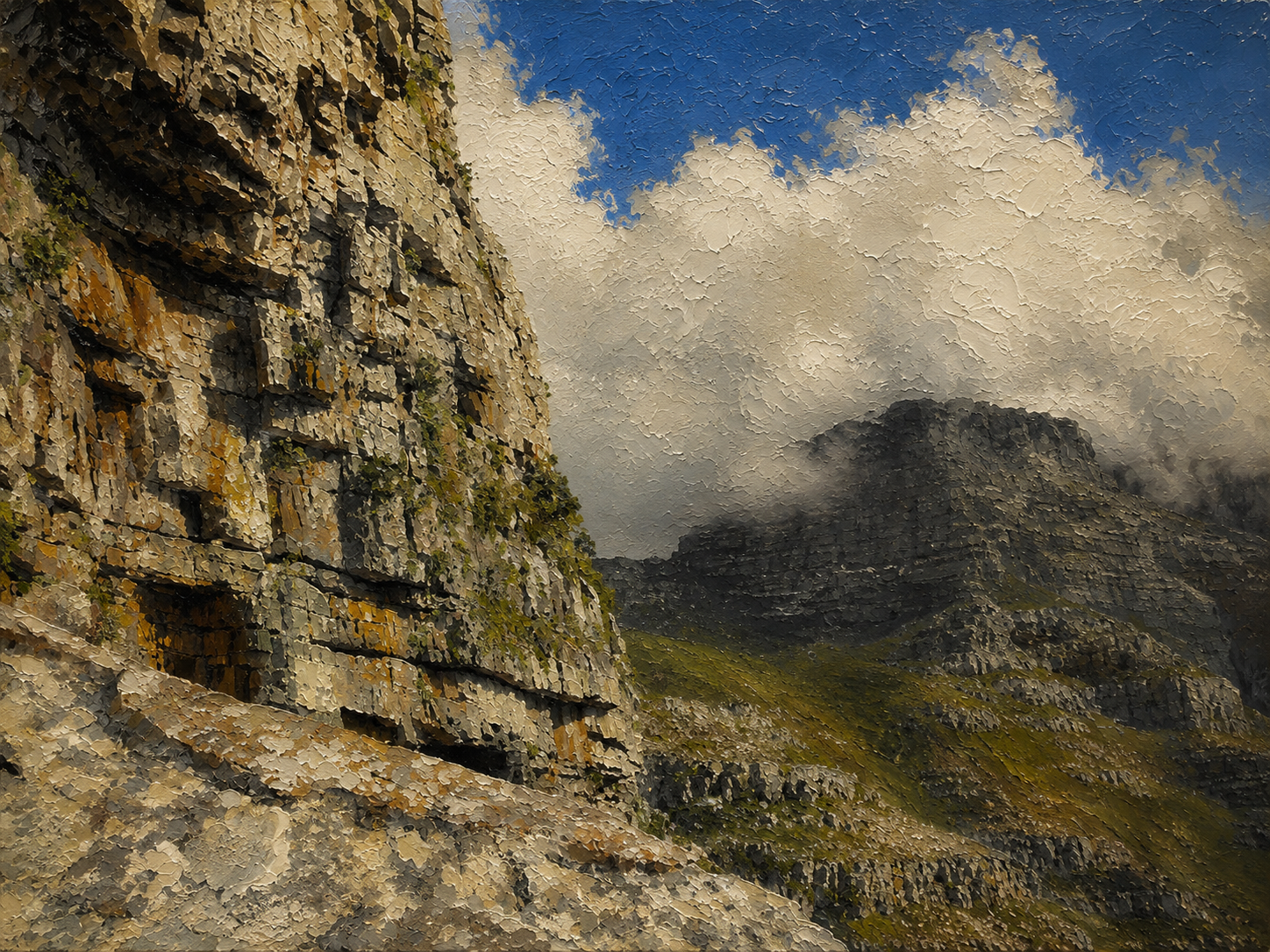
I stayed a long while on the saddle between Table Mountains eastern ridge and Devils Peak, gazing at the mountain from the nearest distance of my life, looking on a splendour of flowers never seen before. As best I recall, it was past midday when I reached the saddle. A thin spring chill came on the mountain wind, and the mist—ah, the drifting mist—wound about the eyes; the path through the flowers was long gone. Only by parting layer after layer of thick wildflowers could I inch forward. Underfoot, uneven juts of rock and barren sand; before me, sturdy, hard-set wildflowers, unafraid of their harsh station. In scent and colour no different from the flowers of the plains—only fiercer in their will to live. Only after coming down the mountain did I search and learn that these flowers are known together as fynbos: of the worlds six floral kingdoms, the flora that belongs to the Cape of South Africa alone. Fynbos is admired for the toughness of its life, and the secret of that toughness is in its asking little, demanding little, forcing nothing; it settles where it falls, and so is content with heaven and at peace with fate. South Africas national flower, the King Protea, is of this kind.
Fynbos is strong of life and long of days—other flowers cannot come near it. Browsing Wikipedia, I found it has a stranger gift still: not only do ants carry its seeds into the earth, but the heat of fire wakes them into sprouting. That would explain why they are so thick and hard, so unlike the frailty of lowland blooms: the seed held within outlasts the burning, and puts forth new life. Fynbos, reborn from fire, is the phoenix among flowers. Standing on the saddle of Table Mountain, having walked through that sea of fynbos, I could only count myself fortunate: the bird of legend has gone unseen since antiquity; the flower of legend stood before my eyes that day. In the drifting haze the flowers swayed and rocked in the clear wind—and my heart with them!
Master Tao picked chrysanthemums by the eastern hedge and, at ease, saw the southern hills; and I, wandering the flowers of my exile, at ease, saw Table Mountain. To see it from so near brought none of the regret of standing too deep within a mountain to see it—only the free delight of a lightened spirit. Head down to the flowers, head up to the mountain; body lost in cloud, walking alone.
I turned toward Devils Peak, found the scree path, and gathered myself to climb again, step after step, turning now and then to look back at Table Mountain, studying its face as it changed in the light. The higher I went, the wider the view: once more the range ran out to its far end—the Cape of Good Hope farther south still—and from this angle the massed peaks stood at the meeting of two oceans. From the saddle, about half an hours walking brought me to the summit of Devils Peak: below, the city of Cape Town; and in the glittering water, Robben Island alone, where Mandela was once held.
The afternoon wearing late: time to go down. I weighed returning the way I had come; but wanting to catch a little more of the view, I took the long way round—from the saddle, crossing from the back of Devils Peak to its face, keeping to the highest line along the cliffs, then down the zigzag path. The cliff stretch was the most perilous of all: along the sheer edge one could only turn sideways and inch forward with every care. Next time I would know—never this path again. Southeast all the way, about an hours going, and I was back at the Kings Blockhouse where I had begun. Then downhill to Rhodes Memorial. By the hour of sundown the sun was dropping fast into the Atlantic; the eastern ridge of Table Mountain had lost its light and was going dark. I caught the last of the dusk, and drove away.
Eight hours on foot: the body thoroughly spent, the spirit brimming. Half a year has passed in a turn of the eye. In those months I have now and then walked the trails above Rhodes Memorial, but lingered only on the lower slopes, never going deep again. In the same season my working life took a dramatic turn. Since the world will not change for my thinking, before all that cannot be changed there is only the fynbos and its lesson: asking little, demanding little, forcing nothing.
Once I set out on a path of my own exploring, not knowing where it would lead; and there was only one trail through the woods. In the forest of retreat there is neither honour nor disgrace; on the road of right there is neither warmth nor chill—the Caigentan, too, marks out a way. May I, deep in the quiet forest, never forget the road of right—yet with no honour and no disgrace, no warmth and no chill.




限會員,要發表迴響,請先登入


