未再回頭
(一)豪特灣
上次登山健行不記得什麼時候了。溫暖的四月天,秋日的太陽溫暖卻不燙熱,風兒微微帶著涼意。若想親近大自然,今日正是時候。趁著午後尚有餘裕,駕車前往豪特灣。這裡是漁港,以新鮮海產與漁市聞名,亦可乘船前往海豹島,看礁石孤立大海,上千海豹蝸居棲息。
豪特灣同時也是桌山西岸通往好望角的必經之地。沿岸的查普曼大道蜿蜒曲折,一百多個彎道反覆折轉,處處臨崖見海。峰迴險處見驚奇,山海之間不斷迂迴向南,可謂開普半島西岸最美麗的風景。今日未再南行,於收費站前折返,因為登山入口,就在此處東砲台(East Fort)。
(二)東砲台
毀於叢林大火的東砲台,如今只剩斷垣殘壁,大砲不見蹤影。據聞此處為荷屬東印度公司設防之地,用以守望西岸海域。十八世紀末年,歐洲局勢動盪,法國革命席捲而來,荷蘭政局劇變,保皇黨與共和派針鋒相對,舊有體制迅速瓦解。流亡英國的奧蘭治親王發出親筆《邱園信函》,命海外殖民地與英軍合作,防止與革命黨親近的法國勢力南下。
1795年7月,英軍艦隊抵達豪特灣海域,繞過好望角來至梅森堡海域(Muizenberg)。開普內部意見分歧,是拒或迎,最高首長 Sluysken 與將軍 Gordon 各持立場。G 將軍傾向遵循親王意旨,傾向迎合英軍為抗法之力;S 首長受法國革命思潮影響,更傾向於荷蘭共和派,視英軍為仇敵。奉命迎擊的將軍在猶豫中錯失先機,英軍在之後戰事與談判屢佔上風,局勢傾斜,最終開普易手。
荷蘭人第一次失去了開普。
而後責難紛至,敗北原因歸咎將軍一人,荷蘭士兵羞辱他、罵他是出賣開普的叛徒。更可恨者,他發現英軍並非盟友,而是打算實行強權佔領開普,乘機控制南大西洋咽喉。這位曾經熱愛非洲大地、精通多種族語言的將軍,進退兩難,其忠誠終於淹沒在眾人質疑聲浪,舉槍自盡。
驕傲的東砲台啊,英軍來時,否曾砲聲轟隆,寧可頑強抵抗?昔日你見過船隻一艘艘,從你面前駛過,從海角最西南向東轉去,駛向印度,駛向南海,駛向清廷門戶。孤獨的東砲台啊,你會怪罪將軍的抉擇嗎?你可知他的不戰,當時又保全了多少性命?
(三)黑焦溝
走過東砲台往南數百尺,即是登山入口。據說有條古道連接半島西岸的豪特灣與東岸的 Muizenberg,漁貨往來其間。「黑焦溝」(Blackburn Ravine),正是其中一段。
啟程時約下午兩點。起初十餘分鐘尚算平緩,大徑通往第一個 HT 標誌處,於此轉入小徑。之後地勢陡升,亂石與雜草掩沒路跡。久未健行,步履艱難,每行數步便需停歇。稍作調整後,身體漸漸適應,坡勢仍在,不復先前艱辛。
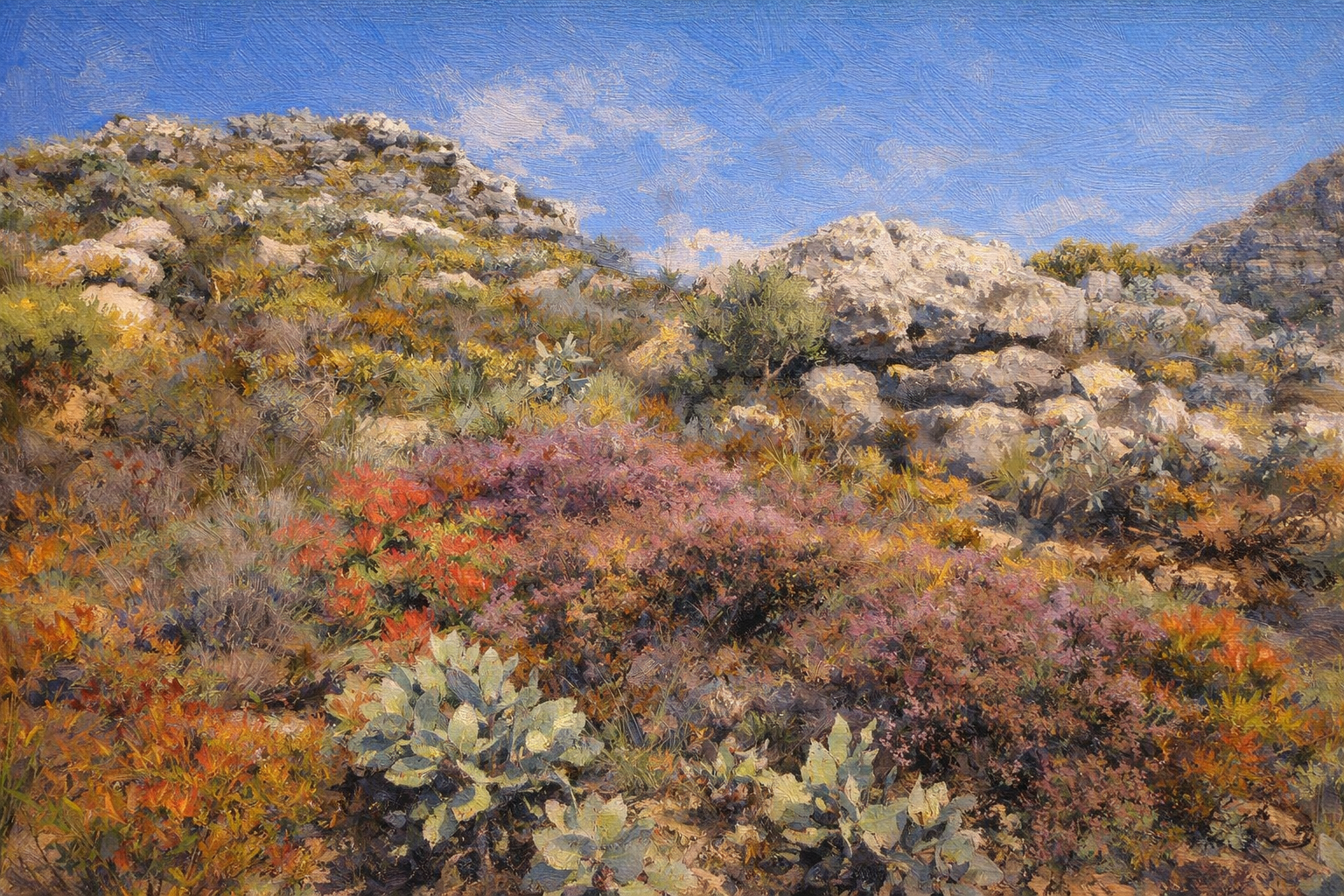
來到叉口,叉口左右各有途徑,向左是青綠的山巒,向右是壯麗的峰岩,當下直覺捨右取左,一路向青綠的山巒而去。既已選擇,不再回頭。
陡升路徑讓我一度以為已近峰巔,沒想到小徑綿延,一路指向山谷更深處。陽光燦爛,回頭望海,豪特港灣清楚可見;藍天無雲,向前凝視,翠綠山脈就在眼前。
「美麗天地,你在何處?再次歸來吧,大自然甜美綻放的年代。」
歸來吧,我已歸來,美麗天地啊,原來你不在何處,就在心中的寧靜安詳。
「行行復行行,遠方更遠方;愈流水愈清,愈流波愈亮。」
「淙淙逝水聲,如酒醉心腸;但問小溪水,水窮向何方?」
於是步步再前往,往更深的翠綠探望,腳下不是古驛道也無妨,我心自由,且在大自然懷中倘佯,汗水酣暢已無償。
(四)回望戈登灣
行至高處,凝望遙遠東方,藍藍的印度洋,地圖在心中指出與梅森堡遙遙相望的戈登灣(Gordon’s Bay),這塊以G將軍命名的港灣,戈登灣就在目視的盡頭。從大西洋一路走來遙望印度洋,思緒又回到遙遠的1795,感懷一段血淚歷史,行走一段荊棘路途。
未再前行,循原路折返。再次經過東砲台,大西洋夕陽餘暉,粼光逐浪翻滾向岸,恰似一朵朵荒嶺棘叢中迎風搖晃的野花,歌唱著希臘諸神的大美天地,而那歌聲順著淙淙流水,隨著風聲流過斷壁殘垣,磚瓦中聽見將軍的水窮何方。
1795荷蘭落敗大英,1895清廷落敗大和,1995此身前來開普,兩百年的思緒在倏忽之間:乾隆盛世將頹,開普孤壘將危,將軍執王子親筆,如握焚心之火,是不戰也,非怯戰也。
呼嘯風中,有人長嘆而去。
Never Looking Back
(2014, Revised 2026)
I. Hout Bay
It has been a long time since my last hike. On this warm April day, the autumn sun is gentle rather than scorching, and the wind carries a faint chill. If one wishes to embrace nature, today is the day. Taking advantage of the lingering afternoon light, I drive toward Hout Bay: a fishing port renowned for its fresh harvest and bustling markets. From here, one can sail to Seal Island to witness thousands of seals huddling upon isolated reefs in the vast ocean.
Hout Bay is also a vital gateway on the western slopes of Table Mountain leading toward the Cape of Good Hope. Along the coast, Chapmans Peak Drive winds and twists through over a hundred bends. Each bend revealed a fresh astonishment; the road meanders southward between mountain and sea, arguably the most breathtaking scenery on the western coast of the Cape Peninsula. Today, I do not venture further south. I turn back before the toll plaza, for the trailhead lies right here, at the East Fort.
II. East Fort
The East Fort, once ravaged by mountain fires, now stands as a collection of crumbling walls and silent ruins; the cannons have long since vanished. It is said that the Dutch East India Company established this post to watch over the western waters. In the late 18th century, as the fires of the French Revolution swept across Europe, the political landscape of the Netherlands shifted violently. Loyalists and Republicans stood in fierce opposition, and the old order rapidly unraveled. From exile in England, the Prince of Orange issued the "Kew Letters," commanding overseas colonies to cooperate with the British to prevent French forces—allied with the revolutionaries—from advancing southward.
In July 1795, the British fleet arrived in the waters of Hout Bay, eventually rounding the Cape to Muizenberg. Within the Cape, opinions were fractured: to resist or to welcome? The Governor, Sluysken, and the commander, General Gordon, held conflicting stances. Gordon leaned toward following the Princes decree, viewing the British as an allied force against the French. Sluysken, influenced by revolutionary ideals, leaned toward the Dutch Republicans and saw the British as enemies. The General, commanded to resist yet wavering in his conviction, missed the tactical window. In the ensuing skirmishes and negotiations, the British gained the upper hand. The balance tipped, and ultimately, the Cape changed hands.
The Dutch had lost the Cape for the first time.
In the aftermath, blame fell heavily upon the General alone. He was scorned by his own soldiers, branded as the traitor who sold out the Cape. Crueller still, he discovered that the British were not mere allies but intended to exert sovereign control over the Cape, seizing this strategic gateway of the South Atlantic. This general, who once loved this African land and mastered its many native tongues, found himself trapped between advance and retreat, both impossible. His loyalty was drowned at last beneath the rising tide of suspicion. He raised the pistol, and it was over.
O proud East Fort! When the British arrived, did your cannons roar in defiance? Did you watch the ships pass one by one before you, sailing from the southwesternmost tip toward the East—toward India, the South Sea, and the gates of the Qing Dynasty? O lonely East Fort! Do you blame the General for his choice? Or do you know that by not fighting, he spared untold lives?
III. Blackburn Ravine
A few hundred feet south of the East Fort lies the trailhead. Legend tells of an ancient track connecting Hout Bay on the west to Muizenberg on the east, once a path for the trade of fish. Blackburn Ravine is a segment of this old trail.
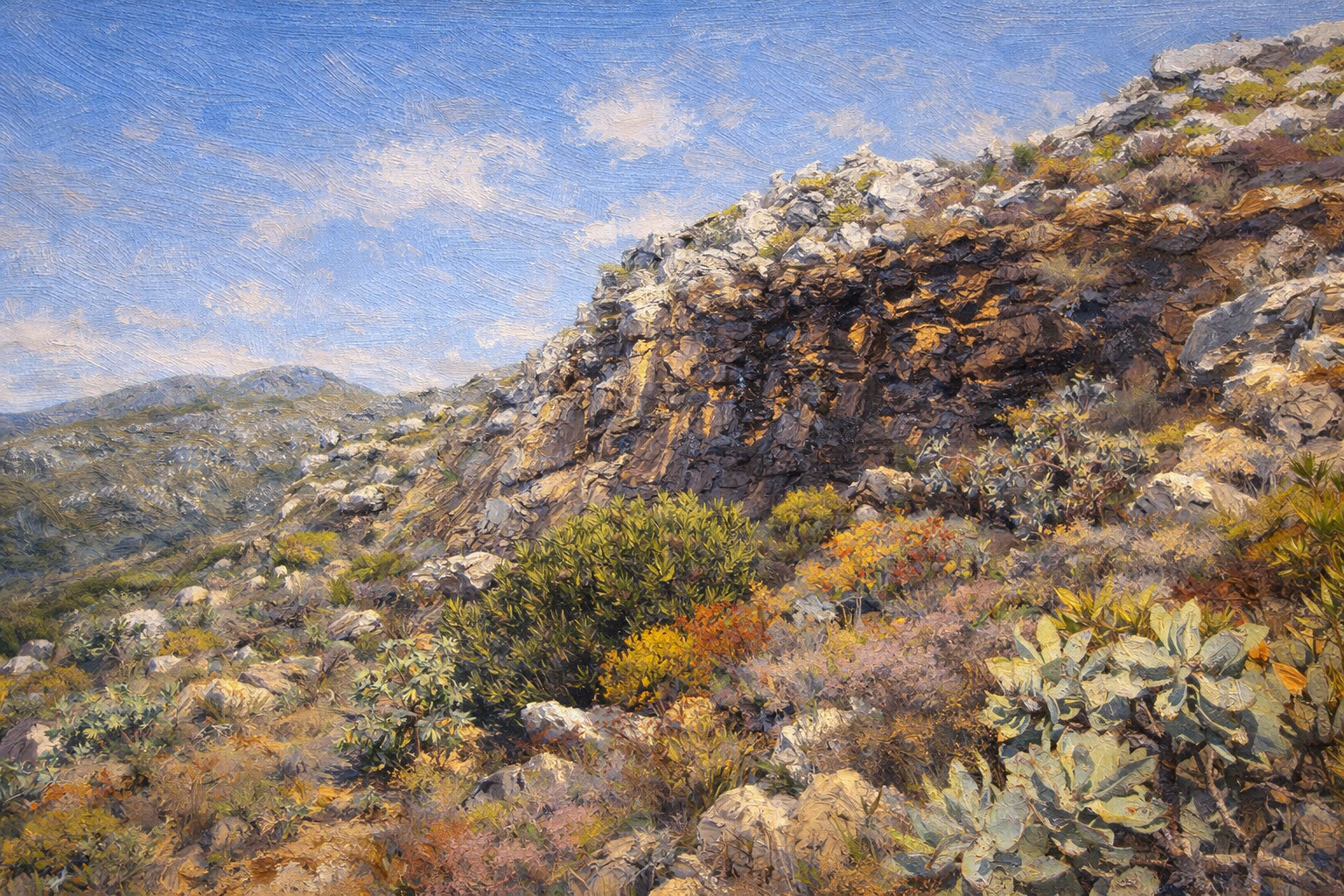
I set out at about two in the afternoon. The first ten minutes are relatively flat until the path reaches the first "HT" marker, where it veers into a narrow trail. From there, the terrain rises steeply, the path nearly swallowed by boulders and overgrowth. Unaccustomed to such exertion, I find the ascent arduous, pausing for breath every few steps. Gradually, my body acclimatizes; the slope remains, but the struggle eases.
Reaching a fork, two paths diverge: to the left, lush green ridges; to the right, majestic rocky crags. Once chosen, there is no looking back.
The steepness once made me believe the summit was near, yet the trail stretches onward, pointing deeper into the valley. The sun is brilliant. Looking back, the harbor of Hout Bay is clearly visible; looking ahead under a cloudless sky, the emerald mountains stand firm.
"Beautiful world, where art thou? Return once more, golden age of natures sweet bloom."
Return—I have returned. O beautiful world, you are not elsewhere; you reside in the peace and serenity of the heart.
"Walking on, and walking on, far and farther still — the more it flows, the clearer; the more it ripples, the brighter."
"The gurgling sound of passing water is like wine to the soul; but tell me, little brook, where does your journey end?"
So I press on, step by step, toward the deeper greens. It matters little whether the path beneath my feet is the ancient track or not; my heart rests easily in natures embrace, the sweat of the journey its own reward.
IV. Glimpsing Gordons Bay
Reaching the heights, I gaze toward the distant east, where the blue Indian Ocean stretched beyond. In my minds map, I locate Gordons Bay—standing in silent dialogue with Muizenberg across the water. The bay named after the General sits at the edge of my vision. Having walked from the Atlantic to overlook the Indian Ocean, my thoughts drift back to 1795. I contemplate a history of blood and tears; I walk a path of thorns.
I venture no further and retrace my steps. Passing the East Fort once more, the Atlantic sunset casts a shimmering glow upon the waves huddling toward the shore—like wild blossoms swaying in the wind amidst the desolate mountain scrub, singing of the "Grand Beauty" of the Greek gods. That song follows the trickling water, flowing with the wind through the broken walls and fallen tiles. Amidst the debris, can one hear the Generals question: where does the journey end?
1795, the Dutch fell to the British; 1895, the Qing fell to the Yamato; 1995, this journey to the Cape. Two hundred years of thought compressed into a single instant: the glory of the Qianlong reign was fading; the isolated fort of the Cape was in peril. The General held the Princes decree as if clutching a fire in his heart. He did not fight. This was not fear.
In the whistling wind, someone sighs, and is gone.








限會員,要發表迴響,請先登入


