2016.11.03
🎃 Western Literature 🎃
🍙 Metamorphoses
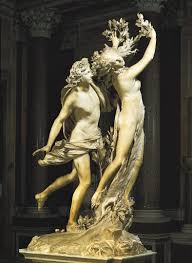
The Metamorphoses is a Latin narrative poem by the Roman poet Ovid, considered his magnum opus. Comprising fifteen books and over 250 myths, the poem chronicles the history of the world from its creation to the deification of Julius Caesar within a loose mythico-historical framework.One of the most influential works in Western culture, the Metamorphoses has inspired such authors as Dante, Boccaccio, Chaucer, and Shakespeare. Numerous episodes from the poem have been depicted in acclaimed works of sculpture, painting, and music. Although interest in Ovid faded after the Renaissance, towards the end of the twentieth century there was a resurgence of attention to his work; today, the Metamorphoses continues to inspire and be retold through various media. The work has been the subject of numerous translations into English, the first by William Caxton in 1480.
🍙 Hippocrates
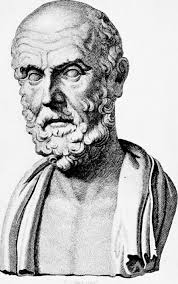
Hippocrates of Kos, also known as Hippocrates II, was a Greek physician of the Age of Pericles (Classical Greece), and is considered one of the most outstanding figures in the history of medicine. He is referred to as the "Father of Modern Medicine" in recognition of his lasting contributions to the field as the founder of the Hippocratic School of Medicine. Hippocrates is commonly portrayed as the paragon of the ancient physician, and credited with coining the Hippocratic Oath, still relevant and in use today. He is also credited with greatly advancing the systematic study of clinical medicine, summing up the medical knowledge of previous schools, and prescribing practices for physicians through the Hippocratic Corpus and other works.
🍙 Hippocratic Oath
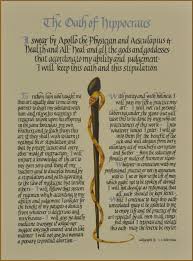
The Hippocratic Oath is an oath historically taken by physicians. It is one of the most widely known of Greek medical texts. In its original form, it requires a new physician to swear, by a number of healing gods, to uphold specific ethical standards.

🍙 Garden of Eden
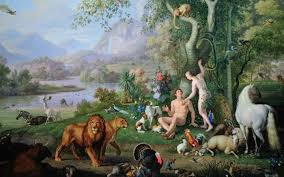
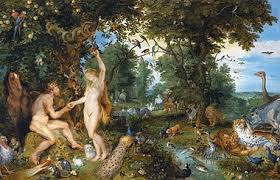
The Garden of Eden or often Paradise is the biblical "garden of God".The "garden of God", not called Eden, is mentioned in Genesis 13, and the "trees of the garden" are mentioned in Ezekiel 31. The Book of Zechariah and the Book of Psalms also refer to trees and water in relation to the temple without explicitly mentioning Eden.Traditionally, the favored derivation of the name "Eden" was from the Akkadian edinnu, derived from a Sumerian word meaning "plain" or "steppe". Eden is now believed to be more closely related to an Aramaic root word meaning "fruitful, well-watered."The story of Eden echoes the Mesopotamian myth of a king, as a primordial man, who is placed in a divine garden to guard the tree of life. In the Hebrew Bible, Adam and Eve are depicted as walking around the Garden of Eden naked due to their innocence.Eden and its rivers may signify the real Jerusalem, the Temple of Solomon, or the Promised Land. It may also represent the divine garden on Zion, and the mountain of God, which was also Jerusalem. The imagery of the Garden, with its serpent and cherubs, has been compared to the images of the Solomonic Temple with its copper serpent (the nehushtan) and guardian cherubs.
🍙 Original Sin
Original sin, also called ancestral sin, is the Christian doctrine of humanity's state of sinresulting from the fall of man, stemming from Adam and Eve's rebellion in Eden, namely the sin of disobedience in consuming from the tree of knowledge of good and evil. This condition has been characterized in many ways, ranging from something as insignificant as a slight deficiency, or a tendency toward sin yet without collective guilt, referred to as a "sin nature", to something as drastic as total depravity or automatic guilt of all humans through collective guilt.
🍙 Asclepius
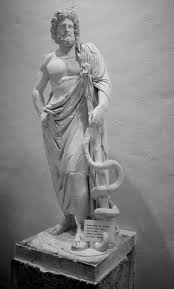
Asclepius was a hero and god of medicine in ancient Greek religion and mythology. Asclepius represents the healing aspect of the medical arts.He was associated with the Roman/Etruscan god Vediovis and the Egyptian Imhotep. He was one of Apollo's sons, sharing with Apollo the epithet Paean ("the Healer").The rod of Asclepius, a snake-entwined staff, remains a symbol of medicine today. Those physicians and attendants who served this god were known as the Therapeutae of Asclepius.
>>Asclepius with his serpent-entwined staff
🍙 Shakespeare
👉 Influent:
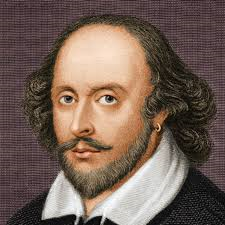
Shakespeare's work has made a lasting impression on later theatre and literature. In particular, he expanded the dramatic potential of characterisation, plot, language, and genre. Until Romeo and Juliet, for example, romance had not been viewed as a worthy topic for tragedy. Soliloquies had been used mainly to convey information about characters or events; but Shakespeare used them to explore characters' minds. His work heavily influenced later poetry. The Romantic poets attempted to revive Shakespearean verse drama, though with little success. Critic George Steiner described all English verse dramas from Coleridge to Tennyson as "feeble variations on Shakespearean themes."
Shakespeare influenced novelists such as Thomas Hardy, William Faulkner, and Charles Dickens. The American novelist Herman Melville's soliloquies owe much to Shakespeare; his Captain Ahab in Moby-Dick is a classic tragic hero, inspired by King Lear. Scholars have identified 20,000 pieces of music linked to Shakespeare's works. These include two operas by Giuseppe Verdi, Otello and Falstaff, whose critical standing compares with that of the source plays. Shakespeare has also inspired many painters, including the Romantics and the Pre-Raphaelites. The Swiss Romantic artist Henry Fuseli, a friend of William Blake, even translated Macbeth into German. The psychoanalyst Sigmund Freud drew on Shakespearean psychology, in particular, that of Hamlet, for his theories of human nature.
In Shakespeare's day, English grammar, spelling and pronunciation were less standardised than they are now, and his use of language helped shape modern English. Samuel Johnson quoted him more often than any other author in his A Dictionary of the English Language, the first serious work of its type. Expressions such as "with bated breath" (Merchant of Venice) and "a foregone conclusion" (Othello) have found their way into everyday English speech.
👉 Blank Verse
Shakespeare's standard poetic form was blank verse, composed in iambic pentameter. In practice, this meant that his verse was usually unrhymed and consisted of ten syllables to a line, spoken with a stress on every second syllable. The blank verse of his early plays is quite different from that of his later ones. It is often beautiful, but its sentences tend to start, pause, and finish at the end of lines, with the risk of monotony. Once Shakespeare mastered traditional blank verse, he began to interrupt and vary its flow. This technique releases the new power and flexibility of the poetry in plays such as Julius Caesar and Hamlet. Shakespeare uses it, for example, to convey the turmoil in Hamlet's mind:
Sir, in my heart there was a kind of fighting
That would not let me sleep. Methought I lay
Worse than the mutines in the bilboes. Rashly—
And prais'd be rashness for it—let us know
Our indiscretion sometimes serves us well ...
— Hamlet, Act 5, Scene 2, 4–8
🍙 Shakespeare's sonnets
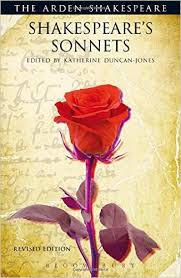
Shakespeare's Sonnets is the title of a collection of 154 sonnets by William Shakespeare, which covers themes such as the passage of time, love, beauty and mortality. The first 126 sonnets are addressed to a young man; the last 28 to a woman. The sonnets to the young man express overwhelming, obsessional love. The main issue of debate has always been whether it remained platonic or became physical.The first 17 poems, traditionally called the procreation sonnets, are addressed to the young man urging him to marry and have children in order to immortalize his beauty by passing it to the next generation.Other sonnets express the speaker's love for the young man; brood upon loneliness, death, and the transience of life; seem to criticise the young man for preferring a rival poet; express ambiguous feelings for the speaker's mistress; and pun on the poet's name. The final two sonnets are allegorical treatments of Greek epigrams referring to the "little love-god" Cupid.
🍙 Shakespeare Sonnet 18
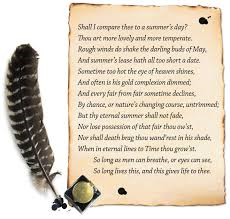
Shall I compare thee to a summer's day?
Thou art more lovely and more temperate:
Rough winds do shake the darling buds of May,
And summer's lease hath all too short a date:
Sometime too hot the eye of heaven shines,
And often is his gold complexion dimm'd;
And every fair from fair sometime declines,
By chance, or nature's changing course, untrimm'd;
But thy eternal summer shall not fade
Nor lose possession of that fair thou ow'st;
Nor shall Death brag thou wander'st in his shade,
When in eternal lines to time thou grow'st;
So long as men can breathe or eyes can see,
So long lives this, and this gives life to thee.
>>analysis
In the sonnet, the speaker compares his beloved to the summer season, and argues that his beloved is better. He also states that his beloved will live on forever through the words of the poem. Scholars have found parallels within the poem to Ovid's Tristia and Amores, both of which have love themes.
限會員,要發表迴響,請先登入


