2017.05.10
💠 Week 14
💠 Emily Dickinson (1830~1886)
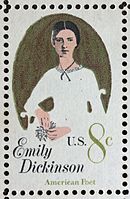
She was an American poet. With the possible exception of Walt Whitman, Dickinson is now recognized as the most important American poet of the 19th century.
Legacy
Emily Dickinson is now considered a powerful and persistent figure in American culture. Although much of the early reception concentrated on Dickinson's eccentric and secluded nature, she has become widely acknowledged as an innovative, proto-modernist poet. As early as 1891, William Dean Howells wrote that "If nothing else had come out of our life but this strange poetry, we should feel that in the work of Emily Dickinson, America, or New England rather, had made a distinctive addition to the literature of the world, and could not be left out of any record of it." Critic Harold Bloom has placed her alongside Walt Whitman, Wallace Stevens, Robert Frost, T. S. Eliot, and Hart Crane as a major American poet, and in 1994 listed her among the 26 central writers of Western civilization.
Influence:
Emily Dickinson's life and works have been the source of inspiration to artists, particularly to feminist orientated artists, of a variety of mediums.
👉 A Narrow Fellow in the Grass
A narrow Fellow in the Grass
Occasionally rides -
You may have met him? Did you not
His notice instant is -
The Grass divides as with a Comb,
A spotted Shaft is seen,
And then it closes at your Feet
And opens further on
He likes a Boggy Acre -
A Floor too cool for Corn -
But when a Boy and Barefoot
I more than once at Noon
Have passed I thought a Whip Lash
Unbraiding in the Sun
When stooping to secure it
It wrinkled And was gone -
Several of Nature’s People
I know, and they know me
I feel for them a transport
Of Cordiality
But never met this Fellow
Attended or alone
Without a tighter Breathine
And Zero at the Bone.
Summary
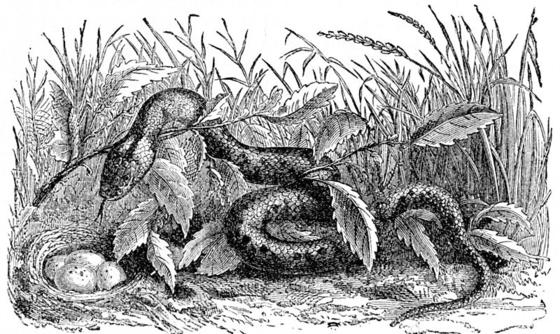
One of the best-known Dickinson nature poems, poem 986 is more remarkable for its execution and technique than its content. The narrator unexpectedly encounters a snake in tall marsh grass. Far from tempting the narrator, as the serpent tempted Eve, it induces fear, panting, and a sudden chill. The first eleven lines describe the snake in a personified, almost amiable way. He sometimes “rides” through the grass, parting it like a comb does hair. Yet, when plain sight threatens to betray its exact location, the grass “closes at your feet/ And opens further on—.”
The narrator of this poem is male, perhaps because boys rather than girls would be more likely to walk through marshes; however, the narrator’s sex also underscores the phallic implications of this symbol. If one prefers to see this sexual imagery, it is possible to cite the sexual association of such words and phrases as “Whip lash,” “tighter breathing,” and “Zero at the Bone.” In any event, reading the poem as a commentary on human cunning is entirely consistent with any further level of meaning. The narrator feels cordial toward “Several of Nature’s People” but has only fear for the snake. In this, as in many of Dickinson’s poems, one must beware of mixing biographical folklore with the poem and forcing the reading offered by structuralist critics that the poem is Dickinson’s confession of sexual fear.
Reading the poem’s first line aloud causes the tongue to flicker, like that of a snake; sibilants abound in increasing number as the lines describe the snake’s approach. These elements are certainly intentional. Poem 1670 (“In Winter in my Room”) presents a similar encounter, though with a worm-turned-snake. Relating the events as a dream sequence, this narrator flees whole towns from the creature before she dares set the experience down.
💠 E. E. Cummings (1894~1962)
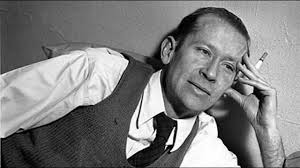
He was an American poet, painter, essayist, author, and playwright. He wrote approximately 2,900 poems; two autobiographical novels; four plays and several essays. He is remembered as an eminent voice of 20th-Century English literature.
🍙 In Just
spring when the world is mud-
luscious the little
lame balloonman
whistles far and wee
and eddieandbill come
running from marbles and
piracies and it's
spring
when the world is puddle-wonderful
the queer
old balloonman whistles
far and wee
and bettyandisbel come dancing
from hop-scotch and jump-rope and
it's
spring
and
the
goat-footed
balloonMan whistles
far
and
wee
Summary
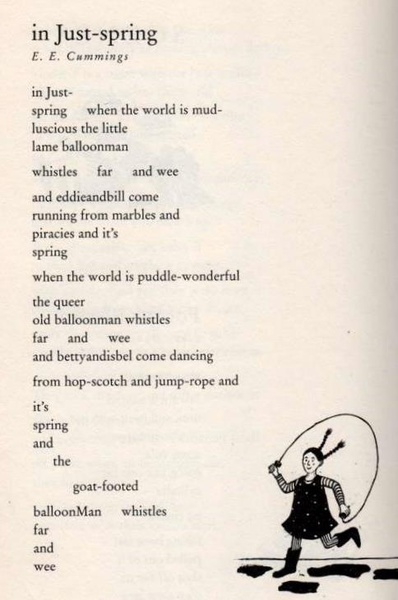
It is about the spring as seen from the viewpoint of the child. The very title is said with an excitement of remembering childhood, and the power to enjoy the spring. Two boys Eddie and Bill come running from their marble and pirate games. The speaker himself is so delighted at the thought of such a spring world that he simply repeats: “it’s/ spring/ when the world is puddle-wonderful” with conspicuous emphases on each word and on the fore grounded new compound “puddle-wonderful”.
The puddle (pool of dirty water on the road) is a wonderful thing to the child. The ‘queer’ old balloon man whistles far and wee. This man is a symbol of adulthood, puberty and sexuality, and the imperfect and ugly age that the children do not yet know anything about. This man, as indicated later on in the poem, is Pan, the goat-footed Greek god.
Pan is a lecherous and ugly old man who is despised by the girls; but though he is disliked, he is essential because it is he who brings about the sexual changes in the growing children. This god is cast in the form of the modern balloon man. The sheer joy of the children is significant in the light of the fact that the balloon man is bringing an end to their childhood. But this, as the poem implies, is a positive thing, for every part of life, as it comes naturally, is desirable. In fact, the spring is not a static season; it is a process that leads naturally to summer, growth, fertility, and even age & death at length.
👉 Somewhere I Have Never Travelled, Gladly Beyond
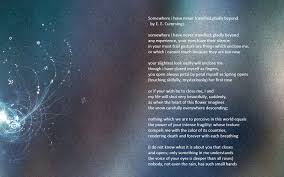
somewhere i have never travelled,gladly beyond
any experience,your eyes have their silence:
in your most frail gesture are things which enclose me,
or which i cannot touch because they are too near
your slightest look easily will unclose me
though i have closed myself as fingers,
you open always petal by petal myself as Spring opens
(touching skilfully,mysteriously)her first rose
or if your wish be to close me,i and
my life will shut very beautifully,suddenly,
as when the heart of this flower imagines
the snow carefully everywhere descending;
nothing which we are to perceive in this world equals
the power of your intense fragility:whose texture
compels me with the colour of its countries,
rendering death and forever with each breathing
(i do not know what it is about you that closes
and opens;only something in me understands
the voice of your eyes is deeper than all roses)
nobody,not even the rain,has such small hands
➡ Theme
The theme is without doubt love, but which kind of love? A lustful love? A romantic love? Familial love? Love for a friends
Some say the poem was written following the birth of his daughter, hence the reference to frail and fragility. Some insist it was an ode to his second wife, Anne Barton. Others claim it to be an attempt to transcend sexuality, lust and love.
➡ Mood
This is an in-the-moment love poem written for a special partner. Perhaps the speaker has fallen under the spell of love and is trying to put into words what it feels like to look into a special one's eyes.
And what an unusual and informal declaration we have here. It's both profound and mysterious.
Note the reference to the season of Spring, the traditional time of year when poets find their Muse, and also to the rose, the iconic flower, a symbol of love and dedication.
It is a soulful, spontaneous outburst expressing the mystery and beauty of that elusive creature called love.
限會員,要發表迴響,請先登入


