2017.02.22
💠 Week 2
👉 Quiz of Raymond Carver- “Cathedral (7)
1. Which of the following does not describe Robert’s role in the narrator’s experience of drawing a cathedral?
A. Robert asks the narrator to get a pen and paper to draw a cathedral.
B. Robert places his hand on top of the narrator’s hand while he is drawing.
C. Robert assures the narrator that he is producing a fine drawing.
D. Robert is not present when the narrator draws the cathedral.
2. Which of the following is true of the narrator’s wife’s history?
A. She had divorced two men before she married the narrator.
B. She tried to commit suicide.
C. She wrote short stories.
D. She used to work as a maid.
“. . . one night she got to feeling lonely and cut off from people. . . . She went in and swallowed all the pills and capsules in the medicine chest and washed them down with a bottle of gin. Then she got into a hot bath and passed out. But instead of dying, she got sick” (par. 4–5)
3. According to the story, the building of a cathedral is notable for
A. the way it expresses the vision of a single architect.
B. the use of only materials local to the cathedral’s setting.
C. the fact that it could take place in a remarkably short period of time.
D. the fact that it involved hundreds of workers, laboring over generations.
When the narrator asks Robert what he knows about cathedrals, Robert replies, “I know they took hundreds of workers fifty or a hundred years to build. . . . The men who began their life’s work on them, they never lived to see the completion of their work.” (par. 96). The narrator’s drawing of a cathedral is also a kind of communal effort—Robert urges him to draw it and places his hand on top of the narrator’s hand.
4. The narrator’s wife met Robert when she
A. helped him cross the road.
B. answered a “Help Wanted” ad.
C. sat next to him on an airplane.
D. joined Alcoholics Anonymous at the same time that he did.
5. Robert is characterized by his
A. interest in and openness to the world around him.
B. tendency to pre-judge people and situations.
C. bitterness about his blindness.
D. nervousness and anxiety.
In sharp distinction to the narrator, Robert is portrayed as interested in and open to new experiences, new people, and new opportunities to learn. He asks the narrator questions about himself, talks with people all over the world through his ham radio, eats dinner with great enthusiasm, tries marijuana when the narrator invites him to, and is happy to listen to whatever program the narrator decides to watch on television. As he says, “I’m always learning something. Learning never ends”
6. Which of the following is not an assumption the narrator made about blind people?
A. They use canes.
B. They do not laugh.
C. They have beards.
D. They do not smoke.
The narrator is surprised when Robert arrives wearing a full beard: “The blind man, feature this, he was wearing a full beard! A beard on a blind man! Too much, I say!”
7. All of the following are true of the narrator except
A. he has nightmares.
B. he worries constantly about money.
C. he is dissatisfied with his job.
D. he has few friends.
Raymond Carver (May 25, 1938 – August 2, 1988)
Something about Raymond Carver:
1. He was born in 1938 in Clatskanie, Oregon.
2. His nickname when he was a young boy was “Frog”
3. The first short story that Carver published was “Furious Seasons” in 1963. It appeared in December.
4. Carver attended a creative writing class at Chico State College taught by John Gardner.
5. Jay McInerney is one of his student.
6. “Whoever Was Using This Bed” is a short story about a couple awakened in the middle of the night by a phone call from a woman who is trying to reach a man named Bud.
7. The short story “Cathedral”, the narrator tries to describe a cathedral to a blind man.
8. His poem “Near Klamath” capture an intensely emotional moment among salmon fishermen standing around a burning oil drum.
9. Haruki Murakami is a well- known Japanese novelist of his.
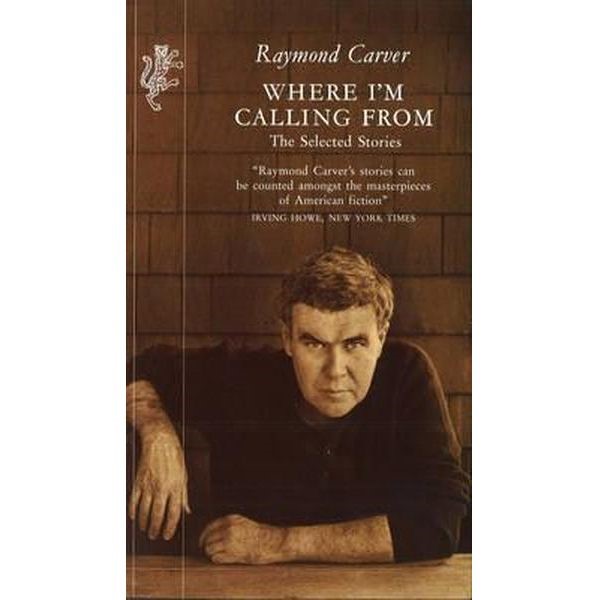
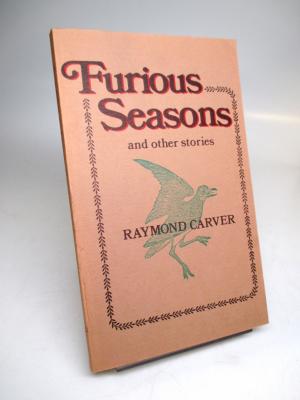
He was an American short-story writer and poet. Carver contributed to the revitalization of the American short story in literature during the 1980s.
The novelist Chuck Kinder published Honeymooners: A Cautionary Tale (2001), a roman à clef about his friendship with Carver in the 1970s. Carver's high school sweetheart and first wife, Maryann Burk Carver, wrote a memoir of her years with Carver, What it Used to be Like: A Portrait of My Marriage to Raymond Carver (2006).
The New York Times Book Review and San Francisco Chronicle named Carol Sklenicka's unauthorized biography, Raymond Carver: A Writer's Life (2009), published by Scribner, one of the Best Ten Books of that year; and the San Francisco Chronicle deemed it: "exhaustively researched and definitive biography". Carver's widow, Tess Gallagher, refused to engage with Sklenica.
His final (incomplete) collection of seven stories, titled Elephant in Britain (included in "Where I'm Calling From") was composed in the five years before his death. The nature of these stories, especially "Errand", have led to some speculation that Carver was preparing to write a novel. Only one piece of this work has survived – the fragment "The Augustine Notebooks", first printed in No Heroics, Please.
Tess Gallagher published five Carver stories posthumously in Call If You Need Me; one of the stories "Kindling" won an O. Henry Award in 1999. In his lifetime, Carver won five O. Henry Awards; these winning stories were "Are These Actual Miles" (originally titled "What is it?") (1972), "Put Yourself in My Shoes" (1974), "Are You A Doctor?" (1975), "A Small, Good Thing" (1983), and "Errand" (1988).
Tess Gallagher fought with Knopf for permission to republish the stories in What We Talk About When We Talk About Love as they were originally written by Carver, as opposed to the heavily edited and altered versions that appeared in 1981 under the editorship of Gordon Lish. The book, entitled Beginners, was released in hardback on October 1, 2009 in Great Britain, followed by its U.S. publication in the Library of America edition that collected all of Carver's short fiction in a single volume.
💠 What We Talk About When We Talk About Love
This is a 1981 collection of short stories by American writer Raymond Carver.
Main characters:
Mel McGinnis:
Is a 45-year-old cardiologist married to Teresa, also known as Terri. They live together in Albuquerque. The narrator describes Mel as tall and rangy with curly soft hair and Teresa (who is Mel's second wife) as bone-thin with a pretty face, dark eyes, and brown hair. Mel and Terri have two friends named Nick and Laura.
Nick is 38 years old and is the narrator of the story.
Laura is 35, married to Nick, and works as a legal secretary.
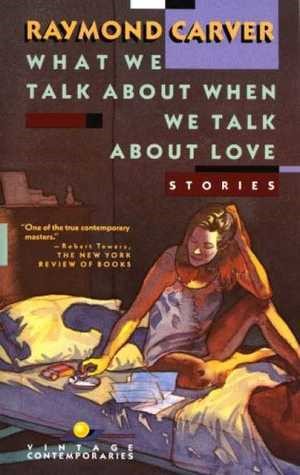
The story is about four friends—Mel, Teresa, Laura, and Nick. The setting is Mel's house, around a table with a bucket of ice in the middle.
They soon start to talk about love.
Terri has had an abusive relationship; the abuse, she says, derives from love. She believed that Ed loved her and his abuse was his way of showing it. Mel doesn’t agree with it.
Ed, Terri's former abusive boyfriend. He eventually committed suicide after two attempts (as Terri sees it, another act of love). First attempt was when Terri had left him. Ed had drunk rat poison, but was rushed to the hospital where he was saved. In Ed's second, successful attempt he shot himself in the mouth.
Mel felt even though one loves a person, if something were to happen to them, the survivor would grieve but love again. His personal thoughts about love, hatred toward his ex-wife, and life as a knight.
Quote:
“There was a time when I thought I loved my first wife more than life itself. But now I hate her guts. I do. How do you explain that? What happened to that love? What happened to it, is what I'd like to know. I wish someone could tell me.”
― Raymond Carver, What We Talk About When We Talk About Love
“Something’s died in me,” she goes. “It took a long time for it to do it, but it’s dead. You’ve killed something, just like you’d took an axe to it. Everything is dirt now.”
― Raymond Carver, What We Talk About When We Talk About Love
“All this, all of this love we're talking about, it would just be a memory. Maybe not even a memory. Am I wrong? Am I way off base? Because I want you to set me straight if you think I'm wrong. I want to know. I mean, I don't know anything, and I'm the first one to admit it.”
― Raymond Carver, What We Talk About When We Talk About Love
💠 Cathedral (1981)
Author:
Raymond Carver 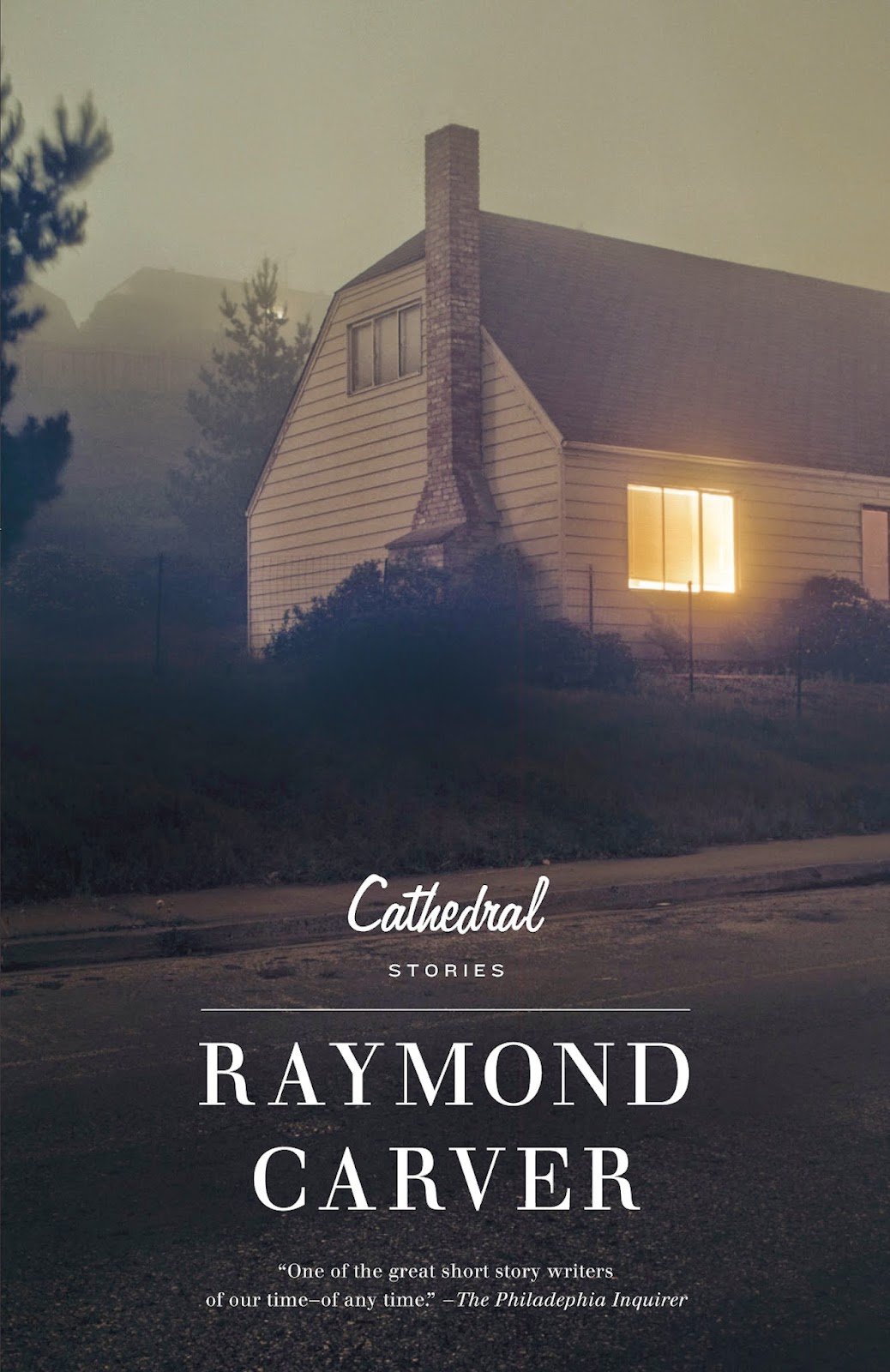
Summary:
"Cathedral" opens with the narrator telling the reader in a conversational tone that a blind friend of his wife's is coming to visit them. The narrator is clearly unhappy about the upcoming visit. He then flashes back to the story of how his wife met the blind man when she worked for him as a reader. At the time, she was engaged to marry an officer in the Air Force. When she tells the blind man goodbye, he asks if he can touch her face. The touch of his fingers on her face is a pivotal moment in her life, something the narrator does not understand. Although his wife has maintained contact with the blind man for ten years, this will be the first time she has seen him since her marriage, subsequent divorce, and remarriage. Robert, the blind man, has just lost his wife and will be traveling to Connecticut to visit with her family. Along the way he will spend the night at the home of the narrator and his wife. His wife tells the narrator that Robert and his wife, Beulah, were inseparable.
👉 Cathedral:
Functions:
Notwithstanding wide differences over time in institutional structures and wider historical contexts, the key functions established for the first cathedrals have tended to remain as distinctive cathedral functions down the centuries; a regular cycle of choral prayer; providing a forum for civic leadership; a commitment to higher learning; and the promotion and dissemination of music. 
限會員,要發表迴響,請先登入


