2017.05.03
💠 Week 13
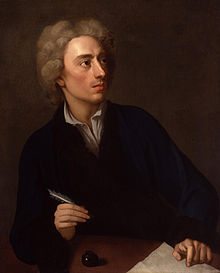
💠 Alexander Pope (1688~1744)
He is best known for his satirical verse and for his translation of Homer, and he is also famous for his use of the heroic couplet. He is the second-most frequentl
y quoted writer in The Oxford Dictionary of Quotations after Shakespeare.
 👉 Sound and Sense
True ease in writing comes from art, not change,
As those move easiest who have learned to dance.
'Tis not enough no harshness gives offense,
The spound must seem an echo to the sense;
Soft is the strain when Zephyr gently blows,
And the smooth stream in smoother numbers flows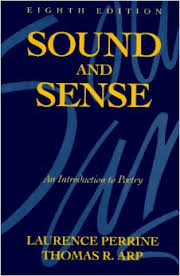
But when loud surges lash the sounding shore,
The hoarse rough verse should like the torrent roar.
When Ajax strives some rock's vast weight to throw,
The line too labors, and the words move slow;
Not so, when swift Camilla scours the plain,
Flies o'er the' unbending corn, and skims along the main.
Hear how Timotheus' varied lays surprise,
And bid alternate passions fall and rise!
While, at each change, the son of Libyan Jove
Now burns with glory, and then melts with love;
Now his fierce eyes with sparkling fury glow,
Now sighs steal out, and tears begin to flow:
Persians and Greeks like turns of nature found,
And the world's victor stood subdued by sound
The power of music all our hearts allow,
And what Timotheus was, i
s DRYDEN now.
Rhythm
If two words or lines of poetry rhyme, they end with the same sounds, including a vowel. That is, a sound device that the final vowel and consonant repeated in two words. There are different kinds of rhyme:
1. Exact rhyme means that the final vowel and consonants sounds are exactly the same. For example, the word "cat" is an exact rhyme with "hat," "fat," "sat," "rat," and other words.
2. Slant rhyme is the rhyme that the final consonant of two words sounds the same, but the fina
l vowel sounds are not identical. "Room" and "storm" are slant rhymes (Emily Dickinson's I heard a fly buzz when I died).
3. End rhyme refers to two sounds rhyme each other at the end of lines. The first and third lines rhyme and the second and fourth lines rhyme. For example, That time of the year thou mayst in me behold / When yellow leaves, or none, or few, do hang / Upon those boughs which shale against the cold / Bare ruined choirs, where late the sweet birds sang. Behold and cold rhyme, and hang and sang rhyme. (William Shakespeare, That time of the year thou mayst in me behold).
4. Internal rhyme means tha
t not all rhyming words have to be at the end of lines. Some poems have rhymes within the lines.
👉 Poetic rhythm
Refers to the alternation between the stressed and unstressed syllables in a poem. A stressed syllable receives more emphasis and stress than an unstressed syllable.
🍙 Metaphor
Metaphor, like other types of analogy, can usefully be distinguished from metonymy as one o
f two fundamental modes of thought. Metaphor and analogy both work by bringing together two concepts from different conceptual domains, whereas metonymy works by using one element from a given domain to refer to another closely related element. Thus, a metaphor creates new links between otherwise distinct conceptual domains, whereas a metonymy relies on the existing links within them.
A metaphor is a figure of speech that refers, for rhetorical effect, to one thing by mentioning another thing. It may provide clarity or identify hidden similarities between two ideas. Antithesis, hyperbole, metonymy and simile are all types of metaphor. One of the most commonly cited examples of a metaphor in English literature is the "All the world's a stage" monologue from As You Like It:
All the world's a stage,
And all the men and
women merely players;
They have their exits and their entrances[...]
—William Shakespeare, As You Like It, 2/7
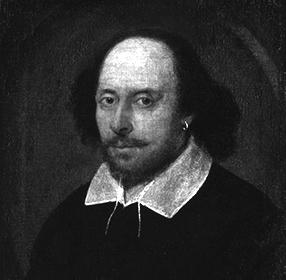 | 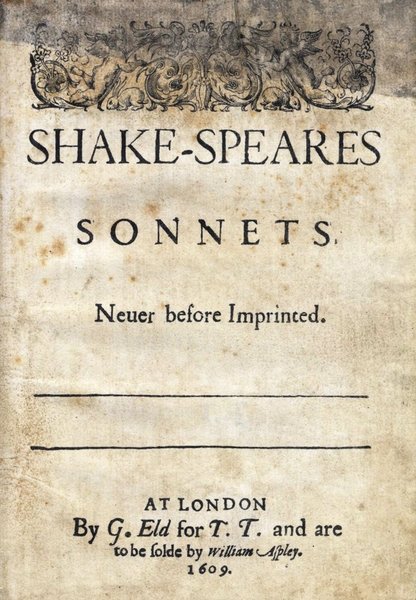 |
➡ That time of year thou mayst in me behold (Sonnet 73)
That time of year thou mayst in me behold
When yellow leaves, or none, or few, do hang
Upon those boughs which shake against the cold,
Bare ruined choirs, where late the sweet birds sang.
In me thou see’st the twilight of such day
As after sunset fadeth in the west;
Which by and by black night doth take away,
Death’s second self, that seals up all in rest.
In me thou see’st the glowing of such fire,
That on the ashes of his youth doth lie,
As the deathbed whereon it must expire,
Consumed with that which it was nourished by.
This thou perceiv’st, which makes thy love more strong,
To love that well which thou must leave ere long.
➡ Compared
Metaphors are most frequently compared with similes. A simile is a specific type of metaphor that uses the words "like" or "as" in comparing two objects, whereas what is commonly referred to as a metaphor states that A is B or substitutes B for A.
What is usually referred to as a metaphor asserts the two objects in the comparison are identical on the point of comparison, a simile merely asserts a similarity. For this reason a common-type metaphor is generally considered more forceful than a simile.
🍙 Personification
Personification is a figure of speech where human qualities are given to animals, objects or ideas.
In the arts, personification means representing a non-human thing as if it were human. Personification gives human traits and qualities, such as emotions, desires, sensations, gestures and speech, often by way of a metaphor.
Personification is much used in visual arts. Examples in writing are "the leaves waved in the wind", "the ocean heaved a sigh" or "the Sun smiled at us". In easy language personification is just giving an example of a living being for a non-living thing. "The wind shouted". Obviously the wind cannot shout, only people can. This is what is called personification.
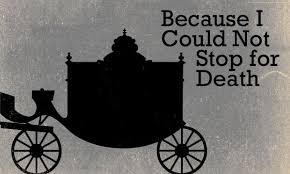
➡ Because I could not Stop for Death
Is a lyrical poem by Emily Dickinson first published posthumously in Poems: Series 1 in 1890. The persona of Dickinson's poem meets personified Death. Death is a gentleman caller who takes a leisurely carriage ride with the speaker to her grave.
Summary
The poem was published posthumously in 1890 in Poems: Series 1, a collection of Dickinson's poems assembled and edited by her friends Mabel Loomis Todd and Thomas Wentworth Higginson. The poem was published under the title "The Chariot". It is composed in six quatrains with the meter alternating between iambic tetrameter and iambic trimeter. Stanzas 1, 2, 4, and 6 employ end rhyme in their second and fourth lines, but some of these are only close rhyme or eye rhyme. In the third stanza, there is no end rhyme, but "ring" in line 2 rhymes with "gazing" and "setting" in lines 3 and 4 respectively. Internal rhyme is scattered throughout. Figures of speech include alliteration, anaphora, paradox, and personification. The poem personifies Death as a gentleman caller who takes a leisurely carriage ride with the poet to her grave. She also personifies immortality. The volte (turn) happens in the fourth quatrain. Structurally, the syllables shift from its constant 8-6-8-6 scheme to 6-8-8-6. This parallels with the undertones of the sixth quatrain. The personification of death changes from one of pleasantry to one of ambiguity and morbidity: "Or rather--He passed Us-- / The Dews drew quivering and chill--" (13-14). The imagery changes from its original nostalgic form of children playing and setting suns to Death's real concern of taking the speaker to afterlife.
🍙 Simile
Is a figure of speech that directly compares two things. Although similes and metaphors are similar, similes explicitly use connecting words (such as like, as, so, than, or various verbs such as resemble), though these specific words are not always necessary. While similes are mainly used in forms of poetry that compare the inanimate and the living, there are also terms in which similes and personifications are used for humorous purposes and comparison.
In comedy:
Similes are used extensively in British comedy, notably in the slapstick era of the 1960s and 1970s. In comedy, the simile is often used in negative style: "he was as daft as a brush." They are also used in comedic context where a sensitive subject is broached, and the comedian will test the audience with response to a subtle implicit simile before going deeper. The sitcom Blackadder featured the use of extended similes, normally said by the title character.
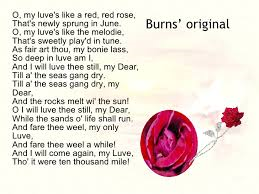
➡ A Red, Red Rose
O my Luve's like a red, red rose
That’s newly sprung in june;
O my Luve's like the melodie
That’s sweetly play'd in tune:
As fair art thou, my bonnie lass,
So deep in luve am I:
And I will luve thee still, my dear,
Till a’ the seas gang dry:
Till a’ the seas gang dry, my dear,
And the rocks melt wi’ the sun:
I will luve thee still, my dear,
While the sands o’ life shall run.
And fare thee weel, my only Luve
And fare thee weel, a while!
And I will come again, my Luve,
 Tho’ it were ten thousand mile.
My Love is Like a Red, Red Rose
Is a 1794 song in Scots by Robert Burns based on traditional sources. The song is also referred to by the title "Oh, My Love is Like a Red, Red Rose", "My Love is Like a Red, Red Rose" or "Red, Red Rose" and is often published as a poem.
Symbolism
The song is highly evocative, including lines describing rocks melting with the sun, and the seas running dry. Burns may have been inspired by the concept of deep time put forward a few years earlier by geologist James Hutton in his Theory of the Earth in 1789. Hutton and Burns were contemporaries, and would have mixed in similar circles in Edinburgh.
🍙 Analogy
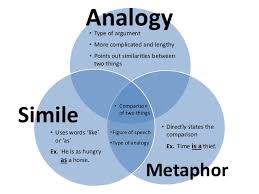 Is a cognitive process of transferring information or meaning from a particular subject (the analogue or source) to another (the target), or a linguistic expression corresponding to such a process. In a narrower sense, analogy is an inference or an argument from one particular to another particular, as opposed to deduction, induction, and abduction, where at least one of the premises or the conclusion is general. The word analogy can also refer to the relation between the source and the target themselves, which is often, though not necessarily, a similarity, as in the biological notion of analogy.
限會員,要發表迴響,請先登入


