2016.12.01
🎃 Western Literature 🎃
🍙 Electra
In Greek mythology, Electra was the daughter of King Agamemnon and Queen Clytemnestra, and thus princess of Argos. She and her brother Orestes plotted revenge against their mother Clytemnestra and stepfather Aegisthus for the murder of their father, Agamemnon.Electra is one of the most popular mythological characters in tragedies. She is the main character in two Greek tragedies, Electra by Sophocles and Electra by Euripides. She is also the central figure in plays by Aeschylus, Alfieri, Voltaire, Hofmannsthal, and Eugene O'Neill.
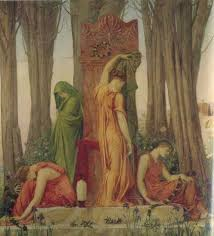
🍙 Electra Complex
In Neo-Freudian psychology, the Electra complex, as proposed by Carl Gustav Jung, is a girl's psychosexual competition with her mother for possession of her father. In the course of her psychosexual development, the complexis the girl's phallic stage; formation of a discrete sexual identity, a boy's analogous experience is the Oedipus complex. The Electra complex occurs in the third—phallic stage (ages 3–6)—of five psychosexual development stages: (i) the Oral, (ii) the Anal, (iii) the Phallic, (iv) the Latent, and (v) the Genital—in which the source libido pleasure is in a different erogenous zone of the infant’s body.In classical psychoanalytic theory, the child's identification with the same-sex parent is the successful resolution of the Electra complex and of the Oedipus complex; his and her key psychological experience to developing a mature sexual role and identity. Sigmund Freud instead proposed that girls and boys resolved their complexes differently—she via penis envy, he via castration anxiety; and that unsuccessful resolutions might lead to neurosis and homosexuality.Hence, women and men who are fixated in the Electra and Oedipal stages of their psychosexual development might be considered "father-fixated" and "mother-fixated" as revealed when the mate (sexual partner) resembles the father or the mother.
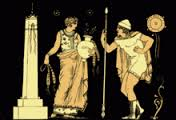
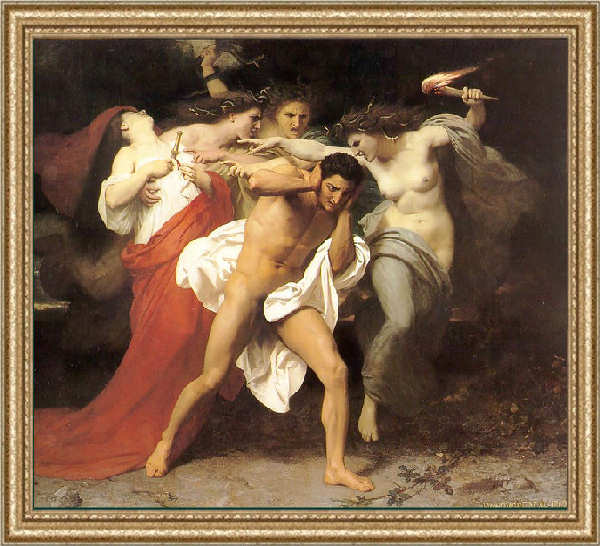
🍙 Orestes
In Greek mythology, Orestes was the son of Clytemnestra and Agamemnon. He is the subject of several Ancient Greek plays and of various myths connected with his madness and purification, which retain obscure threads of much older ones.
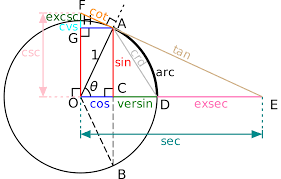
🍙 Trigonometry
Trigonometry is a branch of mathematics that studies relationships involving lengths and angles of triangles. The field emerged in the Hellenistic world during the 3rd century BC from applications of geometry to astronomical studies.
🍙 Kilometer
The kilometre or kilometer is a unit of length in the metric system, equal to one thousand metres (kilo- being the SI prefix for 1000). It is now the measurement unit used officially for expressing distances between geographical places on land in most of the world; notable exceptions are the United States and the road network of the United Kingdom where the statute mile is the official unit used.
🍙 Thermometer
A thermometer is a device that measures temperature or a temperature gradient. A thermometer has two important elements: (1) a temperature sensor (e.g. the bulb of a mercury-in-glass thermometer) in which some physical change occurs with temperature, and (2) some means of converting this physical change into a numerical value (e.g. the visible scale that is marked on a mercury-in-glass thermometer). Thermometers are widely used in industry to control and regulate processes, in the study of weather, in medicine, and in scientific research.

🍙 Hydrometer
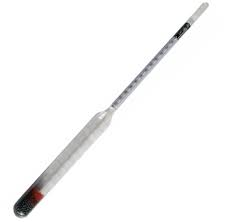
A hydrometer or areometer is an instrument that measures the specific gravity (relative density) of liquids—the ratio of the density of the liquid to the density of water.
A hydrometer is usually made of glass, and consists of a cylindrical stem and a bulb weighted with mercury or lead shot to make it float upright.
🍙 Barometer
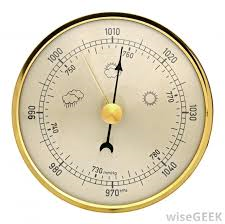
A barometer is a scientific instrument used in meteorology to measure atmospheric pressure. Pressure tendency can forecast short term changes in the weather. Numerous measurements of air pressure are used within surface weather analysis to help find surface troughs, high pressure systems and frontal boundaries.
🍙 Clytemnestra
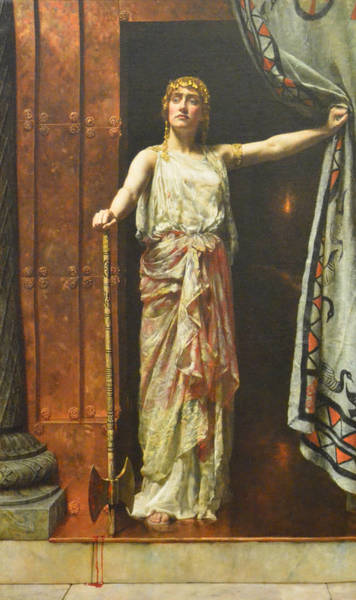
Clytemnestra, also spelled Clytaemnestra, in ancient Greek legend, was the wife of Agamemnon, ruler of the Ancient Greek kingdom of Mycenae or Argos. In the Oresteia by Aeschylus, she murdered Agamemnon – said by Euripides to be her second husband – and the Trojan princess Cassandra, whom he had taken as war prize following the sack of Troy; however, in Homer's Odyssey, her role in Agamemnon's death is unclear and her character is significantly more subdued.
👉 Background:
Clytemnestra was the daughter of Tyndareus and Leda, the King and Queen of Sparta. According to the myth, Zeus appeared to Leda in the form of a swan, seducing and impregnating her. Leda produced four offspring from two eggs: Castor and Clytemnestra from one egg, and Helen and Polydeuces (Pollux) from the other. Therefore, Castor and Clytemnestra were fathered by Tyndareus, whereas Helen and Polydeuces were fathered by Zeus.
限會員,要發表迴響,請先登入


