2017.05.31
💠 Week 17
💠 Dover Beach
It is a lyric poem by the English poet Matthew Arnold. It was first published in 1867 in the collection New Poems.
Analysis
In Stefan Collini's opinion, "Dover Beach" is a difficult poem to analyse, and some of its passages and metaphors have become so well known that they are hard to see with "fresh eyes". Arnold begins with a naturalistic and detailed nightscape of the beach at Dover in which auditory imagery plays a significant role ("Listen! you hear the grating roar"). The beach, however, is bare, with only a hint of humanity in a light that "gleams and is gone". Reflecting the traditional notion that the poem was written during Arnold's honeymoon (see composition section), one critic notes that "the speaker might be talking to his bride"
The anonymous figure to whom Arnold addresses his poem becomes the subject of Hecht's poem. In Hecht's poem she "caught the bitter allusion to the sea", imagined "what his whiskers would feel like / On the back of her neck", and felt sad as she looked out across the channel. "And then she got really angry" at the thought that she had become "a sort of mournful cosmic last resort". After which she says "one or two unprintable things".
Summary
One night, the speaker of "Dover Beach" sits with a woman inside a house, looking out over the English Channel near the town of Dover. They see the lights on the coast of France just twenty miles away, and the sea is quiet and calm.
When the light over in France suddenly extinguishes, the speaker focuses on the English side, which remains tranquil. He trades visual imagery for aural imagery, describing the "grating roar" of the pebbles being pulled out by the waves. He finishes the first stanza by calling the music of the world an "eternal note of sadness."
Matthew Arnold: Poems Summary and Analysis of "Dover Beach" (1867)
When the light over in France suddenly extinguishes, the speaker focuses on the English side, which remains tranquil. He trades visual imagery for aural imagery, describing the "grating roar" of the pebbles being pulled out by the waves. He finishes the first stanza by calling the music of the world an "eternal note of sadness.
The next stanza flashes back to ancient Greece, where Sophocles heard this same sound on the Aegean Sea, and was inspired by it to write his plays about human misery.
Stanza three introduces the poem's main metaphor, with: "The Sea of Faith/Was once, too, at the full, and round earth's shore." The phrase suggests that faith is fading from society like the tide is from the shore. The speaker laments this decline of faith through melancholy diction.
In the final stanza, the speaker directly addresses his beloved who sits next to him, asking that they always be true to one another and to the world that is laid out before them. He warns, however, that the world's beauty is only an illusion, since it is in fact a battlefield full of people fighting in absolute darkness.
💠 Matthew Arnold (1822~1888)
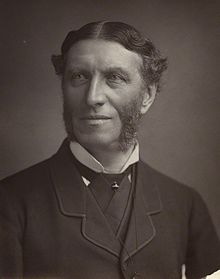
He was an English poet and cultural critic who worked as an inspector of schools. He was the son of Thomas Arnold, the famed headmaster of Rugby School, and brother to both Tom Arnold, literary professor, and William Delafield Arnold, novelist and colonial administrator. Matthew Arnold has been characterized as a sage writer, a type of writer who chastises and instructs the reader on contemporary social issues
"Matthew Arnold," wrote G. W. E. Russell in Portraits of the Seventies, is "a man of the world entirely free from worldliness and a man of letters without the faintest trace of pedantry".[11] Arnold was a familiar figure at the Athenaeum Club, a frequent diner-out and guest at great country houses, fond of fishing and shooting, and a lively conversationalist, with a self-consciously cultivated air combining foppishness and Olympian grandeur. He read constantly, widely, and deeply, and in the intervals of supporting himself and his family by the quiet drudgery of school inspecting, filled notebook after notebook with meditations of an almost monastic tone. In his writings, he often baffled and sometimes annoyed his contemporaries by the apparent contradiction between his urbane, even frivolous manner in controversy, and the "high seriousness" of his critical views and the melancholy, almost plaintive note of much of his poetry. "A voice poking fun in the wilderness" was T. H. Warren's description of him.
限會員,要發表迴響,請先登入


