2016.11.17
🎁Extra Information🎁
🍙 When I was One-and-Twenty
by A.E Housman
When I was one-and-twenty
I heard a wise man say,
“Give crowns and pounds and guineas
But not your heart away;
Give pearls away and rubies
But keep your fancy free.”
But I was one-and-twenty,
No use to talk to me.
When I was one-and-twenty
I heard him say again,
“The heart out of the bosom
Was never given in vain;
Tis paid with sighs a plenty
And sold for endless rue.”
And I am two-and-twenty,
And oh, ’tis true, ’tis true.

>>Analysis
The theme of the poem "When I was One and Twenty" is given by the “wise man” in two pieces of wisdom, but they are closely related. One is, in effect, “Don’t give your heart away,” that is, don’t fall in love; the second is, “If you do give your heart away, you will suffer.”
The speaker ignored the advice, and now, at twenty-two, has learned its truth. The last line of the poem, with its repetition, suggests that the speaker takes his youthful sorrow very seriously (“And oh ’tis true, ’tis true”), but surely the line strikes one (and is intended to strike) as a trifle maudlin. And, since the poem jingles nicely and almost suggests a nursery rhyme, we can hardly take the grief too seriously. We listen with sympathetic amusement to this tale of disillusionment, but we are pretty confident that the young man in the poem will survive, and probably will live to love another day.
🍙 The Philosophy of Composition
by Edgar Allan Poe
"The Philosophy of Composition" is an 1846 essay written by American writer Edgar Allan Poe that elucidates a theory about how good writers write when they write well. He concludes that length, "unity of effect" and a logical method are important considerations for good writing. He also makes the assertion that "the death... of a beautiful woman" is "unquestionably the most poetical topic in the world". Poe uses the composition of his own poem "The Raven" as an example. The essay first appeared in the April 1846 issue of Graham's Magazine. It is uncertain if it is an authentic portrayal of Poe's own method. Generally, the essay introduces three of Poe's theories regarding literature. The author recounts this idealized process by which he says he wrote his most famous poem, "The Raven" to illustrate the theory, which is in deliberate contrast to the "spontaneous creation" explanation put forth, for example, by Coleridge as an explanation for his poem Kubla Khan. Poe's explanation of the process of writing is so rigidly logical, however, that some have suggested the essay was meant as a satire or hoax.
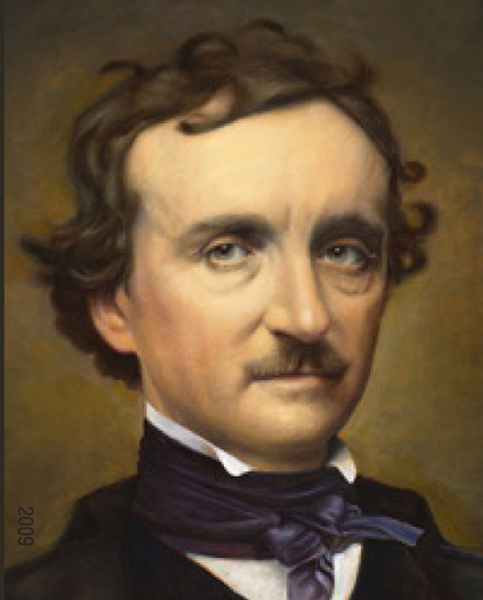
🍙 The Raven ---- by Edgar Allan Poe
In the essay, Poe traces the logical progression of his creation of "The Raven" as an attempt to compose "a poem that should suit at once the popular and the critical taste." He claims that he considered every aspect of the poem. For example, he purposely set the poem on a tempestuous evening, causing the raven to seek shelter. He purposefully chose a pallid bust to contrast with the dark plume of the bird. The bust was of Pallas in order to evoke the notion of scholar, to match with the presumed student narrator poring over his "volume[s] of forgotten lore." No aspect of the poem was an accident, he claims, but is based on total control by the author. Even the term "Nevermore," he says, is based on logic following the "unity of effect." The sounds in the vowels in particular, he writes, have more meaning than the definition of the word itself. He had previously used words like "Lenore" for the same effect. The raven itself, Poe says, is meant to symbolize Mournful and Never-ending Remembrance. This may imply an autobiographical significance to the poem, alluding to the many people in Poe's life who had died.

🍙 Do not go gentle into that good night
by Dylan Thomas
Do not go gentle into that good night,
Old age should burn and rave at close of day;
Rage, rage against the dying of the light.
Though wise men at their end know dark is right,
Because their words had forked no lightning they
Do not go gentle into that good night.
Good men, the last wave by, crying how bright
Their frail deeds might have danced in a green bay,
Rage, rage against the dying of the light.
Wild men who caught and sang the sun in flight,
And learn, too late, they grieved it on its way,
Do not go gentle into that good night.
Grave men, near death, who see with blinding sight
Blind eyes could blaze like meteors and be gay,
Rage, rage against the dying of the light.
And you, my father, there on the sad height,
Curse, bless, me now with your fierce tears, I pray.
Do not go gentle into that good night.
Rage, rage against the dying of the light.
>>Analysis
‘'Do Not Go Gentle Into That Night’' was written by Dylan Thomas in 1945, when his father D. J Thomas was seriously ill. The poem was published in his collection, In Country Sleep, after his father’s death. The poem is a protest against the idea of accepting death quietly. It discusses the various ways to approach death in old age and advocates struggling against death until the last breath.
🍙 Journey of the Magi ---- by T.S. EliotA
cold coming we had of it,
Just the worst time of the year
For a journey, and such a journey:
The ways deep and the weather sharp,
The very dead of winter.'
And the camels galled, sore-footed,
refractory,
Lying down in the melting snow.
There were times we regretted
The summer palaces on slopes, the
terraces,
And the silken girls bringing sherbet.
Then the camel men cursing and
grumbling
And running away, and wanting their
liquor and women,
And the night-fires going out, and the
lack of shelters,
And the cities hostile and the towns
unfriendly
And the villages dirty and charging high
prices:
A hard time we had of it.
At the end we preferred to travel all
night,
Sleeping in snatches,
With the voices singing in our ears,
saying
That this was all folly.
Then at dawn we came down to a
temperate valley,
Wet, below the snow line, smelling of
vegetation;
With a running stream and a water-mill
beating the darkness,
And three trees on the low sky,
And an old white horse galloped in
away in the meadow.
Then we came to a tavern with
vine-leaves over the lintel,
Six hands at an open door dicing for
pieces of silver,
And feet kicking the empty wine-skins.
But there was no imformation, and so
we continued
And arrived at evening, not a moment
too soon
Finding the place; it was (you may say)
satisfactory.
All this was a long time ago, I
remember,
And I would do it again, but set down
This set down
This: were we led all that way for
Birth or Death? There was a Birth,
certainly,
We had evidence and no doubt. I had
seen birth and death,
But had thought they were different;
this Birth was
Hard and bitter agony for us, like
Death, our death.
We returned to our places, these
Kingdoms,
But no longer at ease here, in the old
dispensation,
With an alien people clutching their
gods.
I should be glad of another death.
>>Analysis
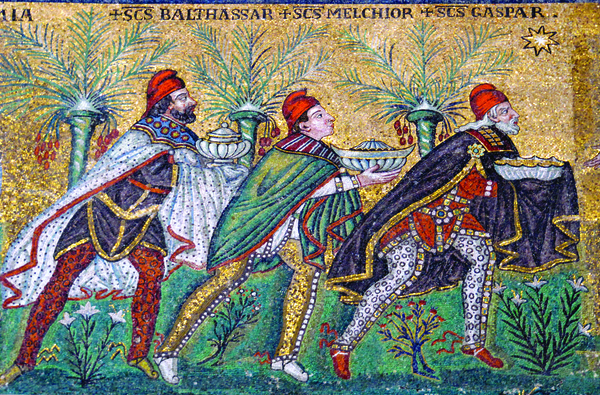
“Journey of the Magi” is a first-person recollection of a Magus, one of the
Persian Magi who came to visit the Christ child as recorded in the second chapter of Matthew. The poem is narrated, however, from the perspective of many years later, after the Magus has returned to his home country. He is an elderly man, reflecting on events that occurred many years prior.
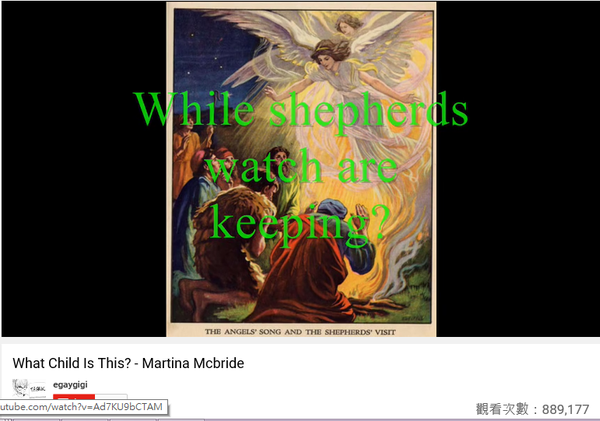
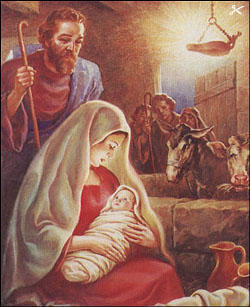
🍙 What Child Is This
What child is this, who, laid to rest,
On Mary's lap is sleeping?
Whom angels greet with anthems sweet,
While shepherds watch are keeping?
This, this is Christ the King,
Whom shepherds guard and angels sing:
Haste, haste to bring Him laud,
The babe, the son of Mary.
Why lies He in such mean estate,
Where ox and donkeys are feeding?
Good Christians, fear, for sinners here
The silent Word is pleading.
Nails, spears shall pierce him through,
the cross he bore for me, for you.
Hail, hail the Word made flesh,
the Babe, the Son of Mary.
So bring him incense, gold, and myrrh,
Come, peasant, king, to own him.
The King of kings salvation brings,
Let loving hearts enthrone him.
Raise, raise a song on high,
The virgin sings her lullaby
Joy, joy for Christ is born,
The babe, the Son of Mary.
This, this is Christ the King,
Whom shepherds guard and angels sing:
Haste, haste to bring Him laud,The babe, the son of Mary
🎪 1100 Words I need to know 🎪
🎓 Week 25~27
Ob- : "toward, against, across, down,"
💠 Obliterate (v.): ob "against" + littera (also litera) "letter, script"
1. to remove all signs of something, either by destroying it or by covering it so that it cannot be seen
➡ The missile strike was devastating - the target was totally obliterated. 2. to make an idea or feeling disappear completely
➡ Maybe she gets drunk to obliterate painful memories.
👉 Related: (n.) obliteration
in- : not, opposite of, without
💠 Imbibe (v.): in- "into, in, on, upon" + bibere "to drink,"
- to drink, especially alcohol
➡ Have you been imbibing again?
2. to receive and accept information
💠 Doddering (adj.):
1. weak and unable to walk in a normal way, usually because you are old
➡ a doddery old man
👉 Related: dodder (v.)
💠 Aegis (n.):
- with the protection or support of someone or something, especially an organization
➡ The project was set up under the aegis of the university.
Ab- : away, from, from off, down
💠 Aversion (n.): ab- "off, away from" + vertere "to turn"
- (a person or thing that causes) a feeling of strong dislike or of not wishing to do something
➡ I felt an instant aversion to his parents.
👉 Phrase: Aversion to
👉 Related: avert (v.)
awesome (adj.) Look up awesome at Dictionary.com
1590s, "profoundly reverential," from awe (n.) + -some (1). Meaning "inspiring awe" is from 1670s; weakened colloquial sense of "impressive, very good" is recorded by 1961 and was in vogue from after c. 1980. Related: Awesomely; awesomeness.
eruption (n.) Look up eruption at Dictionary.com
early 15c., from Middle French éruption (14c.) and directly from Latin eruptionem (nominative eruptio) "a breaking out," noun of action from past participle stem of erumpere "break out, burst forth" (see eruption).
puny (adj.) Look up puny at Dictionary.com
1570s, "inferior in rank" (1540s as a noun, "junior pupil, freshman"), from Middle French puisné (Modern French puîné), from Old French puisne "born later, younger, youngest" (12c., contrasted with aisné "first-born"), from puis nez, from puis "afterward" (from Vulgar Latin *postius, from Latin postea "after this, hereafter," from post "after," see post-, + ea "there") + Old French né "born," from Latin natus, past participle of nasci "be born" (Old Latin gnasci; see genus). Sense of "small, weak, insignificant" first recorded 1590s. Compare puisne. Related: Puniness.
debris (n.) Look up debris at Dictionary.com
1708, from French débris "remains, waste, rubbish" (16c.), from obsolete debriser "break down, crush," from Old French de- (see de-) + briser "to break," from Late Latin brisare, possibly of Gaulish origin (compare Old Irish brissim "I break").
dispersed (v.) Look up disperse at Dictionary.com
late 14c., from Latin dispersus, past participle of dispergere "to scatter," from dis- "apart, in every direction" (see dis-) + spargere "to scatter" (see sparse). The Latin word is glossed in Old English by tostregdan. Related: Dispersed; dispersing.
-
obliterate (v.) Look up obliterate at Dictionary.com
c. 1600, from Latin obliteratus, past participle of obliterare "cause to disappear, blot out, erase, efface," figuratively "cause to be forgotten," from ob "against" (see ob-) + littera (also litera) "letter, script" (see letter (n.)); abstracted from phrase literas scribere "write across letters, strike out letters." Related: Obliterated; obliterating.
deplorable (adj.) Look up deplorable at Dictionary.com
"that must be deplored, lamentable, grievous, miserable," also "pitiable, contemptible," 1610s, from -able + deplore (v.) "lament, bewail, give up as hopeless," from French déplorer (13c.), from Latin deplorare "bewail, lament, give up for lost," from de- "entirely" (see de-) + plorare "weep, cry out," which is of unknown origin. Perhaps from or inspired by French déplorable or directly from Late Latin deplorabilis. Johnson (mid-18c.) noted the weakened colloquial use of the word for "very bad." Related: Deplorably; deplorability.
initiate (n.) Look up initiate at Dictionary.com
"one who has been initiated" (in secret doctrines, etc.), 1732, from obsolete or archaic past participle adjective initiate "initiated, instructed in secret knowledge" (c. 1600), from Latin initiatus (see initiate (v.)).
(v.) Look up initiate at Dictionary.com
c. 1600, "introduce to some practice or system," also "begin, set going," from Late Latin initiatus, past participle of initiare "to begin, originate," in classical Latin only in the sense "to instruct in mysteries or sacred knowledge." This is from initium "a beginning; an entrance," also in plural initia "constituent parts; sacred mysteries," a noun use of the neuter past participle of inire "to go into, enter upon, begin," from in- "into, in" (see in- (2)) + ire "to go" (see ion).
In some senses the English word is a back-formation from initiation. Related: Initiated; initiates; initiating; initiator.
conflagration
rue (v.) Look up rue at Dictionary.com
"feel regret," Old English hreowan "make sorry, distress, grieve" (class II strong verb; past tense hreaw, past participle hrowen), from Proto-Germanic *khrewan (source also of Old Frisian riowa, Middle Dutch rouwen, Old Dutch hrewan, German reuen "to sadden, cause repentance"); in part, blended with Old English weak verb hreowian "feel pain or sorrow," and perhaps influenced by Old Norse hryggja "make sad," both from Proto-Germanic *khruwjan, all from PIE root *kreue- (2) "to push, strike" (see anacrusis). Related: Rued; ruing.
(n.1) Look up rue at Dictionary.com
perennial evergreen shrub, late 14c., from Old French rue (13c.), earlier rude, from Latin ruta "rue," probably from Greek rhyte, of uncertain etymology, originally a Peloponnesian word. The bitter taste of its leaves led to many punning allusions to rue (n.2.).
(n.2) Look up rue at Dictionary.com
"sorrow, repentance," Old English hreow "grief, repentance, sorrow, regret, penitence," common Germanic (Frisian rou, Middle Dutch rou, Dutch rouw, Old High German (h)riuwa, German reue), related to the root of rue (v.).
(n.3) Look up rue at Dictionary.com
French for "street," from Vulgar Latin *ruga (source also of Old Italian ruga, Spanish rua "street in a village"), from Latin ruga, properly "a furrow," then in Medieval Latin "a path, street," from PIE root *reue- (2) "to smash, knock down, tear out, dig up" (see rough (adj.)).
-
congenial (adj.) Look up congenial at Dictionary.com
1620s, "kindred, sympathetic," from Latin com "with, together" (see com-) + genialis "of birth," thus, "kindred" (see genus). Sense of "agreeable" is first recorded 1711. Related: Congeniality.
hoard (n.) Look up hoard at Dictionary.com
Old English hord "a treasure, valuable stock or store," from Proto-Germanic *huzdam (source also of Old Saxon hord "treasure, hidden or inmost place," Old Norse hodd, German Hort, Gothic huzd "treasure," literally "hidden treasure"), from PIE root *(s)keu- "to cover, conceal" (see hide (n.1)).
(v.) Look up hoard at Dictionary.com
Old English hordian "to hoard," from the root of hoard (n.). Cognate with Old High German gihurten, German gehorden, Gothic huzdjan. Related: Hoarded; hoarding.
sage (adj.) Look up sage at Dictionary.com
"wise," c. 1300 (late 12c. as a surname), from Old French sage "wise, knowledgeable, learned; shrewd, skillful" (11c.), from Gallo-Roman *sabius, from Vulgar Latin *sapius, from Latin sapere "have a taste, have good taste, be wise," from PIE root *sap- "to taste" (see sap (n.1)). Meaning "characterized by wisdom" is from 1530s. Related: Sageness.
(n.1) Look up sage at Dictionary.com
kind of herb (Salvia officinalis), early 14c., from Old French sauge (13c.), from Latin salvia, from salvus "healthy" (see safe (adj.)). So called for its healing or preserving qualities (it was used to keep teeth clean and relieve sore gums, and boiled in water to make a drink to alleviate arthritis). In English folklore, sage, like parsley, is said to grow best where the wife is dominant. In late Old English as salvie, directly from Latin. Compare German Salbei, also from Latin.
(n.2) Look up sage at Dictionary.com
"man of profound wisdom," mid-14c., from sage (adj.). Originally applied to the Seven Sages -- Thales, Solon, Periander, Cleobulus, Chilon, Bias, and Pittacus.
aegis "protection," 1793, a figurative use of Latin aegis, from Greek Aigis, the name of the shield of Zeus, a word said by Herodotus to be related to aix (genitive aigos) "goat," from PIE *aig- "goat" (source also of Sanskrit ajah, Lithuanian ozys "he-goat"), as the shield was of goatskin. Athene's aigis was a short goat-skin cloak, set with a gorgon's head and fringed with snakes. The exact use and purpose of it is not now clear.
The goatskin would be worn with the two forelegs tied in front of the wearer's breast, or possibly with the head passed through an opening made at the neck, by the removal of the animal's head. [F. Warre Cornish, ed., "Dictionary of Greek and Roman Antiquities," London, 1898]
detriment (n.) Look up detriment at Dictionary.com
early 15c., from Middle French détriment or directly from Latin detrimentum "a rubbing off; a loss, damage, defeat," from past participle stem of detere "to wear away," figuratively "to weaken, impair," from de- "away" (see de-) + terere "to rub, wear" (see throw (v.)).
-
longevity (n.) Look up longevity at Dictionary.com
1610s, from Late Latin longaevitatem (nominative longaevitas) "great age, long life," from Latin longaevus "of great age, ancient, aged," from longus "long" (see long (adj.)) + aevum "lifetime, age" (see eon).
imbibe (v.) Look up imbibe at Dictionary.com
late 14c., from Old French imbiber, embiber "to soak into," and directly from Latin imbibere "absorb, drink in, inhale," from assimilated form of in- "into, in, on, upon" (see in- (2)) + bibere "to drink," related to potare "to drink," from PIE *po(i)- "to drink" (see potion). Figurative sense of "mentally drink in" (knowledge, ideas, etc.) was the main one in classical Latin, first attested in English 1550s. Related: Imbibed; imbibing.
virile (adj.) Look up virile at Dictionary.com
late 15c., "characteristic of a man; marked by manly force," from Middle French viril (14c.) and directly from Latin virilis "of a man, manly, worthy of a man," from vir "a man, a hero," from PIE *wi-ro- "man, freeman" (source also of Sanskrit virah, Avestan vira-, Lithuanian vyras, Old Irish fer, Welsh gwr, Gothic wair, Old English wer "man"). Virile member for "penis" is recorded from 1540s.
senile (adj.) Look up senile at Dictionary.com
1660s, "suited to old age," from French sénile (16c.), from Latin senilis "of old age," from senex (genitive senis) "old, old man," from PIE root *sen- "old" (source also of Sanskrit sanah "old;" Avestan hana- "old;" Old Persian hanata- "old age, lapse of time;" Armenian hin "old;" Greek enos "old, of last year;" Lithuanian senas "old," senis "an old man;" Gothic sineigs "old" (used only of persons), sinistra "elder, senior;" Old Norse sina "dry standing grass from the previous year;" Old Irish sen, Old Welsh hen "old"). Meaning "weak or infirm from age" is first attested 1848.
doddering 1610s, perhaps from Middle English daderen "to quake, tremble" (late 15c.), apparently frequentative of dialectal dade, on a form similar to totter, patter. Related: Doddered; doddering.
week26
lethargic (adj.) Look up lethargic at Dictionary.com
late 14c., litargik, "morbidly drowsy, manifesting lethargy," from Latin lethargicus "affected with lethargy," from Greek lethargikos "drowsy," from lethargos "forgetful; inactive" (see lethargy). From 1590s as "pertaining to lethargy." Related: Lethargically. In 17c. also with a verb form, lethargize, and a noun, letharge "lethargic patient."
prevalent (adj.)early 15c., "having great power or force," from Latin praevalentem (nominative praevalens) "of superior strength; mighty," present participle of praevalere "to be more able" (see prevail). Meaning "extensively existing, in general use" is from 1650s.
paramount (adj.) Look up paramount at Dictionary.com
1530s, from Anglo-French paramont, Old French paramont "above" (in place, order, degree), mid-14c., from Old French par "by," from Latin per "through, for, by" (see per (prep.)) + amont "up," from a mont "upward" (see amount (v.)). The whole from Latin per ad montem, literally "to the hill."
remiss (adj.) Look up remiss at Dictionary.com
early 15c., "weak, dissolved," from Latin remissus "relaxed, languid; negligent," past participle of remittere "slacken, abate, let go" (see remit). Meaning "characterized by lack of strictness" is attested from mid-15c.; that of "characterized by negligence" is from mid-15c.
hostile (adj.) Look up hostile at Dictionary.com
late 15c., from Middle French hostile "of or belonging to an enemy" (15c.) or directly from Latin hostilis "of an enemy, belonging to or characteristic of the enemy; inimical," from hostis "enemy" (see guest (n.)). The noun meaning "hostile person" is recorded from 1838, American English, a word from the Indian wars. Related: Hostilely.
-
rebuke (v.) Look up rebuke at Dictionary.com
early 14c., "to reprimand, reprove; chide, scold," from Anglo-French rebuker "to repel, beat back," Old French rebuchier, from re- "back" (see re-) + buschier "to strike, chop wood," from busche (French bûche) "wood," from Proto-Germanic *busk- (see bush (n.)). Related: Rebuked; rebuking.
early 15c., "a reproof, reprimand," from rebuke (v.).
aversion (n.) Look up aversion at Dictionary.com
"a turning away from," 1590s; figurative sense of "mental attitude of repugnance" is from 1650s, from Middle French aversion and directly from Latin aversionem (nominative aversio), noun of action from past participle stem of aversus "turned away, backwards, behind, hostile," itself past participle of avertere (see avert). Earlier in the literal sense of "a turning away from" (1590s). Aversion therapy in psychology is from 1950.
evince (v.) Look up evince at Dictionary.com
c. 1600, "disprove, confute," from French évincer "disprove, confute," from Latin evincere "conquer, overcome subdue, vanquish, prevail over; elicit by argument, prove," from assimilated form of ex "out" (see ex-) + vincere "overcome" (see victor). Meaning "show clearly" is late 18c. Not clearly distinguished from its doublet, evict, until 18c. Related: Evinced; evinces; evincing; evincible.
vogue 1570s, the vogue, "height of popularity or accepted fashion," from Middle French vogue "fashion, success;" also "drift, swaying motion (of a boat)" literally "a rowing," from Old French voguer "to row, sway, set sail" (15c.), probably from a Germanic source. Compare Old High German wagon "to float, fluctuate," literally "to balance oneself;" German Woge "wave, billow," wogen "fluctuate, float" (see weigh).
Perhaps the notion is of being "borne along on the waves of fashion." Italian voga "a rowing," Spanish boga "rowing," but colloquially "fashion, reputation" also probably are from the same Germanic source. Phrase in vogue "having a prominent place in popular fashion" first recorded 1643. The fashion magazine began publication in 1892.
superficial (adj.) Look up superficial at Dictionary.com
late 14c., in anatomical and mathematical uses, "of or relating to a surface," from Late Latin superficialis "of or pertaining to the surface," from superficies "surface, upper side, top," from super "above, over" (see super-) + facies "form, face" (see face (n.)). Meaning "not deep, without thorough understanding, cursory, comprehending only what is apparent or obvious" (of perceptions, thoughts, etc.) first recorded early 15c. (implied in superficially "not thoroughly").
-
jettison 1848, "to throw overboard," especially to save a ship in danger, from jettison (n.) "act of throwing overboard" to lighten a ship. This noun was an 18c. Marine Insurance writers' restoration of the earlier form and original sense of the 15c. word that had become jetsam, probably because jetsam had taken on a sense of "things cast overboard" and an unambiguous word was needed for "act of casting things overboard."
Middle English jetteson (n.) "act of throwing overboard" is from Anglo-French getteson, Old French getaison "act of throwing (goods overboard)," especially to lighten a ship in distress, from Late Latin iactionem (nominative iactatio) "a throwing, act of throwing," noun of action from past participle stem of iactare "to throw, toss about" (see jet (v.1)). Related: Jettisoned.
inevitable (adj.) Look up inevitable at Dictionary.com
"unavoidable," mid-15c., from Latin inevitabilis "unavoidable," from in- "not, opposite of" (see in- (1)) + evitabilis "avoidable," from evitare "to avoid," from ex "out" (see ex-) + vitare "shun," originally "go out of the way." As a noun from 1850. Related: Inevitableness.
lucrative (adj.) Look up lucrative at Dictionary.com
early 15c., from Old French lucratif "profitable" and directly from Latin lucrativus "gainful, profitable," from lucratus, past participle of lucrari "to gain, win, acquire," from lucrum "gain, profit" (see lucre). Related: Lucratively; lucrativeness.
(v.) Look up tussle at Dictionary.com
"to struggle, scuffle, wrestle confusedly," late 15c. (transitive); 1630s (intransitive), Scottish and northern English variant of touselen (see tousle). Related: Tussled; tussling.
intrinsic
(n.) Look up tussle at Dictionary.com
"a struggle, conflict, scuffle," 1620s (but rare before 19c.), from tussle (v.).
-
acute (adj.) Look up acute at Dictionary.com
late 14c., originally of fevers and diseases, "coming quickly to a crisis" (opposed to chronic), from Latin acutus "sharp, pointed," figuratively "shrill, penetrating; intelligent, cunning," past participle of acuere "to sharpen" (literal and figurative), from PIE root *ak- "rise to a point, be sharp" (see acro-). Also used of humors (early 15c.). Meaning "ending in a sharp point" is from 1560s; sense of "sharp or penetrating in intellect" is from 1580s. OF feelings, pains, etc., "intense," 1727. As a noun, early 15c. of fevers; c. 1600 as "acute accent." Related: Acutely; acuteness.
gist (n.) Look up gist at Dictionary.com
1711, "the real point" (of a law case, etc.), from Anglo-French legalese phrases such as cest action gist "this action lies," from Old French gist en "it consists in, it lies in," from gist (Modern French gît), third person singular present indicative of gésir "to lie," from Latin iacet "it lies," from iacere "to lie, rest," related to iacere "to throw" (see jet (v.)). Extended sense of "essence" first recorded 1823.
transient (adj.) Look up transient at Dictionary.com
c. 1600, "transitory, not durable," from Latin transientem (nominative transiens) "passing over or away," present participle of transire "cross over, go over, pass over, hasten over, pass away," from trans "across, beyond" (see trans-) + ire "to go" (see ion). Meaning "passing through a place without staying" is from 1680s. The noun is first attested 1650s; specific sense of "transient guest or boarder" attested from 1857. Related: Transiently.
terse (adj.) Look up terse at Dictionary.com
1590s (implied in tersely), "clean-cut, burnished, neat," from French ters "clean," and directly from Latin tersus "wiped off, clean, neat," from past participle of tergere "to rub, polish, wipe." Sense of "concise or pithy in style or language" is from 1777, which led to a general sense of "neatly concise." The pejorative meaning "brusque" is a fairly recent development. Related: Terseness.
cogent (adj.) Look up cogent at Dictionary.com
1650s, from French cogent "necessary, urgent" (14c.), from Latin cogentem (nominative cogens), present participle of cogere "to curdle; to compel; to collect," literally "to drive together," from com- "together" (see co-) + agere "to set in motion, drive, drive forward; to do, perform" (see act (n.)).
-
week 27
(n.) Look up pinnacle at Dictionary.com
c. 1300, "mountain, peak, promontory," from Old French pinacle "top, gable" (13c.) and directly from Late Latin pinnaculum "peak, pinnacle, gable," extended form (via diminutive suffix, but not necessarily implying smallness) of Latin pinna "peak, point," (see pin (n.1)). Figurative use is attested from c. 1400.
array
(adj.) Look up obscure at Dictionary.com
c. 1400, "dark," figuratively "morally unenlightened; gloomy," from Old French obscur, oscur "dark, clouded, gloomy; dim, not clear" (12c.) and directly from Latin obscurus "dark, dusky, shady," figuratively "unknown; unintelligible; hard to discern; from insignificant ancestors," from ob "over" (see ob-) + -scurus "covered," from PIE *(s)keu- "to cover, conceal" (see sky). Related: Obscurely.
(v.) Look up obscure at Dictionary.com
early 15c., "to cover (something), cloud over," from obscure (adj.) or else from Middle French obscurer, from Latin obscurare "to make dark, darken, obscure," from obscurus. Related: Obscured; obscuring.
ardent (adj.) Look up ardent at Dictionary.com
early 14c., of alcoholic distillates, brandy (ardent spirits), etc., from Old French ardant (13c.) "burning, hot; zealous," from Latin ardentem (nominative ardens) "glowing, fiery, hot, ablaze," also used figuratively of passions, present participle of ardere "to burn," from PIE root *as- "to burn, glow" (source also of Old English æsce "ashes;" see ash (n.1)).
Ardent spirits (late 15c.) so called because they are inflammable, but the term now, if used at all, probably is felt in the figurative sense. The figurative sense (of "burning with" passions, desire, etc.) is from late 14c.; literal sense of "burning, parching" (c. 1400) remains rare. Related: Ardently.
culminate (v.) Look up culminate at Dictionary.com
1640s, from Late Latin culminatus past participle of culminare "to top, to crown," from Latin culmen (genitive culminis) "top, peak, summit, roof, gable," also used figuratively, contraction of columen (see column). Related: Culminated; culminating.
-
constrict (v.) Look up constrict at Dictionary.com
early 15c., from Latin constrictus, past participle of constringere "compress" (see constrain). A direct borrowing from Latin of the same word which, via French, became constrain. Related: Constricted; constricting.
prodigy (n.) Look up prodigy at Dictionary.com
late 15c., "sign, portent, something extraordinary from which omens are drawn," from Latin prodigium "prophetic sign, omen, portent, prodigy," from pro "forth, before" (see pro-) + -igium, a suffix or word of unknown origin, perhaps from the same source as aio "I say" (see adage). Meaning "child with exceptional abilities" first recorded 1650s. Related: Prodigial.
bereft (adj.) Look up bereft at Dictionary.com
late 14c., past participle adjective from bereave (v.).
falter (v.) Look up falter at Dictionary.com
late 14c., "to stagger, totter," of unknown origin, possibly from a Scandinavian source (compare Old Norse faltrask "be burdened, hesitate, be troubled"), or else a frequentative of Middle English falden "to fold," influenced by fault (but OED rejects any direct connection to that word). Of the tongue, "to stammer," mid-15c. Related: Faltered; faltering.
exultation (n.) Look up exultation at Dictionary.com
early 15c., from Old French exultacion "joyousness, exultation," from Latin exultationem/exsultationem "a leaping for joy, exultation," noun of action from past participle stem of exultare/exsultare (see exult). The notion is of leaping or dancing for joy. An Old English word for it was heahbliss "high bliss."
-
vitriolic (adj.) Look up vitriolic at Dictionary.com
1660s, from French vitriolique (16c.) or from vitriol + -ic. Figurative sense "biting, caustic, very severe" is by 1841.
invective (n.) Look up invective at Dictionary.com
"an attacking in words," 1520s, from Medieval Latin invectiva "abusive speech," from Late Latin invectivus "abusive, scolding" from invect-, past participle stem of invehere "to carry in, bring in, introduce; assault, assail; attack with words" (see inveigh). For nuances of usage, see humor (n.). The earlier noun form in English was inveccion (mid-15c.), and invective (adj.) was in Middle English.
besmirch (v.) Look up besmirch at Dictionary.com
1590s, from be- + smirch.
Our Gayness and our Gilt are all besmyrcht. ["Henry V," IV.iii.110]
Related: Besmirched; besmirching.
voluminous (adj.) Look up voluminous at Dictionary.com
1610s, "forming a large mass," also "full of turnings and windings," from Late Latin voluminosus, from Latin volumen (genitive voluminis) "volume" (see volume). Related: Voluminously; voluminousness.
retrospect (n.) Look up retrospect at Dictionary.com
c. 1600, "a regard or reference" (to something), from Latin retrospectum, past participle of retrospicere "look back," from retro- "back" (see retro-) + specere "look at" (see scope (n.1)). Meaning "survey of past events" is from 1660s.
-
egotist (n.) Look up egotist at Dictionary.com
1714, "one who makes too frequent use of the first-person singular pronoun," see ego + -ist. First attested in Joseph Addison (see egotism). Related: Egotistic; egotistical; egotistically.
(n.) Look up humility at Dictionary.com
early 14c., "quality of being humble," from Old French umelite "humility, modesty, sweetness" (Modern French humilité), from Latin humilitatem (nominative humilitas) "lowness, small stature; insignificance; baseness, littleness of mind," in Church Latin "meekness," from humilis "humble" (see humble (adj.)). In the Mercian hymns, Latin humilitatem is glossed by Old English eaðmodnisse.
pungent
inveterate (adj.) Look up inveterate at Dictionary.com
late 14c., "old," from Latin inveteratus "of long standing, chronic, old," past participle of inveterare "become old in," from in- "in, into" (see in- (2)) + verb from vetus (genitive veteris) "old" (see veteran). From early 15c. as "firmly established by long continuance;" from c. 1500, of persons, "hardened, confirmed" (in habit, etc.). Related: Inveterateness.
(adj.) Look up adamant at Dictionary.com
late 14c., "hard, unbreakable," from adamant (n.). Figurative sense of "unshakeable" first recorded 1670s. Related: Adamantly; adamance.
(n.) Look up adamant at Dictionary.com
Old English aðamans "a very hard stone;" the modern word is a mid-14c. borrowing of Old French adamant "diamond; magnet" or directly from Latin adamantem (nominative adamas) "adamant, hardest iron, steel," also used figuratively, of character, from Greek adamas (genitive adamantos), name of a hypothetical hardest material, noun use of an adjective meaning "unbreakable, inflexible," which was metaphoric of anything unalterable (such as Hades), a word of uncertain origin.
It is perhaps literally "invincible, indomitable," from a- "not" (see a- (3)) + daman "to conquer, to tame," from PIE root *deme- "to constrain, force, break (horses)" (see tame (adj.)). "But semantically, the etymology is rather strange," according to Beekes, who suggests it might be a foreign word altered in Greek by folk etymology, and compares Akkadian (Semitic) adamu.
Applied in antiquity to a metal resembling gold (Plato), white sapphire (Pliny), magnet (Ovid, perhaps through confusion with Latin adamare "to love passionately"), steel, emery stone, and especially diamond, which is a variant of this word. "The name has thus always been of indefinite and fluctuating sense" [Century Dictionary].
限會員,要發表迴響,請先登入


