2017.03.01
💠 Week 3
Quiz of Genre_ Fiction
1. From what other genres did the novel originate?
A. poetry and epic
B. short stories and novellas
C. drama and historical fiction
D. prose romances and travel writing
“Fiction: Reading, Responding, Writing.”
2. How is the plot of a story different from its action?
A. The action is merely the events in a story, whereas the plot involves the way the author recounts the events to shape readers’ responses.
B. The action of a story does not provide introductory details about the characters in a story, whereas the plot does.
C. Action always ends in a climax, whereas plot ends in resolution.
D. Fictional plots always have flashbacks and flash forwards, whereas action is always chronological.
3. Which of the following most appropriately defines a story’s theme?
A. a general summary of the story’s action
B. a comparison between one character, action, or setting and some other concept or idea that the audience will recognize
C. a story’s central idea or message
D. a description of the story’s subject, often deriving from its title
4. What is the rising action of a fictional plot?
A. the life story and character background of the protagonist
B. introductory information that allows a reader to understand the conflict
C. a series of troubling events that leads to the plot’s major conflict
D. the turning point of the plot, in which the conflict finds resolution
5. How is an antihero distinguished from a conventional protagonist?
A. Antihero is another term for the antagonist, the character who opposes a story’s hero (the protagonist).
B. The antihero is the protagonist’s main foil—a minor character who illuminates the character of the hero by contrast.
C. An antihero is a protagonist who does not act in typically heroic ways.
D. An antihero is an archaic term for a story’s heroine, a female protagonist.
6. Which of the following describes a flat character?
A. a character who is not very interesting
B. a protagonist who feels oppressed by larger forces
C. a character who behaves and speaks in predictable, repetitive ways
D. a character who represents a specific social or cultural group
7. Why did the short story first become a popular genre during the nineteenth century?
A. The industrial revolution shortened the amount of time average people had for reading longer works.
B. The rise of periodicals like newspapers and magazines meant that more space was available for publication of short stories.
C. Writers like Henry James and Nathaniel Hawthorne popularized the form, and others wished to follow their examples.
D. Passengers on short train routes required a genre that could be finished before reaching their destinations.
8. What is historical fiction?
A. fiction that was written many centuries ago
B. fiction that begins with a real event and then completely rewrites what comes next
C. fiction that deals with characters who are historians
D. fiction that incorporates real people and events
9. The setting of a story is
A. the structural pattern formed by the plot’s events.
B. the expository details the narrator presents about the main character.
C. the time and place in which the story was first published.
D. the time and place in which the story is set.
10. Which of the following is the correct definition of a novella?
A. a short work of fiction of 1,000 words maximum, like a fable or parable
B. a short work of fiction of about 5,000 to 15,000 words, which can be read in one sitting
C. a work of fiction of about 17,000 to 40,000 words, which focuses on one character
D. a narrative of at least 40,000 words, designed for reading over several days
11. How do symbols function within an allegory?
A. They are unusually hard to decipher.
B. They refer to common hallmarks (particular plots, characters, motifs) that appear across cultures.
C. They are used again and again, to a different effect with each repetition.
D. They set up a series of correspondences throughout the entire work, often for a specific moral
12. The voice that tells an audience a fictional story is referred to as
A. the author.
B. the narrator.
C. the narratee.
D. the protagonist.
💠 Wharton
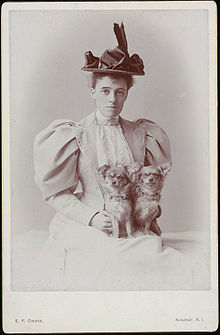
👉 Edith Wharton (1862~1937)
She was born in New York. She was a Pulitzer Prize-winning American novelist, short story writer, and designer. She was nominated for the Nobel Prize in Literature in 1927, 1928 and 1930. Wharton combined her insider's view of America's privileged classes with a brilliant, natural wit to write humorous, incisive novels and short stories of social and psychological insight. She was well acquainted with many of her era's other literary and public figures, including Theodore Roosevelt.
Edith began writing poetry and fiction as a young girl. She attempted to write a novel at age eleven. Her first publication was a translation of the German poem "Was die Steine Erzählen" ("What the Stones Tell") by Heinrich Karl Brugsch, which earned her $50. She was 15 at the time.
💠 Roman Fever
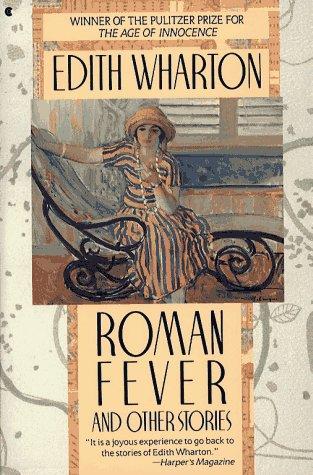
This is a short story by Edith Wharton. It was first published in the magazine Liberty in 1934, and was later included in Wharton's last short-story collection, The World Over.
👉 Summary:
In the story, Grace Ansley and Alida Slade were middle-aged American women visiting Rome with their daughters, Barbara Ansley and Jenny Slade. The elder women grew up in Manhattan, New York, and were friends from childhood. A youthful and romantic rivalry led Mrs. Slade to nurture feelings of jealousy and hatred against Mrs. Ansley.
In the opening pages of the story, the two women compare their daughters and reflect on each other's lives. Eventually, Mrs. Slade reveals a secret about a letter written to Mrs. Ansley on a visit to Rome many years ago. The letter was purportedly from Mrs. Slade's fiancé, Delphin, inviting Mrs. Ansley to a rendezvous at the Colosseum. In fact, Mrs. Slade herself had written the letter, in an attempt to get Mrs. Ansley out of the way of the engagement by disappointing her with Delphin's absence (and, it is implied, to get Mrs. Ansley sick with Roman Fever). Mrs. Ansley is upset at this revelation, but reveals that she was not left alone at the Colosseum—she responded to the letter, and Delphin arrived to meet her. Mrs. Slade eventually states that Mrs. Ansley ought not to feel sorry for her, because "I had Delphin for twenty-five years" while Mrs. Ansley had "nothing but a letter he didn't write." Mrs. Ansley responds, in the last sentence of the story, "I had Barbara."
👉 Theme:
Power struggle for those in the upper classes: Mrs. Slade and Mrs. Ansley vie for engagement to Mr. Slade. The eventual Mrs. Slade tries to remove Mrs. Ansley from the picture with a false letter inviting the latter to a night rendezvous. While the plan backfires for Mrs. Slade because her eventual husband actually meets with Mrs. Ansley, Mrs. Slade still marries her beau, but it seems the soon-to-be Mrs. Ansley actually bears Mr. Slade's daughter, Barbara.
Betrayal and deception: The two main characters use subterfuge and machination in order to improve their engagement prospects as youths.
👉 My Reflection:
I think the central conflict is that when the plot lead the reader to believe Mrs. Slade was the final winner. It turns out to be totally opposite result. When Mrs. Ansley said ‘I have Barbara.’ the whole story comes to the climax and it makes the biggest conflict between Mrs. Slade and Mrs. Ansley.
💠 Virginia Woolf (1882~1941)
She was born in Kensington, Middlesex, England. She was the British modernist author.
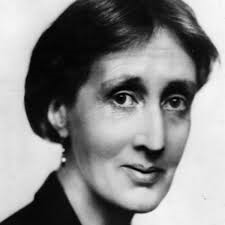
She was an English writer who is considered one of the foremost modernists of the 20th century, and a pioneer in the use of stream of consciousness as a narrative device. Born in an affluent household in Kensington, London, she attended the King's College London and was acquainted with the early reformers of women's higher education.
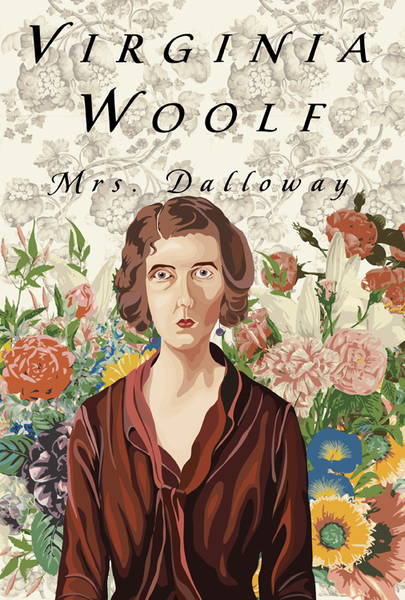
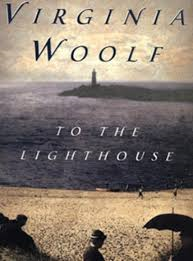
Having been home-schooled for most part of her childhood, mostly in English classics and Victorian literature, Woolf began writing professionally in 1900. During the interwar period, Woolf was a significant figure in London literary society and a central figure in the influential Bloomsbury Group of intellectuals. She published her first novel entitled The Voyage Out in 1915, through the Hogarth Press, a publishing house that she established with her husband, Leonard Woolf. Her best-known works include the novels Mrs. Dalloway (1925), To the Lighthouse (1927) and Orlando (1928), and the book-length essay A Room of One's Own (1929), with its dictum, "A woman must have money and a room of her own if she is to write fiction."
Woolf became one of the central subject of the 1970s movement of feminist criticism, and her works have since garnered much attention and widespread commentary for "inspiring feminism", an aspect of her writing that was unheralded for earlier. Her works are widely read all over the world and have been translated into more than fifty languages. She suffered from severe bouts of mental illness throughout her life and took her own life by drowning in 1941 at the age of 59.
 |  |
👉 Orlando: A Biography
👉 Influence and recognition
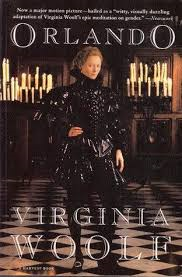
Orlando was a contemporary success, both critically and financially, and guaranteed the Woolfs' financial stability. It was generally viewed not just as high literature, but as a gossipy novel about Sackville-West. However, the New York Times review of the book acknowledged the importance of the work as an experiment into new forms of literature.
The work has been the subject of numerous scholarly writings, including detailed treatment in multiple works on Virginia Woolf. An "annotated" edition has been published to facilitate critical reading of the text.
The novel's title has also come to stand in some senses for women's writing generally, as one of the most famous works by a woman author that directly treats the subject of gender. For example, a project on the history of women's writing in the British Isles was named after the book.
The skating party on the Thames was featured in Simple Gifts, a Christmas collection of six animated shorts shown on PBS TV in 1977.
The novel has been adapted for theatre and film. In 1989 the American director Robert Wilson, and writer Darryl Pinckney collaborated on a theatrical production. A British film adaptation was released in 1992, starring Tilda Swinton as Orlando and Quentin Crisp as Queen Elizabeth I. A second theatre adaptation by Sarah Ruhl premiered in New York 2010.
💠 The Anxiety of Influence: A Theory of Poetry
👉Author:
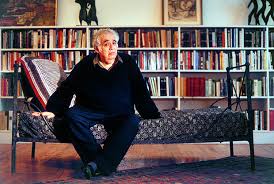
Harold Bloom (1930~)
He is an American literary critic and Sterling Professor of Humanities at Yale University. Since the publication of his first book in 1959, Bloom has written more than 20 books of literary criticism, several books discussing religion, and a novel. He has edited hundreds of anthologies concerning numerous literary and philosophical figures for the Chelsea House publishing firm. Bloom's books have been translated into more than 40 languages.
Bloom came to public attention in the United States as a commentator during the canon wars of the early 1990s.
👉About:
This is a 1973 book by Harold Bloom. It was the first in a series of books that advanced a new "revisionary" or antithetical approach to literary criticism. Bloom's central thesis is that poets are hindered in their creative process by the ambiguous relationship they necessarily maintained with precursor poets. While admitting the influence of extra literary experience on
every poet, he argues that  "the poet in a poet"
限會員,要發表迴響,請先登入


