2016.11.17
🎁Extra Information🎁
🍙 Lord's Prayer
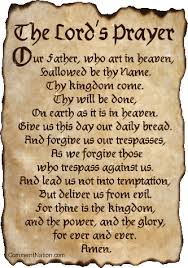
The Lord's Prayer, also called the Our Father, Pater Noster, and the Model Prayer is a venerated Christian prayer originally recorded in Koine Greek that, according to the New Testament, was taught by Jesus to his disciples. Two forms of it are recorded in the New Testament: a longer form in the Gospel of Matthew as part of the Sermon on the Mount, and a shorter form in the Gospel of Luke as a response by Jesus to a request by "one of his disciples" to teach them "to pray as John taught his disciples."
🍙 Seven Deadly Sins
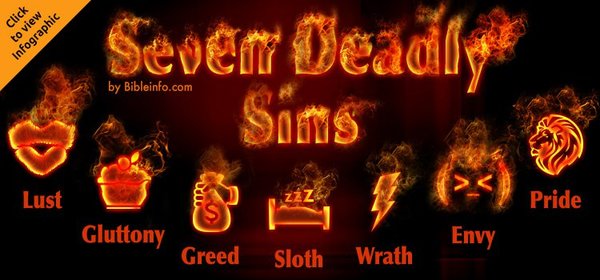
The seven deadly sins, also known as the capital vices or cardinal sins, is a grouping and classification of vices of Christian origin. Behaviors or habits are classified under this category if they directly give birth to other immoralities. According to the standard list, they are pride, greed, lust, envy, gluttony, wrath, and sloth, which are also contrary to the seven virtues. These sins are often thought to be abuses or excessive versions of one's natural faculties or passions (for example, gluttony abuses one's desire to eat).
🍙 Sloth
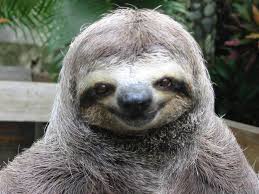
Sloths are mammals classified in the families Megalonychidae (two-toed sloths) and Bradypodidae (three-toed sloths), including six extant species. They are named after the capital sin of sloth because they seem slow and lazy at first glance; however, their usual idleness is due to metabolic adaptations for conserving energy. Aside from their surprising speed during emergency flights from predators, other notable traits of sloths include their strong body and their ability to host symbiotic algae on their furs.
🍙 Stan
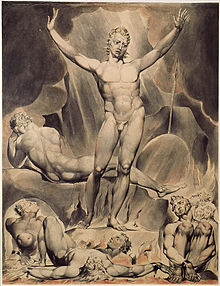
Satan is a figure appearing in the texts of the Abrahamic religions who brings eviland temptation, and is known as the deceiver who leads humanity astray. Some religious groups teach that he originated as an angel, or something of the like, who used to possess great piety and beauty, but fell because of hubris, seducing humanity into the ways of falsehood and sin, and has power in the fallen world. In the Hebrew Bible and the New Testament, Satan is primarily an accuser and adversary, a decidedly malevolent entity, also called the devil, who possesses abhorrent qualities.
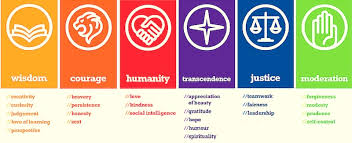
🍙 Seven Virtues
In the Catholic catechism, the seven Christian virtues or heavenly virtues refers to the union of two sets of virtues: from ancient Greek philosophy, are prudence, justice, temperance (meaning restriction or restraint), and courage (or fortitude); and the three theological virtues, from the letters of Saint Paul of Tarsus, are faith, hope, and charity (or love). These were adopted by the Church Fathers as the seven virtues.
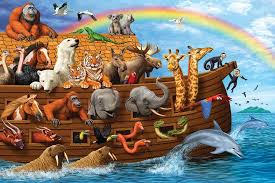
🍙 Noah's Ark
Noah's Ark is the vessel in the Genesis flood narrative(Genesis chapters 6–9) by which God spares Noah, his family, and a remnant of all the world's animals from the flood. According to Genesis, God gave Noah instructions for building the ark. Seven days before the deluge, God told Noah to enter the ark with his household and the animals. The story goes on to describe the ark being afloat throughout the flood and subsequent receding of the waters before it came to rest on the Mountains of Ararat. The story is repeated, with variations, in the Quran, where the ark appears as Safina Nuh. The Genesis flood narrative is similar to numerous other flood myths from a variety of cultures. There is no scientific evidence for a global flood, and despite many expeditions, no evidence of the ark has been found. The practical challenges associated with building an ark large enough to house all living animal types, and even plants, would have been impossible.
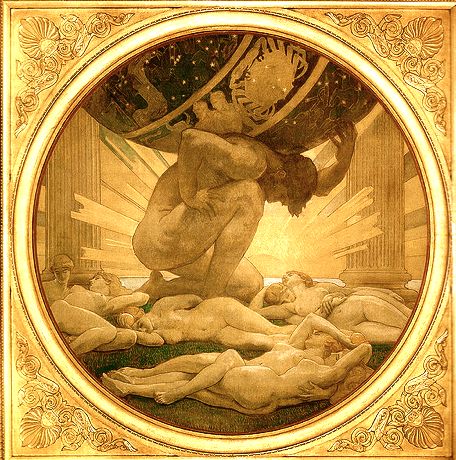
🍙 Atlas(mythology)
In Greek mythology, Atlas was a Titan condemned to hold up the sky for eternity after the Titanomachy. Although associated with various places, he became commonly identified with the Atlas Mountains in northwest Africa (modern-day Morocco, Algeria and Tunisia).Atlas was the son of the Titan Iapetus and the Oceanid Asia or Clymene. He had many children, mostly daughters, the Hesperides, the Hyades, the Pleiades, and the nymph Calypso who lived on the island Ogygia. According to the ancient Greek poet Hesiod Atlas stood at the ends of the earth towards the west.
🎪 1100 Words I need to know 🎪
🎓 Week 22~24
in- : not, opposite of, without
💠 Incompatibility (n.): in- "not, opposite of"+ compatibilis
- not able to exist or work with another person or thing because of basic differences
➡ Any new video system that is incompatible with existing ones has little chance of success.
👉 Related: (adj.) incompatible
Com- : with, together, together with, in combination, beside, near, by
💠 Recondite (adj.): com- "together" + -dere "put,"
- not known about by many people and difficult to understand
➡ We had to work from material that was both complex and recondite
De- : down, down from, from, off; concerning, off, away, from among
💠 Demur (v.): de- + morari "to delay,"
- to express disagreement or refuse to do something
➡ The lawyer requested a break in the court case, but the judge demurred.
👉 Related: (n.) Demur / Demurrage
Hetero- : other, different
💠 Heterogeneous (adj.): heteros "different" + genos "kind, gender, race stock"
- consisting of parts or things that are very different from each other:
➡ Switzerland is a heterogeneous confederation of 26 self-governing cantons.
👉 Related: (n.) Heterogeneity
Ab- : away, from, from off, down
💠 Abhor (v.): ab "off, away from" + horrere "tremble at, shudder, to bristle, be shaggy"
- to hate a way of behaving or thinking, often because you think it is not moral
➡ I abhor all forms of racism.
👉 Related: abhorrent (adj.)
abhorrence (n.)
限會員,要發表迴響,請先登入


