2017.03.29
💠 Week 7
💠 William Faulkner (1897~1962)
He was an American writer and Nobel Prize laureate from Oxford, Mississippi. Faulkner wrote novels, short stories, a play, poetry, essays, and screenplays. He is primarily known for his novels and short stories set in the fictional Yoknapatawpha County, based on Lafayette County, Mississippi, where he spent most of his life.
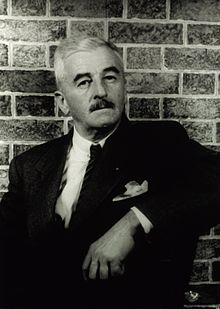
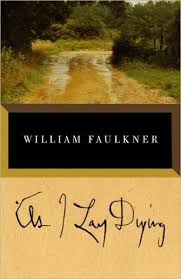
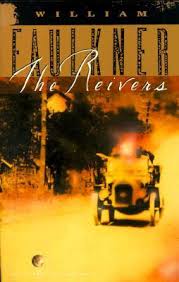
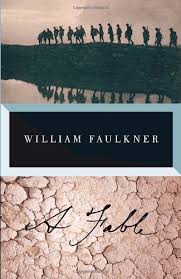
Faulkner is one of the most celebrated writers in American literature generally and Southern literature specifically. Though his work was published as early as 1919, and largely during the 1920s and 1930s, Faulkner was relatively unknown until receiving the 1949 Nobel Prize in Literature, for which he became the only Mississippi-born Nobel winner. Two of his works, A Fable (1954) and his last novel The Reivers (1962), won the Pulitzer Prize for Fiction. In 1998, the Modern Library ranked his 1929 novel The Sound and the Fury sixth on its list of the 100 best English-language novels of the 20th century; also on the list were As I Lay Dying (1930) and Light in August (1932). Absalom, Absalom! (1936) is often included on similar lists.
 |   |
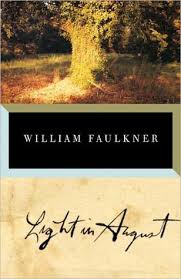 | 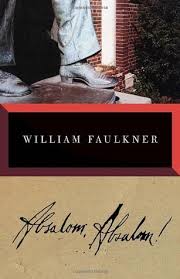 |
👉 Quotes
1. “Read, read, read. Read everything -- trash, classics, good and bad, and see how they do it. Just like a carpe
nter who works as an apprentice an
d studies the master. Read! You'll absorb it.
Then write. If it's good, you'll find out. If it's not, throw it out of the window.”
― William Faulkner
2. “Never be afraid to raise your voice for honesty and truth and compassion agains
t injustice and lying and greed. If people all over the world...would do this, it would change the earth.”
― William Faulkner
3. “You cannot swim for new horizons until you have courage to lose sight of the shore.”
― William Faulkner
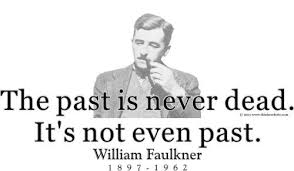
4. “Always dream and shoot higher than you know you can do. Do not bother just to be better th
an your contemporaries or predecessors. Try to be better than yourself.”
― William Faulkner
5. “In writing, you must kill all your darlings.”
― William Faulkner
💠 A Rose for Emily
Is a short story by American author William Faulkner, first published in the April 30, 1930, issue of The Forum. The story takes place in Faulkner's fictional city, Jefferson, Mississippi, in the fictional southern town of Yoknapatawpha County. It was Faulkner's first short story published in a nation
al magazine.
👉 Summary
The story opens with a br
ief first-person account of the funeral of Emily Grierson, an elderly Southern woman whose funeral is the obligation of their small town. It then proceeds in a non-linear fashion to the narrator's recollections of Emily's archaic and increasingly strange behavior t
hroughout the years. Emily is a member of a family of the antebellum Southern aristocracy. After the Civil War, the family has fallen on hard times. She and her father, the last two of the clan, continue to live as if in the past; Emily’s father refuses for her to marry. Her father dies when Emily is about the age of 30, and takes her by surprise. She refused to give up his corpse, and the townspeople wrote it off as her grieving process.
After her acceptance of her father's death, Emily somewhat revives; she becomes friendly with Homer Barron, a N
orthern laborer who comes to town shortly after Mr. Grierson’s death. The connection surprises some of the community while others are glad she is taking an interest. But Homer claims that he is not a marrying man—a bachelor. Emily shortly buys arsenic from a druggist in town, which convinces the townspeople she was to poison herself with it. The minister’s wife to supervise Miss Emily and Homer Barron calls Emily’s distant cousins into town. Homer leaves town
for some time, reputedly to give Emily a chance to get rid of her cousins, and returns three days later after the cousins have left. Homer is never seen again.

Despite these turnabouts in her soci
al status, Emily continues to behave haughtily, as she ha
d before her father died. Her reputation is such that the city council finds themselves unable to confront her about a strong smell that has begun to emanate from the house. Instead, they decide to send men to her house under the cover of darkness to sprinkle lime around the house, after which the smell dissipates. The mayor of the town, Colonel Sartoris, made a gentleman's agreement to overlook her taxes as an act of charity, though it was done under a pretense of repayment towards her father to assuage Emily's pride after her father had died. Years later, when the next generation has come to power, Emily insists on this informal arrangement, flatly refusing that she owes any taxes; the council declines to press the issue. Emily has become a recluse: s
he is never seen out of the house, and only rarely accepts people into it. The community comes to view her as a "hereditary obligation" on the town, who must be humored and tolerated.
The funeral is a large affair; Emily had become an institution, so her death sparks a great deal of curiosity about her reclusive nature and what remains of her house. After she is buried, a group of townsfolk enters her house to see
what remains of her life there. The door to her upstairs bedroom is locked; some of the townsfolk kick in the door to see what has been h
idden for so long. Inside, among the possessions that Emily had bought for Homer, lies the decomposed corpse of Homer Barron on the bed; on the pillow beside him is the indentation of a head and a single strand of Emily's gray hair.
👉 About
"A Rose for Emily" discusses many dark themes that characterized the Old South. Death is an important theme because it thematically reflects the decaying of the S
outh in the 1930s by relating it to Emily's need to cling to tradition by sleeping next to the corpse of Homer Barro
n. There is also a reference to the stagnant mindset of the Old South in their inability to initially accept Homer Barron, a Northerner, into their lives
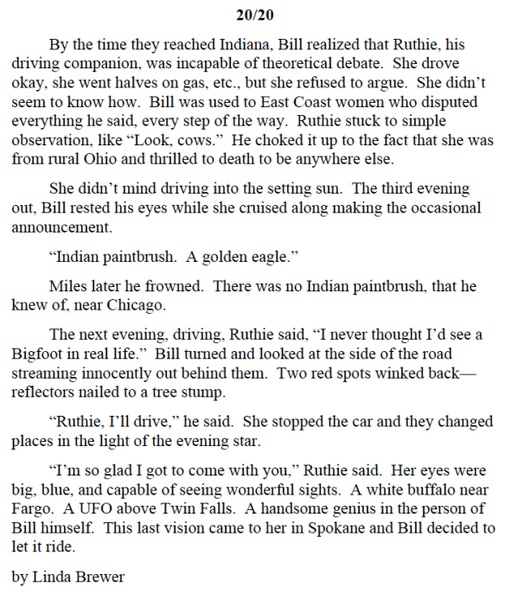
💠 20/20 by Linda Brewer
Story begins and ends in the middle of things: "By the time," "let it ride."
👉 Initial Impressions:
Plot: begins in the middle of action, on a journey. Narration: past tense, third person.
Character: Bill is the focal character, and he and Ruthie have been driving for a while.
Setting: Indiana is a middling, unromantic place.
Paragraph 1
Narration and Character: Bill's judgments of Ruthie show that he prides himself on arguing
about abstract ideas; that he thinks Ruthie must be stupid; that they didn't know each other well and aren't suited for a long trip together. Bill is from the unfriendly East Coast; Ruthie, from easygoing, dull "rural Ohio." Style: The casual language—"okay" and "etc."—sounds like Bill's voice, but he's not the narrator. The vague "etc." hints that Bill isn't really curious about her. The observation of cows sounds funny, childlike, even stupid. But why does he have to "chalk it up" or keep score?
Paragraph 2
Plot and Character: This is the first specific time given in the story, the "third evening": Ruthie
surprises the reader and Bill with more than dull "observation."
Paragraph 4
Style, Character, Setting, and Tone: Dozing in the speeding car, Bill is too late to check out what she says. He frowns (he doesn't argue) because the plant and the bird can't be seen in the Midwest. Brewer uses a series of plac
e names to indicate the route of the car. There's humor in Ruthie's habit of pointing out bizarre sights.
Paragraph 5
Character and Setting: Bigfoot is a legendary monster living in Western forests. Is Ruthie's imagination getting the better of Bill's logic? "Innocently" personifies the road, and the reflectors on the stump wink like the monster; Bill is finally looking (though in hindsight). The scenery seems to be playing a joke on him.
Paragraph 6
Plot and Character: Here the characters change places. He wants to drive (is she hallucinating?), but it's as if she has won. The narration (which has been relying on Bill's voice and perspective) for the first time notices a romantic detail o
f scenery that Ruthie doesn't point out (the evening star).
Paragraph 7
Character and Theme: Bill begins to see Ruthie and what she is capable of. What they see is the journey these characters take toward falling in love, in the West where things become unreal. Style: The long "o" sounds and images in "A white buffalo near Fargo. A UFO above Twin Falls" (along with the wor
ds Ohio, Chicago, and Spokane) give a feeling for the wildness (notice the Indian place names). The outcome of the story is that they go far to Fargo, see double and fall in love at Twin Falls—see and imagine wonderful things in each other. They end up with perfectly matched vision.
限會員,要發表迴響,請先登入


