2016.11.17
🎃 Western Literature 🎃
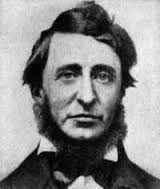
🍙 Henry David Thoreau
He was an American essayist, poet, philosopher, abolitionist, naturalist, tax resister, development critic, surveyor, and historian. A leading transcendentalist, Thoreau is best known for his book Walden, a reflection upon simple living in natural surroundings, and his essay Civil Disobedience (originally published as Resistance to Civil Government), an argument for disobedience to an unjust state.His literary style interweaves close natural observation, personal experience, pointed rhetoric, symbolic meanings, and historical lore, while displaying a poetic sensibility, philosophical austerity, and "Yankee" love of practical detail.He was also deeply interested in the idea of survival in the face of hostile elements, historical change, and natural decay; at the same time he advocated abandoning waste and illusion in order to discover life's true essential needs.
"The fate of the country does not depend on how you vote at the polls --
the worst man is as strong as the best at that game;
it does not depend on what kind of paper
you drop into the ballot-box once a year,
but on what kind of man you drop from your chamber
into the street every morning."
🍙 Ithaca
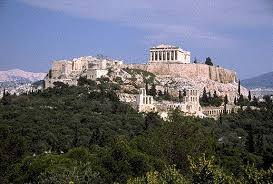
Ithaca or Ithaka is a Greek island located in the Ionian Sea, off the northeast coast of Kefalonia and to the west of continental Greece.The main hero of the story, Odysseus, lived in Ithaca and was its rightful ruler.Odysseus was one of the suitors of Helen.Foreseeing that the situation would not lead anywhere, as there was a multitude of suitors and Tyndareus was unable to choose a husband for her in fear of offending them, he made a proposal to him. He said that if Tyndareus would help him win the hand of Penelope, then he would provide a solution to the problem.He then told all of the suitors to swear an oath, which was hence named the Oath of Tyndareus, according to which no matter who Helen would pick for her husband, they would all support the couple. Everyone agreed and Helen chose Menelaus, king of Sparta. Odysseus then took Penelope for his bride and went back to Ithaca.
🍙 Pygmalion(mythology)
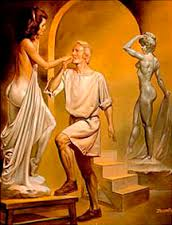
Pygmalion is a legendary figure of Cyprus. Though Pygmalionis the Greek version of the Phoenician royal name Pumayyaton, he is most familiar from Ovid's narrative poem Metamorphoses, in which Pygmalion was a sculptor who fell in love with a statue he had carved.In Ovid's narrative, Pygmalion was a Cypriot sculptor who carved a woman out of ivory. According to Ovid, after seeing the Propoetides he was "not interested in women", but his statue was so beautiful and realistic that he fell in love with it.
🍙 Tiresias
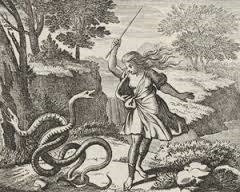
In Greek mythology, Tiresias was a blind prophet of Apollo in Thebes, famous for clairvoyance and for being transformed into a woman for seven years. He was the son of the shepherd Everes and the nymph Chariclo. Tiresias participated fully in seven generations at Thebes, beginning as advisor to Cadmus himself.
🍙 Pygmalion(play)
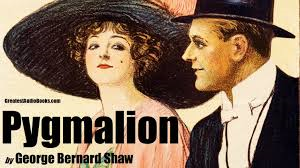
Pygmalion is a play by George Bernard Shaw, named after a Greek mythological character. It was first presented on stage to the public in 1913.In ancient Greek mythology, Pygmalion fell in love with one of his sculptures, which then came to life. The general idea of that myth was a popular subject for Victorian era English playwrights, including one of Shaw's influences, W. S. Gilbert, who wrote a successful play based on the story called Pygmalion and Galatea first presented in 1871.
>>Pygmalion Effect
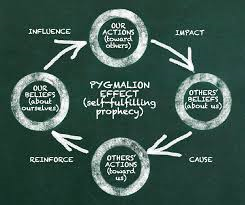
The Pygmalion effect, or Rosenthal effect, is the phenomenon whereby higher expectations lead to an increase in performance. The effect is named after the Greek myth of Pygmalion, a sculptor who fell in love with a statue he had carved, or alternately, after the Rosenthal–Jacobson study (see below).
🍙 Medea
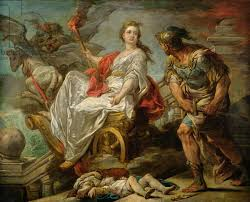
is an ancient Greek tragedy written by Euripides, based upon the myth of Jason and Medea and first produced in 431 BC. The plot centers on the actions of Medea, a former princess of the "barbarian" kingdom of Colchis, and the wife of Jason; she finds her position in the Greek world threatened as Jason leaves her for a Greek princess of Corinth. Medea takes vengeance on Jason by killing Jason's new wife as well as her own children with him, after which she escapes to Athens to start a new life.
🍙 Labyrinth
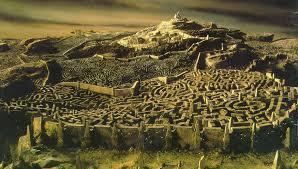
In Greek mythology, the labyrinth was an elaborate structure designed and built by the legendary artificer Daedalus for King Minos of Crete at Knossos. Its function was to hold the Minotaur eventually killed by the hero Theseus. Daedalus had so cunningly made the Labyrinth that he could barely escape it after he built it.
限會員,要發表迴響,請先登入


