2017.03.08
💠 Week 4
Quiz of Wharton
1. Which one of Mrs. Ansley’s relatives does Mrs. Slade bring up in the course of their conversation?
A. a great-uncle who embezzled money from the Stock Exchange
B. a great-grandmother who eloped with her best friend’s fiancé
C. a great-aunt who purposely exposed her own sister to a contagious illness
D. a great-grandfather who fathered two children out of wedlock
Mrs. Slade, of course, borrows the plot of this story when she sends the forged letter to Mrs. Ansley.
2. At the beginning of the story, Mrs. Ansley views Mrs. Slade as
A. a formidable rival.
B. an object of pity.
C. a model of social success.
D. a boring acquaintance.
“Sometimes Mrs. Ansley thought Alida Slade was disappointed; on the whole she had had a sad life. Full of failures and mistakes; Mrs. Ansley had always been rather sorry for her
3. Mrs. Slade worries that her daughter, Jenny, and Mrs. Ansley’s daughter, Barbara, are
A. competing for the same man.
B. in a fight about money.
C. scheming together to evade the curfew imposed by their mothers.
D. likely to contract malaria, or Roman Fever.
“Suddenly [Mrs. Slade] thought, ‘. . . if Babs Ansley isn’t out to catch that young aviator—the one who’s a Marchese—then I don’t know anything. And Jenny has no chance beside her. I know that too’ ”
4. At the beginning of the story, Mrs. Slade views Mrs. Ansley as
A. poorly educated.
B. striving too hard for social recognition.
C. unbearably snobbish.
D. old-fashioned and dull.
Mrs. Slade reflects on Mrs. Ansley’s predictability and what she sees as her rather boring respectability early in the story: “ ‘Grace Ansley was always old-fashioned,’ she thought” (par. 10). She also describes Mr. and Mrs. Ansley as “nullities” and wonders where their daughter, Barbara, got her “edge”
5. Mrs. Ansley spends much of the story engaged in what activity?
A. idgeting with her corsage
B. playing solitaire
C. knitting
D. turning the pages of an old photograph album
6. Who wrote the letter that Mrs. Ansley believed was from Mr. Slade twenty years earlier?
A. Mr. Slade himself
B. Mr. Slade’s secretary
C. Mrs. Slade
D. Mrs. Ansley herself
7. How do Mrs. Slade and Mrs. Ansley know each other?
A. They are distant cousins.
B. They have moved in the same New York social circles since they were young girls.
C. Their husbands were political rivals.
D. They met while chaperoning their daughters in
“The two ladies, who had been intimate since childhood, reflected how little they knew each other. . . . Mrs. Slade and Mrs. Ansley had lived opposite each other—literally as well as figuratively—for years”
💠 Charles Dickens (1812~1870)
He was an English writer and social critic. He created some of the world's best-known fictional characters and is regarded by many as the greatest novelist of the Victorian era. His works enjoyed unprecedented popularity during his lifetime, and by the twentieth century, critics and scholars had recognized him as a literary genius. His novels and short stories enjoy lasting popularity. Born in 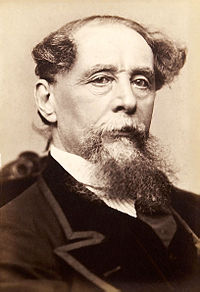 Portsmouth.
💠 Fiction
Fiction is the classification for any story or similar work derived from imagination—in other words, not based strictly on history or fact. Fiction can be expressed in a variety of formats, including writings, live performances, films, television programs, animations, video games, and role-playing games, though the term originally and most commonly refers to the narrative forms of literature (see literary fiction), including the novel, novella, short story, and play. Fiction does not refer to a specific mode or genre, unless used in its narrowest sense to mean a "literary narrative". Fiction is traditionally regarded as the opposite of non-fiction, whose creators assume responsibility for presenting only the historical and factual truth; however, the distinction between fiction and non-fiction can be blurred, for example, in postmodern literature.
A work of fiction is an act of creative invention; its audience does not typically assume its total faithfulness to reality, and so it is not expected to present only characters who are actual people or descriptions that are factually accurate. Instead, the context of fiction is generally open to interpretation, due to fiction's freedom from adhering exactly to the real world. Characters and events within a fictional work may even be openly set in their own context entirely separate from the known universe: a fictional universe.
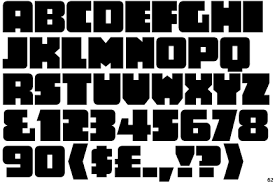
👉 Extrabold
💠 Genre
Genre is any form or type of communication in any mode (written, spoken, digital, artistic, etc.) with socially-agreed upon conventions developed over time. Genre is most popularly known as a category of literature, music, or other forms of art or entertainment, whether written or spoken, audio or visual, based on some set of stylistic criteria, yet genres can be aesthetic, rhetorical, communicative, or functional. Genres form by conventions that change over time as new genres are invented and the use of old ones is discontinued. Often, works fit into multiple genres by way of borrowing and recombining these conventions. Stand alone texts, works, or pieces of communication may have individual styles, but genres are amalgams of these texts based on agreed upon or socially inferred conventions. Some genres may be rigid with strictly adhered to guidelines while others may be very flexible.
Genre began as an absolute classification system for ancient Greek literature. Poetry, prose, and performance each had a specific and calculated style that related to the theme of the story. Speech patterns for comedy would not be appropriate for tragedy, and even actors were restricted to their genre under the assumption that a type of person could tell one type of story best. In later periods genres proliferated and developed in response to changes in audiences and creators. Genre became a dynamic tool to help the public make sense out of unpredictable art. Because art is often a response to a social state, in that people write/paint/sing/dance about what they know about, the use of genre as a tool must be able to adapt to changing meanings.
💠 Cannon
A cannon is any piece of artillery that uses gunpowder or other usually explosive-based propellants to launch a projectile, which may or may not be explosive. Cannon vary in caliber, range, mobility, rate of fire, angle of fire, and firepower; different forms of cannon combine and balance these attributes in varying degrees, depending on their intended use on the battlefield. The word cannon is derived from several languages, in which the original definition can usually be translated as tube, cane, or reed. In the modern era, the term cannon has fallen into decline, replaced by "guns" or "artillery" if not a more specific term such as "gun", "mortar" or "howitzer", except for in the field of aerial warfare, where it is often used as shorthand for autocannon.
The Greeks invented the first type—a steam cannon—designed by Archimedes during the Siege of Syracuse. Ctesibius built a steam cannon in Alexandria and in the fifteenth century Leonardo da Vinci designed another, the Architonnerre, based on Archimedes' work. The earliest form of gunpowder artillery was developed in Song China, over time replacing siege engines and other forms of aging weaponry. In the Middle East, the first use of the hand cannon is argued to be during the 1260 Battle of Ain Jalut between the Mamluk Sultanate and Mongol Empire. The first cannon in Europe were in use in the Iberian Peninsula by the mid-13th century. It was during this period, the Middle Ages, that cannon became standardised, and more effective in both the anti-infantry and siege roles. After the Middle Ages most large cannon were abandoned in favour o
f greater numbers of lighter, more manoeuvreable pieces. In addition, new technologies and tactics were developed, making most defences obsolete; this led to the construction of bastion forts, specifically designed to withstand artillery bombardment though these too, along with Martello towers, would find themselves rendered obsolete when explosive and armor piercing rounds made even these types of fortifications vulnerable.
限會員,要發表迴響,請先登入


