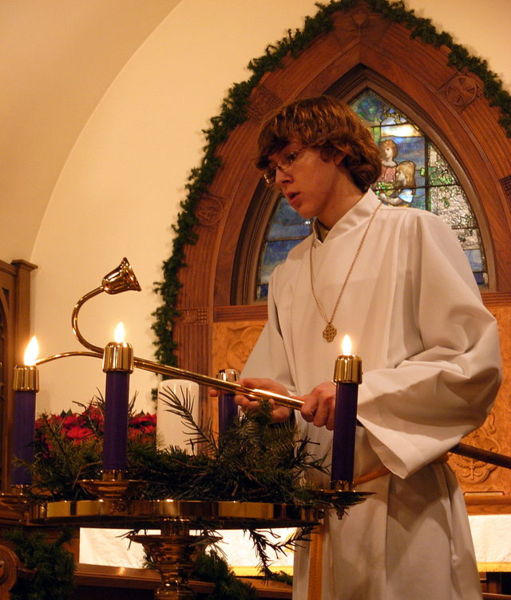
聖誕節前四個禮拜,每個禮拜點一盞蠟燭,到了聖誕節剛好4個都點好了。
Advent is a season observed in many Western Christian churches as a time of expectant waiting and preparation for the celebration of the Nativity of Jesus at Christmas. The term is an anglicized version of the Latin word adventus, meaning "coming".
Latin adventus is the translation of the Greek word parousia, commonly used to refer to the Second Coming of Christ. For Christians, the season of Advent anticipates the coming of Christ from two different perspectives. The season offers the opportunity to share in the ancient longing for the coming of the Messiah, and to be alert for his Second Coming.
Advent is the beginning of the Western liturgical year and commences on Advent Sunday. At least in the Roman Catholic, Anglican, Lutheran, Moravian, Presbyterian and Methodist calendars, Advent starts on the fourth Sunday before December 25.
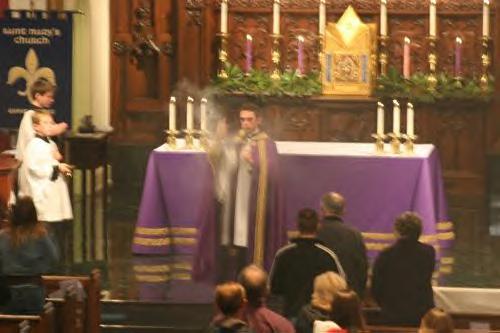
The usual liturgical color in Western Christianity for Advent is either purple (王者之色) or blue. The purple color is often used for hangings around the church, the vestments of the clergy, and often also the tabernacle. In some Christian denominations, blue, a color representing hope, is an alternative liturgical color for Advent, a custom traced to the usage of the Church of Sweden (Lutheran) and the medieval Sarum Rite in England. In addition, the color blue is also used in the Mozarabic Rite (Catholic and Anglican), which dates from the 8th century. This color is often referred to as "Sarum blue".
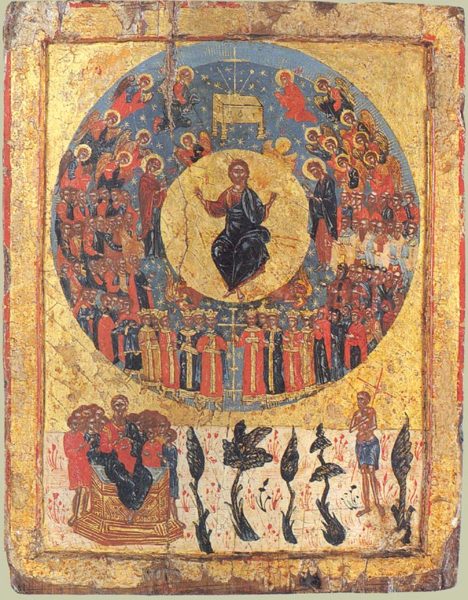
In Christianity, the Second Coming, sometimes called the second advent of Christ or the parousia, is the anticipated return of Jesus to Earth. The belief is based on prophecies found in the canonical gospels and is part of most Christian eschatologies. The coming is predicted in biblical messianic prophecies. Views about the nature of Jesus' Second Coming vary among Christian denominations and among individual Christians.
Most English versions of the Nicene Creed in current use include the following statements: "...he ascended into heaven and is seated at the right hand of the Father. He will come again in glory to judge the living and the dead, and his kingdom will have no end. ... We look for the resurrection of the dead, and the life of the world to come."
William Butler Yeats (1865-1939)
 THE SECOND COMING (還有希望)
Turning and turning in the widening gyre
The falcon cannot hear the falconer;
Things fall apart; the centre cannot hold;
Mere anarchy is loosed upon the world,
The blood-dimmed tide is loosed, and everywhere
The ceremony of innocence is drowned;
The best lack all conviction, while the worst
Are full of passionate intensity.
Surely some revelation is at hand;
Surely the Second Coming is at hand.
The Second Coming! Hardly are those words out
When a vast image out of Spiritus Mundi
Troubles my sight: a waste of desert sand;
A shape with lion body and the head of a man,
A gaze blank and pitiless as the sun,
Is moving its slow thighs, while all about it
Wind shadows of the indignant desert birds.
The darkness drops again but now I know
That twenty centuries of stony sleep
Were vexed to nightmare by a rocking cradle,
And what rough beast, its hour come round at last,
Slouches towards Bethlehem to be born?
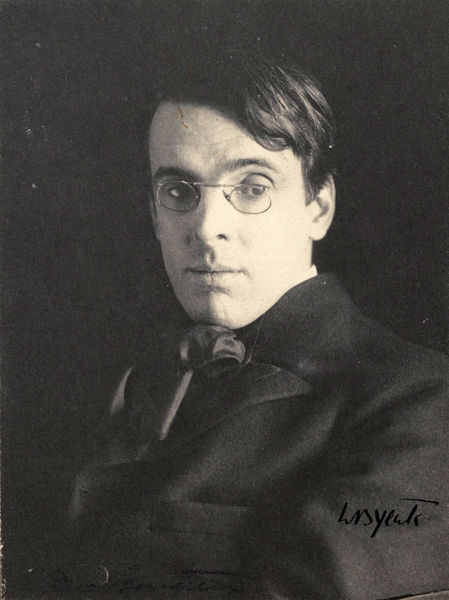
William Butler Yeats (/ˈjeɪts/; 13 June 1865 – 28 January 1939) was an Irish poet and one of the foremost figures of 20th century literature. A pillar of both the Irish and British literary establishments, in his later years he served as an Irish Senator for two terms. Yeats was a driving force behind the Irish Literary Revival and, along with Lady Gregory, Edward Martyn, and others, founded the Abbey Theatre, where he served as its chief during its early years. In 1923 he was awarded the Nobel Prize in Literature as the first Irishman so honoured for what the Nobel Committee described as "inspired poetry, which in a highly artistic form gives expression to the spirit of a whole nation." Yeats is generally considered one of the few writers who completed their greatest works after being awarded the Nobel Prize; such works include The Tower (1928) and The Winding Stair and Other Poems (1929). Yeats was a very good friend of American expatriate poet and Bollingen Prize laureate Ezra Pound. Yeats wrote the introduction for Rabindranath Tagore's Gitanjali, which was published by the India Society.
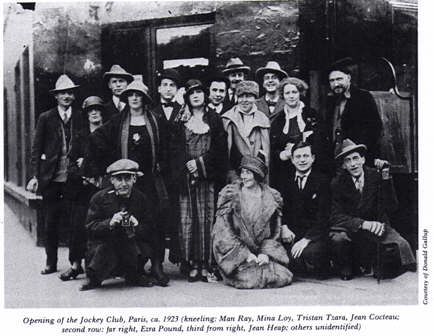
The "Lost Generation" was the generation that came of age during World War I. The term was popularized by Ernest Hemingway, who used it as one of two contrasting epigraphs for his novel, The Sun Also Rises. In that volume Hemingway credits the phrase to Gertrude Stein, who was then his mentor and patron. In A Moveable Feast, published after Hemingway's and Stein's deaths, Hemingway claims that Stein heard the phrase from a garage owner who serviced Stein's car. When a young mechanic failed to repair the car quickly enough, the garage owner shouted at the boy, "You are all a "génération perdue." Stein, in telling Hemingway the story, added, "That is what you are. That's what you all are ... all of you young people who served in the war. You are a lost generation." This generation included distinguished artists such as F. Scott Fitzgerald, T. S. Eliot, John Dos Passos, Waldo Peirce, Isadora Duncan, Abraham Walkowitz, Alan Seeger, and Erich Maria Remarque.

Gertrude Stein (February 3, 1874 – July 27, 1946) was an American writer of novels, poetry and plays. Born in West Allegheny (Pittsburgh), Pennsylvania and raised in Oakland, California, Stein moved to Paris in 1903, making France her home for the remainder of her life. A literary innovator and pioneer of Modernist literature, Stein’s work broke with the narrative, linear, and temporal conventions of 19th-century. She was also known as a collector of Modernist art.
In 1933, Stein published a kind of memoir of her Paris years, The Autobiography of Alice B. Toklas, written in the voice of Toklas, her life partner. The book became a literary bestseller and vaulted Stein from the relative obscurity of cult literary figure into the light of mainstream attention.
Beat Generation 被擊倒的一代

The Beat Generation was a group of American post-World War II writers who came to prominence in the 1950s, as well as the cultural phenomena that they both documented and inspired. Central elements of "Beat" culture: rejection of received standards, innovations in style, use of illegal drugs, alternative sexualities, an interest in religion, a rejection of materialism, and explicit portrayals of the human condition.
Allen Ginsberg's Howl (1956), William S. Burroughs's Naked Lunch (1959) and Jack Kerouac's On the Road (1957) are among the best known examples of Beat literature. Both Howl and Naked Lunch were the focus of obscenity trials that ultimately helped to liberalize publishing in the United States. The members of the Beat Generation developed a reputation as new bohemian hedonists, who celebrated non-conformity and spontaneous creativity.
The original "Beat Generation" writers met in New York. Later, in the mid-1950s, the central figures (with the exception of Burroughs) ended up together in San Francisco where they met and became friends of figures associated with the San Francisco Renaissance.
In the 1960s, elements of the expanding Beat movement were incorporated into the hippie and larger counterculture movements.
西方國家在Christmas 會做的事:
https://www.youtube.com/watch?v=gFtb3EtjEic
"It's The Most Wonderful Time Of The Year"
It's The Most Wonderful Time Of The Year
With the kids jingle belling
And everyone telling you "Be of good cheer"
It's The Most Wonderful Time Of The Year
It's the hap -happiest season of all
With those holiday greetings and gay happy meetings
When friends come to call
It's the hap - happiest season of all
There'll be parties for hosting
Marshmallows for toasting
And caroling out in the snow
There'll be scary ghost stories
And tales of the glories of
Christmases long, long ago
It's The Most Wonderful Time Of The Year
There'll be much mistltoeing
And hearts will be glowing
When love ones are near
It's The Most Wonderful Time Of The Year
There'll be parties for hosting
Marshmallows for toasting
And caroling out in the snow
There'll be scary ghost stories
And tales of the glories of
Christmases long, long ago
It's The Most Wonderful Time Of The Year
There'll be much mistltoeing
And hearts will be glowing
When love ones are near
It's The Most Wonderful Time
It's The Most Wonderful Time
It's The Most Wonderful Time Of The Year
吃到老師的棉花糖,要記得交筆記囉! 12/09 傳到老師的信箱。

The Fall of the House of Usher
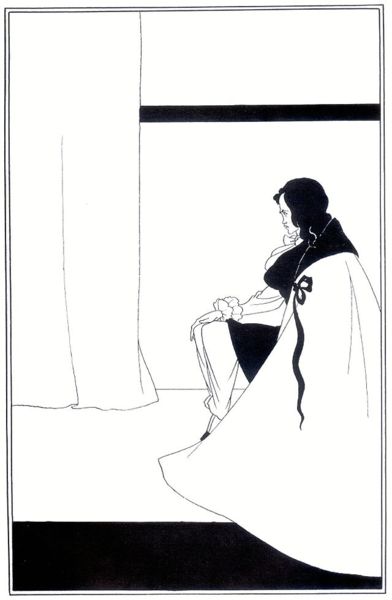
"The Fall of the House of Usher" is considered the best example of Poe's "totality", where every element and detail is related and relevant.
The theme of the crumbling, haunted castle is a key feature of Horace Walpole's Castle of Otranto (1764), which largely contributed in defining the Gothic genre. The presence of a capacious, disintegrating house symbolizing the destruction of the human body is a characteristic element in Poe's later work.
"The Fall of the House of Usher" shows Poe's ability to create an emotional tone in his work, specifically feelings of fear, doom, and guilt. These emotions center on Roderick Usher who, like many Poe characters, suffers from an unnamed disease. Like the narrator in "The Tell-Tale Heart", his disease inflames his hyperactive senses. The illness manifests physically but is based in Roderick's mental or even moral state. He is sick, it is suggested, because he expects to be sick based on his family's history of illness and is, therefore, essentially a hypochondriac. Similarly, he buries his sister alive because he expects to bury her alive, creating his own self-fulfilling prophecy.
The House of Usher, itself doubly referring both to the actual structure and the family, plays a significant role in the story. It is the first "character" that the narrator introduces to the reader, presented with a humanized description: its windows are described as "eye-like" twice in the first paragraph. The fissure that develops in its side is symbolic of the decay of the Usher family and the house "dies" along with the two Usher siblings. This connection was emphasized in Roderick's poem "The Haunted Palace"(家族詛咒) which seems to be a direct reference to the house that foreshadows doom.
幻聽的感覺
“Not hear it?—yes, I hear it, and have heard it. Long—long—long—many minutes, many hours, many days, have I heard it—yet I dared not—oh, pity me, miserable wretch that I am!—I dared not—I dared not speak! We have put her living in the tomb! Said I not that my senses were acute? I now tell you that I heard her first feeble movements in the hollow coffin.
考ID
“Madman! I tell you that she now stands without(beside) the door!”
最後一句
While I gazed, this fissure rapidly widened—there came a fierce breath of the whirlwind—the entire orb of the satellite burst at once upon my sight—my brain reeled as I saw the mighty walls rushing asunder—there was a long tumultuous shouting sound like the voice of a thousand waters—and the deep and dank tarn at my feet closed sullenly and silently over the fragments(裂掉的房子) of the “House of Usher.”
還有fra-的字: fragile
Frailty, thy name is woman(弱者的名字是女人) quote and analysis from William Shakespeare works Hamlet. Speakers: Hamlet. Themes: anger, family, gender, misogyny.
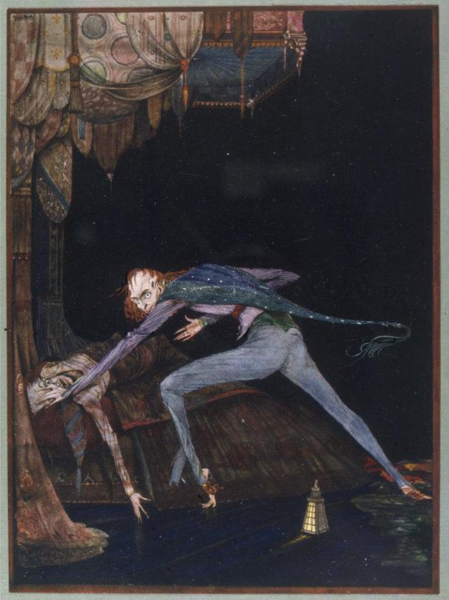
"The Tell-Tale Heart" is a short story by Edgar Allan Poe first published in 1843. It is told by an unnamed narrator who endeavors to convince the reader of his sanity, while describing a murder he committed. (The victim was an old man with a filmy "vulture-eye", as the narrator calls it.) The murder is carefully calculated, and the murderer hides the body by dismembering it and hiding it under the floorboards. Ultimately the narrator's guilt manifests itself in the form of the sound—possibly hallucinatory—of the old man's heart still beating under the floorboards.
The story was first published in James Russell Lowell's The Pioneer in January 1843. "The Tell-Tale Heart" is widely considered a classic of the Gothic fiction genre and is one of Poe's most famous short stories.
"The Tell-Tale Heart" is a first-person narrative of an unnamed narrator who insists he is sane but suffering from a disease (nervousness) which causes "over-acuteness of the senses". The old man with whom he lives has a clouded, pale, blue "vulture-like" eye which so distresses the narrator that he plots to murder the old man, though the narrator states that he loves the old man, and hates only the eye. The narrator insists that his careful precision in committing the murder shows that he cannot possibly be insane. For seven nights, the narrator opens the door of the old man's room, in order to shine a sliver of light onto the "evil eye". However, the old man's vulture-eye is always closed, making it impossible to "do the work".
最後一段他已經瘋了:
"Villains!" I shrieked, "dissemble no more! I admit the deed! --tear up the planks! here, here! --It is the beating of his hideous(有點擬聲) heart!"
Araby 收錄在都柏林的短篇小說
North Richmond Street, being blind, was a quiet street except at the hour when the Christian Brothers' School set the boys free. An uninhabited house of two storeys stood at the blind end, detached from its neighbours in a square ground. The other houses of the street, conscious of decent lives within them, gazed at one another with brown imperturbable faces.
Gothic architecture 會考Definition
Gothic architecture is a style of architecture that flourished during the high and late medieval period. It evolved from Romanesque architecture and was succeeded by Renaissance architecture. Originating in 12th-century France and lasting into the 16th century, Gothic architecture was known during the period as Opus Francigenum ("French work") with the term Gothic first appearing during the latter part of the Renaissance. Its characteristics include the pointed arch, the ribbed vault and the flying buttress. Gothic architecture is most familiar as the architecture of many of the great cathedrals, abbeys and churches of Europe. It is also the architecture of many castles, palaces, town halls, guild halls, universities and to a less prominent extent, private dwellings.
今年暑假去法國拍的照片 Façade of Reims Cathedral, France
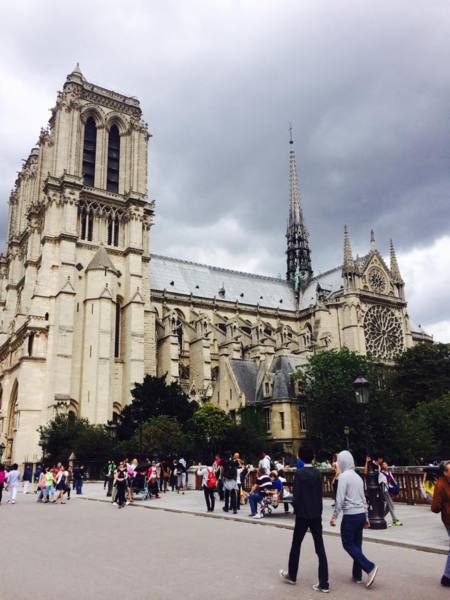
側拍-天氣不是很好,開始飄雨
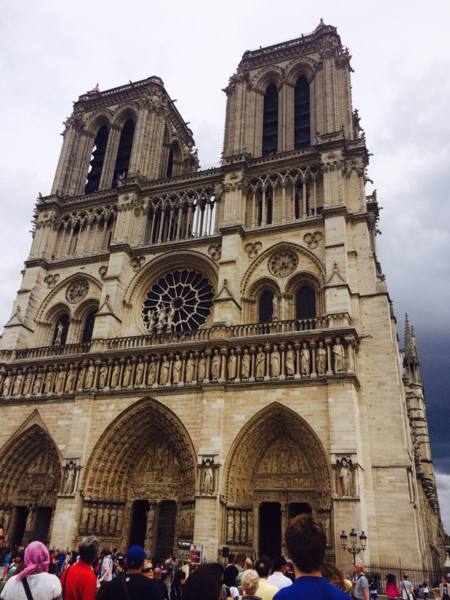
排隊參觀的人龍超級長!
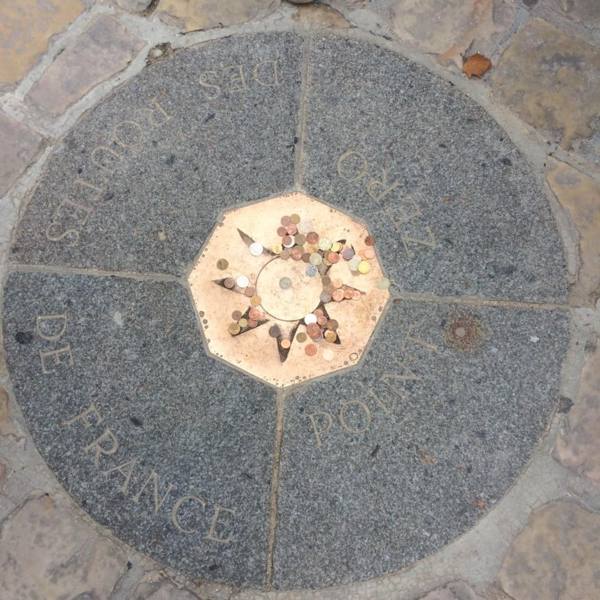
在聖母院正前方,也就是巴黎的中心點。
Gothic fiction, which is largely dominated by the subgenre of Gothic horror, is a genre or mode of literature that combines fiction, horror and Romanticism. Its origin is attributed to English author Horace Walpole, with his 1764 novel The Castle of Otranto, subtitled (in its second edition) "A Gothic Story." The effect of Gothic fiction feeds on a pleasing sort of terror, an extension of Romantic literary pleasures that were relatively new at the time of Walpole's novel. Melodrama and parody (including self-parody) were other long-standing features of the Gothic initiated by Walpole. It originated in England in the second half of the 18th century and had much success in the 19th, as witnessed by Mary Shelley’s Frankenstein and the works of Edgar Allan Poe. Another well known novel in this genre, dating from the late Victorian era, is Bram Stoker’s Dracula. The name Gothic refers to the (pseudo)-medieval buildings in which many of these stories take place. This extreme form of romanticism was very popular in England and Germany. The English gothic novel also led to new novel types such as the German Schauerroman and the French roman noir.
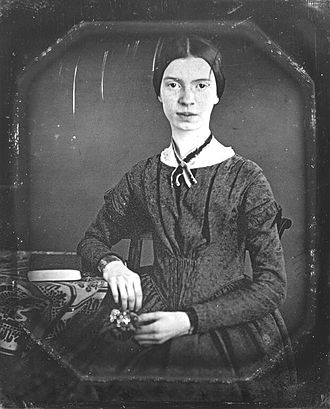
Emily Elizabeth Dickinson (December 10, 1830 – May 15, 1886) was an American poet. Born in Amherst, Massachusetts, to a successful family with strong community ties, she lived a mostly introverted and reclusive life. After she studied at the Amherst Academy for seven years in her youth, she spent a short time at Mount Holyoke Female Seminary before returning to her family's house in Amherst. Considered an eccentric by the locals, she became known for her penchant for white clothing and her reluctance to greet guests or, later in life, even leave her room. Most of her friendships were therefore carried out by correspondence.
While Dickinson was a prolific private poet, fewer than a dozen of her nearly 1800 poems were published during her lifetime. The work that was published during her lifetime was usually altered significantly by the publishers to fit the conventional poetic rules of the time. Dickinson's poems are unique for the era in which she wrote; they contain short lines, typically lack titles, and often use slant rhyme as well as unconventional capitalization and punctuation. Many of her poems deal with themes of death and immortality, two recurring topics in letters to her friends.
Free verse 考Definition
Free verse is an open form of poetry. It does not use consistent meter patterns, rhyme, or any other musical pattern. It thus tends to follow the rhythm of natural speech.
Iambic pentameter 一般的英詩都是這個
Iambic pentameter is a commonly used type of metrical line in traditional clarification needed] poetry and verse drama. The term describes the rhythm that the words establish in that line, which is measured in small groups of syllables called "feet". The word "iambic" refers to the type of foot that is used, known as the iamb, which in English is an unstressed syllable followed by a stressed syllable. The word "pentameter" indicates that a line has five of these "feet". For example, “Shall I compare thee to a summer's day?”
限會員,要發表迴響,請先登入


