 1/3 Note要打分數,blog要裝潢好!
The Masque of the Red Death 紅色死神的面具 plague為主題。
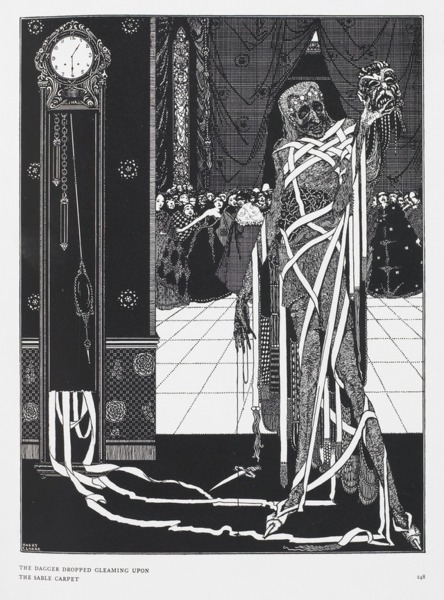
"The Masque of the Red Death", originally published as "The Mask of the Red Death: A Fantasy" (1842), is a short story by Edgar Allan Poe. The story follows Prince Prospero's attempts to avoid a dangerous plague known as the Red Death by hiding in his abbey. He, along with many other wealthy nobles, has a masquerade ball within seven rooms of his abbey, each decorated with a different color. In the midst of their revelry, a mysterious figure disguised as a Red Death victim enters and makes his way through each of the rooms. Prospero dies after confronting this stranger, whose "costume" proves to have nothing tangible inside it; the guests also die in turn.
I’m Nobody! Who are you? (260)
Emily Dickinson, 1830 - 1886
I’m Nobody!(考ID) Who are you?
Are you – Nobody – too?
Then there’s a pair of us!
Don’t tell! they’d advertise – you know!
How dreary – to be – Somebody!
How public – like a Frog –
To tell one’s name – the livelong June –
To an admiring Bog!
“I’m nobody”—a kind of suicide, or abject and potentially shifty diffidence, or as a name—Nobody—the oldest trick in the book. As Dickinson understood, anonymity can be empowering; identity, a sham and a bore (“How public – like a frog – ”).
Dismissively shrouding a third party—“oh, she’s nobody”—it’s a cover, like Odysseus’s men clinging to the undersides of sheep.
But at its most poetic, the power lies in a pun like Odysseus’s or Sylvia’s, in duplicity. For having been themselves duped and treated like Nobodies, to be disposed of and walked over, they use Nobody’s powerful gradient of displacement to their advantage, countervailing with duplicitous double-duty irony, bettering, one-upping.
Nobody is always ironic.
I heard a Fly buzz (465)
Emily Dickinson, 1830 - 1886
I heard a Fly(名詞大寫是德語的殘留) buzz – when I died –
The Stillness in the Room
Was like the Stillness in the Air –
Between the Heaves of Storm (whirlwind)–
The Eyes around – had wrung them dry –
And Breaths were gathering firm
For that last Onset – when the King
Be witnessed – in the Room –
I willed my Keepsakes – Signed away
What portions of me be
Assignable – and then it was
There interposed a Fly –
With Blue – uncertain stumbling Buzz –
Between the light – and me –
And then the Windows failed – and then
I could not see to see –
Whirlwind Job
Verse 1. - Then the Lord answered Job out of the whirlwind. It is remarked, with reason, that the special mention of Job as the person answered "implies that another speaker had intervened" (Wordsworth); while the attachment of the article to the word "whirlwind" implies some previous mention of that phenomenon, which is only to be found in the discourse of Elihu (Job 37:9).
The most righteous person on earth
Scapegoat代罪羔羊
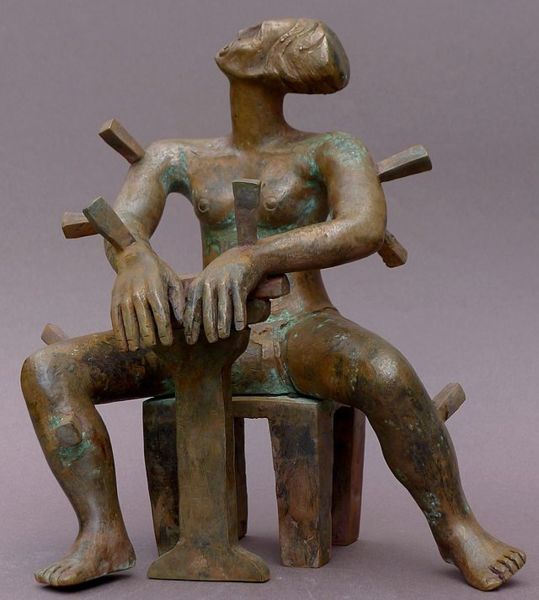
The scapegoat was a goat that was designated (Hebrew לַעֲזָאזֵֽל ) la-aza'zeyl; either "for absolute removal" (Brown-Driver-Briggs Lexicon) or possibly "for Azazel" (some modern versions taking the term as a name) and outcast in the desert as part of the ceremonies of the Day of Atonement, that began during the Exodus with the original Tabernacle and continued through the times of the temples in Jerusalem.
Throughout the year, the sins of the ancient Israelites were daily transferred to the regular sin offerings as outlined in the Torah inLeviticus Ch 16. Once a year, on the tenth day of the seventh month in the Jewish calendar, the Day of Atonement, the High Priest of Israel sacrificed a bull for a sin offering for his own sins. Subsequently he took two goats and presented them at the door of the tabernacle with a view to dealing with the corporate sins of God's people — the nation of Israel. Two goats were chosen by lot: one to be "The Lord's Goat", which was offered as a blood sacrifice, and the other to be the "Azazel" scapegoat to be sent away into the wilderness. The blood of the slain goat was taken into the Holy of Holies behind the sacred veil and sprinkled on the mercy seat, the lid of the ark of the covenant. Later in the ceremonies of the day, the High Priest confessed the sins of the Israelites to Yahweh placing them figuratively on the head of the other goat, the Azazel scapegoat, who "took them away" never to be seen again. The sin of the nation was thus "atoned for" (paid for) by the "The Lord's Goat" and "The Azazel Goat".
In Christianity this process prefigures the sacrifice of Christ on the cross through which God has been propitiated and sins can be expiated. Jesus Christ is seen to have fulfilled all of the Biblical "types" - the High Priest who officiates at the ceremony, the Lord's goat that deals with the pollution of sin and the scapegoat that removes the "burden of sin". Christians believe that sinners who own their guilt and confess their sins, exercising faith and trust in the person and sacrifice of Jesus, are forgiven their sins.
In the Hebrew Bible, (or the Tanakh), called the "Old Testament" by Christians, the "Treasured People" is the exact phrase used in the text, referring to the Hebrews/Israelites. In the Book of Deuteronomy, YHWH proclaims the Nation of Israel, known originally as the Children of Israel, as his "treasured people out of all the people on the face of the earth" (Deuteronomy 7:6). As mentioned in the Book of Exodus, the Hebrew people are God's chosen people, and from them shall come the Messiah, or redeemer of the world. The Israelites also possess the "Word of God" and/or the "Law of God" in the form of the Torah as communicated by God to Moses.
In philosophy, religion, mythology, and fiction, the afterlife (also referred to as life after death or the Hereafter) is the concept of a realm, or the realm itself (whether physical or transcendental), in which an essential part of an individual's identity or consciousness continues to exist after the death of the body in the individual's lifetime. According to various ideas about the afterlife, the essential aspect of the individual that lives on after death may be some partial element, or the entire soul or spirit, of an individual, which carries with it and confers personal identity. Belief in an afterlife, which may be naturalistic or supernatural, is in contrast to the belief in oblivion after death.
1865-1914美國因第一次世界大戰開始成為新興國家
兩位主要作家 (寫實)
1. Mark Twain (poor 鄉村代表)
2. Henry Jame (有錢,中上階層,自然化歸英國)
因為Howeles兩人認識,但是互相瞧不起。
Mark Twain(1835-1910)
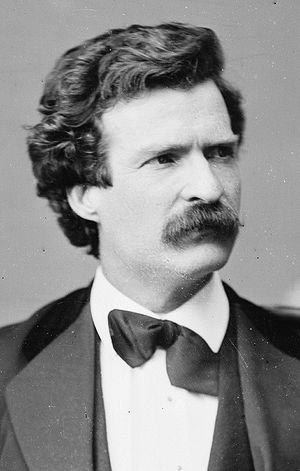
Mark Twain, was an American author and humorist. He wrote The Adventures of Tom Sawyer (1876) and its sequel, Adventures of Huckleberry Finn (1885),[2] the latter often called "the Great American Novel".
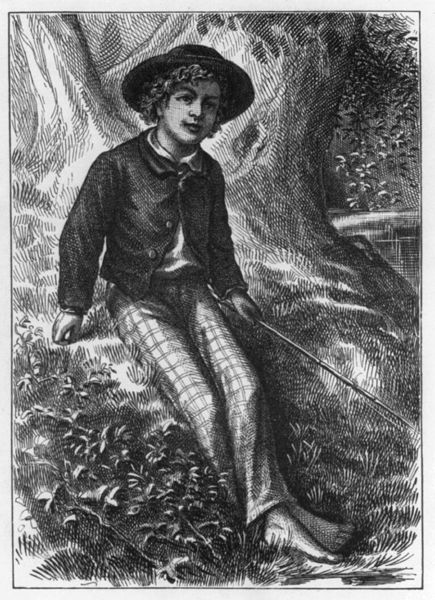
The Adventures of Tom Sawyer by Mark Twain is an 1876 novel about a young boy growing up along the Mississippi River. The story is set in the fictional town of St. Petersburg, inspired by Hannibal, Missouri, where Twain lived.
為什麼會成為暢銷小說?
1. 爭取小讀者認同的孩童主角(child protagonist)
2. 弱勢族群的集結以挑戰權威
在《湯姆歷險記》裏,我們看到無論孩童主角(child protagonist)湯姆和他的死黨哈克或是反角(antagonist)印第安喬,都是主流社會下的弱勢族群,呼應了小孩原本在智識體能和經濟權威方面的無力。這也是許多兒童文學經典的共同點:這些主角們不是孤兒單親就是窮苦無依,要不然就是些極度孤絕的心靈,舉凡像哈利波特(Harry Potter)、《綠野仙蹤》的桃樂絲(Dorothy)、《秘密花園》的瑪麗(Mary Lenox)、爸爸命喪隔壁Mr. McGregor 菜園的彼得兔(Peter Rabbit) 、《小婦人》中的馬爾屈女孩(March girls)或是《漫遊奇境》的愛麗思(Alice)。
3. 領導統禦與兄弟情誼
4. 追求夢想與冒險
5. 用方言俚語來突顯地方色彩和角色身份
I ain't doing my duty by that boy, and that's [the Lord's truth], goodness knows. Spare the rod and spile the child, as [the Good Book] says. I'm a laying up sin and suffering for us both, I know. He's full of the Old Scratch, but laws-a-me! he's my own dead sister's boy, poor thing, and I ain't got the heart to lash him, somehow. Every time I let him off, my conscience does hurt me so, and every time I hit him my old heart most breaks. Well-a-well, man that is born of woman is of few days and full of trouble, as [the Scripture] says, and I reckon it's so.
波麗阿姨這個密蘇裏鄉下女人的方言口音。馬克·吐溫用拼音(如spoil卻念成spile)、口說文字(如ain't doing)和節構破碎的語句(run-on sentences),加上常張冠李戴的經典諺語和自以為是的真理格言,還有三不五時(這裏英文才七行不到就提了三次)就捧出來的聖經名言也可能表示她一生只讀過聖經這本書,絮絮叨叨的波麗阿姨下里巴人的氣質於是躍然紙上。
Adventures of Huckleberry Finn 口語化文學colloquial
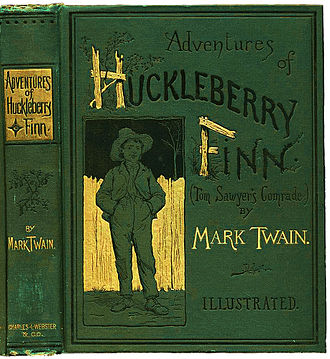
Adventures of Huckleberry Finn is a novel by Mark Twain, first published in the United Kingdom in December 1884 and in the United States in February 1885. Commonly named among the Great American Novels, the work is among the first in major American literature to be written throughout in vernacular English, characterized by local color regionalism. It is told in the first person by Huckleberry "Huck" Finn, a friend of Tom Sawyer and narrator of two other Twain novels (Tom Sawyer Abroad and Tom Sawyer, Detective). It is a direct sequel to The Adventures of Tom Sawyer.
Perennially popular with readers, Adventures of Huckleberry Finn has also been the continued object of study by literary critics since its publication. It was criticized upon release because of its coarse language and became even more controversial in the 20th century because of its perceived use of racial stereotypes and because of its frequent use of the racial slur "nigger", despite strong arguments that the protagonist, and the tenor of the book, is anti-racist.
黑人口音: double negative
Example: I don’t know nothing.
Sydney cafe: Australians say to Muslims "I'll ride with you"
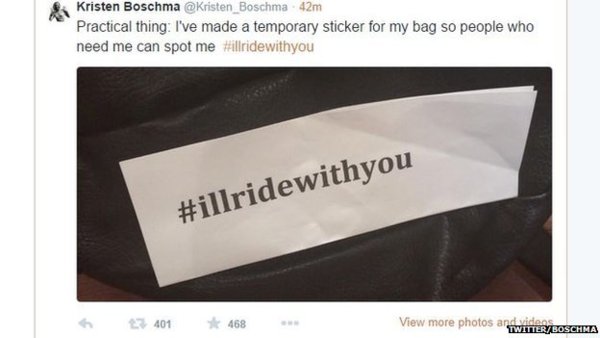
不是每個回教徒都是恐怖份子。對於明顯是不宗教種族的人加以保護。
As a gunman holds people hostage in a cafe in Sydney, thousands of messages of support have been posted online for Muslims in Australia who are afraid of an Islamophobic backlash.
The spark was this post on Facebook by Rachael Jacobs, who said she'd seen a woman she presumed was Muslim silently removing her hijab while sitting next to her on the train: "I ran after her at the train station. I said 'put it back on. I'll walk with u'. She started to cry and hugged me for about a minute - then walked off alone'.
The story of Rachael's encounter with a woman in religious attire inspired this Twitter user, 'Sir Tessa', aka Tessa Kum: "If you reg take the #373 bus b/w Coogee/MartinPl, wear religious attire, & don't feel safe alone: I'll ride with you. @ me for schedule," user 'Sir Tessa' tweeted. Moments later she tweeted "Maybe start a hashtag? What's in #illridewithyou?"
限會員,要發表迴響,請先登入


