 Salem, Massachusetts 以前是海港,淤積後沒落

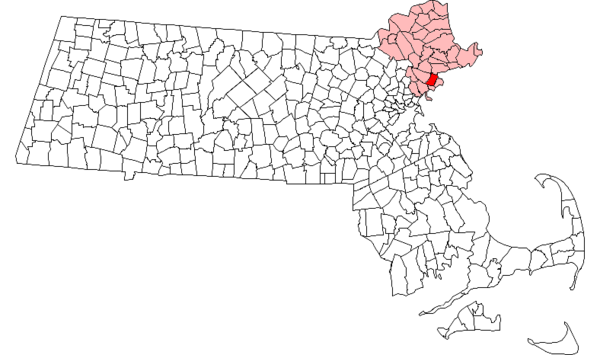
Salem is a city in Essex County, Massachusetts, in the United States. The population was 41,340 at the 2010 census. Salem and Lawrence were the county seats of Essex County prior to the abolishment of county government in 1999.
Tourists know Salem as a mix of important historical sites, New Age and Wiccan boutiques, kitschy Halloween, witch-themed attractions and a vibrant downtown that has more than 60 restaurants, cafes and coffee shop.
Salem witch trials 把孤苦無依的女生當女巫處死
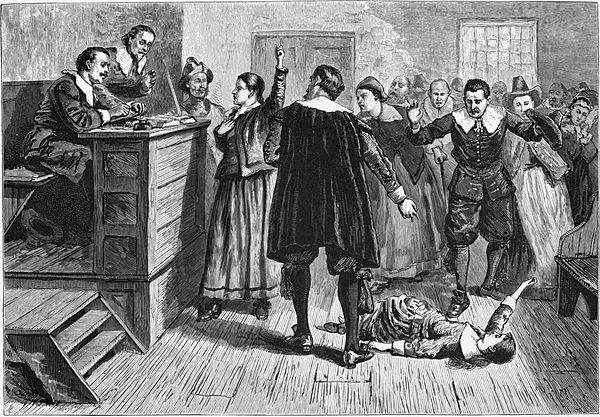
The Salem witch trials were a series of hearings and prosecutions of people accused of witchcraft in colonial Massachusetts between February 1692 and May 1693. The trials resulted in the executions of twenty people, most of them women. Despite being generally known as the Salem witch trials, the preliminary hearings in 1692 were conducted in several towns in the Province of Massachusetts Bay: Salem Village (now Danvers), Ipswich, Andover, and Salem Town.
Initial events
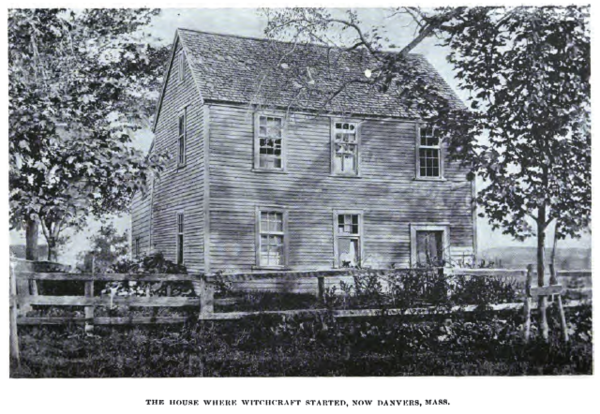
In Salem Village, in the winter months of 1692, Betty Parris, age 9, and her cousin Abigail Williams, age 11, the daughter and niece, respectively, of Reverend Samuel Parris, began to have fits described as "beyond the power of Epileptic Fits or natural disease to effect" by John Hale, the minister of the nearby town of Beverly. The girls screamed, threw things about the room, uttered strange sounds, crawled under furniture, and contorted themselves into peculiar positions, according to the eyewitness account of Rev. Deodat Lawson, himself a former minister in Salem Village.
The girls complained of being pinched and pricked with pins. A doctor, historically assumed to be William Griggs, could find no physical evidence of any ailment. Other young women in the village began to exhibit similar behaviors. When Lawson preached in the Salem Village meetinghouse, he was interrupted several times by outbursts of the afflicted.
The first three people accused and arrested for allegedly afflicting Betty Parris, Abigail Williams, 12-year-old Ann Putnam, Jr., and Elizabeth Hubbard were Sarah Good, Sarah Osborne, and Tituba. The accusation by Ann Putnam Jr. is seen by some historians as evidence that a family feud may have been a major cause of the witch trials. At the time, a vicious rivalry was underway between the Putnam and Porter families, one which deeply polarized the people of Salem. Citizens would often have heated debates, which escalated into full-fledged fighting, based solely on their opinion of the feud.
The House of the Seven Gables is a Gothic novel written beginning in mid-1850 by American author Nathaniel Hawthorne and published in April 1851 by Ticknor and Fields of Boston. The novel follows a New England family and their ancestral home. In the book, Hawthorne explores themes of guilt, retribution, and atonement and colors the tale with suggestions of the supernatural and witchcraft.
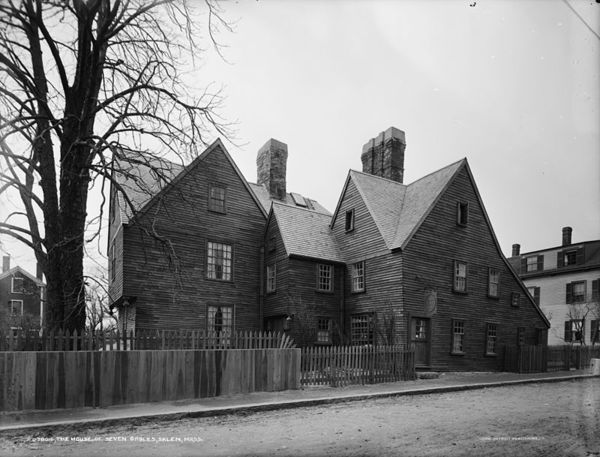
The House of the Seven Gables in Salem, Massachusetts — today a museum accompanying a settlement house — was at one time owned by Hawthorne's cousin, Susanna Ingersoll, and she entertained him there often. Its seven-gabled state was known to Hawthorne only through childhood stories from his cousin; at the time of his visits, he would have seen just three gables due to architectural renovations. Reportedly, Ingersoll inspired Hawthorne to write the novel, though Hawthorne also stated that the book was a work of complete fiction, based on no particular house.
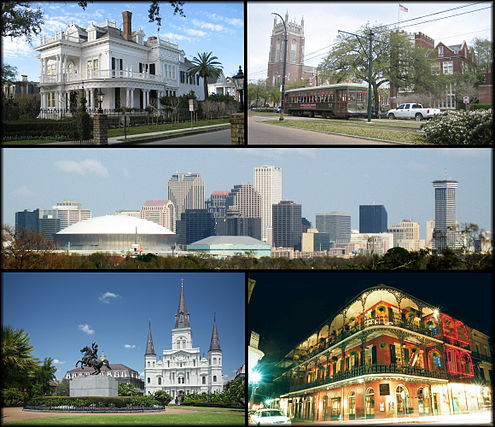
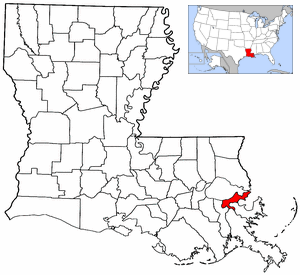
The city is named after the Duke of Orleans, who reigned as Regent for Louis XV from 1715 to 1723, as it was established by French colonists and strongly influenced by their European culture. It is well known for its distinct French and Spanish Creole architecture, as well as its cross-cultural and multilingual heritage. New Orleans is also famous for its cuisine, music (particularly as the birthplace of jazz), and its annual celebrations and festivals, most notably Mardi Gras, dating to French colonial times. The city is often referred to as the "most unique" in the United States.
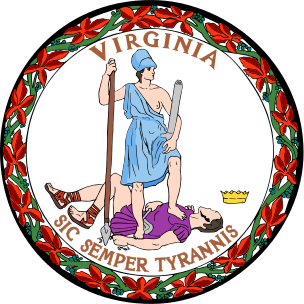
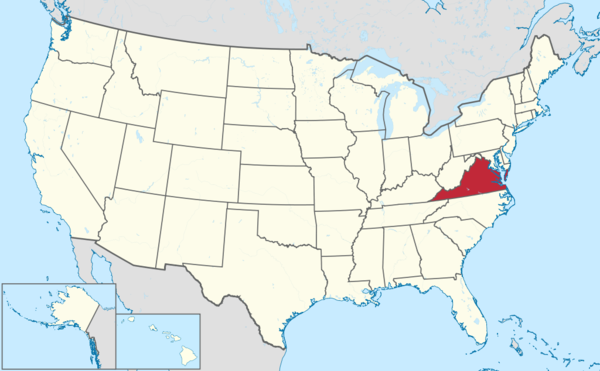
Virginia is a U.S. state located in the South Atlantic region of the United States. Virginia is nicknamed the "Old Dominion" due to its status as a former dominion of the English Crown, and "Mother of Presidents" due to the most U.S. presidents having been born there.
|
1788 |
|
|
1800 |
|
|
1808 |
|
|
1816 |
|
|
1840 |
|
|
1841 |
|
|
1848 |
|
|
1912 |
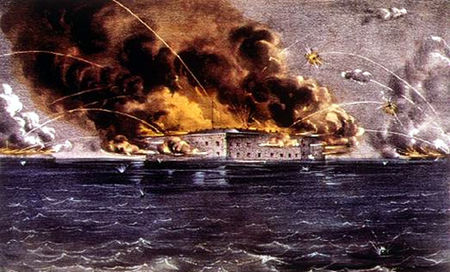
The Battle of Fort Sumter (April 12–14, 1861) was the bombardment and surrender of Fort Sumter, near Charleston, South Carolina, that started the American Civil War.南北戰爭打出第一砲的地方
St. Augustine, Florida 西班牙第一個到的
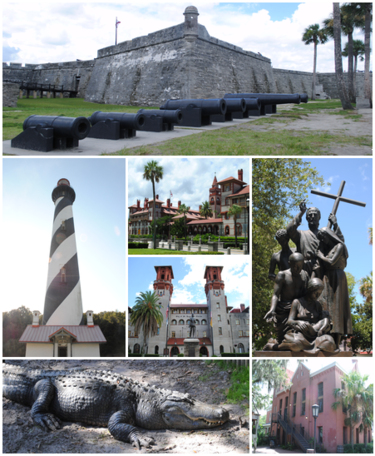
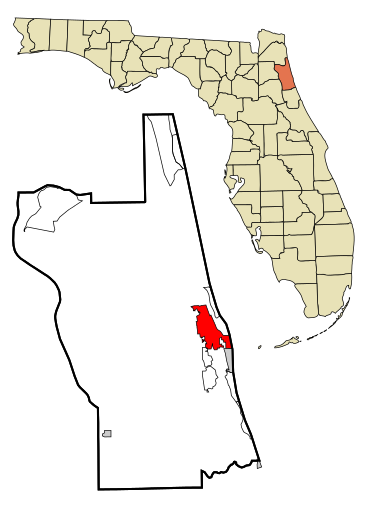
St. Augustine is a city in Northeast Florida and the oldest continuously occupied European-established settlement and port in the continental United States.
American Literature 1820-1865
An American Renaissance?
According to the critics who helped to established American literature as a field of study, the “Renaissance” was inspired during the 1830s by the writings of Emerson and came into its own in the 1850s with such major works as Hawthorne’s The Scarlet Letter (1850), Melville’s Moby-Dick (1851), Thoreau’s Walden (1854), and Whitman’s Leaves of Grass (1855).
But the emergence of internationally acclaimed writers like Irving, Bryant and Cooper also helped open up new literacy opportunities for American writers.
Washington Irving 1783-1859 美國第一個專業文人(會餓死)
Washington Irving (April 3, 1783 – November 28, 1859) was an American author, essayist, biographer, historian, and diplomat of the early 19th century. He is best known for his short stories "Rip Van Winkle" (1819).
1. 有擬真的感覺
2. 最常出現的key word: change
3. 人物第一次出現時要注意
The story of Rip Van Winkle is set in the years before and after the American Revolutionary War. In a pleasant village, at the foot of New York's Catskill Mountains, lives kindly Rip Van Winkle, a colonial British-American villager of Dutch ancestry. Van Winkle enjoys solitary activities in the wilderness, but he is also loved by all in town—especially the children to whom he tells stories and gives toys. However, he tends to shirk hard work, to his nagging wife's dismay, which has caused his home and farm to fall into disarray.
One winter day, to escape his wife, Dame Van Winkle, 's nagging, Van Winkle wanders up the mountains with his dog, Wolf. Hearing his name called out, Rip sees a man wearing antiquated Dutch clothing; he is carrying a keg up the mountain and requires help. Together, they proceed to a hollow in which Rip discovers the source of thunderous noises. A group of ornately dressed, silent, bearded men who are playing nine-pins. Rip does not ask who they are or how they know his name. Instead, he begins to drink some of their moonshine and soon falls asleep.
He awakes to discover shocking changes. His musket is rotting and rusty, his beard is a foot long, and his dog is nowhere to be found. Van Winkle returns to his village where he recognizes no one. He discovers that his wife has died and that his close friends have fallen in a war or moved away. He gets into trouble when he proclaims himself a loyal subject of King George III, not aware that the American Revolution has taken place. King George's portrait in the inn has been replaced with one of George Washington.
限會員,要發表迴響,請先登入


