1. The novels and short stories of Henry James and Edith Wharton tended to focus on the inner psychological lives of privileged upper-class 上層階級有特權characters. →找到民族自信
“[T]he realism practiced by Edith Wharton and Henry James focused on the interior moral and psychological lives of upper-class people. . . . Wharton and James hoped to convince readers—most of whom were from the middle class—that the inner lives of the privileged were in accord with the truths of human nature. Wealthy people had what working people did not—time to develop and display their inner selves; they were just like everybody else, although more so.”
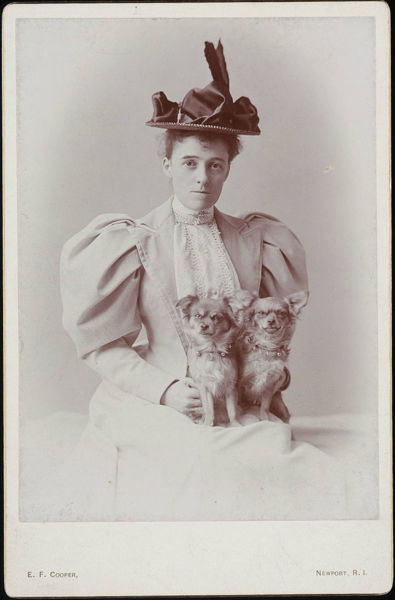
Edith Wharton (January 24, 1862 – August 11, 1937) was a Pulitzer Prize-winning American novelist, short story writer, and designer. She was nominated for the Nobel Prize in Literature in 1927, 1928 and 1930. Wharton combined her insider's view of America's privileged classes with a brilliant, natural wit to write humorous, incisive novels and short stories of social and psychological insight. She was well acquainted with many of her era's other literary and public figures, including Theodore Roosevelt.
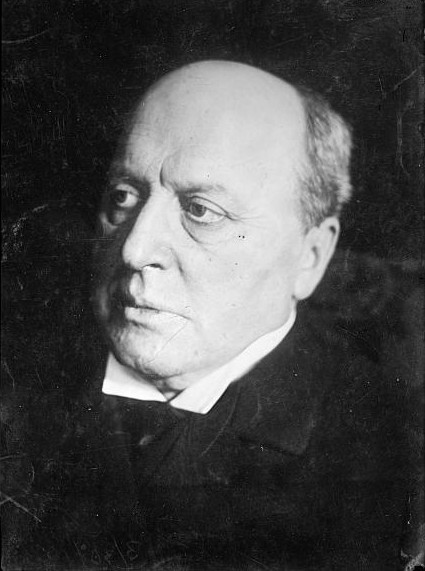
Henry James, OM (15 April 1843 – 28 February 1916) was an American writer who spent most of his writing career in Britain. He is regarded as one of the key figures of 19th-century literary realism.
James contributed significantly to literary criticism, particularly in his insistence that writers be allowed the greatest possible freedom in presenting their view of the world. James claimed that a text must first and foremost be realistic and contain a representation of life that is recognisable to its readers. Good novels, to James, show life in action and are, most importantly, interesting. His imaginative use of point of view, interior monologue and possibly unreliable narrators in his own novels and tales brought a new depth and interest to narrative fiction.
James is one of the major figures of trans-Atlantic (Free will and responsible for your choice) literature. His works frequently juxtapose characters from the Old World (Europe), embodying a feudal civilization that is beautiful, often corrupt, and alluring, and from the New World (United States), where people are often brash, open, and assertive and embody the virtues—freedom and a more highly evolved moral character—of the new American society.
Naturalism was a literary movement or tendency from the 1880s to 1930s that used detailed realism to suggest that social conditions, heredity, and environment had inescapable force in shaping human character. It was a mainly unorganized literary movement that sought to depict believable everyday reality, as opposed to such movements as Romanticism or Surrealism, in which subjects may receive highly symbolic, idealistic or even supernatural treatment.
Naturalistic writers were influenced by Charles Darwin's theory of evolution. They often believed that one's heredity and social environment largely determine one's character. Whereas realism seeks only to describe subjects as they really are, naturalism also attempts to determine "scientifically" the underlying forces (e.g., the environment or heredity) influencing the actions of its subjects.
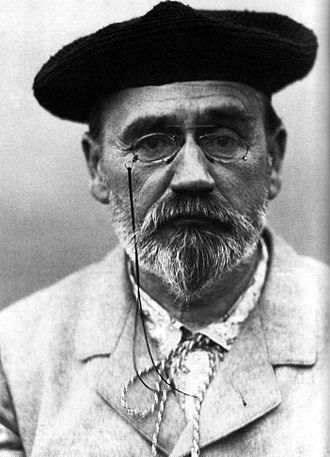
The term naturalism may have been used in this sense for the first time by Émile Zola. It is believed that he sought a new idea to convince the reading public of something new and more modern in his fiction. He argued that his innovation in fiction-writing was the creation of characters and plots based on the scientific method.
Heredity is the passing of traits to offspring from their parents. This is the process by which an offspring cell or organism acquires or becomes predisposed to the characteristics of its parent cell or organism. Through heredity, variations exhibited by individuals can accumulate and cause some species to evolve. The study of heredity in biology is called genetics, which includes the field of epigenetics.
 Literary realism (1865-1914)
Literary realism is part of the realist art movement beginning with mid nineteenth-century French literature and extending to the late nineteenth and early twentieth-century. Literary realism, in contrast to idealism, attempts to represent familiar things as they are. Realist authors chose to depict everyday and banal activities and experiences, instead of using a romanticized or similarly stylized presentation. Literary critic Ian Watt, however, dates the origins of realism in United Kingdom to the early 18th-century novel. Subsequent related developments in the arts are naturalism, social realism, and in the 1930s, socialist realism.
The literature of the latter half of the century is a fascinating kaleidoscope exhibiting the new and ever-changing forms of our national life. From the Gilded Age to the strenuous Nineties, what it shows us is endlessly various, but the variousness is not of a sort to baffle us. Patterns show up quite clearly. We can see the development of a national consciousness, where heretofore there had been many and sometimes opposing sectional self-interests. We can see a heightened concern with culture standards and a growth of social criticism. In the plot of the short story writer and in the idiom of the poet, what we see tells us that us that the era of romanticism had ended a new era of realism had begun.
4. The conditions most urban factory workers faced at the end of the nineteenth century are low wages, dangerous working conditions, and few laws regulating safety or working hours. Wages were low, and workers faced inhumane and dangerous working conditions; at this time there were few laws regulating safety and working hours.
5. The effects of the end of Reconstruction in the southern states in 1877 are the southern states protected African Americans’ right to vote and to wield political power but continued to practice de facto segregation.
“[I]t became clear, with the end of Reconstruction and the withdrawal of federal troops from the southern states in 1877, and then with the subsequent shift to segregationist種族分離制度Crow laws and the Supreme Court’s ‘separate but equal’ decision in the case of Plessy v. Ferguson (1896), that there had been considerable erosion of the Constitutional amendments 增修promising to guarantee the civil rights of African Americans.”
American Modernism 1914-1945現代主義高峰
American Modernism covered a wide variety of topics including race relations, gender roles, and sexuality. It reached its peak in America in the 1920s up to the 1940s. Celebrated Modernists include Ezra Pound, William Carlos Williams, F. Scott Fitzgerald, Ernest Hemingway and William Faulkner, and while largely regarded as a romantic poet, Walt Whitman is sometimes regarded as a pioneer of the modernist era in America.
Influenced by the First World War, many American modernist writers explored the psychological wounds and spiritual scars of the war experience. The economic crisis in America at the beginning of the 1930s also left a mark on literature, such as John Steinbeck's The Grapes of Wrath. A related issue is the loss of self and need for self-definition, as workers faded into the background of city life, unnoticed cogs within a machine yearning for self-definition. American modernists echoed the mid-19th-century focus on the attempt to "build a self"—a theme illustrated by Fitzgerald's The Great Gatsby. Madness and its manifestations seems to be another favorite modernist theme, as seen in Eugene O'Neill's The Emperor Jones, Hemingway's The Battler and Faulkner's That Evening Sun. Nevertheless, all these negative aspects led to new hopes and aspirations, and to the search for a new beginning, not only for the contemporary individuals, but also for the fictional characters in American modernist literature.
The modernist period also brought changes to the portrayal of gender roles and especially to women's role in society, and the literature reflects the emancipation and societal change of the era. Gatsby, for example, deals with such topics as gender interaction in a mundane society.
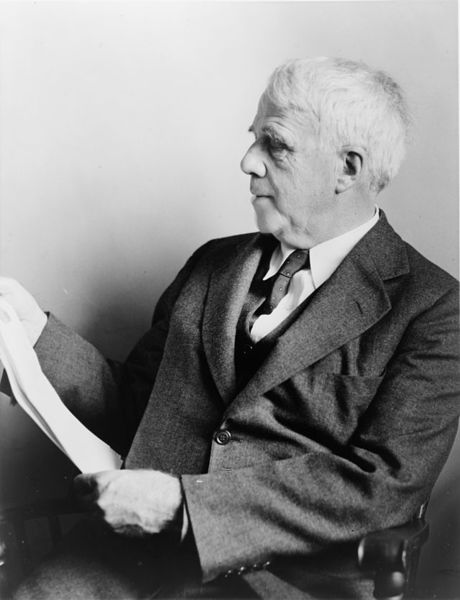
Robert Lee Frost (March 26, 1874 – January 29, 1963) was an American poet. His work was initially published in England before it was published in America. He is highly regarded for his realistic depictions of rural life and his command of American colloquial speech. His work frequently employed settings from rural life in New England in the early twentieth century, using them to examine complex social and philosophical themes.
三首重要的詩
1. The Road Not Taken
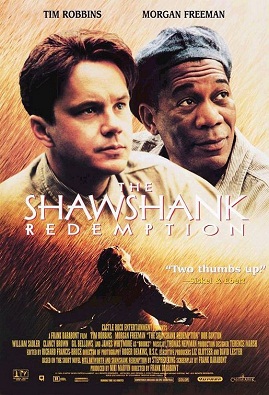
2. Birches (在The Shawshank Redemption的最後有出現這首詩)
3. Stopping by Woods on a Snowy Evening
死神與睡神是twins。
政治人物在沉潛黯淡時,常引用這首詩。
Stopping by Woods on a Snowy Evening
BY ROBERT FROST
Whose woods these are I think I know.
His house is in the village though;
He will not see me stopping here
To watch his woods fill up with snow.
My little horse must think it queer
To stop without a farmhouse near
Between the woods and frozen lake
The darkest evening of the year.
He gives his harness bells a shake
To ask if there is some mistake.
The only other sound’s the sweep
Of easy wind and downy flake.
The woods are lovely, dark and deep,
But I have promises to keep,
And miles to go before I sleep,
And miles to go before I sleep.
Anecdote of the Jar (對一個東西的冥想)
Wallace Stevens, 1879 - 1955
I placed a jar in Tennessee,
And round it was, upon a hill.
It made the slovenly wilderness
Surround that hill.
The wilderness rose up to it,
And sprawled around, no longer wild.
The jar was round upon the ground
And tall and of a port in air.
It took dominion everywhere.
The jar was gray and bare.
It did not give of bird or bush,
Like nothing else in Tennessee.
Ode on a Grecian Urn (本來只是破瓶子,透過冥想不一樣free association)
BY JOHN KEATS
…
Ah, happy, happy boughs! that cannot shed
Your leaves, nor ever bid the Spring adieu;
And, happy melodist, unwearied,
For ever piping songs(Pan Dionysus) for ever new;
More happy love! more happy, happy love!
For ever warm and still to be enjoy'd,
For ever panting, and for ever young;
All breathing human passion far above,
That leaves a heart high-sorrowful and cloy'd,
A burning forehead, and a parching tongue.
…
O Attic shape! Fair attitude! with brede
Of marble men and maidens(想到博物館驚魂夜3) overwrought,
With forest branches and the trodden weed;
Thou, silent form, dost tease us out of thought
As doth eternity: Cold Pastoral!
When old age shall this generation waste,
Thou shalt remain, in midst of other woe
Than ours, a friend to man, to whom thou say'st,
"Beauty is truth, truth beauty,—that is all
Ye know on earth, and all ye need to know." 美的沉思
Sunday Morning(星期天沒有去教堂→對信仰的質疑&精神文明破產)
I
Complacencies of the peignoir, and late
Coffee and oranges in a sunny chair,
And the green freedom of a cockatoo
Upon a rug mingle to dissipate
The holy hush of ancient sacrifice.
She dreams a little, and she feels the dark
Encroachment(無聲無息) of that old catastrophe(猶太人殺耶穌大災難),
As a calm darkens among water-lights.
The pungent oranges and bright, green wings
Seem things in some procession of the dead,
Winding across wide water, without sound(蜻蜓水上漂).
The day is like wide water, without sound,
Stilled for the passing of her dreaming feet思緒
Over the seas, to silent Palestine,
Dominion of the blood and sepulchre.
The Journey of the Magi (旅程=邁向死亡? 後現代主義→精神文明破產)
by T. S. Eliot
'A cold coming we had of it,
Just the worst time of the year
For a journey, and such a long journey:
The ways deep and the weather sharp,
The very dead of winter.'
And the camels galled, sorefooted, refractory,
Lying down in the melting snow.(形容大家都在移動)
There were times we regretted
The summer palaces on slopes, the terraces,
And the silken girls bringing sherbet.
Then the camel men cursing and grumbling
and running away, and wanting their liquor and women,
And the night-fires going out, and the lack of shelters,
And the cities hostile and the towns unfriendly
And the villages dirty and charging high prices:
A hard time we had of it.
At the end we preferred to travel all night,
Sleeping in snatches,
With the voices singing in our ears, saying
That this was all folly.
Then at dawn we came down to a temperate valley,
Wet, below the snow line, smelling of vegetation;
With a running stream and a water-mill beating the darkness,
And three trees on the low sky,
And an old white horse galloped away in the meadow.
Then we came to a tavern with vine-leaves over the lintel,
Six hands at an open door dicing for pieces of silver,(聖經典故: 30元賣耶穌)
And feet kicking the empty wine-skins. (迦納婚禮)
But there was no information, and so we continued
And arrived at evening, not a moment too soon
Finding the place; it was (you might say) satisfactory.
…
12. In 1870, the U.S. population was 38.5 million; by 1920 it was 123 million. What was responsible for the dramatic increase in population during this period?
Immigrants from southern and eastern Europe poured into the northeastern United States.
The Columbian Exchange哥倫布大交換
(帶來重要農作物和天主教,卻換來印加文化的消失和梅毒)
The Columbian Exchange or Grand Exchange refers to the widespread transfer of animals, plants, culture, human populations, communicable diseases, technology and ideas between the American and Afro-Eurasian hemispheres in the 15th and 16th centuries, related to European colonization and trade (including African/American slave trade) after Christopher Columbus' 1492 voyage. The contact between the two areas circulated a wide variety of new crops and livestock, which supported increases in population in both hemispheres. Traders returned to Europe with maize, potatoes, and tomatoes, which became very important crops in Europe by the 18th century. Similarly, Europeans introduced manioc and peanut to tropical Asia and West Africa, where they flourished and supported growth in populations on soils that otherwise would not produce large yields.
限會員,要發表迴響,請先登入


