一開始先go through 前兩周的上課內容,再繼續上禮拜沒討論完的Quiz
11. Immigrants to the American colonies in the eighteenth century can be characterized as: an ethnically diverse group of Europeans, including English, Dutch, French, German, and Jewish immigrants along with an increasing number of enslaved Africans.
12. Jonathan Edwards is most closely associated with the movement known as “The Great Awakening”.
The term Great Awakening is used to refer to several periods of religious revival (emotion and feeling) in American religious history. Historians and theologians identify three or four waves of increased religious enthusiasm occurring between the early 18th century and the late 19th century.
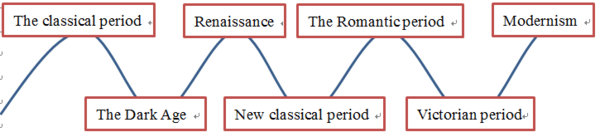
啟發於18th 英國 The Romantic period (Emotional, Humanism, Idealism) 後文藝復興
 五大詩人
五大詩人
In English literature, the key figures of the Romantic movement are considered to be the group of poets including William Wordsworth, Samuel Taylor Coleridge, John Keats, Lord Byron, Percy Bysshe Shelley, and the much older William Blake.
a.
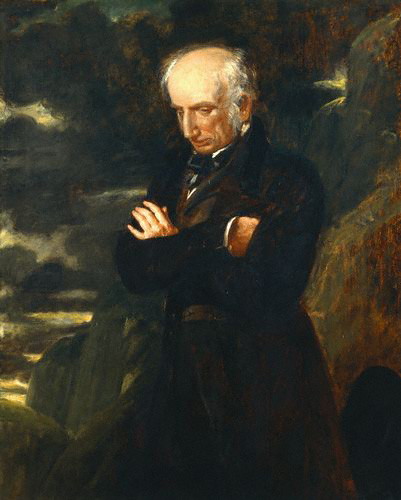
William Wordsworth (7 April 1770 – 23 April 1850) was a major English Romantic poet who, with Samuel Taylor Coleridge, helped to launch the Romantic Age in English literature with their joint publication Lyrical Ballads (1798).
b.
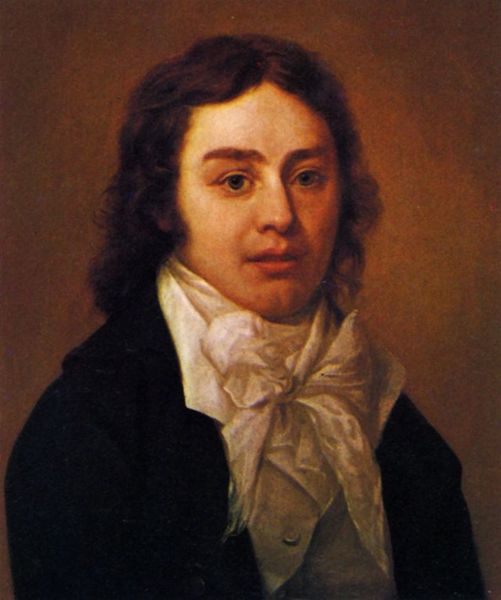
Samuel Taylor Coleridge (21 October 1772 – 25 July 1834) was an English poet, literary critic and philosopher who, with his friend William Wordsworth, was a founder of the Romantic Movement in England and a member of the Lake Poets. He wrote the poems The Rime of the Ancient Mariner and Kubla Khan, as well as the major prose work Biographia Literaria.
c.
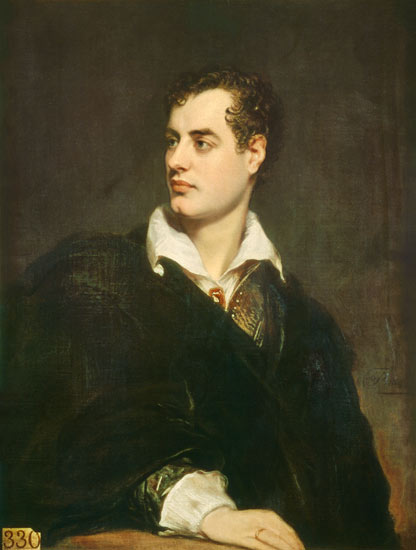
John Keats (31 October 1795 – 23 February 1821) was an English Romantic poet. He was one of the main figures of the second generation of Romantic poets. The poetry of Keats is characterised by sensual imagery, most notably in the series of odes.
d.
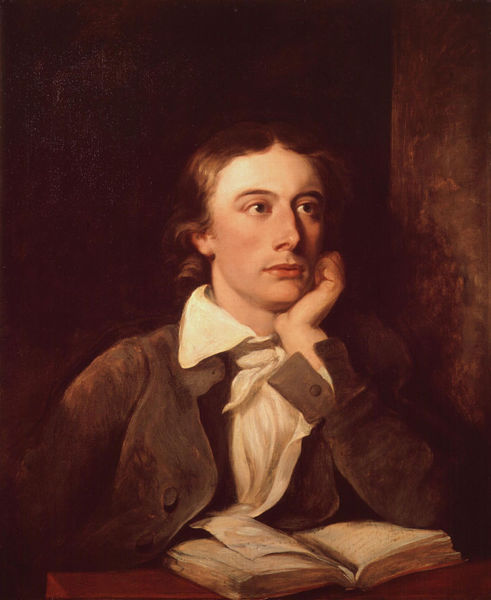
Lord Byron, was an English poet and a leading figure in the Romantic movement. Among Byron's best-known works are the lengthy narrative poems Don Juan and Childe Harold's Pilgrimage and the short lyric She Walks in Beauty. He travelled all over Europe especially in Italy where he lived for seven years and then joined the Greek War of Independence fighting the Ottoman Empire, for which Greeks revere him as a national hero. He died one year later at age 36 from a fever contracted while in Missolonghi in Greece.
e.
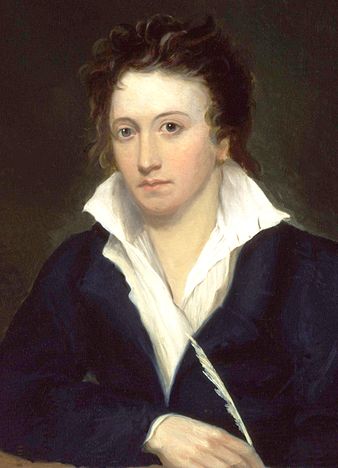
Percy Bysshe Shelley (4 August 1792 – 8 July 1822) was one of the major English Romantic poets and is regarded by critics as amongst the finest lyric poets in the English language.
f.
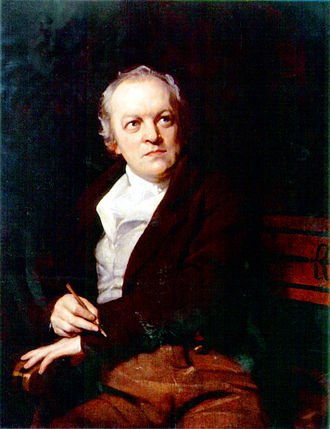
William Blake (28 November 1757 – 12 August 1827) was an English painter, poet and printmaker. Largely unrecognised during his lifetime, Blake is now considered a seminal figure in the history of the poetry and visual arts of the Romantic Age. His prophetic poetry has been said to form "what is in proportion to its merits the least read body of poetry in the English language".
每個時期都是上一個時期的反動
13. Best describes the eighteenth-century movement known as “the Enlightenment” is a conviction that the human mind could comprehend, and sometimes control, the physical universe and that human fellow-feeling and sympathy is the basis of moral life
The Age of Enlightenment (or simply the Enlightenment or Age of Reason) was a cultural movement of intellectuals beginning in late 17th-century Europe emphasizing reason and individualism rather than tradition. Its purpose was to reform society using reason, to challenge ideas grounded in tradition and faith, and to advance knowledge through the scientific method. It promoted scientific thought, skepticism, and intellectual interchange. The Enlightenment was a revolution in human thought. This new way of thinking was that rational thought begins with clearly stated principles, uses correct logic to arrive at conclusions, tests the conclusions against evidence, and then revises the principles in the light of the evidence.
Where is the quote That Government is best which governs least?
The quote can be found in Henry David Thoreau's essay entitled Civil Disobedience published in 1849. However the quote is often attributed to Thomas Jefferson, but there is no writing suggesting Jefferson actually said it.
但是在台灣的考試要回答 Thomas Paine
Henry David Thoreau
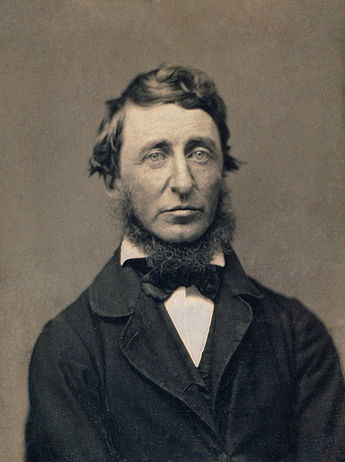
Henry David Thoreau (July 12, 1817 – May 6, 1862) was an American author, poet, philosopher, polymath, abolitionist, naturalist, tax resister, development critic,
15. During the American Revolution, many eastern Native American tribes: sided with the British.選錯邊所以之後慘遭掃蕩
進入這禮拜的考題
1. Studies of the American Renaissance have tended to exclude the significant contributions of women and minority writers are the problems have recent critics frequently raised about the construction of the so-called American Renaissance.
In American literature, the American Renaissance was a period during which many of the literary works most widely considered American masterpieces were produced. The period is generally defined as the mid-19th century but especially the years roughly from 1850 to 1855. Major works from those years include Ralph Waldo Emerson's Representative Men (1850, though most of Emerson's best-known texts were published earlier), Nathaniel Hawthorne's The Scarlet Letter (1850) and The House of the Seven Gables (1851), Herman Melville's Moby-Dick (1851), Henry David Thoreau's Walden (1854), and Walt Whitman's first edition of Leaves of Grass (1855).
4. Territorial expansion to the West (西進) and the increasing accessibility of the West through the development of roads, canals, and railroads, sparked the popularity of what literary genre is travel writing.
6. Never really a formalized movement, but instead a shared belief among a group of writers in the creative powers of the individual mind and the need to question established institutions and traditions is best describe Transcendentalism as a literary movement.
Transcendentalism(美國文藝復興重要的字) 對傳統文化的反動
Transcendentalism is a religious and philosophical movement that was developed during the late 1820s and 1830s in the Eastern region of the United States as a protest against the general state of spirituality and, in particular, the state of intellectualism at Harvard University and the doctrine of the Unitarian church taught at Harvard Divinity School. Among the transcendentalists' core beliefs was the inherent goodness of both people and nature.
限會員,要發表迴響,請先登入


