2016.12.29
🎁 Extra Information 🎁
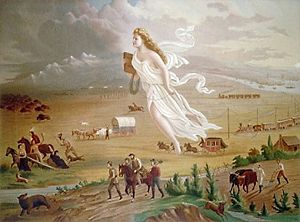
🍙 Manifest Destiny
In the 19th century, manifest destiny was a widely held belief in the United States that its settlers were destined to expand across North America. There are three basic themes to manifest destiny:
The special virtues of the American people and their institutions
The mission of the United States to redeem and remake the west in the image of agrarian America
An irresistible destiny to accomplish this essential duty
Historian Frederick Mark says this concept was born out of "a sense of mission to redeem the Old World by high example ... generated by the potentialities of a new earth for building a new heaven".
Historians have emphasized that "manifest destiny" was a contested concept—pre-civil war Democrats endorsed the idea but many prominent Americans (such as Abraham Lincoln, Ulysses S. Grant, and most Whigs) rejected it. Historian Daniel Walker Howe writes, "American imperialism did not represent an American consensus; it provoked bitter dissent within the national polity ... Whigs saw America's moral mission as one of democratic example rather than one of conquest."
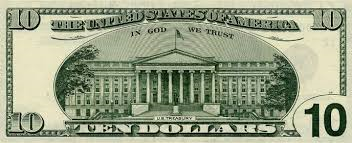
🍙 US dollars-- In God We Trust
"In God We Trust" is the official motto of the United States. It was adopted as the nation's motto in 1956 as an alternative or replacement to the unofficial motto of E pluribus Unum, which was adopted when the Great Seal of the United States was created and adopted in 1782.
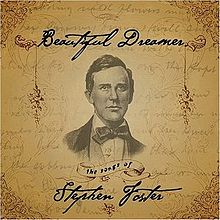
🍙 Beautiful Dreamer ----- by Stephen Foster
Beautiful dreamer, wake unto me
starlight and dewdrops are awaiting thee
Sounds of the rude world heard in the day
Led by the moonlight have all passed away
Beautiful dreamer, queen of my song
List while I woo thee with soft melody
Gone are the cares of life's busy throng
Beautiful dreamer awakes unto me
Beautiful dreamer awakes unto me!
Beautiful dreamer, out on the sea
Mermaids are chanting the wild lorelei
Over the streamlet vapors are borne
Waiting to fade at the bright coming morn
Beautiful dreamer, beam on my heart
E'en as the morn on the streamlet and sea
Then will all clouds of sorrow depart
Beautiful dreamer, awake unto me
Beautiful dreamer, awake unto me!

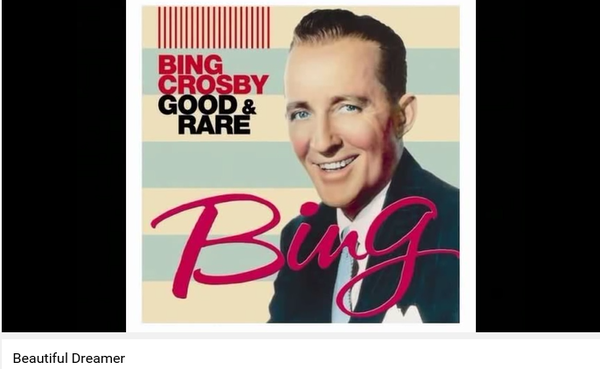
🍙 My Old Kentucky Home ---- by Stephen Foster
The sun shines bright on my old Kentucky home
This summer, the darkies are gay
The corn top's ripe and the meadow's in bloom
While the birds make music all the day
The young folks roll on the little cabin floor
All merry, all happy and bright
By 'n by hard times come a-knocking at the door
Then my old Kentucky home good night
Weep no more, my lady
Oh, weep no more, today
We will sing one song for the old Kentucky home
For the old Kentucky home far away.
They hunt no more for the 'possum and the coon,
On meadow, the hill and the shore,
They sing no more by the glimmer of the moon,
On the bench by that old cabin door.
The day goes by like a shadow o'er the heart,
With sorrow where all was delight.
The time has come when the darkies have to part,
Then my old Kentucky home, good night.
The head must bow and the back will have to bend,
Wherever the poor folks may go
A few more days and the trouble will end,
In the field where sugar-canes may grow.
A few more days for to tote the weary load,
No matter, 'twill never be light
A few more days till we totter on the road,
Then my old Kentucky home, good night.
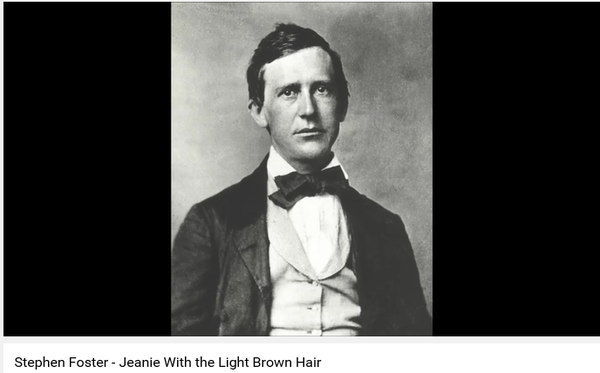
🍙 Jeanie With The Light Brown Hair
by Stephen Foster
I dream of Jeannie with the light brown hair
Borne, like a vapor, on the summer air
I see her tripping where the bright streams play
Happy as the daisies that dance on her way
Many were the wild notes her merry voice would pour
Many were the blithe birds that warbled them o'er
Oh! I dream of Jeannie with the light brown hair
Floating, like a vapor, on the soft, summer air
I long for Jeannie with the day dawn smile
Radiant in gladness, warm with winning guile
I hear her melodies, like joys gone by
Sighing round my heart o'er the fond hopes that die
Sighing like the night wind and sobbing like the rain
Wailing for the lost one that comes not again
Oh! I long for Jeannie, and my heart bows low
Never more to find her where the bright waters flow
I sigh for Jeannie, but her light form strayed
Far from the fond hearts round her native glade
Her smiles have vanished and her sweet songs flown
Flitting like the dreams that have cheered us and gone
Now the nodding wild flow'rs may wither on the shore
While her gentle fingers will cull them no more
Oh! I sigh for Jeannie with the light brown hair
Floating like a vapor, on the soft summer air
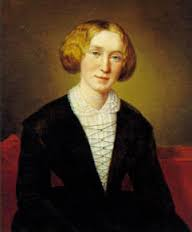
🍙 George Eliot
Mary Ann Evans (22 November 1819 – 22 December 1880; alternatively "Mary Anne" or "Marian"), known by her pen name George Eliot, was an English novelist, poet, journalist, translator and one of the leading writers of the Victorian era. She is the author of seven novels, including Adam Bede (1859), The Mill on the Floss (1860), Silas Marner (1861), Felix Holt, the Radical (1866), Middlemarch (1871–72), and Daniel Deronda (1876), most of which are set in provincial England and known for their realism and psychological insight. She used a male pen name, she said, to ensure that her works would be taken seriously. Female authors were published under their own names during Eliot's life, but she wanted to escape the stereotype of women writing only lighthearted romances. She also wished to have her fiction judged separately from her already extensive and widely known work as an editor and critic. An additional factor in her use of a pen name may have been a desire to shield her private life from public scrutiny and to prevent scandals attending her relationship with the married George Henry Lewes, with whom she lived for over 20 years.
🌟 Jane Eyre and No Strings Attached
>>http://blog.udn.com/tysunnhcue/8537021
🍙 No Strings Attached
No Strings Attached is a 2011 American romantic comedy film directed by Ivan Reitman and written by Elizabeth Meriwether. Starring Natalie Portman and Ashton Kutcher, the film is about two friends who decide to make a pact to have "no strings attached" casual sex without falling in love with each other. The film was released in the United States on January 21, 2011.

🍙 Jane Eyre
Jane Eyre (originally published as Jane Eyre: An Autobiography) is a novel by English writer Charlotte Brontë. It was published on 16 October 1847, by Smith, Elder & Co. of London, England, under the pen name "Curer Bell." The first American edition was published the following year by Harper & Brothers of New York. Primarily of the Bildungsroman genre, Jane Eyre follows the emotions and experiences of its eponymous heroine, including her growth to adulthood and her love for Mr. Rochester, the Byronic master of fictitious Thorn field Hall. In its internalization of the action—the focus is on the gradual unfolding of Jane's moral and spiritual sensibility, and all the events are colored by a heightened intensity that was previously the domain of poetry—Jane Eyre revolutionized the art of fiction. Charlotte Brontë has been called the 'first historian of the private consciousness' and the literary ancestor of writers like Joyce and Proust. The novel contains elements of social criticism, with a strong sense of morality at its core, but is nonetheless a novel many consider ahead of its time given the individualistic character of Jane and the novel's exploration of classism, sexuality, religion, and proto-feminism.

🎪 1100 Words I need to know 🎪
🎓 Week 40~42
💠 Shibboleth (n.):
- a belief or custom that is not now considered as important and correct as it was in the past
➡ They still cling to many of the old shibboleths of education.
2. a word, phrase, custom, etc., only known to a particular group of people, that you can use to prove to them that you are a real member of that group
👉 Phrase: Shibboleth of
💠 Rhetoric (n.):
- (language)the study of the ways of using language effectively
➡ I was swayed by her rhetoric into donating all my savings to the charity.
2. speech or writing intended to be effective and influence people
3. clever language that sounds good but is not sincere or has no real meaning
➡ In reply to the question, he just produced a lot of empty (= meaningless) rhetoric.
👉 Related: rhetorical (adj.)
rhetorician (n.)
💠 Lassitude (n.):
- physical or mental tiredness
➡ Shareholders are blaming the company's problems on the lassitude of the CEO.
💠 Potpourri (n.):
- a mixture of dried petals and leaves from various flowers and plants that is used to give a room a pleasant smell
➡ a bowl of potpourri
2. an unusual or interesting mixture of things
➡ Her new TV show will be a potpourri of arts and media reports.
💠 Raucous (adj.):
- loud and unpleasant
➡ The party was becoming rather raucous.
👉 Related: (adv.) Raucously
(n.) Raucousness
Week40
🌟Rhetoric (n.):
early 14c., from Old French rethorique, from Latin rhetorice, from Greek rhetorike techne "art of an orator," from rhetor (genitive rhetoros) "speaker, orator, teacher of rhetoric," related to rhesis "speech," rhema "word, phrase, verb," literally "that which is spoken," from PIE *wre-tor-, from root *were- "to speak" (source also of Old English word, Latin verbum, Greek eirein "to say;" see verb).
🍙 rhetorical (adj.) Look up rhetorical at Dictionary.commid-15c., "eloquent," from Latin rhetoricus, from Greek rhetorikos "oratorical, rhetorical; skilled in speaking," from rhetor "orator". Meaning "pertaining to rhetoric" is from 1520s. Rhetorical question is from 1670s.
👉 Related: Rhetorically.
🍙 rhetorician (n.) Look up rhetorician at Dictionary.comearly 15c., Old French rethoricien, from rethorique. An Old English word for one was wordsawere "word-sower."
🌟Clique (n.)
Look up clique at Dictionary.com1711, "a party of persons; a small set, especially one associating for exclusivity," from obsolete French clique, originally (14c.) "a sharp noise," also "latch, bolt of a door," from Old French cliquer "click, clatter, crackle, clink," 13c., echoic. Apparently this word was at one time treated in French as the equivalent of claque (q.v.) and partook of that word's theatrical sense.
🍙 cliquish (adj.) Look up cliquish at Dictionary.com1839, from clique + -ish.
👉 Related: Cliquishly; cliquishness.
🌟Extol(v.)
Look up extol at Dictionary.comalso extoll, c. 1400, "to lift up," from Latin extollere "to place on high, raise, elevate," figuratively "to exalt, praise," from ex "up" (see ex-) + tollere "to raise," from PIE *tele- "to bear, carry," "with derivatives referring to measured weights and thence money and payment" [Watkins].
Cognates include Greek talantos "bearing, suffering," tolman "to carry, bear," telamon "broad strap for bearing something," talenton "a balance, pair of scales," Atlas "the 'Bearer' of Heaven;" Lithuanian tiltas "bridge;" Sanskrit tula "balance," tulayati "lifts up, weighs;" Latin tolerare "to bear, support," perhaps also latus "borne;" Old English þolian "to endure;" Armenian tolum "I allow." Figurative sense of "praise highly" in English is first attested c. 1500.
👉 Related: Extolled; extolling.
🌟Mentor (n.)(v.)
1888, from mentor (n.). Related: Mentored; mentoring.
"wise adviser," 1750, from Greek Mentor, friend of Odysseus and adviser of Telemachus (but often actually Athene in disguise) in the "Odyssey," perhaps ultimately meaning "adviser," because the name appears to be an agent noun of mentos "intent, purpose, spirit, passion" from PIE *mon-eyo- (source also of Sanskrit man-tar- "one who thinks," Latin mon-i-tor "one who admonishes"), causative form of root *men- "to think". The general use of the word probably is via later popular romances, in which Mentor played a larger part than he does in Homer.
🌟Facile (adj.)
late 15c., "easy to do," from Middle French facile "easy," from Latin facilis "easy to do" and, of persons, "pliant, courteous, yielding," from facere "to do"Usually now with depreciatory implication. Of persons, "easily led," from 1510s.
Cant
🌟Umbrage(n.)
early 15c., "shadow, shade," from Middle French ombrage "shade, shadow," from noun use of Latin umbraticum "of or pertaining to shade; being in retirement," neuter of umbraticus "of or pertaining to shade," from umbra "shade, shadow," from PIE root *andho- "blind; dark" (source also of Sanskrit andha-, Avestan anda- "blind, dark"). Many figurative uses in 17c.; main remaining one is the meaning "suspicion that one has been slighted," first recorded 1610s; hence phrase to take umbrage at, attested from 1670s.
🍙 umbrageous (adj.) "shady," 1580s, from French ombrageux, from Old French umbrageus, from umbre "shade," from Latin umbra "shade, shadow" (see umbrage).
🌟Vilify(v.)
Look up vilify at Dictionary.commid-15c., "to lower in worth or value," from Late Latin vilificare "to make cheap or base; to esteem of little value," from Latin vilis "cheap, base" (see vile) + root of facere "to make" (see factitious). Meaning "to slander, speak evil of" is first recorded 1590s.
👉 Related: Vilified, vilifying.
🍙 vilification (n.) Look up vilification at Dictionary.com1620s, from Medieval Latin vilificationem (nominative vilificatio), noun of action from past participle stem of Late Latin vilificare (see vilify).
🌟Elucidate (v.)
Look up elucidate at Dictionary.com1560s, perhaps via Middle French élucider (15c.) or directly from Late Latin elucidatus, past participle of elucidare "make light or clear," from assimilated form of ex "out, away" (see ex-) + lucidus "clear" (see lucid). 👉 Related: Elucidated; elucidates; elucidating.
🍙 elucidation (n.) Look up elucidation at Dictionary.com1560s, "act of making intelligible," noun of action from elucidate. As "an explanation" from 1660s.
1650s, "flat, insipid" (of drinks), from Latin vapidus "flat, insipid," literally "that has exhaled its vapor," related to vappa "stale wine," and probably to vapor "vapor." Applied from 1758 to talk and writing deemed dull and lifeless. Related: Vapidly; vapidness.
🍙vapidity (n.): 1721, from vapid + -ity.
late 14c., "lacking strength, powerless," from un- (1) "not" + obsolete wieldy, from Old English wielde "active, vigorous," from Proto-Germanic *walth- "have power" (see wield (v.)). Meaning "moving ungracefully" is recorded from 1520s; in reference to weapons, "difficult to handle, awkward by virtue of size or shape" it is attested from 1540s.
👉 Related: Unwieldiness.
late 15c., from Middle French proximité "nearness" (14c.), from Latin proximitatem (nominative proximitas) "nearness, vicinity," from proximus "nearest, next; most direct; adjoining," figuratively "latest, most recent; next, following; most faithful," superlative of prope "near" (see propinquity).
🍙proxemics (n.): 1963, coined from proximity + -emics
"neighboring," 1590s (implied in proximately), from Late Latin proximatus, past participle of proximare "to draw near," from proximus "nearest, next" (see proximity).
1727, from Latin proximus "nearest, next" (see proximity) + -al
👉 Related: Proximally.
early 15c., from Latin lassitudinem (nominative lassitudo) "faintness, weariness," from lassus "faint, tired, weary," from PIE *led-to-, suffixed form of *led- "slow, weary" (source also of Old English læt "sluggish, slow;" see late (adj.)), from root *le- (2) "to let go, slacken" (see lenient).
1530s, from Latin vitiatus, past participle of vitiare "to make faulty, injure, spoil, corrupt," from vitium "fault, defect, blemish, crime, vice"
👉 Related: Vitiated; vitiating.
1630s, from Latin vitiationem (nominative vitiatio) "violation, corruption," noun of action from past participle stem of vitiare (see vitiate).
c. 1400, from Old French augmenter "increase, enhance" (14c.), from Late Latin augmentare "to increase," from Latin augmentum "an increase," from augere "to increase, make big, enlarge, enrich," from PIE root *aug- (1) "to increase" (source also of Sanskrit ojas- "strength;" Lithuanian augu "to grow," aukstas "high, of superior rank;" Greek auxo "increase," auxein "to increase;" Gothic aukan "to grow, increase;" Old English eacien "to increase"). Related: Augmented; augmenting. As a noun from early 15c.
past participle adjective from augment, c. 1600. Musical sense is attested from 1825.
c. 1500, from Middle French augmentatif (14c.), from Late Latin augmentat-, stem of augmentare "to increase" (see augment).
mid-15c., "act of making greater," from Old French augmentacion "increase," from Late Latin augmentationem (nominative augmentatio), noun of action from past participle stem of augmentare "to increase" (see augment). Meaning "amount by which something is increased" is from 1520s. Musical sense is from 1590s.
"foolish, stupid," 1530s, from Latin fatuus "foolish, insipid, silly;" which is of uncertain origin. Buck suggests originally "stricken" in the head. But de Vaan says from Proto-Italic *fatowo- "of speech," from the PIE root of fame (n.).
[I]f we connect the fact that Fatuus is said to be an alternative name for Faunus, and that he predicted the future, and that this god is attested on an Etruscan mirror as Fatuvs in a clear oracular function (Weiss 2007b), we may venture a derivation from forfor 'to say' (Untermann 2000). The name of the god would then have come to be used pejoratively as 'silly'.
👉 Related: Fatuously; fatuousness.
1640s, from Middle French fatuité (14c.), from Latin fatuitatem (nominative fatuitas) "foolishness, folly," from fatuus "foolish, insipid" (see fatuous).
"will o' the wisp, jack-o-lantern," 1560s, Medieval Latin, literally "foolish fire;" see igneous + fatuous. "It seems to have been formerly a common phenomenon; but is now exceedingly rare" [OED].
1530s, "turn (something) to foolishness, frustrate by making foolish," from Latin infatuatus, past participle of infatuare "make a fool of," from in- "in" (see in- (2)) + fatuus "foolish" (see fatuous). Specific sense of "inspire (in someone) a foolish passion beyond control of reason" is from 1620s.
👉 Related: Infatuated; infatuating.
An infatuated person is so possessed by a misleading idea or passion that his thoughts and conduct are controlled by it and turned into folly. [Century Dictionary]
early 15c., from Latin contortus, past participle of contorquere "to whirl, twist together," from com "with, together," here perhaps intensive (see com-) + torquere "to twist"
👉 Related: Contorted; contorting.
early 15c., from Middle French contorsion or directly from Latin contortionem (nominative contorsio), noun of action from past participle stem of contorquere
🍙contortionist (n.) : 1841, from contortion + -ist.
"a stock of plays, songs, etc., which a performer or company has studied and is ready to perform," 1847, from French répertoire, literally "index, list" (14c.), from Late Latin repertorium "inventory"
1550s, "an index, list, catalogue," from Late Latin repertorium "inventory, list," from Latin repertus, past participle of reperire "to find, get, invent," from re-, intensive prefix (see re-), + parire, archaic form of paerere "produce, bring forth," from PIE root *pere- (1) "to bring forth" (see pare). Meaning "list of performances" is first recorded 1845, from similar use of French repertoire; repertory theater is attested from 1896.
👉 Related: Repertorial.
early 15c., from Middle French imperceptible (15c.), from Medieval Latin imperceptibilis, from assimilated form of in- "not, opposite of" (see in- (1)) + perceptibilis (see perceptible). Related: Imperceptibly; imperceptibility. OED marks imperceivable (1610s) as "Now rare."
🍙imperceptibility (n.): 1670s, from imperceptible + -ity.
Week41
late 13c., "to rub down a horse," from Anglo-French curreier "to curry-comb a horse," from Old French correier "put in order, prepare, curry," from con-, intensive prefix (see com-), + reier "arrange," from a Germanic source (see ready).
👉 Related: Curried; currying.
🍙curry (n.): the spice, 1680s, from Tamil kari "sauce, relish for rice."
Old English pæll "rich cloth or cloak, purple robe, altar cloth," from Latin pallium "cloak, coverlet, covering," in Tertullian, the garment worn by Christians instead of the Roman toga; related to pallo "robe, cloak," palla "long upper garment of Roman women," perhaps from the root of pellis "skin." Notion of "cloth spread over a coffin" (mid-15c.) led to figurative sense of "dark, gloomy mood" (1742).
"become tiresome," 1700, from Middle English pallen "to become faint, fail in strength" (late 14c.), shortened form of appallen "to dismay, fill with horror or disgust" (see appall).
👉 Related: Palled; palling.
c. 1600, from French succulent (16c.), from Latin succulentus "having juice, juicy," from succus "juice, sap;" related to sugere "to suck," and possibly cognate with Old English socian "to soak," sucan "to suck" (see sup (v.2)). The noun meaning "plant with juicy tissues" is from 1825.
🍙succulence (n.): 1787, from succulent + -ence.
👉 Related: Succulency (1610s).
1530s, from Middle French satiété, from Latin satietatem (nominative satietas) "abundance, sufficiency, fullness," from satis "enough," from PIE root *sa- "to satisfy" (see sad).
late 15c., "interior, inward, internal," from Middle French intrinsèque "inner" (14c.), from Medieval Latin intrinsecus "interior, internal," from Latin intrinsecus (adv.) "inwardly, on the inside," from intra "within" (see intra-) + secus "along, alongside," from PIE *sekw-os- "following," suffixed form of root *sekw- (1) "to follow" (see sequel). The form in English was conformed to words in -ic by 18c. Meaning "belonging to the nature of a thing" is from 1640s.
👉 Related: Intrinsical; intrinsically.
also pot-pourri, 1610s, "mixed meats served in a stew," from French pot pourri "stew," literally "rotten pot" (loan-translation of Spanish olla podrida), from pourri, past participle of pourrir "to rot," from Vulgar Latin *putrire, from Latin putrescere "grow rotten" (see putrescent). Notion of "medley" led to meaning "mixture of dried flowers and spices," first recorded in English 1749. Figurative sense (originally in music) of "miscellaneous collection" is recorded from 1855.
1778, "confirm by sanction, make valid or binding;" 1797 as "to permit authoritatively;" from sanction (n.). Seemingly contradictory meaning "impose a penalty on" is from 1956 but is rooted in an old legalistic sense of the noun.
👉 Related: Sanctioned; sanctioning.
early 15c., "confirmation or enactment of a law," from Latin sanctionem (nominative sanctio) "act of decreeing or ordaining," also "decree, ordinance," noun of action from past participle stem of sancire "to decree, confirm, ratify, make sacred". Originally especially of ecclesiastical decrees.
🍙sanctions (n.): in international diplomacy, 1919, plural of sanction (n.) in the sense of "part or clause of a law which spells out the penalty for breaking it" (1650s).
1590s, from Middle French dénoter (14c.), from Latin denotare "denote, mark out," from de- "completely" (see de-) + notare "to mark, note, make a note" (see note (v.)). 👉 Related: Denoted; denoting.
1590s, from past participle stem of Latin denotare (see denote).
👉 Related: Denotated; denotating.
1530s, "indication," from Late Latin denotationem (nominative denotatio), noun of action from past participle stem of denotare (see denote). As a term in logic, from 1843 (contrasted with connotation).
🍙denotative (adj.): 1610s, from Latin denotat-, past participle stem of denotare (see denote) + -ive.
1530s, "to mock" (transitive, now obsolete), from Middle French alluder or directly from Latin alludere "to play, make fun of, joke, jest," also of waves lapping the shore, from ad "to" (see ad-) + ludere "to play" (see ludicrous). Meaning "make an indirect reference, point in passing" is from 1530s. Related: Alluded; alluding.
"involving allusions," c. 1600, from Latin allus-, past participle stem of alludere "to joke, jest" (see allude) + -ive. Related: Allusively; allusiveness.
1540s, from Middle French insidieux "insidious" (15c.) or directly from Latin insidiosus "deceitful, cunning, artful, treacherous," from insidiae (plural) "plot, snare, ambush," from insidere "sit on, occupy," from in- "in" (see in- (2)) + sedere "to sit" (see sedentary). Figurative, usually with a suggestion of lying in wait and the intent to entrap.
👉 Related: Insidiously; insidiousness.
mid-15c., "proper character, disposition," from Old French proprieté "individuality, peculiarity; property" (12c.), from Latin proprietatem (nominative proprietas) "appropriateness," also "ownership" (see property). Meaning "fitness, appropriateness" is attested from 1610s; sense of "conformity to good manners" is from 1782.
c. 1300, properte, "nature, quality," later "possession, thing owned" (early 14c., a sense rare before 17c.), from an Anglo-French modification of Old French propriete "individuality, peculiarity; property", from Latin proprietatem (nominative proprietas) "ownership, a property, propriety, quality," literally "special character" (a loan-translation of Greek idioma), noun of quality from proprius "one's own, special". For "possessions, private property" Middle English sometimes used proper goods. Hot property "sensation, a success" is from 1947 in "Billboard" stories.
"important arrival," 1742, an extended sense of Advent "season preceding Christmas" (in reference to the "coming" of Christ), late Old English, from Latin adventus "a coming, approach, arrival," in Church Latin "the coming of the Savior," from past participle stem of advenire "arrive at, come to," from ad "to" (see ad-) + venire "to come," from a suffixed form of PIE root *gwā- "to come" (see come).
👉 Related: Adventual.
"of the nature of an addition from without, not from the essence of the subject; accidentally or casually acquired," c. 1600, from Medieval Latin adventitius "coming from abroad, extraneous," a corruption of Latin adventicius "foreign, strange, accidental," from advent- past participle stem of advenire "to arrive at, reach, come to"
👉 Related: Adventitiously; adventitiousness.
"one of a religious denomination that believes in or looks for the early second coming of Christ to establish a personal reign," 1843; see advent + -ist. In Church Latin adventus was applied to the coming of the Savior, both the first or the anticipated second, hence Adventist was applied to millenarian sects, especially and originally the Millerites (U.S.). By the end of the 19c. there were three main divisions of them; the Seventh-Day Adventists so called for their observation of Saturday as the Sabbath.
1590s, "irreligious, lacking reverence for God," from Latin impius "without reverence, irreverent, wicked; undutiful, unpatriotic," from assimilated form of in- "not, opposite of" (+ pius (see pious).
👉 Related: Impiously; impiousness.
mid-14c., from Old French impieté "impiety, wickedness" (12c.) or directly from Latin impietatem (nominative impietas) "irreverence, ungodliness; disloyalty, treason," noun of quality from impius "irreverent"
"to offer," late 13c., from Anglo-French profrier (mid-13c.), Old French poroffrir (11c.), from por- "forth" (from Latin pro; see pro-) + offrir "to offer," from Latin offerre. As a noun from late 14c.
👉 Related: Proffered; proffering.
early 15c., originally Scottish and northern English, "a sudden flood, especially one caused by heavy rains or a snowmelt," of unknown origin. Perhaps from Old French espoit "flood," from Dutch spuiten "to flow, spout;" related to spout (v.). Figurative sense of "unusual quantity" is attested from 1610s.
late 14c., the Hebrew word shibboleth, meaning "flood, stream," also "ear of corn;" in Judges xii.4-6. It was the password used by the Gileadites to distinguish their own men from fleeing Ephraimites, because Ephraimites could not pronounce the -sh- sound. Hence the figurative sense of "watchword" (first recorded 1630s), which evolved by 1862 to "outmoded slogan still adhered to." A similar test-word was cicera "chick pease," used by the Italians to identify the French (who could not pronounce it correctly) during the massacre called the Sicilian Vespers (1282).
1838, "counterfeit money, spurious coin," American English, apparently from a slang word applied (according to some sources first in Ohio in 1827) to a counterfeiter's apparatus.
One bogus or machine impressing dies on the coin, with a number of dies, engraving tools, bank bill paper, spurious coin, &c. &c. making in all a large wagon load, was taken into possession by the attorney general of Lower Canada. [Niles' Register, Sept. 7, 1833, quoting from Concord, New Hampshire, "Statesman," Aug. 24]
Some trace this to tantrabobus, also tantrabogus, a late 18c. colloquial Vermont word for any odd-looking object, in later 19c. use "the devil," which might be connected to tantarabobs, recorded as a Devonshire name for the devil. Others trace it to the same source as bogey (n.1).
1650s, "to make real, to give substance to," from Modern Latin substantiatus, past participle of substantiare, from Latin substantia "being, essence, material" (see substance). Meaning "to demonstrate or prove" is attested from 1803.
👉 Related: Substantiated; substantiating.
1760, "embodiment;" 1832, "the making good of a statement, the act of proving," noun of action from substantiate.
🍙unsubstantiated (adj.): 1775, from un- "not" + past participle of substantiate (v.).
late 14c., from Old French nutritif and directly from Medieval Latin nutritivus "nourishing," from past participle stem of Latin nutrire "to nourish"
1769, from Latin raucus "hoarse" (also source of French rauque, Spanish ronco, Italian rauco), related to ravus "hoarse," from PIE echoic base *reu- "make hoarse cries" (source also of Sanskrit rayati "barks," ravati "roars;" Greek oryesthai "to howl, roar;" Latin racco "a roar;" Old Church Slavonic rjevo "I roar;" Lithuanian rekti "roar;" Old English rarian "to wail, bellow"). Middle English had rauc in the same sense, from the same source.
Week42
"state of perplexity," 1570s, of unknown origin, perhaps a quasi-Latinism based on Latin quando "when? at what time?; at the time that, inasmuch," pronominal adverb of time, related to qui "who" (see who). Originally accented on the second syllable.
c. 1400, "hardened," in the physical sense, from Latin callosus "thick-skinned," from callus, callum "hard skin" (see callus). The figurative sense of "unfeeling" appeared in English by 1670s.
👉 Related: Callously; callousness.
🍙 callosal (adj.): "pertaining to the corpus callosum," from Latin callosus (see callous) + -al
late 14c., "advantageous, fit, proper to a purpose," from Old French expedient "useful, beneficial" (14c.) or directly from Latin expedientem (nominative expediens) "beneficial," present participle of expedire "make fit or ready, prepare". The noun meaning "a device adopted in an exigency, that which serves to advance a desired result" is from 1650s.
👉 Related: Expediential; expedientially (both 19c.).
Expedient, contrivance, and device indicate artificial means of escape from difficulty or embarrassment; resource indicates natural means or something possessed; resort and shift may indicate either.
🍙 expediently (adv.) : late 14c., from expedient (adj.) + -ly
mid-15c., "advantage, benefit," from Old French expedience, from Late Latin expedientia, from expedientem . From "that which is expedient," the sense tends toward "utilitarian wisdom." Meaning "quality of being expedient" is from 1610s. Related: Expediency (1610s).
🍙inexpedient (adj.): "not suitable to the purpose or circumstances," c. 1600, from in- "not, opposite of" + expedient.
👉 Related: Inexpedience; inexpediently.
"capable of being neglected," 1819, from negligence + -ible. Related: Negligibly; negligibility.
"bored from overindulgence," 1819, from French blasé, past participle of blaser "to satiate" (17c.), which is of unknown origin. Perhaps from Dutch blazen "to blow" (related to English blast), with a sense of "puffed up under the effects of drinking."
1660s as a French word in English; nativized by 1758; from French ennui, from Old French enui "annoyance" (13c.), back-formation from enuier (see annoy). Hence ennuyé (adj.) "afflicted with ennui," and thence ennuyée (n.) for a woman so afflicted.
So far as frequency of use is concerned, the word might be regarded as fully naturalized; but the pronunciation has not been anglicized, there being in fact no Eng. analogy which could serve as a guide. [OED]
"beautiful, handsome," c. 1400, probably from Old English cymlic "lovely, splendid, finely made," from cyme "exquisite, glorious, delicate," from West Germanic *kumi- "delicate, feeble" (source also of Old High German chumo "with difficulty," chumig "weak, delicate;" German kaum "hardly, scarcely"). Or perhaps the modern word is from Middle English bicumelic (c. 1200) "suitable, exquisite," literally "becomely" (compare becoming).
c. 1200, "improper, unseemly, indecent," from un- "not" + comely. Related: Uncomeliness.
late 14c., frenetik, "temporarily deranged, delirious, crazed," from Old French frenetike "mad, crazy" (13c.), from Latin phreneticus "delirious," alteration of Greek phrenitikos, from phrenitis "frenzy," literally "inflammation of the brain," from phren "mind, reason," also "diaphragm" (see phreno-) + -itis "inflammation." The classical ph- sometimes was restored from mid-16c. (see phrenetic).
👉 Related: Frenetical; frenetically. Compare frantic.
1530s, "workmanship, the making of anything by craft or skill," from Middle French artifice "skill, cunning" (14c.), from Latin artificium "a profession, trade, employment, craft; making by art," from artifex (genitive artificis) "craftsman, artist," from stem of ars "art" + facere "to make, do". Meaning "device, trick" (the usual modern sense) is from 1650s.
late 14c., "one who makes by art or skill," agent noun from artifice. Military sense dates from 1758.
late 14c., in the phrase artificial day "part of the day from sunrise to sunset," from Old French artificial, from Latin artificialis "of or belonging to art," from artificium (see artifice). Meaning "made by man" (opposite of natural) is from early 15c. Applied to things that are not natural, whether real (artificial light) or not (artificial flowers). Artificial insemination dates from 1897. Artificial intelligence "the science and engineering of making intelligent machines" was coined in 1956.
mid-14c., "quality of being diverse," mostly in a neutral sense, from Old French diversité (12c.) "difference, diversity, unique feature, oddness:" also "wickedness, perversity," from Latin diversitatem (nominative diversitas) "contrariety, contradiction, disagreement;" also, as a secondary sense, "difference, diversity," from diversus "turned different ways" (in Late Latin "various"), past participle of divertere Negative meaning, "being contrary to what is agreeable or right; perversity, evil" existed in English from late 15c. but was obsolete from 17c. Diversity as a virtue in a nation is an idea from the rise of modern democracies in the 1790s, where it kept one faction from arrogating all power (but this was not quite the modern sense, as ethnicity, gender, sexual identity, etc. were not the qualities in mind):
The dissimilarity in the ingredients which will compose the national government, and still more in the manner in which they will be brought into action in its various branches, must form a powerful obstacle to a concert of views in any partial scheme of elections. There is sufficient diversity in the state of property, in the genius, manners, and habits of the people of the different parts of the Union, to occasion a material diversity of disposition in their representatives towards the different ranks and conditions in society.
Old English cwealm (West Saxon) "death, murder, slaughter; disaster; plague; torment," utcualm (Anglian) "utter destruction," probably related to cwellan "to kill, murder, execute," cwelan "to die" (see quell). Sense softened to "feeling of faintness" 1520s; figurative meaning "uneasiness, doubt" is from 1550s; that of "scruple of conscience" is 1640s. Evidence of a direct path from the Old English to the modern senses is wanting, but it is plausible, via the notion of "fit of sickness." The other suggested etymology, less satisfying, is to take the "fit of uneasiness" sense from Dutch kwalm "steam, vapor, mist" (cognate with German Qualm "smoke, vapor, stupor"), which also might be ultimately from the same Germanic root as quell.
1620s, "to purge" (in anatomy), back-formation from expurgation or from Latin expurgatus, past participle of expurgare "to cleanse out, purge, purify."
👉 Related: Expurgated; expurgating.
The earlier verb was simply expurge (late 15c.), from Middle French expurger. Meaning "remove (something offensive or erroneous) from" is from 1670s.
1882, from un- "not" + past participle of expurgate (v.).
mid-14c., from be- + Middle English grucchen "to murmur"
👉 Related: Begrudged; begrudging; begrudgingly.
1580s, "unskillful," from art (n.) + -less. Later also "uncultured" (1590s); then "unartificial, natural" (1670s) and "guileless, ingenuous" (1714).
👉 Related: Artlessly; artlessness.
1520s, "graciousness," from French gratuité (14c.) or directly from Medieval Latin gratuitatem (nominative gratuitas) "free gift," probably from Latin gratuitus "free, freely given" (see gratuitous). Meaning "money given for favor or services" is first attested 1530s.
late 14c., "to spread" (one's fame), "to show plainly," from manifest (adj.) or else from Latin manifestare "to discover, disclose, betray". Meaning "to display by actions" is from 1560s; reflexive sense, of diseases, etc., "to reveal as in operation" is from 1808.
👉 Related: Manifested; manifesting.
"ship's cargo," 1706; see manifest (adj.). Earlier, "a public declaration" (c. 1600; compare manifesto), from French manifeste, verbal noun from manifester. Earlier still in English as "a manifestation" (1560s).
late 14c., "clearly revealed," from Old French manifest "evident, palpable," (12c.), or directly from Latin manifestus "plainly apprehensible, clear, apparent, evident;" of offenses, "proved by direct evidence;" of offenders, "caught in the act," probably from manus "hand" (see manual) + -festus "struck" (compare second element of infest).
Other nations have tried to check ... the fulfillment of our manifest destiny to overspread the Continent allotted by Providence for the free development of our yearly multiplying millions. The phrase apparently is O'Sullivan's coinage; the notion is as old as the republic.
early 15c., "action of manifesting; exhibition, demonstration," from Late Latin manifestationem (nominative manifestatio), noun of action from past participle stem of Latin manifestare (see manifest (adj.)). Meaning "an object, action, or presence by which something is made manifest" is from 1785. The spiritualism sense is attested from 1853.
Old English delfan "to dig" (class III strong verb; past tense dealf, past participle dolfen), common West Germanic verb (cognates: Old Saxon delban, Dutch delven, Middle High German telben "to dig"), from PIE root *dhelbh- (source also of Lithuanian delba "crowbar," Russian dolbit', Czech dlabati, Polish dłubać "to chisel;" Russian dolotó, Czech dlato, Polish dłuto "chisel"). Weak inflections emerged 14c.-16c.
👉 Related: Delved; delving.
1590s, from French capricieux "whimsical" (16c.), from Italian capriccioso, from capriccio.
👉 Related: Capriciously; capriciousness
mid-15c., from Latin requisitus, past participle of requirere (see require). As a noun from c. 1600.
mid-14c., from Old French repleniss-, extended present participle stem of replenir "to fill up," from re-, here probably an intensive prefix, + -plenir, from Latin plenus "full" (see plenary).
👉 Related: Replanished; replenishing.
限會員,要發表迴響,請先登入


