2016.12.22
🎁 Extra Information 🎁
🍙 It's The Most Wonderful Time Of The Year
by Andy Williams
It's the most wonderful time of the year
With the kids jingle belling
And everyone telling you be of good cheer
It's the most wonderful time of the year
It's the hap-happiest season of all
With those holiday greetings and gay happy meetings
When friends come to call
It's the hap-happiest season of all
There'll be parties for hosting
Marshmallows for toasting
And caroling out in the snow
There'll be scary ghost stories
And tales of the glories of
Christmases long, long ago
It's the most wonderful time of the year
There'll be much mistltoeing
And hearts will be glowing
When love ones are near
It's the most wonderful time of the year
There'll be parties for hosting
Marshmallows for toasting
And caroling out in the snow
There'll be scary ghost stories
And tales of the glories of
Christmases long, long ago
It's the most wonderful time of the year
There'll be much mistltoeing
And hearts will be glowing
When love ones are near
It's the most wonderful time
Yes the most wonderful time
Oh the most wonderful time
Of the year

>>Tip:
You stay longer on the accented syllables of the content words, not louder, but longer.
🍙 Hark The Herald Angel Sing
Hark! the herald angels sing,
"Glory to the newborn King!"
Peace on earth, and mercy mild,
God and sinners reconciled
Joyful, all ye nations, rise,
Join the triumph of the skies;
With th' angelic host proclaim,
"Christ is born in Bethlehem."
Hark! the herald angels sing,
"Glory to the newborn King!"
Christ, by highest heav'n adored:
Christ, the everlasting Lord;
Late in time behold him come,
Offspring of the favored one.
Veil'd in flesh, the Godhead see;
Hail, th'incarnate Deity:
Pleased, as man, with men to dwell,
Jesus, our Emmanuel!
Hark! the herald angels sing,
"Glory to the newborn King!"
Hail! the heav'n born Prince of peace!
Hail! the Son of Righteousness!
Light and life to all he brings,
Risen with healing in his wings
Mild he lays his glory by,
Born that man no more may die:
Born to raise the sons of earth,
Born to give them second birth.
Hark! the herald angels sing,
"Glory to the newborn King!"
🍙 Twelves Days of Christmas
On the first day of Christmas
My true love sent to me
A partridge in a pear tree
On the second day of Christmas
My true love sent to me
Two turtle doves and
A partridge in a pear tree
On the third day of Christmas
My true love sent to me
Three french hens
Two turtle doves and
A partridge in a pear tree
On the fourth day of Christmas
My true love sent to me
Four calling birds
Three french hens
Two turtle doves and
A partridge in a pear tree
On the fifth day of Christmas
My true love sent to me
Five golden rings
Four calling birds
Three french hens
Two turtle doves and
A partridge in a pear tree
On the sixth day of Christmas,
My true love sent to me
Six geese a-laying
Five golden rings
Four calling birds
Three french hens
Two turtle doves and
A partridge in a pear tree
On the seventh day of Christmas,
My true love sent to me
Seven swans a-swimming
Six geese a-laying
Five golden rings
Four calling birds
Three french hens
Two turtle doves and
A partridge in a pear tree
On the eight day of Christmas,
My true love sent to me
Eight maids a-milking
Seven swans a-swimming
Six geese a-laying
Five golden rings
Four calling birds
Three french hens
Two turtle doves and
A partridge in a pear tree
On the ninth day of Christmas,
My true love sent to me
Nine ladies dancing
Eight maids a-milking
Seven swans a-swimming
Six geese a-laying
Five golden rings
Four calling birds
Three french hens
Two turtle doves and
A partridge in a pear tree
On the tenth day of Christmas,
My true love sent to me
Ten lords a-leaping
Nine ladies dancing
Eight maids a-milking
Seven swans a-swimming
Six geese a-laying
Five golden rings
Four calling birds
Three french hens
Two turtle doves and
A partridge in a pear tree
On the eleventh day of Christmas,
My true love sent to me
Eleven pipers piping
Ten lords a-leaping
Nine ladies dancing
Eight maids a-milking
Seven swans a-swimming
Six geese a-laying
Five golden rings
Four calling birds
Three french hens
Two turtle doves and
A partridge in a pear tree
On the Twelfth day of Christmas,
My true love sent to me
Twelve drummers drumming
Eleven pipers piping
Ten lords a-leaping
Nine ladies dancing
Eight maids a-milking
Seven swans a-swimming
Six geese a-laying
Five golden rings
Four calling birds
Three french hens
Two turtle doves
and a partridge in a pear tree
🍙 Auld Lang Syne
Should auld acquaintance be forgot,
And never brought to mind?
Should auld acquaintance be forgot,
And days o’ lang syne!
Chorus:
For auld lang syne, my dear
For auld lang syne,
We’ll tak a cup o’ kindness yet
For auld lang syne!
We twa hae run about the braes,
And pu’d the gowans fine,
But we’ve wander’d mony a weary foot
Sin’ auld lang syne.
We twa hae paidl’t in the burn
Frae morning sun till dine,
But seas between us braid hae roar’d
Sin’ auld lang syne.
And there’s a hand, my trusty fiere,
And gie’s a hand o’ thine,
And we’ll tak a right guid willie-waught
For auld lang syne!
And surely ye’ll be your pint’ stoup,
And surely I’ll be mine!
And we’ll tak a cup o’ kindness yet
For auld lang syne!
🍙 Beowulf
Beowulf is an Old English epic poem consisting of 3182 alliterative lines. It may be the oldest surviving long poem in Old English and is commonly cited as one of the most important works of Old English literature. A date of composition is a matter of contention among scholars; the only certain dating pertains to the manuscript, which was produced between 975 and 1025. The author was an anonymous Anglo-Saxon poet, referred to by scholars as the "Beowulf poet”. The poem is set in Scandinavia. Beowulf, a hero of the Geats, comes to the aid of Hrothgar, the king of the Danes, whose mead hall in Heorot has been under attack by a monster known as Grendel. After Beowulf slays him, Grendel's mother attacks the hall and is then also defeated. Victorious, Beowulf goes home to Geatland and later becomes king of the Geats. After a period of fifty years has passed, Beowulf defeats a dragon, but is fatally wounded in the battle. After his death, his attendants cremate his body and erect a tower on a headland in his memory. The full poem survives in the manuscript known as the Nowell Codex, located in the British Library. It has no title in the original manuscript, but has become known by the name of the story's protagonist. In 1731, the manuscript was badly damaged by a fire that swept through Ashburnham House in London that had a collection of medieval manuscripts assembled by Sir Robert Bruce Cotton.

🍙 The Canterbury Tales
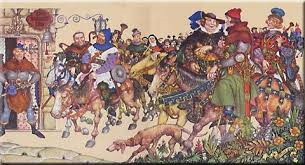
The Canterbury Tales is a collection of 24 stories that runs to over 17,000 lines written in Middle English by Geoffrey Chaucer. In 1386, Chaucer became Controller of Customs and Justice of Peace and, three years later, Clerk of the King's work in 1389. It was during these years that Chaucer began working on his most famous text, The Canterbury Tales. The tales (mostly written in verse, although some are in prose) are presented as part of a story-telling contest by a group of pilgrims as they travel together on a journey from London to Canterbury to visit the shrine of Saint Thomas Becketat Canterbury Cathedral. The prize for this contest is a free meal at the Tabard Inn at Southwark on their return. It has been suggested that the greatest contribution of The Canterbury Tales to English literature was the popularization of the English vernacular in mainstream literature, as opposed to French, Italian or Latin. English had, however, been used as literary language centuries before Chaucer's time, and several of Chaucer's contemporaries—John Gower, William Langland, the Pearl Poet, and Julian of Norwich—also wrote major literary works in English. It is unclear to what extent Chaucer was seminal in this evolution of literary preference.
🍙 The Decameron
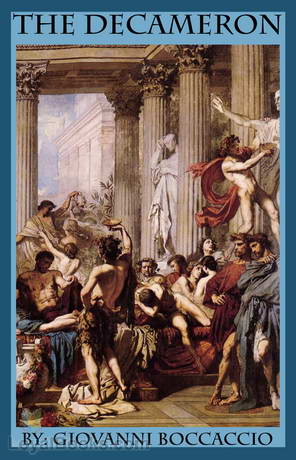
The Decameron, is a collection of novellas by the 14th-century Italian author Giovanni Boccaccio (1313–1375). The book is structured as a frame story containing 100 tales told by a group of seven young women and three young men sheltering in a secluded villa just outside Florence to escape the Black Death, which was afflicting the city. Boccaccio probably conceived the Decameron after the epidemic of 1348, and completed it by 1353. The various tales of love in The Decameron range from the erotic to the tragic. Tales of wit, practical jokes, and life lessons contribute to the mosaic. In addition to its literary value and widespread influence (for example on Chaucer's The Canterbury Tales), it provides a document of life at the time. Written in the vernacular of the Florentine language, it is considered a masterpiece of classical early Italian prose.
🍙 Machiavelli
Niccolò Machiavelli, or more formally Niccolò di Bernardo dei Machiavelli, was an Italian Renaissance historian, politician, diplomat, philosopher, humanist, and writer. He has often been called the founder of modern political science. He was for many years a senior official in the Florentine Republic, with responsibilities in diplomatic and military affairs. He also wrote comedies, carnival songs, and poetry. His personal correspondence is renowned in the Italian language. He was secretary to the Second Chancery of the Republic of Florence from 1498 to 1512, when the Medici were out of power. He wrote his most renowned work The Prince (Il Principe) in 1513.

🍙 The Prince
The Prince is a 16th-century political treatise, by the Italian diplomat and political theorist, Niccolò Machiavelli. From correspondence a version appears to have been distributed in 1513, using a Latin title, De Principatibus (About Principalities). However, the printed version was not published until 1532, five years after Machiavelli's death. This was done with the permission of the Medici pope Clement VII, but "long before then, in fact since the first appearance of The Prince in manuscript, controversy had swirled about his writings”. The Prince is sometimes claimed to be one of the first works of modern philosophy, especially modern political philosophy, in which the effective truth is taken to be more important than any abstract ideal. It was also in direct conflict with the dominant Catholic and scholastic doctrines of the time concerning politics and ethics.

🍙 The Republic (Plato)
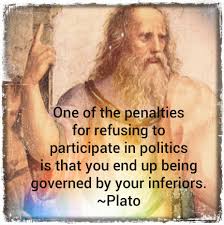
The Republic is a Socratic dialogue, written by Platoaround 380 BC, concerning the definition of justice, the order and character of the just city-state and the just man—for this reason, ancient readers used the name On Justice as an alternative title (not to be confused with the spurious dialogue also titled On Justice). The dramatic date of the dialogue has been much debated and though it might have taken place some time during the Peloponnesian War, "there would be jarring anachronisms if any of the candidate specific dates between 432 and 404 were assigned". It is Plato's best-known work, and has proven to be one of the world's most influential works of philosophy and political theory, both intellectually and historically. In it, Socrates along with various Athenians and foreigners discuss the meaning of justice and examine whether or not the just man is happier than the unjust man by considering a series of different cities coming into existence "in speech", culminating in a city called Kallipolis, which is ruled by philosopher-kings; and by examining the nature of existing regimes. The participants also discuss the theory of forms, the immortality of the soul, and the roles of the philosopher and of poetry in society.
🍙 Utopia
A utopia is an imagined community or society that possesses highly desirable or nearly perfect qualities. Utopian ideals often place emphasis on egalitarian principles of equality in economics, government and justice, though by no means exclusively, with the method and structure of proposed implementation varying based on ideology. According to Lyman Tower Sargent "[t]here are socialist, capitalist, monarchical, democratic, anarchist, ecological, feminist, patriarchal, egalitarian, hierarchical, racist, left-wing, right-wing, reformist, free love, nuclear family, extended family, gay, lesbian, and many more utopias”. The term has been used to describe intentional communities.

🍙 Dystopia
A dystopia is a community or society that is undesirable or frightening. It is translated as "not-good place", an antonym of utopia, a term that was coined by Sir Thomas More and figures as the title of his most well-known work, Utopia (the blueprint for an ideal society with minimal crime, violence and poverty). Dystopian societies appear in many artistic works, particularly in stories set in the future. Some of the most famous examples are George Orwell's 1984 and Aldous Huxley's Brave New World. Dystopias are often characterized by dehumanization, totalitarian governments, environmental disaster, or other characteristics associated with a cataclysmic decline in society. Dystopian societies appear in many subgenres of fiction and are often used to draw attention to real-world issues regarding society, environment, politics, economics, religion, psychology, ethics, science, and/or technology. Some authors however also use the term to refer to actually-existing societies, many of which are or have been totalitarian polities, or societies in an advanced state of collapse and disintegration. An attempt to draw together and compare both the fictional and real dystopias has been made in Gregory Clays’ Dystopia: A Natural History (Oxford University Press, 2016).

🍙 Thomas More
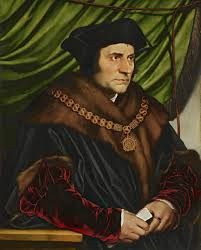
Sir Thomas More, venerated by Roman Catholics as Saint Thomas More, was an English lawyer, social philosopher, author, statesman and noted Renaissance humanist. He was also a councilor to Henry VIII, and Lord High Chancellor of England from October 1529 to 16 May 1532. He also wrote Utopia, published in 1516, about the political system of an imaginary ideal island nation. More opposed the Protestant Reformation, in particular the theology of Martin Luther and William Tyndale. More opposed the King's separation from the Catholic Church, refusing to acknowledge Henry as Supreme Head of the Church of England and the annulment of his marriage to Catherine of Aragon. After refusing to take the Oath of Supremacy, he was convicted of treason and beheaded. Of his execution, he was reported to have said: "I die the King's good servant, and God's first."
🍙 Apocalypse
An apocalypse is a disclosure of knowledge or revelation. In religious contexts it is usually a disclosure of something hidden, “a vision of heavenly secrets that can make sense of earthly realities". In the Book of Revelation, the last book of the New Testament, the revelation which John receives is that of the ultimate victory of good over evil and the end of the present age, and that is the primary meaning of the term, one that dates to 1175.Today, it is commonly used in reference to any prophetic revelation or so-called end time scenario, or to the end of the world in general.

🎪 1100 Words I need to know 🎪
🎓 Week 1
Sub- : under, behind, from under, below, beneath, at the foot of, a little, somewhat
(of time) within, during
(figuratively) subject to, in the power of
💠 Sojourn (n.)(v.): sub- "under, until" + diurnare "to last long,"
- a short period when a person stays in a particular place
➡ My sojourn in the youth hostel was thankfully short.
👉 Related: sojourner (n.)
Halo- : "salt, sea,"
💠 Halcyon (adj.): halo- "sea; salt" + kyon "conceiving,"
- a very happy or successful period in the past
➡ She recalled the halcyon days of her youth
👉 Phrase: halcyon days
🎄 MORE🎄
💠 Servile (adj.):
- too eager to serve and please someone else in a way that shows you do not have much respect for yourself
➡ As a waiter you want to be pleasant to people without appearing totally servile.
👉 Related: servility (n.)
💠 Volition (n.):
- the power to make your own decisions
➡ The singer wished it to be known that he had left the band (out) of his own volition
👉 Related: velleity (n.)
💠 Austere (adj.):
- 1. very simple and without comfort or unnecessary things, especially because of severe limits on money or goods
➡ an austere childhood during the war
2. very severe and unfriendly in manner
➡ The courtroom was a large, dark chamber, an austere place.
3. plain and without decoration
➡ He was a tall, austere, forbidding figure.
👉 Related: austerity (n.)
Week37
🌟confront(v)
1560s, "to stand in front of," from Middle French confronter (15c.), from Medieval Latin confrontare "assign limits, adjoin," from Latin com "with, together" (see com-) + frontem (nominative frons) "forehead" (see front (n.)). Sense of "to face in defiance or hostility" is late 16c.
👉 Related: Confronted; confronting.
🌟antipathy(n)
c. 1600, from Latin antipathia, from Greek antipatheia, abstract noun from antipathes "opposed in feeling, having opposite feeling; in return for suffering; felt mutually," from anti "against" (see anti-) + root of pathos "feeling" (see pathos).
🌟servile(adj)
late 14c., from Latin servilis "of a slave" (as in Servile Wars, name given to the slave revolts in the late Roman Republic), also "slavish, servile," from servus "slave" (see serve (v.)). Earliest sense was legal, servile work being forbidden on the Sabbath; sense of "cringing, fawning" first recorded c. 1600.
🌟volition(n)
1610s, from French volition (16c.), from Medieval Latin volitionem (nominative volitio) "will, volition," noun of action from Latin stem (as in volo "I wish") of velle "to wish," from PIE root *wel- (2) "to wish, will" (see will (v.)).
👉 Related: Volitional.
🌟sojourn(n)
mid-13c., "temporary stay, visit," from Anglo-French sojorn, variant of Old French sejorn, from sejorner "stay or dwell for a time" (see sojourn (v.)).
🌟austere(adj)
early 14c., from Old French austere (Modern French austère) and directly from Latin austerus "dry, harsh, sour, tart," from Greek austeros "bitter, harsh," especially "making the tongue dry" (originally used of fruits, wines), metaphorically "austere, harsh," from PIE *saus- "dry" (see sere (adj.)). Use in English is figurative: "stern, severe, very simple."
👉 Related: Austerely.
🌟felicitous(adj)
1726, "blissful, very happy," from felicity + -ous. There is an isolated use of felicitously from 1530s.
🌟halcyon(adj)
"calm, quiet, peaceful," 1540s, in halcyon dayes (translating Latin alcyonei dies, Greek alkyonides hemerai), 14 days of calm weather at the winter solstice, when a mythical bird (also identified with the kingfisher) was said to breed in a nest floating on calm seas. The name of this fabulous bird is attested in Middle English as alcioun (late 14c.). The name is from Latin halcyon, alcyon, from Greek halkyon, variant (perhaps a misspelling) of alkyon "kingfisher," a word of unknown origin. The explanation that this is from hals "sea; salt" (see halo-) + kyon "conceiving," present participle of kyein "to conceive," literally "to swell" (see cumulus) probably is ancient folk-etymology to explain a loan-word from a non-Indo-European language. Identified in mythology with Halcyone, daughter of Aeolus, who when widowed threw herself into the sea and became a kingfisher.
🌟tenable(adj)
"capable of being held or maintained," 1570s, from Middle French tenable, from Old French (12c.), from tenir "to hold," from Latin tenere "to hold, keep" (see tenet).
🌟superfluous(adj)
early 15c. (earlier superflue, late 14c.), from Latin superfluus "unnecessary," literally "overflowing, running over," from superfluere "to overflow," from super "over" (see super-) + fluere "to flow" (see fluent).
👉 Related: Superfluously; superfluousness.
🌟motivate(v)
1863, "to stimulate toward action," from motive + -ate (2); perhaps modeled on French motiver or German motivieren.
👉 Related: Motivated; motivating.
🌟rationalize(v)
1767, "explain in a rational way, make conformable to reason," from rational + -ize. In the psychological sense of "to give an explanation that conceals true motives" it dates from 1922.
👉 Related: Rationalized; rationalizing.
🌟therapy(n)
1846, "medical treatment of disease," from Modern Latin therapia, from Greek therapeia "curing, healing, service done to the sick; a waiting on, service," from therapeuein "to cure, treat medically," literally "attend, do service, take care of" (see therapeutic).
🌟nascent(adj)
1620s, from Latin nascentem (nominative nascens) "arising young, immature," present participle of nasci "to be born" (Old Latin gnasci; see genus).
👉 Related: Nascence (1560s); nascency
🌟iconoclast(n)
"breaker or destroyer of images," 1590s, from French iconoclaste and directly from Medieval Latin iconoclastes, from Late Greek eikonoklastes, from eikon (genitive eikonos) "image" + klastes "breaker," from klas- past tense stem of klan "to break" (see clastic). Originally in reference to those in the Eastern Church in 8c. and 9c. whose mobs of followers destroyed icons and other religious objects on the grounds that they were idols. Applied to 16c.-17c. Protestants in Netherlands who vandalized former Catholic churches on similar grounds. Extended sense of "one who attacks orthodox beliefs or cherished institutions" is first attested 1842.
🌟erudite(adj)
early 15c., "learned, well-instructed," from Latin eruditus "learned, accomplished, well-informed," past participle of erudire "to educate, teach, instruct, polish," literally "to bring out of the rough," from assimilated form of ex "out" (see ex-) + rudis "unskilled, rough, unlearned" (see rude).
👉 Related: Eruditely.
🌟phobia(n)
"irrational fear, horror, aversion," 1786, perhaps on model of similar use in French, abstracted from compounds in -phobia, from Greek -phobia, from phobos "fear, panic fear, terror, outward show of fear; object of fear or terror," originally "flight" (still the only sense in Homer), but it became the common word for "fear" via the notion of "panic, fright" (compare phobein "put to flight, frighten"), from PIE root *bhegw- "to run" (source also of Lithuanian begu "to flee;" Old Church Slavonic begu "flight," bezati "to flee, run;" Old Norse bekkr "a stream"). Psychological sense attested by 1895.
🌟germane(adj)
mid-14c., "having the same parents," same as german (adj.) but directly from Latin germanus instead of via French (compare urbane/urban). Main modern sense of "closely connected, relevant" (c. 1600) derives from use in "Hamlet" Act V, Scene ii: "The phrase would bee more Germaine to the matter: If we could carry Cannon by our sides," which is a figurative use of the word in the now-obsolete loosened sense of "closely related, akin" (late 15c.) in reference to things, not persons.
🌟vertigo(n)
early 15c., from Latin vertigo "dizziness, sensation of whirling," originally "a whirling or spinning movement," from vertere "to turn" (see versus).
🌟conducive(adj)
Week38
🌟 glib(adj)
1590s, "smooth and slippery," a dialect word, possibly a shortening of obsolete glibbery "slippery," which is perhaps from Low German glibberig "smooth, slippery," from Middle Low German glibberich, from or related to glibber "jelly," all part of the Germanic group of gl- words for "smooth, shining, joyful" (see glad (adj.)). Of words, speakers, etc., from c. 1600.
👉Related: Glibly; glibness.
🌟homogenous(adj)
a spelling of homogeneous that represents a common pronunciation, perhaps by influence of homogenize.
🌟malleable(adj)
late 14c., "capable of being shaped by hammering," from Middle French malleable and directly from Medieval Latin malleabilis, from malleare "to beat with a hammer," from Latin malleus "hammer" (see mallet). Figurative sense, of persons, "capable of being adapted" first recorded 1610s.
🌟legerdemain(n)
early 15c., "conjuring tricks, sleight of hand," from Middle French léger de main "quick of hand," literally "light of hand." Léger "light" in weight (Old French legier, 12c.) is from Latin levis "light," from PIE root *legwh- "light, having little weight; easy, agile, nimble" (see lever); it is cognate with Spanish ligero, Italian leggiero "light, nimble" (hence also leger line in music). Main "hand" is from Latin manus (see manual (adj.)).
🌟trend(n)
"the way something bends" (coastline, mountain range, etc.), 1777, earlier "round bend of a stream" (1620s), from trend (v.); sense of "general course or direction" is from 1884. Sense of "a prevailing new tendency in popular fashion or culture" is from c. 1950.
🌟stagnant(adj)
1660s, from French stagnant (early 17c.), from Latin stagnantem (nominative stagnans), present participle of stagnare "to stagnate" (see stagnate).
👉 Related: Stagnancy (1650s); stagnantly.
🌟fatal(adj)
late 14c., "decreed by fate," also "fraught with fate," from Middle French fatal (14c.) and directly from Latin fatalis "ordained by fate, decreed, destined; destructive, deadly," from fatum (see fate (n.)); sense of "causing or attended with death" in English is from early 15c. Meaning "concerned with or dealing with destiny" is from mid-15c.
🌟passe(adj)
1775, from French passé (fem. passée) "past, faded," past participle of passer "to pass" (see pass (v.)). Originally of a woman past the period of greatest beauty.
🌟procrastinate(v)
1580s, a back formation from procrastination or else from Latin procrastinatus, past participle of procrastinare "to put off till tomorrow; defer, delay" (see procrastination).
👉 Related: Procrastinated; procrastinating. Earlier verb was procrastine (1540s), from French.
🌟facet(n)
1620s, "one side of a multi-sided body," from French facette (12c., Old French facete), diminutive of face "face, appearance" (see face (n.)). The diamond-cutting sense is the original one. Transferred and figurative use by 1820.
👉 Related: Faceted; facets.
🌟foist(v)
1540s, probably from Dutch vuisten "take in hand," from Middle Dutch vuist "fist" (see fist (n.)). Earliest sense was cheating at dice by concealing a loaded one in the palm of the hand with the intention of introducing it into play; general meaning "introduce surreptitiously, work in by a trick" is from 1560s.
👉 Related: Foisted; foisting.
🌟stigmatize(v)
1580s, "to brand or tattoo," from Medieval Latin stigmatizare, from Greek stigmatizein, from stigmat-, stem of stigma (see stigma). Meaning "to blemish" is from 1610s (figurative), 1630s (literal).
👉 Related: Stigmatized; stigmatizing.
🌟capitulate(v)
1570s, "to draw up in chapters" (i.e., under "heads"), in part a back-formation from capitulation, in part from Medieval Latin capitulatus, past participle of capitulare "to draw up in heads or chapters, arrange conditions." Often of terms of surrender, hence meaning "to yield on stipulated terms" (1680s).
👉 Related: Capitulated; capitulating.
🌟audacity(n)
mid-15c., from Medieval Latin audacitas "boldness," from Latin audacis genitive of audax (see audacious).
🌟tantalize(v)
1590s, with -ize + Latin Tantalus, from Greek Tantalos, king of Phrygia, son of Zeus, father of Pelops and Niobe, punished in the afterlife (for an offense variously given) by being made to stand in a river up to his chin, under branches laden with fruit, all of which withdrew from his reach whenever he tried to eat or drink. His story was known to Chaucer (c. 1369).
👉 Related: Tantalized; tantalizing; tantalizingly; tantalization.
🌟retort(v)
1550s, "make return in kind" (especially of an injury), from Old French retort and directly from Latin retortus, past participle of retorquere "turn back, twist back, throw back," from re- "back" (see re-) + torquere "to twist" (see torque (n.)). Applied to exchanges of jest or sarcasm by c. 1600, hence "say or utter sharply and aggressively in reply" (1620s).
👉 Related: Retorted; retorting.
🌟reticent(adj)
1834, from Latin reticentem (nominative reticens), present participle of reticere "be silent" (see reticence).
🌟tacit(adj)
c. 1600, "silent, unspoken," from French tacite and directly from Latin tacitus "that is passed over in silence, done without words, assumed as a matter of course, silent," past participle of tacere "be silent, not speak," from suffixed form of PIE root *tak- "to be silent" (source also of Gothic þahan, Old Norse þegja "to be silent," Old Norse þagna "to grow dumb," Old Saxon thagian, Old High German dagen "to be silent"). The musical instruction tacet is the 3rd person present singular of the Latin verb.
👉 Related: Tacitly.
🌟chicanery(n)
c. 1600, "legal quibbling, sophistry," from French chicanerie "trickery," from Middle French chicaner "to pettifog, quibble" (15c.), which is of unknown origin, perhaps from Middle Low German schikken "to arrange, bring about," or from the name of a golf-like game once played in Languedoc. Thornton's "American Glossary" has shecoonery (1845), which it describes as probably a corruption of chicanery.
🌟docile(adj)
late 15c., "easily taught," from Italian or French docile, from Latin docilis "easily taught," from docere "teach" (see doctor). Sense of "obedient, submissive" first recorded 1774.
Week39
🌟saga(n)
1709, an antiquarians' revival to describe the medieval prose narratives of Iceland and Norway, from Old Norse saga "saga, story," cognate with Old English sagu "a saying" (see saw (n.2)). Properly, a narrative composition of Iceland or Norway in the Middle Ages, or one that has their characteristics. Meaning "long, convoluted story" is from 1857.
🌟belated(adj)
1610s, "overtaken by night," past participle adjective from belate "to make late, detain," from be- + late. Sense of "coming past due, behind date" is from 1660s.
👉 Related: Belatedly.
🌟decrepit(adj)
mid-15c., from Middle French décrépit (15c.), from Latin decrepitus "very old, infirm," from de- "down" (see de-) + *crepitus, past participle of crepare "to crack, break" (see raven).
🌟imperturbable(adj)
c. 1500, from Middle French imperturbable (15c.) and directly from Late Latin imperturbabilis "that cannot be disturbed" (Augustine), from assimilated form of in- "not, opposite of" (see in- (1)) + *perturbabilis, from Latin perturbare "to confuse, disturb" (see perturb).
👉 Related: Imperturbably (1785); imperturbability (1831; earlier as a dictionary word); imperturbation.
🌟vacillate(v)
1590s, "to sway unsteadily," from Latin vacillatus, past participle of vacillare "sway to and fro; hesitate" (see vacillation). Meaning "to waver between two opinions or courses" is recorded from 1620s.
👉 Related: Vacillated; vacillates; vacillating.
🌟staunch (adj)
early 15c., "impervious to water," from Old French estanche "firm, watertight," fem. of estanc "tired, exhausted, wearied, vanquished; water-tight; withered, dried" (Modern French étanche), from Vulgar Latin *stanticare (source also of Spanish estanco "water-tight," Italian stanco "exhausted, weary"), probably from Latin stans (genitive stantis), present participle of stare "to stand," from PIE root *stā- "to stand" (see stet). Sense of "strong, substantial" first recorded mid-15c.; of persons, "standing firm and true to one's principles" from 1620s.
🌟opprobrium(n)
1680s, from Latin opprobrium "disgrace, infamy, scandal, dishonor," from opprobare (see opprobrious).
🌟Machiavellian(adj)
"cunning, deceitful, unscrupulous," 1570s, from Niccolo Machiavelli (1469-1527), Florentine statesman and author of "Il Principe," a work advising rulers to place advantage above morality. A word of abuse in English well before his works were translated ("The Discourses" in 1636, "The Prince" in 1640), in part because his books were Indexed by the Church, in part because of French attacks on him (such as Gentillet's, translated into English 1602).
🌟unconscionable(adj)
1560s, "showing no regard for conscience," from un- (1) + now rare conscionable "conscientious."
👉 Related: Unconscionably.
🌟pandemonium(n)
1667, Pandæmonium, in "Paradise Lost" the name of the palace built in the middle of Hell, "the high capital of Satan and all his peers," coined by John Milton (1608-1674) from Greek pan- "all" (see pan-) + Late Latin daemonium "evil spirit," from Greek daimonion "inferior divine power," from daimon "lesser god" (see demon). Transferred sense "place of uproar" is from 1779; that of "wild, lawless confusion" is from 1865.
👉 Related: Pandemoniac, pandemoniacal, pandemonian, pandemonic.
🌟flay(v)
Old English flean "to skin, to flay" (strong verb, past tense flog, past participle flagen), from Proto-Germanic *flahan (source also of Middle Dutch vlaen, Old High German flahan, Old Norse fla), from PIE root *pl(e)ik-, *pleik- "to tear, rend" (source also of Lithuanian plešiu "to tear").
👉 Related: Flayed; flaying
.
🌟demeanor(n)
late 15c., from obsolete Middle English demean "handle, manage, conduct," later "behave in a certain way" (early 14c.), from Old French demener (11c.) "to guide, conduct; to live, dwell," from de- "completely" (see de-) + mener "to lead, direct," from Latin minari "to threaten," in Late Latin "to drive (a herd of animals);" see menace (n.). Sense in English evolved from notion of "conduct, manage" (oneself). Spelling changed by influence of nouns in -or, -our.
🌟delineation (n)
1560s, native formation from delineate, or else from Latin delineationem (nominative delineatio) "sketch, description," noun of action from past participle stem of delineare (see delineate).
🌟vindicate(v)
1620s, "to avenge or revenge," from Latin vindicatus, past participle of vindicare "to stake a claim; to liberate; to act as avenger" (see vindication). Meaning "to clear from censure or doubt, by means of demonstration" is recorded from 1630s.
👉 Related: Vindicated, vindicating.
🌟heinous(adj)
late 14c., "hateful, odious, atrocious," from Old French hainos "inconvenient, awkward; hateful, unpleasant; odious" (12c., Modern French haineux), from haine "hatred, hate," from hair "to hate," from Frankish, from Proto-Germanic *hatjan, from PIE *kad- "sorrow, hatred" (see hate (v.)).
👉 Related: Heinously; heinousness.
🌟turpitude (n)
"depravity, infamy," late 15c., from Middle French turpitude (early 15c.), from Latin turpitudinem (nominative turpitudo) "baseness," from turpis "vile, physically ugly, base, unsightly," figuratively "morally ugly, scandalous, shameful," of unknown origin. Klein suggests perhaps originally "what one turns away from" (compare Latin trepit "he turns").
🌟infraction(n)
mid-15c., "the breaking of an agreement," from Old French infraction (13c.) and directly from Latin infractionem (nominative infractio) "a breaking, weakening," noun of action from past participle stem of infringere "to damage, break off, break, bruise," from in- "in" (see in- (2)) + frangere "to break" (see fraction). The verb infract (1560s) is archaic.
🌟callous(adj)
c. 1400, "hardened," in the physical sense, from Latin callosus "thick-skinned," from callus, callum "hard skin" (see callus). The figurative sense of "unfeeling" appeared in English by 1670s.
👉 Related: Callously; callousness.
🌟redress(v)
mid-14c., "to correct, reform;" late 14c., "restore, put right" (a wrong, error, offense); "repair; relieve; improve; amend," from Old French redrecier "reform, restore, rebuild" (Modern French redresser), from re- "again" (see re-) + drecier "to straighten, arrange" (see dress (v.)). Formerly used in many more senses than currently. 👉Related: Redressed; redressing.
🌟vituperation(n)
mid-15c., but rare before early 19c., from Latin vituperationem (nominative vituperatio) "blame, a blaming, censuring," from past participle stem of vituperare "disparage, find fault with," from vitiperos "having faults," from vitium "fault, defect" (see vice (n.1)) + parare "prepare, provide, procure" (see pare). Vituperatio was stronger than either Latin reprehensio or Modern English vituperation.
限會員,要發表迴響,請先登入


