1.
plot- refers to the sequence of events inside a story which affect other events through the principle of cause and effect. The causal events of a plot can be thought of as a series of sentences linked by "and so." Plots can vary from simple structures such as in a traditional ballad to complex interwoven structures sometimes referred to as an imbroglio. The term plot can serve as a verb and refer to a character planning future actions in the story.
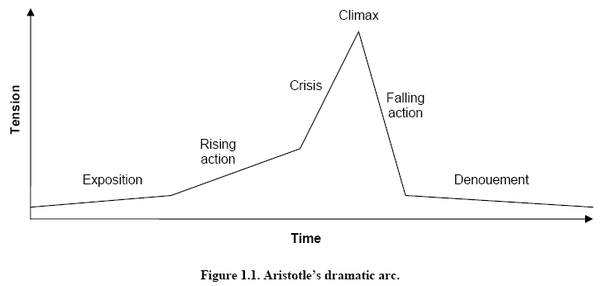
plot structure- The Greek philosopher Aristotle, writing in the fourth century BCE in his classic book The Poetics, considered plot or mythos as the most important element of drama, even more important than character. Aristotle wrote that a tragedy, a type of plot, could be divided into three parts: a beginning, where the plot is set up; a middle, where the plot reaches its climax; and an end, where the plot is resolved. He also believed that the events of the plot must causally relate to one another as being either necessary or probable. Of the utmost importance is the plot's ability to arouse emotion in the psyche of the audience, he thought.
2.
Deus ex machina- is a Latin calque from Greek, meaning "god from the machine". The term has evolved to mean a plot device whereby a seemingly unsolvable problem is suddenly and abruptly resolved by the contrived and unexpected intervention of some new event, character, ability or object. Depending on how it is done, it can be intended to move the story forward when the writer has "painted himself into a corner" and sees no other way out, to surprise the audience, to bring the tale to a happy ending, or as a comedic device.
example: Euripides' Medea, in which the deus ex machina, a dragon-drawn chariot sent by the sun god, is used to convey his granddaughter Medea, who has just committed murder and infanticide, away from her husband Jason to the safety and civilization of Athens.
3.
Medea- is an ancient Greek tragedy written by Euripides, based upon the myth of Jason and Medea and first produced in 431 BCE. The plot centers on the actions of Medea, a barbarian and the wife of Jason; she finds her position in the Greek world threatened as Jason leaves her for a Greek princess of Corinth. Medea takes vengeance on Jason by killing Jason's new wife as well as her own children with him, after which she escapes to Athens to start a new life.
4.
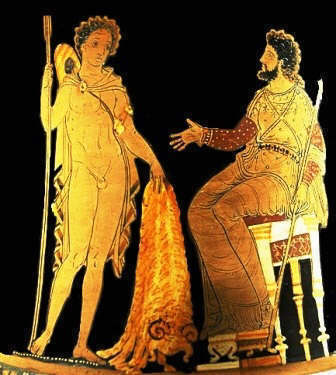
Golden Fleece- is the fleece of the gold-hair winged ram, which was held in Colchis. The fleece is a symbol of authority and kingship. It figures in the tale of the hero Jason and his band of Argonauts, who set out on a quest for the fleece by order of King Pelias, in order to place Jason rightfully on the throne of Iolcus in Thessaly. Through the help of Medea, they acquire the Golden Fleece. The story is of great antiquity and was current in the time of Homer (eighth century BC). It survives in various forms, among which the details vary.
5.
barbarian- is a human who is perceived to be uncivilized or primitive. The designation is usually applied as generalization based on a popular stereotype; barbarians can be any member of a nation judged by some to be less civilized or orderly, but may also be part of a certain "primitive" cultural group or social class both within and outside one's own nation.
assembly- a number of people gathered together, esp for a formal meeting held at
regular intervals or the act of assembling or the state of being assembled.
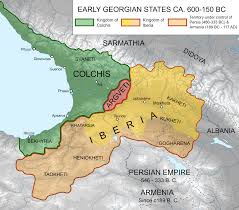
Colchis- was the name for a region in the Southern Caucasus. Colchis was located on the eastern coast of the Black Sea, centered on present-day western Georgia. Around the 1st centuries BC and AD the land south of the Greater Caucasus and north of the Lesser Caucasus was divided between Kolchis in the west, Caucasian Iberia in the center and Caucasian Albania in the east. To the southwest was Armenia and to the southeast Atropatene.
6.
enchant- to cast a spell on; bewitch or to delight or captivate utterly; fascinate; charm.
enchantress- a woman who practices magic; sorceress.