1.
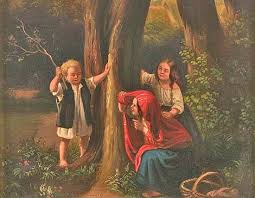
Mother Goose- is the imaginary author of a collection of fairy tales and nursery rhymes often published as (Old) Mother Goose's Rhymes. As a character, she appears in one nursery rhyme. A Christmas pantomime called Mother Goose is often performed in the United Kingdom. The so-called "Mother Goose" rhymes and stories have formed the basis for many classic British pantomimes. Mother Goose is generally depicted in literature and book illustration as an elderly country woman in a tall hat and shawl, a costume identical to the peasant costume worn in Wales in the early 20th century, but is sometimes depicted as a goose.
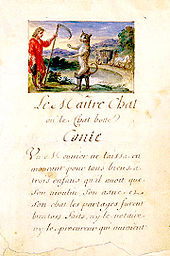
Perrault's Tale of My Mother Goose- Charles Perrault, the initiator of the literary fairy tale genre, published a collection of fairy tales in 1695 called Histoires ou contes du temps passés, avec des moralités under the name of his son, which became better known under its subtitle of Contes de ma mère l'Oye or Tales of My Mother Goose. Perrault's publication marks the first authenticated starting-point for Mother Goose stories.
Nursery Rhyme- is a traditional poem or song for children in Britain and many other countries, but usage of the term only dates from the late 18th/early 19th century. In North America the term Mother Goose Rhymes, introduced in the mid-18th century, is still often used. From the mid-16th century they begin to be recorded in English plays, and most popular nursery rhymes date from the 17th and 18th centuries. The first English collections, Tommy Thumb's Song Book and a sequel, Tommy Thumb's Pretty Song Book, were published before 1744. John Newbery's compilation of English rhymes, Mother Goose's Melody, or, Sonnets for the Cradle (London, c. 1765), is the first record we have of many classic rhymes, still in use today.
2. Examples of Nursery Rhyme
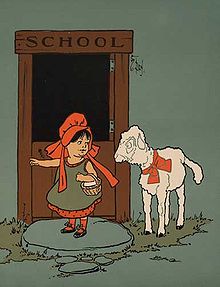
(1)'' Marry Had a Little Lamb''- is an English language nursery rhyme of nineteenth-century American origin.
Mary had a little lamb, little lamb,
little lamb, Mary had a little lamb
whose fleece was white as snow.
And everywhere that Mary went
Mary went, Mary went, everywhere
that Mary went
The lamb was sure to go.
fleece- a soft warm fabric with a texture similar to sheep's wool, used as a lining material.
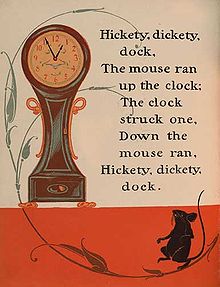
(2) '' Hickory Dickory Dock'' - is a popular English nursery rhyme. The earliest recorded version of the rhyme is in Tommy Thumb's Pretty Song Book. The rhyme is thought by some commentators to have originated as a counting-out rhyme.
Hickory, dickory, dock.
The mouse ran up the clock.
The clock struck one,
The mouse ran down,
Hickory, dickory, dock.
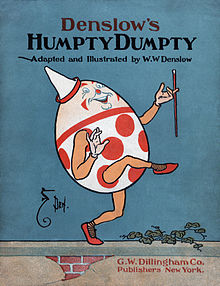
(3) '' Humpty Dumpty'' - is a character in an English nursery rhyme, probably originally a riddle and one of the best known in the English-speaking world. He is typically portrayed as an anthropomorphic egg, though he is not explicitly described so. Its origins are obscure and several theories have been advanced to suggest original meanings.
Humpty Dumpty sat on a wall,
Humpty Dumpty had a great fall.
All the king's horses and all the king's men
Couldn't put Humpty together again
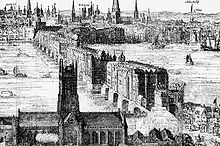
(4) '' London Bridge Is Falling Down'' - is a traditional English nursery rhyme and singing game, which is found in different versions all over the world. It deals with the depredations of London Bridge and attempts, realistic or fanciful, to repair it. The lyrics were first printed in close to their modern form in the mid-eighteenth century and became popular, particularly in Britain and the United States in the nineteenth century.
London Bridge is falling down,
Falling down, falling down.
London Bridge is falling down,
My fair lady
3. Term Explanation and Vocabulary
(1)
precisely- in exact terms; without vagueness.
definitely- without doubt (used for emphasis).
exactly- used to emphasize the accuracy of a figure or description.
(2)
Show and tell- s a common expression about showing an audience something and telling them about it. In the United Kingdom, North America, New Zealand and Australia, it is a common classroom activity at early elementary school. It is used to teach young children the skills of public speaking. For example, a child will bring an item from home and will explain to the class why they chose that particular item, where they got it, and other relevant information.
Hide and Seek- is a popular children's game in which any number of players conceal themselves in the environment, to be found by one or more seekers. The game is played by one player chosen (designated as being "it") closing their eyes and counting to a predetermined number while the other players hide.