1.
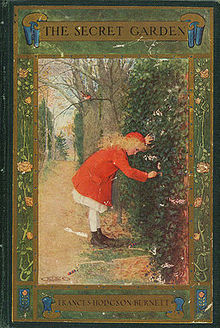
The Secret Garden- is a novel by Frances Hodgson Burnett. It was initially published in serial form beginning in 1910, and first published in its entirety in 1911. It is now one of Burnett's most popular novels, and considered a classic of English children's literature. Several stage and film adaptations have been made.
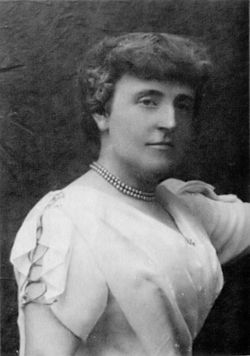
The Author The Secret Garden- Frances Hodgson Burnett
- was an English-American novelist and playwright. She is best known for the three children's novels Little Lord Fauntleroy (published in 1885–1886), A Little Princess (1905), and The Secret Garden (1911). Frances Eliza Hodgson was born in Cheetham, England. After her father died in 1852, the family fell on straitened circumstances and in 1865 immigrated to the United States, settling near Knoxville, Tennessee. There Frances began writing to help earn money for the family, publishing stories in magazines from the age of 19. In 1870, her mother died, and in 1872 Frances married Swan Burnett, who became a medical doctor. The Burnetts lived for two years in Paris, where their two sons were born, before returning to the United States to live in Washington, D.C., Burnett then began to write novels, the first of which (That Lass o' Lowrie's), was published to good reviews. Little Lord Fauntleroy was published in 1886 and made her a popular writer of children's fiction, although her romantic adult novels written in the 1890s were also popular. She wrote and helped to produce stage versions of Little Lord Fauntleroy and A Little Princess.
2.
initiation- the action of admitting someone into a secret or obscure society or group, typically with a ritual.
confirmation- the action of confirming something or the state of being confirmed.
recruit training
3.
epidemic- is the rapid spread of infectious disease to a large number of people in a given population within a short period of time, usually two weeks or less. For example, in meningococcal infections, an attack rate in excess of 15 cases per 100,000 people for two consecutive weeks is considered an epidemic.
rejuvenation- is distinct from life extension. Life extension strategies often study the causes of aging and try to oppose those causes in order to slow aging. Rejuvenation is the reversal of aging and thus requires a different strategy, namely repair of the damage that is associated with aging or replacement of damaged tissue with new tissue. Rejuvenation can be a means of life extension, but most life extension strategies do not involve rejuvenation.
4.
Note of The Princess and The Pea
(1) to see the princess is real or not.
(2) Nobody can feel the pea under the twenty pieces of mattress.
(3) resolution: the pea was stored in the museum.