1.
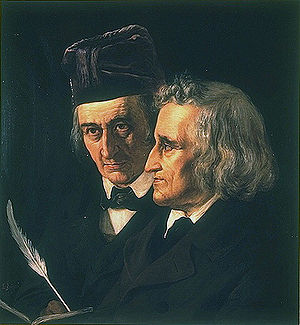
The Brothers Grimm- Jacob and Wilhelm Grimm, were German academics, philologists, cultural researchers, lexicographers and authors who together specialized in collecting and publishing folklore during the 19th century. The rise of romanticism during the 19th century revived interest in traditional folk stories, which to the brothers represented a pure form of national literature and culture. With the goal of researching a scholarly treatise on folk tales, they established a methodology for collecting and recording folk stories that became the basis for folklore studies. Between 1812 and 1857, their first collection was revised and republished many times, growing from 86 stories to more than 200. In addition to writing and modifying folk tales, the brothers wrote collections of well-respected German and Scandinavian mythologies, and in 1838 they began writing a definitive German dictionary, which they were unable to finish during their lifetimes. The popularity of the Grimms' best folk tales has endured well. The tales are available in more than 100 languages and have been later adapted by filmmakers including Lotte Reiniger and Walt Disney, with films such as Snow White and the Seven Dwarfs and Sleeping Beauty.
Popular stories from Grimm:
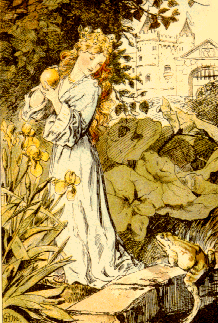
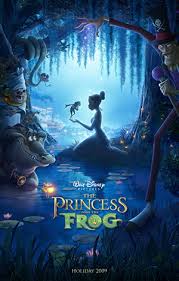
(1) '' The Frog Princess ''- is a fairy tale, best known through the Brothers Grimm's written version; traditionally it is the first story in their collection. The 2009 Disney film, The Princess and the Frog, is loosely based on this story. In the tale, a spoiled princess reluctantly befriends the Frog Prince (meeting him after dropping a gold ball into a pond), who magically transforms into a handsome prince. Although in modern versions the transformation is invariably triggered by the princess kissing the frog, in the original Grimm version of the story the frog's spell was broken when the princess threw it against a wall in disgust.
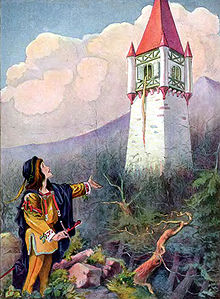
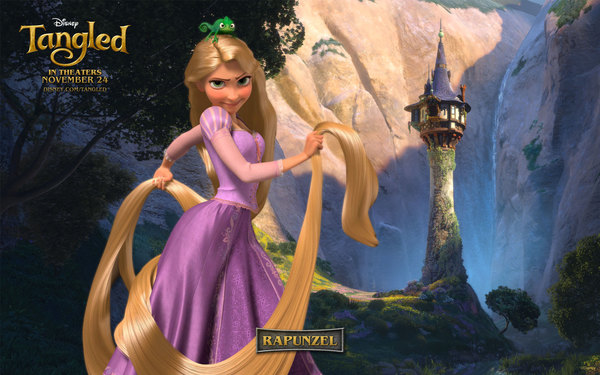
(2) '' Rapunzel ''- is a German fairy tale in the collection assembled by the Brothers Grimm, and first published in 1812 as part of Children's and Household Tales. The Grimm Brothers' story is an adaptation of the fairy tale Rapunzel by Friedrich Schulz published in 1790. The Schulz version is based on Persinette by Charlotte-Rose de Caumont de La Force originally published in 1698 which in turn was influenced by an even earlier tale, Petrosinella by Giambattista Basile, published in 1634. Its plot has been used and parodied in various media and its best known line ("Rapunzel, Rapunzel, let down your hair") is an idiom of popular culture.
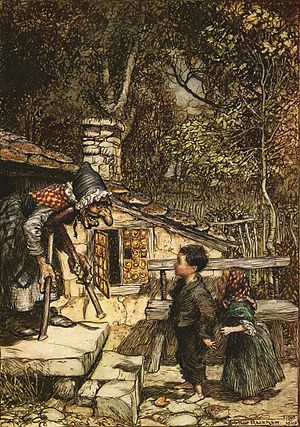
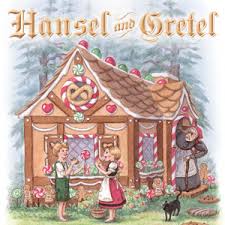
(3) '' Hansel and Gretel ''- is a well-known fairy tale of German origin, recorded by the Brothers Grimm and published in 1812. Hansel and Gretel are a young brother and sister kidnapped by a cannibalistic witch living deep in the forest in a house constructed of cake and confectionery. The two children save their lives by outwitting her. The tale has been adapted to various media, most notably the opera Hänsel und Gretel (1893) by Engelbert Humperdinck. Under the Aarne–Thompson classification system, "Hansel and Gretel" is classified under Class 327.
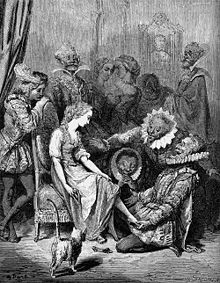
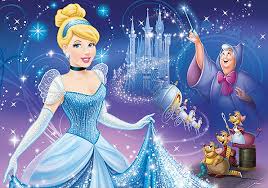
(4) '' Cinderella ''- is a folk tale embodying a myth-element of unjust oppression/triumphant reward. Thousands of variants are known throughout the world. The title character is a young woman living in unfortunate circumstances, that are suddenly changed to remarkable fortune. The oldest documented version comes from China, and the oldest European version from Italy. The most popular version was first published by Charles Perrault in Histoires ou contes du temps passé in 1697, and later by the Brothers Grimm in their folk tale collection Grimms' Fairy Tales. Although the story's title and main character's name change in different languages, in English-language folklore "Cinderella" is the archetypal name. The word "Cinderella" has, by analogy, come to mean one whose attributes were unrecognized, or one who unexpectedly achieves recognition or success after a period of obscurity and neglect. The still-popular story of "Cinderella" continues to influence popular culture internationally, lending plot elements, allusions, and tropes to a wide variety of media.
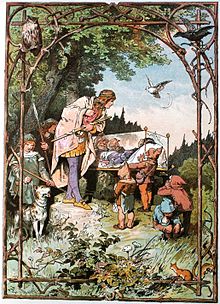
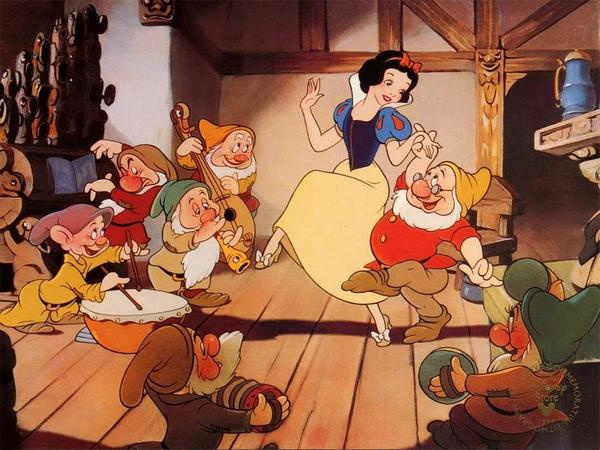
(5) '' Snow White ''- is a nineteenth-century German fairy tale which is today known widely across the Western world. The Brothers Grimm published it in 1812 in the first edition of their collection Grimms' Fairy Tales. It was titled in German: Sneewittchen (in modern orthography Schneewittchen) and numbered as Tale 53. The Grimms completed their final revision of the story in 1854. The fairy tale features such elements as the magic mirror, the poisoned apple, the glass coffin, and the characters of the evil queen and the Seven Dwarfs. The seven dwarfs were first given individual names in the 1912 Broadway play Snow White and the Seven Dwarfs and then given different names in Walt Disney's 1937 film Snow White and the Seven Dwarfs.
2.
novella- is a work of written, fictional, narrative prose normally longer than a short story but shorter than a novel. The English word "novella" derives from the Italian novella, feminine of novello, which means "new". The novella is a common literary genre in several European languages.
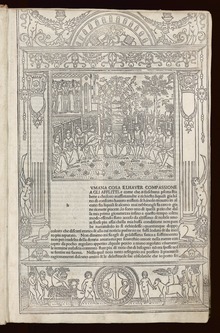
The Decameron- is a collection of novellas by the 14th-century Italian author Giovanni Boccaccio (1313–1375). The book is structured as a frame story containing 100 tales told by a group of seven young women and three young men sheltering in a secluded villa just outside Florence to escape the Black Death, which was afflicting the city. Boccaccio probably conceived the Decameron after the epidemic of 1348, and completed it by 1353. The various tales of love in The Decameron range from the erotic to the tragic. Tales of wit, practical jokes, and life lessons contribute to the mosaic. In addition to its literary value and widespread influence (for example on Chaucer's The Canterbury Tales), it provides a document of life at the time. Written in the vernacular of the Florentine language, it is considered a masterpiece of classical early Italian prose.
3.
Christmas Carol- is a carol (song or hymn) whose lyrics are on the theme of Christmas, and which is traditionally sung on Christmas itself or during the surrounding holiday season. Christmas carols may be regarded as a subset of the broader category of Christmas music.
4. Term Explanation and Vocabulary
(1) qua- four
quarantine- a state, period, or place of isolation in which people or animals that have arrived from elsewhere or been exposed to infectious or contagious disease are placed.
quarter- each of four equal or corresponding parts into which something is or can be divided.
(2) lexicography- the activity or occupation of compiling dictionaries.
(3) semiotics- the study of signs and symbols and their use or interpretation.