1.
Peter Rabbit- is a fictional animal character in various children's stories by Beatrix Potter. He first appeared in The Tale of Peter Rabbit in 1902 and subsequently in five more books between 1904 and 1912. Spinoff merchandise includes dishes, wallpaper, and dolls. He appears as a character in a number of adaptations.
(spinoff- a product marketed by its association with a popular television programme, film, personality, etc.
merchandise- goods to be bought and sold. )
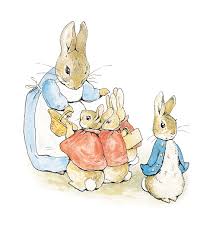
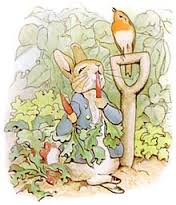
Background- The rabbits in Potter's stories are anthropomorphic and wear human clothes: Peter wears a jacket and shoes. Peter, his widowed mother, Mrs. Josephine Rabbit, as well as his sisters, Flopsy, Mopsy, and Cotton-tail live in a rabbit hole that has a human kitchen, human furniture, as well as a shop where Mrs. Rabbit sells various items. Peter's relatives are Cousin Benjamin Bunny and Benjamin's father Mr. Benjamin Bunny. eter Rabbit was named after a pet rabbit Beatrix Potter had as a child called Peter Piper. The first Peter Rabbit story, The Tale of Peter Rabbit, was originally created in 1893 as a letter to Noel Moore, the five-year-old son of Potter's former governess, Annie Moore. The boy was ill and Potter wrote him a picture and story letter to help him pass the time and to cheer him up. The letter included sketches illustrating the narrative. n June 1903, a trade edition of the tale was published by Frederick Warne & Co, and by the end of the year, 28,000 copies were in print. Over the years, The Tale of Peter Rabbit has sold more than 40 million copies worldwide and as of 2008, the Peter Rabbit series has sold more than 151 million copies in 35 languages.
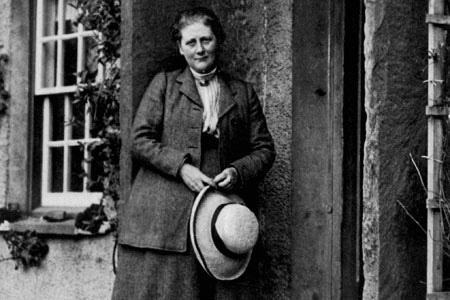
Beatrix Potter- was an English writer, illustrator, natural scientist, and conservationist best known for her children's books featuring animals, such as those in The Tale of Peter Rabbit. Born into a privileged household, Potter was educated by governesses and grew up isolated from other children. She had numerous pets and spent holidays in Scotland and the Lake District, developing a love of landscape, flora and fauna, all of which she closely observed and painted. though Potter was typical of women of her generation in having limited opportunities for higher education, her study and watercolors of fungi led to her being widely respected in the field of mycology. In her thirties, Potter published the highly successful children's book, The Tale of Peter Rabbit. Potter began writing and illustrating children's books full-time. With the proceeds from the books and a legacy from an aunt, in 1905 Potter bought Hill Top Farm in Near Sawrey, a village in the Lake District, which at that time was in Lancashire. Over the following decades, she purchased additional farms to preserve the unique hill country landscape. In 1913, at the age of 47, she married William Heelis, a respected local solicitor from Hawkshead. Potter was also a prize-winning breeder of Herdwick sheep and a prosperous farmer keenly interested in land preservation. She continued to write and illustrate, and to design spin-off merchandise based on her children's books for British publisher Warne, until the duties of land management and her diminishing eyesight made it difficult to continue.
2. Term Explanation and Vocabulary
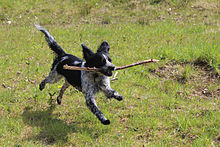
(1) fetch (game)- is a game usually played with a dog. An object, such as a stick or ball, is thrown a moderate distance away from the animal, and it is the animal's objective to grab and retrieve it. Many times, the owner of the animal will say "Fetch" to the animal before or after throwing the object. In rare instances, cats, especially younger cats, have been known to engage in fetch behavior.
fetch (folklore)- is a supernatural double or an apparition of a living person in Irish folklore. It is largely akin to the doppelgänger, and sightings are regarded as omens, usually for impending death. The origin of the term is unclear.
(2) miracle- is an event not explicable by natural or scientific laws. Such an event may be attributed to a supernatural being (a deity), magic, a miracle worker, a saint or a religious leader. Informally, the word "miracle" is often used to characterize any beneficial event that is statistically unlikely but not contrary to the laws of nature, such as surviving a natural disaster, or simply a "wonderful" occurrence, regardless of likelihood, such as a birth. Other such miracles might be: survival of an illness diagnosed as terminal, escaping a life-threatening situation or 'beating the odds'. Some coincidences may be seen as miracles. A true miracle would, by definition, be a non-natural phenomenon, leading many rational and scientific thinkers to dismiss them as physically impossible or impossible to confirm by their nature.
miraculous (adj.)- of the nature of a miracle or having the power to work miracles.
(3) magn- great, large
magnify (v.)- make (something) appear larger than it is, especially with a lens or microscope or increase or exaggerate the importance or effect of
magnificent (adj.)- extremely beautiful, elaborate, or impressive or very good; excellent.
magnate (n.)- a wealthy and influential businessman or businesswoman.
3. Video
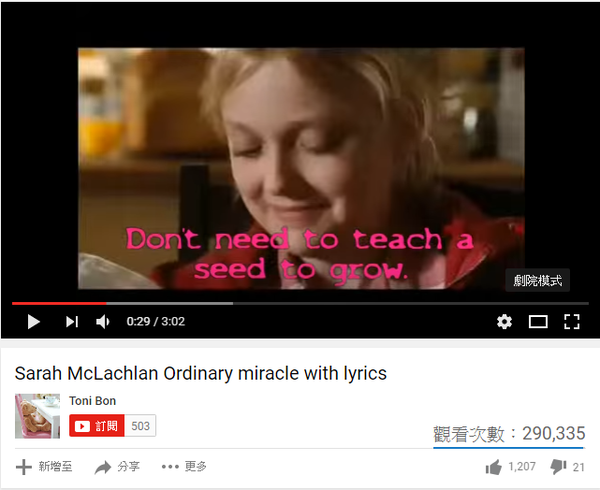
(1) ''Ordinary Miracle''- a song by Sarah McLachlan from the 2006 film Charlotte's Web.
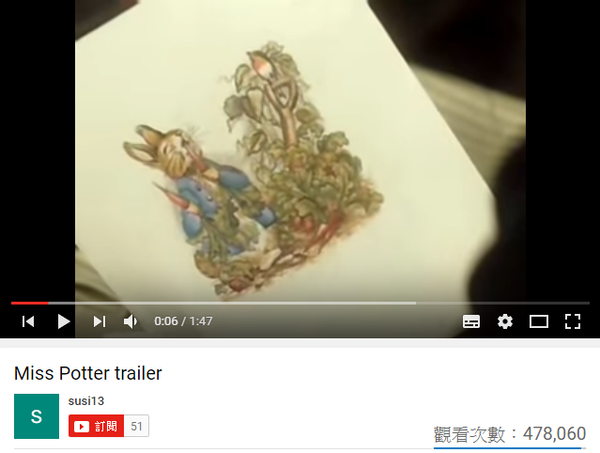
(2) Miss Potter trailer