*barometer (n.)
1. An instrument measuring atmospheric pressure, used especially in forecasting the weather and determining altitude.
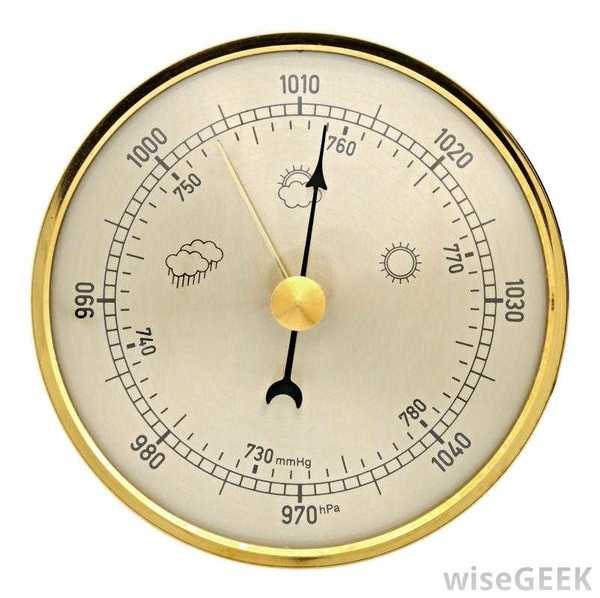
2. Something which reflects changes in circumstances or opinions:
Ex: furniture is a barometer of changing tastes.
Origin: Mid 17th century: from Greek baros weight + -meter.
*itinerant (adj.)
Travelling from place to place:
Ex: itinerant traders
Origin: Late 16th century (used to describe a judge travelling on a circuit): from late Latin itinerant- travelling, from the verb itinerari, from Latin iter, itiner- journey, road.
*myriad (n.)
1. A countless or extremely great number of people or things:
Ex: myriads of insects danced around the light above my head.
2. (chiefly in classical history) a unit of ten thousand:
Ex: the army was organized on a decimal system, up to divisions of 10,000 or myriads.
Origin:
*deem (v.)
formal
Regard or consider in a specified way:
Ex: the event was deemed a great success
[with object and infinitive] ex: the strike was deemed to be illegal
Origin: Old English dēman (also in the sense ‘act as judge’), of Germanic origin; related to Dutch doeman, also to doom.
*accommodate (v.)
1. (of a building or other area) provide lodging or sufficient space for:
Ex: the cottages accommodate up to six people.
2. Fit in with the wishes or needs of:
Ex: any language must accommodate new concepts.
Origin: Mid 16th century: from Latin accommodat- made fitting, from the verb accommodare, from ad- to + commodus fitting.
Stopping by Woods on a Snowy Evening
BY ROBERT FROST
Whose woods these are I think I know.
His house is in the village though;
He will not see me stopping here
To watch his woods fill up with snow.
My little horse must think it queer
To stop without a farmhouse near
Between the woods and frozen lake
The darkest evening of the year.
He gives his harness bells a shake
To ask if there is some mistake.
The only other sound’s the sweep
Of easy wind and downy flake.
The woods are lovely, dark and deep,
But I have promises to keep,
And miles to go before I sleep,
And miles to go before I sleep.

The Road Not Taken
BY ROBERT FROST
TWO roads diverged in a yellow wood,
And sorry I could not travel both
And be one traveler, long I stood
And looked down one as far as I could
To where it bent in the undergrowth;
Then took the other, as just as fair,
And having perhaps the better claim,
Because it was grassy and wanted wear;
Though as for that the passing there
Had worn them really about the same,
And both that morning equally lay
In leaves no step had trodden black.
Oh, I kept the first for another day!
Yet knowing how way leads on to way,
I doubted if I should ever come back.
I shall be telling this with a sigh
Somewhere ages and ages hence:
Two roads diverged in a wood, and I—
I took the one less traveled by,
And that has made all the difference.

indigenous (adj.)
"born or originating in a particular place," 1640s, from Late Latin indigenus "born in a country, native," from Latin indigena "sprung from the land, native," as a noun, "a native," literally "in-born," or "born in (a place)," from Old Latin indu (prep.) "in, within" + gignere (perfective genui) "beget," from PIE root *gene- "to produce, give birth, beget" (see genus).
gregarious (adj.)
1660s, "disposed to live in flocks" (of animals), from Latin gregarius "pertaining to a flock; of the herd, of the common sort, common," from grex (genitive gregis) "flock, herd," from PIE *gre-g-, reduplicated form of root *ger- (1) "to gather together, assemble" (source also of Sanskrit gramah "heap, troop;" Greek ageirein "to assemble," agora "assembly;" Latin gremium "bosom, lap;" Old Church Slavonic grusti "handful," gramota "heap;" Lithuanian gurgulys "chaos, confusion," gurguole "crowd, mass"). Of persons, "sociable" first recorded 1789. Related: Gregariously; gregariousness.
habitat (n.)
"area or region where a plant or animal naturally grows or lives," 1762, originally a technical term in Latin texts on English flora and fauna, literally "it inhabits," third person singular present indicative of habitare "to live, inhabit, dwell," frequentative of habere "to have, to hold, possess" (see habit (n.)). This was the Modern Latin word that began the part of the scientific description of a plant or animal species that told its locality. General sense of "dwelling place" is first attested 1854.
cursory (adj.)
c. 1600, from Middle French cursoire "rapid," from Late Latin cursorius "hasty, of a race or running," from Latin curs-, past participle stem of currere "to run" (see current (adj.)).
interloper (n.)
1590s, enterloper, "unauthorized trader trespassing on privileges of chartered companies," probably a hybrid from inter- "between" + -loper (from landloper "vagabond, adventurer," also, according to Johnson, "a term of reproach used by seamen of those who pass their lives on shore"); perhaps from a dialectal form of leap, or from Middle Dutch loper "runner, rover," from lopen "to run," from Proto-Germanic *hlaupan "to leap" (see leap (v.)).
prolific (adj.)
1640s, from French prolifique (16c.), from Medieval Latin prolificus, from Latin proles "offspring" + root of facere "to make" (see factitious). Latin proles is contracted from *pro-oles, from PIE *pro-al-, from *pro- "forth" (see pro-) + *al- "to grow, nourish" (see old). Related: Prolifical (c. 1600).
bulwark (n.)
"planking or woodwork round the uppermost parts of a vessel," early 15c., from Middle Dutch bulwerke or Middle High German bolwerc, probably from bole "plank, tree trunk" (from Proto-Germanic *bul-, from PIE root *bhel- (2) "to blow, swell;" see bole) + werc "work" (see work (n.)). Figurative sense "means of defense or security" is from 1570s.
sedentary (adj.)
1590s, "remaining in one place," from Middle French sédentaire (16c.) and directly from Latin sedentarius "sitting, remaining in one place," from sedentem (nominative sedens), present participle of sedere "to sit; occupy an official seat, preside; sit still, remain; be fixed or settled," from PIE root *sed- (1) "to sit" (source also of Sanskrit a-sadat "sat down," sidati "sits;" Old Persian hadis "abode;" Greek ezesthai "to sit," hedra "seat, chair, face of a geometric solid;" Old Irish suide "seat, sitting;" Welsh sedd "seat," eistedd "sitting;" Old Church Slavonic sežda, sedeti "to sit;" Lithuanian sedmi "to sit;" Russian sad "garden," Lithuanian soditi "to plant;" Gothic sitan, Old English sittan "to sit;" see sit). Of persons, the sense "not in the habit of exercise" is recorded from 1660s.
frugal (adj.)
"economical in use," 1590s, from Middle French frugal, from Latin frugalis, from undeclined adjective frugi "useful, proper, worthy, honest; temperate, economical," originally dative of frux (plural fruges) "fruit, produce," figuratively "value, result, success," related to fructus (see fruit), from PIE *bhrug- "agricultural produce," also "to enjoy." Sense evolved in Latin from "useful" to "profitable" to "economical." Related: Frugally.
antithesis (n.)
1520s, from Late Latin antithesis, from Greek antithesis "opposition, resistance," literally "a placing against," also a term in logic and rhetoric, noun of action from antitithenai "to set against, oppose," a term in logic, from anti "against" (see anti-) + tithenai "to put, place" (see theme).
altruistic (adj.)
"having regard for the interest and well-being of others," 1853, from altruist + -ic. Related: Altruistically.
embellish (v.)
mid-14c., "to render beautiful," from Old French embelliss-, stem of embellir "make beautiful, ornament," from assimilated form of en- (see en- (1)) + bel "beautiful," from Latin bellus "handsome, pretty, fine" (see bene-). Meaning "dress up (a narration) with fictitious matter" is from mid-15c. Related: Embellished; embellishing.
cache (n.)
1797, "hiding place," from French Canadian trappers' slang, "hiding place for stores" (1660s), a back-formation from French cacher "to hide, conceal" (13c., Old French cachier), from Vulgar Latin *coacticare "store up, collect, compress," frequentative of Latin coactare "constrain," from coactus, past participle of cogere "to collect" (see cogent). Sense extended by 1830s to "anything stored in a hiding place."
coterie (n.)
1738, from French coterie "circle of acquaintances," originally in Middle French an organization of peasants holding land from a feudal lord (14c.), from cotier "tenant of a cote" (see cottage).
cupidity (n.)n cupiditatem (nominative cupiditas) "passionate desire, lust; ambition," from cupidus "eager, passionate," from cupere "to desire" (perhaps cognate with Sanskrit kupyati "bubbles up, becomes agitated," Old Church Slavonic kypeti "to boil," Lithuanian kupeti "to boil over"). Despite the primarily erotic sense of the Latin word, in English cupidity originally, and still especially, means "desire for wealth."
virtuosity (n.)
late 15c., "manly qualities," from Medieval Latin virtuositas, from Late Latin virtuosus (see virtuous). As "skill or abilities of a virtuoso," 1670s, from virtuoso + -ity.
temerity (n.)
late 14c., from Latin temeritatem (nominative temeritas) "blind chance, accident; rashness, indiscretion, foolhardiness," from temere "by chance, at random; indiscreetly, rashly," related to tenebrae "darkness," from PIE root *teme- "dark" (source also of Sanskrit tamas- "darkness," tamsrah "dark;" Avestan temah "darkness;" Lithuanian tamsa "darkness," tamsus "dark;" Old Church Slavonic tima "darkness;" Old High German dinstar "dark;" Old Irish temel "darkness"). The connecting notion is "blindly, without foreseeing."
amorous (adj.)
c. 1300, "in love; inclined to love; sexually attracted," from Old French amoros "loving, in love; lovely" (13c., Modern French amoureux), from Late Latin amorosum, from Latin amor "love, affection, strong friendly feeling; one's beloved," from amare "to love, be in love with; find pleasure in" (see Amy). Related: Amorously; amorousness.
progeny (n.)
early 14c., from Old French progenie (13c.) and directly from Latin progenies "descendants, offspring, lineage, race, family," from stem of progignere "beget," from pro "forth" (see pro-) + gignere "to produce, beget" (see genus).
saturate (v.)
1530s, "to satisfy, satiate," from Latin saturatus, past participle of saturare "to fill full, sate, drench," from satur "sated, full," from PIE root *sa- "to satisfy" (see sad). Meaning "soak thoroughly" first recorded 1756. Marketing sense first recorded 1958. Related: Saturated; saturating.
perpetrate (v.)
1540s, from Latin perpetratus, past participle of perpetrare "to perform, to accomplish," from per- "completely" + patrare "carry out," originally "bring into existence," from pater "father" (see father (n.)). Earlier in English was perpetren, mid-15c., from Old French perpetrer. Neither good nor bad in Latin, first used in English in statutes, hence its sense of "to perform criminally." Related: Perpetrated; perpetrating.
consummate (adj.)
mid-15c., from Latin consummatus "perfected, complete," past participle of consummare "sum up, complete" (see consummation). Of persons, "accomplished, very qualified," from 1640s. Related: Consummately.
subterfuge (n.)
1570s, from Middle French subterfuge (14c.) or directly from Medieval Latin subterfugium "an evasion," from Latin subterfugere "to evade, escape, flee by stealth," from subter "beneath, below;" in compounds "secretly" (from PIE *sup-ter-, suffixed (comparative) form of *(s)up-; see sub-) + fugere "flee" (see fugitive (adj.)).
concoct (v.)
1530s, "to digest," from Latin concoctus, past participle of concoquere "to digest; to boil together, prepare; to consider well," from com- "together" (see com-) + coquere "to cook" (see cook (n.)). Meaning "to prepare an edible thing" is from 1670s. First expanded metaphorically beyond cooking 1792. Related: Concocted; concocting.
fallacious (adj.)
c. 1500, from fallacy (Latin fallacia) + -ous. Related: Fallaciously; fallaciousness.
manifold (n.)
in mechanical sense, first as "pipe or chamber with several outlets," 1884, see manifold (adj.); originally as manifold pipe (1857), with reference to a type of musical instrument mentioned in the Old Testament.
assiduous (adj.)
1530s, from Latin assiduus "attending; continually present, incessant; busy; constant," from assidere "to sit down to" (thus "be constantly occupied" at one's work); from assimilated form of ad "to" (see ad-) + sedere "to sit" (see sedentary). The word acquired a taint of "servility" in 18c. Related: Assiduously; assiduousness.
impeccable (adj.)
1530s, "not capable of sin," from Middle French impeccable (15c.) or directly from Late Latin impeccabilis "not liable to sin," from assimilated form of in- "not, opposite of" (see in- (1)) + peccare "to sin" (see peccadillo). Meaning "faultless" is from 1610s. Related: Impeccably; impeccant; impeccancy.
fraught (adj.)
late 14c., "freighted, laden, loaded, stored with supplies" (of vessels); figurative use from early 15c.; past participle adjective from obsolete verb fraught "to load (a ship) with cargo," Middle English fraughten (c. 1400), which always was rarer than the past participle, from noun fraught "a load, cargo, lading of a ship" (early 13c.), which is the older form of freight (n.).
resourceful (adj.)
1807, from resource + -ful. Related: Resourcefully; resourcefulness.
murky (adj.)
mid-14c., from murk + -y (2). Rare before 17c. Related: Murkily; murkiness.
component (n.)
1640s, "constitutional element" (earlier "one of a group of persons," 1560s), from Latin componentem (nominative componens), present participle of componere "to put together" (see composite). As an adjective, from 1660s.
hoax
1796 (v.) "ridicule; deceive with a fabrication," 1808 (n.), probably an alteration of hocus "conjurer, juggler" (1630s), also "a cheat, impostor" (1680s); or else directly from hocus-pocus. Related: Hoaxed; hoaxing.
labyrinth (n.)
c. 1400, laberynthe (late 14c. in Latinate form laborintus) "labyrinth, maze, great building with many corridors and turns," figuratively "bewildering arguments," from Latin labyrinthus, from Greek labyrinthos "maze, large building with intricate passages," especially the structure built by Daedelus to hold the Minotaur, near Knossos in Crete, a word of unknown origin.
evaluate (v.)
1831, back-formation from evaluation, or else from French évaluer, back-formation from évaluation. Originally in mathematics. Related: Evaluated; evaluating.
exult (v.)
1560s, "to leap up;" 1590s, "to rejoice, triumph," from Middle French exulter, from Latin exultare/exsultare "rejoice exceedingly, revel, vaunt, boast;" literally "leap about, leap up," frequentative of exsilire "to leap up," from ex- "out" (see ex-) + salire "to leap" (see salient (adj.)). The notion is of leaping or dancing for joy. Related: Exulted; exulting.
attest (v.)
1590s, from Middle French attester (Old French atester, 13c.) "affirm, attest," from Latin attestari "confirm," literally "bear witness to," from ad "to" (see ad-) + testari "bear witness," from testis "witness" (see testament). Related: Attested; attesting.
gullible (adj.)
1821, apparently a back-formation from gullibility. Spelling gullable is attested from 1818.
deploy (v.)
1786 as a military word, from French déployer "unroll, unfold," from Old French desploiier "unfold," from Latin displicare "unfold, scatter," from dis- (see dis-) + plicare "to fold" see ply (v.1)). "In its AFr. form regularly adopted in ME as desplay" [OED]. Related: Deployed; deploying.
enigma (n.)
1530s, "statement which conceals a hidden meaning or known thing under obscure words or forms," earlier enigmate (mid-15c.), from Latin aenigma "riddle," from Greek ainigma (plural ainigmata) "a dark saying, riddle," from ainissesthai "speak obscurely, speak in riddles," from ainos "tale, story; saying, proverb;" according to Liddell & Scott, a poetic and Ionic word, of unknown origin. General sense in English of "anything inexplicable to an observer" is from c. 1600.
abortive (adj.)
late 14c., "born prematurely or dead," from Latin abortivus "prematurely born; pertaining to miscarriage; causing abortion," from abort-, past participle stem of aboriri "disappear, miscarry, fail" (see abort). From 14c.-18c. stillborn children or domestic animals were said to be abortive. Transferred meaning "not brought to completion or successful issue" is from 1590s. Also see abortion. Related: Abortiveness.
modify (v.)
late 14c., from Old French modifier (14c.), from Latin modificare "to limit, measure off, restrain," from modus "measure, manner" (see mode (n.1)) + root of facere "to make" (see factitious). Related: Modified; modifying.
accommodate (v.)
1530s, "fit one thing to another," from Latin accomodatus "suitable, fit, appropriate to," past participle of accomodare "make fit, make fit for, adapt, fit one thing to another," from ad "to" (see ad-) + commodare "make fit," from commodus ""proper, fit, appropriate, convenient, satisfactory" (see commode). From late 16c. as "make suitable," also "furnish (someone) with what is wanted," especially "furnish with suitable room and comfort" (1712). Related: Accommodated; accommodating.
spontaneous (adj.)
1650s, "occurring without external stimulus," from Late Latin spontaneus "willing, of one's free will," from Latin (sua) sponte "of one's own accord, willingly;" of uncertain origin. Related: Spontaneously; spontaneousness. Used earlier of persons and characters, with a sense "acting of one's own accord" (c. 1200). Spontaneous combustion first attested 1795. Spontaneous generation (the phrase, not the feat) attested from 1650s.
innate (adj.)
early 15c., "existing from birth," from Late Latin innatus "inborn, native, natural" (source also of French inné, Spanish and Italian innato), past participle of innasci "to be born in, originate in," from in- "in" (see in- (2)) + nasci "to be born" (Old Latin gnasci; see genus). Opposed to acquired. Related: Innately; innateness.
veneer (v.)
1728 (earlier fineer, 1708), from German furnieren (see veneer (n.)). Related: Veneered; veneering.
myriad (n.)
1550s, from Middle French myriade and directly from Late Latin myrias (genitive myriadis) "ten thousand," from Greek myrias (genitive myriados) "a number of ten thousand, countless numbers," from myrios (plural myrioi) "innumerable, countless, infinite; boundless," as a definite number, "ten thousand" ("the greatest number in Greek expressed by one word," Liddell & Scott say), of unknown origin; perhaps from PIE *meue- "abundant" (source also of Hittite muri- "cluster of grapes," Latin muto "penis," Middle Irish moth "penis"). Specific use is usually in translations from Greek or Latin.
urbane (adj.)
1530s, "of or relating to cities or towns," from Middle French urbain (14c.) and directly from Latin urbanus "belonging to a city," also "citified, elegant" (see urban). The meaning "having the manners of townspeople, courteous, refined" is from 1620s, from a secondary sense in classical Latin. Urbanity in this sense is recorded from 1530s. For sense connection and differentiation of form, compare human/humane; german/germane.
crave (v.)
Old English crafian "ask, implore, demand by right," from North Germanic *krabojan (source also of Old Norse krefja "to demand," Danish kræve, Swedish kräva); perhaps related to craft in its base sense of "power." Current sense "to long for" is c. 1400, probably through intermediate meaning "to ask very earnestly" (c. 1300). Related: Craved; craving.
irrelevant (adj.)
1680s, from assimilated form of in- (1) "not, opposite of" + relevant. Related: Irrelevantly.
deem (v.)
Old English deman "to judge, condemn, think, compute," from root of dom (see doom (n.)). Originally "to pronounce judgment" as well as "to form an opinion." The two judges of the Isle of Man were called deemsters in 17c., a title formerly common throughout England and Scotland and preserved in the surname Dempster.
inherent (adj.)
1570s, from Latin inhaerentem (nominative inhaerens), present participle of inhaerere "be closely connected with, be inherent," literally "adhere to, cling to," from in- "in" (see in- (2)) + haerere "to adhere, stick" (see hesitation). Related: Inherently.
buff (v.)
"to polish, make attractive," 1885, in reference to the treatment of buff leather or else to the use of buff cloth in polishing metals, from buff (n.). Related: Buffed; buffing.
romp (n.)
1734, "piece of lively play," from romp (v.). From 1706 as "a wanton girl" (probably a variant of ramp (n.2)).
latent (adj.)
mid-15c., "concealed, secret," from Latin latentem (nominative latens) "lying hid, concealed, secret, unknown," present participle of latere "lie hidden, lurk, be concealed," from PIE *late-, suffixed form of root *lādh- "to be hidden" (source also of Greek lethe "forgetfulness, oblivion," lethargos "forgetful," lathre "secretly, by stealth," lathrios "stealthy," lanthanein "to be hidden;" Old Church Slavonic lajati "to lie in wait for"). Meaning "dormant, undeveloped" is from 1680s, originally in medicine.
tortuous (adj.)
late 14c., "full of twists and turns," from Anglo-French tortuous (12c.), Old French tortuos, from Latin tortuosus "full of twists, winding," from tortus "a twisting, winding," from stem of torquere "to twist, wring, distort" (see torque (n.)). Related: Tortuously; tortuousness.
itinerant (adj.)
1560s (attested in Anglo-Latin from late 13c.), from Late Latin itinerantem (nominative itinerans), present participle of itinerare "to travel," from Latin iter (genitive itineris) "a journey," from ire "go" (see ion). Originally in reference to circuit courts. As a noun from 1640s. Related: Itinerancy. Middle English had itineral "having to do with travel" (late 15c.).
peregrination (n.)
early 15c., from Old French peregrination "pilgrimage, long absence" (12c.) or directly from Latin peregrinationem (nominative peregrinatio) "a journey, a sojourn abroad," noun of action from past participle stem of peregrinari "to journey or travel abroad," figuratively "to roam about, wander," from peregrinus "from foreign parts, foreigner," from peregre (adv.) "abroad," properly "from abroad, found outside Roman territory," from per (see per) + agri, locative of ager "field, territory, land, country" (see acre).
conjugal (adj.)
1540s, from Middle French conjugal (13c.), from Latin coniugalis "relating to marriage," from coniunx (genitive coniugis) "spouse," related to coniugare "to join together," from com "with, together" (see com-) + iugare "to join," from iugum "yoke" (see jugular).
限會員,要發表迴響,請先登入


