fable
Fable is a literary genre: a succinct fictional story, in prose or verse, that features animals, legendary creatures, plants, inanimate objects, or forces of nature that are anthropomorphized (given human qualities, such as the ability to speak human language) and that illustrates or leads to a particular moral lesson (a "moral"), which may at the end be added explicitly as a pithy maxim.
Usage has not always been so clearly distinguished. In the King James Version of the New Testament, "μῦθος" ("mythos") was rendered by the translators as "fable" in the First Epistle to Timothy, the Second Epistle to Timothy, the Epistle to Titus and the First Epistle of Peter.
parable
A parable is a succinct, didactic story, in prose or verse, which illustrates one or more instructive lessons or principles. It differs from a fable in that fables employ animals, plants, inanimate objects, or forces of nature as characters, whereas parables have human characters. A parable is a type of analogy.
Some scholars of the canonical gospels and the New Testament apply the term "parable" only to the parables of Jesus, though that is not a common restriction of the term. Parables such as "The Prodigal Son" are central to Jesus' teaching method in the canonical narratives and the apocrypha.
***A fable differs from a parable in that the latter excludes animals, plants, inanimate objects, and forces of nature as actors that assume speech or other powers of humankind.
political allegory
A political allegory is a story or painting that, on the surface, tells one tale, but has a hidden political meaning underneath. It is an extended metaphor that often uses a simple substitution of one element or symbol for another. Political allegories can be extended to fiction, drama, paintings, music and films.
Allegory comes from the Latin and Greek word ‘allegoria,’ meaning ‘veiled language’ or ‘figurative.’ This means that the meaning is not literal, but is implied. Examples of allegory include Virgil’s “Eclogues” and Jan Vermeer’s “The Allegory of Painting.” Marcus Fabius Quintillian divided allegory into two broad types: the personal/historical and the wit/sarcastic. He also believed that if an allegory was too enigmatic, it was a blemish on art.
Political allegory can cover any time and space and does not have to be limited to the native politics and time of the creator. An allegory becomes political if it covers a political event or situation by producing a subtle commentary on it using other symbols. The term political allegory can also be applied to the use of fictional characters as direct substitutions for real politicians.
Dystopia
A dystopia (from the Greek δυσ- and τόπος, alternatively, cacotopia, kakotopia, or simply anti-utopia) is a community or society that is undesirable or frightening. It is translated as "not-good place", an antonym of utopia, a term that was coined by Sir Thomas More and figures as the title of his best known work, Utopia (the blueprint for an ideal society with minimal crime, violence and poverty).
Dystopian societies appear in many artistic works, particularly in stories set in the future. Some of the most famous examples are George Orwell's 1984 and Aldous Huxley's Brave New World. Dystopias are often characterized by dehumanization, totalitarian governments, environmental disaster, or other characteristics associated with a cataclysmic decline in society. Dystopian societies appear in many sub-genres of fiction and are often used to draw attention to real-world issues regarding society, environment, politics, economics, religion, psychology, ethics, science, and/or technology. However, some authors also use the term to refer to actually-existing societies, many of which are or have been totalitarian states, or societies in an advanced state of collapse and disintegration. An attempt to draw together and compare both the fictional and real dystopias has been made in Gregory Claeys's Dystopia: A Natural History (Oxford University Press, 2016).
Utopia
A utopia is an imagined community or society that possesses highly desirable or nearly perfect qualities for its citizens. The opposite of a utopia is a dystopia. You could also say that utopia is a perfect 'place' that has been made so there are no problems.
Utopian ideals often place emphasis on egalitarian principles of equality in economics, government and justice, though by no means exclusively, with the method and structure of proposed implementation varying based on ideology. According to Lyman Tower Sargent "[t]here are socialist, capitalist, monarchical, democratic, anarchist, ecological, feminist, patriarchal, egalitarian, hierarchical, racist, left-wing, right-wing, reformist, free love, nuclear family, extended family, gay, lesbian, and many more utopias".
Republic(Plato)
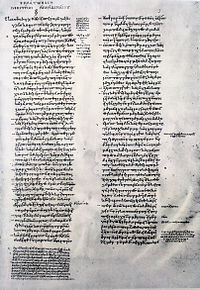
The Republic is a Socratic dialogue, written by Plato around 380 BCE, concerning justice, the order and character of the just city-state and the just man. It is Plato's best-known work, and has proven to be one of the world's most influential works of philosophy and political theory, both intellectually and historically.
In the book's dialogue, Socrates discusses the meaning of justice and whether or not the just man is happier than the unjust man with various Athenians and foreigners. They consider the natures of existing regimes and then propose a series of different, hypothetical cities in comparison. This culminates in the discussion of Kallipolis, a hypothetical city-state ruled by a philosopher king. They also discuss the theory of forms, the immortality of the soul, and the role of the philosopher and that of poetry in society. The dialogues may have taken place during the Peloponnesian War.
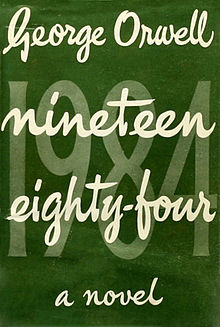
1984 (George Orwell)
Nineteen Eighty-Four, often published as 1984, is a dystopian novel published in 1949 by English author George Orwell. The novel is set in Airstrip One (formerly known as Great Britain), a province of the superstate Oceania in a world of perpetual war, omnipresent government surveillance, and public manipulation. The superstate and its residents are dictated to by a political regime euphemistically named English Socialism, shortened to "Ingsoc" in Newspeak, the government's invented language. The superstate is under the control of the privileged elite of the Inner Party, a party and government that persecutes individualism and independent thinking as "thoughtcrime", which is enforced by the "Thought Police".
限會員,要發表迴響,請先登入


