Canaan (The promising land)
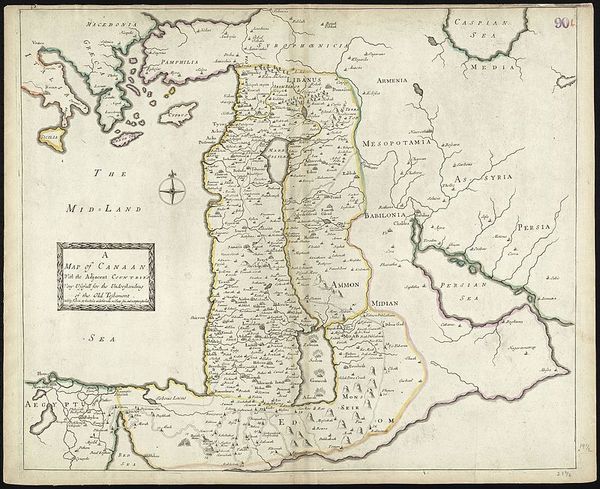
Canaan was a Semitic-speaking region in the Ancient Near East during the late 2nd millennium BC. In the Bible it corresponds to the Levant, in particular to the areas of the Southern Levant that provide the main setting of the narrative of the Hebrew Bible, i.e., the area of Israel, Philistia, Phoenicia, and other nations.
Chosen people
In monotheistic faiths references to God are used in constructs such as "God's Chosen People". The phenomenon of a "chosen people" is particularly common in the Abrahamic tradition, where it originally referred to the Israelites. Some claims of chosenness are based on parallel claims of Israelite ancestry, as is the case for the Christian Identity and Black Hebrew sects- both which claim themselves (and not Jews) to be the "true Israel". Others claim a "spiritual" chosenness, including most Christian denominations, who traditionally believe the church has replaced Israel as the People of God.
Jesus-suffering servant
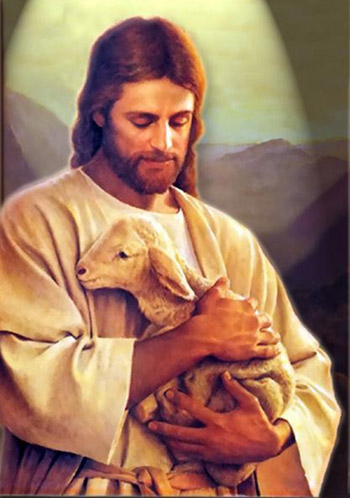
Jesus, also referred to as Jesus of Nazareth or Jesus Christ, was a Jewish preacher and religious leader who became the central figure of Christianity. Christians believe him to be the Son of God and the awaited Messiah prophesied in the Old Testament.
Christians consider Jesus to be the Messiah (Christ) and believe that through his death and resurrection, humans can be reconciled to God and thereby are offered salvation and the promise of eternal life. These teachings emphasize that as the willing Lamb of God, Jesus chose to suffer on the cross at Calvary as a sign of his full obedience to the will of the Eternal Father, as an "agent and servant of God". The choice Jesus made thus counter-positions him as a new man of morality and obedience, in contrast to Adam's disobedience.
Original sin
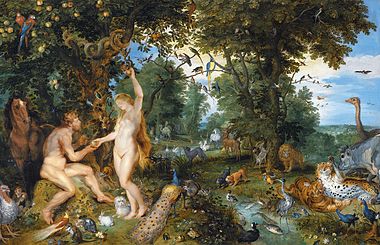
Original sin, also called ancestral sin, is the Christian doctrine of humanity's state of sin resulting from the fall of man, stemming from Adam and Eve's rebellion in Eden, namely the sin of disobedience in consuming from the tree of knowledge of good and evil. This condition has been characterized in many ways, ranging from something as insignificant as a slight deficiency, or a tendency toward sin yet without collective guilt, referred to as a "sin nature", to something as drastic as total depravity or automatic guilt of all humans through collective guilt.
Free will
Free will is the ability to choose between different possible courses of action. It is closely linked to the concepts of responsibility, praise, guilt, sin, and other judgments which apply only to actions that are freely chosen. It is also connected with the concepts of advice, persuasion, deliberation, and prohibition. Traditionally, only actions that are freely willed are seen as deserving credit or blame. There are numerous different concerns about threats to the possibility of free will, varying by how exactly it is conceived, which is a matter of some debate. Adam and Eve namely committed the sin under the Free will.
Sodom and Gomorrah
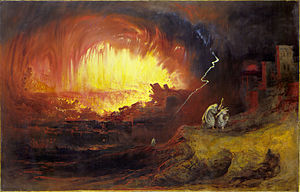
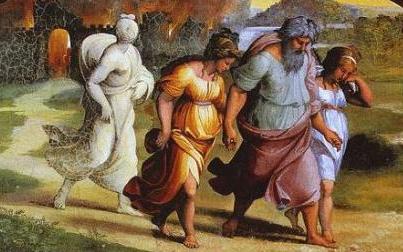
Sodom and Gomorrah were cities mentioned in the Book of Genesis and throughout the Hebrew Bible, the New Testament and in the deuterocanonical books, as well as in the Quran and the hadith. According to the Torah, the kingdoms of Sodom and Gomorrah were allied with the cities of Admah, Zeboim and Bela. These five cities, also known as the "cities of the plain", (from Genesis in the Authorized Version) were situated on the Jordan River plain in the southern region of the land of Canaan. The plain, which corresponds to the area just north of the modern-day Dead Sea, was compared to the garden of Eden[Gen.13:10] as being a land well-watered and green, suitable for grazing livestock.
Lot's wife
In the Bible, Lot's wife is a figure first mentioned in Genesis 19. The Book of Genesis describes how she became a pillar of salt after she looked back at Sodom.She is called "Ado" or "Edith" in some Jewish traditions, but is not named in the Bible. She is also referred to in the deuterocanonical books at Wisdom 10:7 and the New Testament at Luke 17:32.
Protestantism
Protestantism is a form of Christian faith and practice which originated with the Protestant Reformation, a movement against what its followers considered to be errors in the Roman Catholic Church. It is one of the three major divisions of Christendom, together with Roman Catholicism and Orthodoxy. The term derives from the letter of protestation from German Lutheran princes in 1529 against an edict condemning the teachings of Martin Luther as heretical.
Coat of many colors
In the Hebrew Bible, the coat of many colors is the name for the garment that Joseph owned, which was given to him by his father, Jacob.
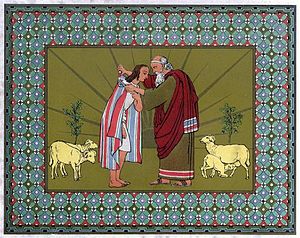
Joseph's father Jacob (also called Israel) favored him and gave Joseph the coat as a gift; as a result, he was envied by his brothers, who saw the special coat as an indication that Joseph would assume family leadership. His brothers' suspicion grew when Joseph told them of his two dreams (Genesis 37:11) in which all the brothers bowed down to him. The narrative tells that his brothers plotted against him when he was 17, and would have killed him had not the eldest brother Reuben interposed. He persuaded them instead to throw Joseph into a pit and secretly planned to rescue him later. However, while Reuben was absent, the others planned to sell him to a company of Ishsmaelite merchant. When the passing Midianites arrived, the brothers dragged Joseph up and sold him to the merchants for 20 pieces of silver. The brothers then dipped Joseph's coat in goat blood and showed it to their father, saying that Joseph had been torn apart by wild beasts.
Potiphar and his wife
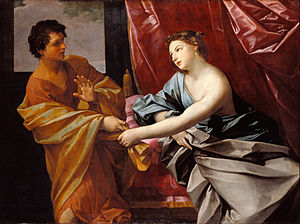
Potiphar or Potifar is a person known only from the Book of Genesis's account of Joseph. Potiphar is said to be the captain of the palace guard and is referred in the Quran as Aziz[citation needed]. Joseph, sold into slavery by his brothers, is taken to Egypt where he is sold to Potiphar as a household slave. Potiphar makes Joseph the head of his household, but Potiphar's wife, who is not named in the Bible or in Christian tradition, is furious at Joseph for resisting her attempts to seduce him, and falsely accuses him of attempted rape. Potiphar casts Joseph into prison, from where he later comes to the notice of Pharaoh through his ability to interpret the dreams of other prisoners.
限會員,要發表迴響,請先登入


