Genre
Genre, is any category of literature, music, or other forms of art or entertainment, whether written or spoken, audio or visual, based on some set of stylistic criteria. Genres form by conventions that change over time as new genres are invented and the use of old ones is discontinued. Often, works fit into multiple genres by way of borrowing and recombining these conventions.

Sitcom (Situation comedy)
A situation comedy, or sitcom, is a genre of comedy centered on a fixed set of characters who carry over from episode to episode. Sitcoms can be contrasted with sketch comedy where a troupe may use new characters in each sketch, and stand-up comedy where a comedian tells jokes and stories to an audience. Sitcoms originated in radio, but today are found mostly on television as one of its dominant narrative forms. This form can also include mockumentaries.

A famous sitcom in the US: Friends
No Strings Attached 
Director: Ivan Reitman
Writer: Elizabeth Meriwether, Michael Samonek
the film is about two friends who decide to make a pact to have "no strings attached" casual sex without falling in love with each other.
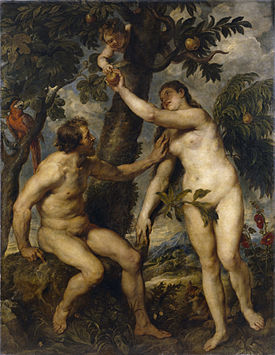
Adam and Eve
Adam and Eve, according to the creation myth of the Abrahamic religions, were the first man and woman and the ancestors of all humans. The story of Adam and Eve is central to the belief that God created human beings to live in a paradise on earth, although they fell away from that state and formed the present world full of suffering and injustice. It provides the basis for the belief that humanity is in essence a single family, with everyone descended from a single pair of original ancestors. It also provides much of the scriptural basis for the doctrines of the fall of man and original sin that are important beliefs in Christianity, but which are not generally held in Judaism or Islam.
In the Book of Genesis of the Hebrew Bible, chapters one through five, there are two creation narratives with two distinct perspectives. In the first, Adam and Eve are not mentioned (at least not mentioned by name). Instead, God created humankind in God's image and instructed them to multiply and to be stewards over everything else that God had made. In the second narrative, God fashions Adam from dust and places him in the Garden of Eden. Adam is told that he can till the ground and eat freely of all the trees in the garden, except for a tree of the knowledge of good and evil. Subsequently, Eve is created from one of Adam's ribs to be Adam's companion. They are innocent and unashamed about their nakedness. However, a serpent deceives Eve into eating fruit from the forbidden tree, and she gives some of the fruit to Adam. These acts give them additional knowledge, but it gives them the ability to conjure negative and destructive concepts such as shame and evil. God later curses the serpent and the ground. God prophetically tells the woman and the man what will be the consequences of their sin of disobeying God. Then he banishes them from the Garden of Eden.
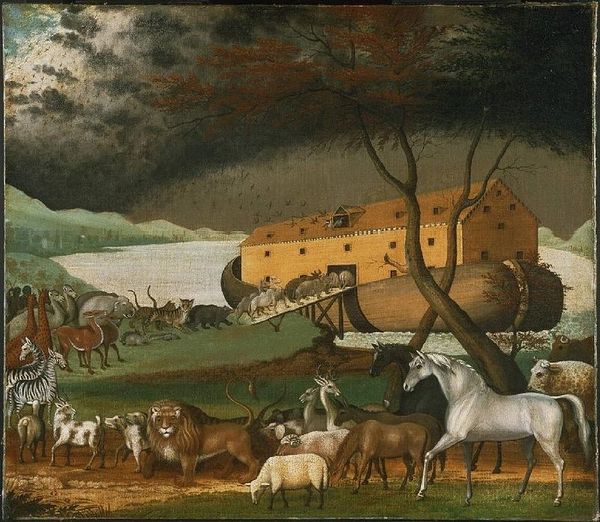
Noah's ark
Noah's Ark is the vessel in the Genesis flood narrative(Genesis chapters 6–9) by which God spares Noah, his family, and a remnant of all the world's animals from the flood. According to Genesis, God gave Noah instructions for building the ark. Seven days before the deluge, God told Noah to enter the ark with his household and the animals. The story goes on to describe the ark being afloat for 150 days and then coming to rest on the Mountains of Ararat and the subsequent receding of the waters.
限會員,要發表迴響,請先登入


