WHEN I was one-and-twenty
I heard a wise man say,
‘Give crowns and pounds and guineas
But not your heart away;
Give pearls away and rubies 5
But keep your fancy free.’
But I was one-and-twenty,
No use to talk to me.
When I was one-and-twenty
I heard him say again, 10
‘The heart out of the bosom
Was never given in vain;
’Tis paid with sighs a plenty
And sold for endless rue.’
And I am two-and-twenty, 15
And oh, ’tis true, ’tis true.

by Edgar Allan Poe
Once upon a midnight dreary, while I pondered, weak and weary,
Over many a quaint and curious volume of forgotten lore,
While I nodded, nearly napping, suddenly there came a tapping,
As of some one gently rapping, rapping at my chamber door.
"'Tis some visitor," I muttered, "tapping at my chamber door-
Only this, and nothing more."
Ah, distinctly I remember it was in the bleak December,
And each separate dying ember wrought its ghost upon the floor.
Eagerly I wished the morrow;- vainly I had sought to borrow
From my books surcease of sorrow- sorrow for the lost Lenore-
For the rare and radiant maiden whom the angels name Lenore-
Nameless here for evermore.
And the silken, sad, uncertain rustling of each purple curtain
Thrilled me- filled me with fantastic terrors never felt before;
So that now, to still the beating of my heart, I stood repeating,
"'Tis some visitor entreating entrance at my chamber door-
Some late visitor entreating entrance at my chamber door;-
This it is, and nothing more."
Presently my soul grew stronger; hesitating then no longer,
"Sir," said I, "or Madam, truly your forgiveness I implore;
But the fact is I was napping, and so gently you came rapping,
And so faintly you came tapping, tapping at my chamber door,
That I scarce was sure I heard you"- here I opened wide the door;-
Darkness there, and nothing more.
Deep into that darkness peering, long I stood there wondering, fearing,
Doubting, dreaming dreams no mortal ever dared to dream before;
But the silence was unbroken, and the stillness gave no token,
And the only word there spoken was the whispered word, "Lenore?"
This I whispered, and an echo murmured back the word, "Lenore!"-
Merely this, and nothing more.
Back into the chamber turning, all my soul within me burning,
Soon again I heard a tapping somewhat louder than before.
"Surely," said I, "surely that is something at my window lattice:
Let me see, then, what thereat is, and this mystery explore-
Let my heart be still a moment and this mystery explore;-
'Tis the wind and nothing more!"
Open here I flung the shutter, when, with many a flirt and flutter,
In there stepped a stately Raven of the saintly days of yore;
Not the least obeisance made he; not a minute stopped or stayed he;
But, with mien of lord or lady, perched above my chamber door-
Perched upon a bust of Pallas just above my chamber door-
Perched, and sat, and nothing more.
Then this ebony bird beguiling my sad fancy into smiling,
By the grave and stern decorum of the countenance it wore.
"Though thy crest be shorn and shaven, thou," I said, "art sure no craven,
Ghastly grim and ancient Raven wandering from the Nightly shore-
Tell me what thy lordly name is on the Night's Plutonian shore!"
Quoth the Raven, "Nevermore."
Much I marvelled this ungainly fowl to hear discourse so plainly,
Though its answer little meaning- little relevancy bore;
For we cannot help agreeing that no living human being
Ever yet was blessed with seeing bird above his chamber door-
Bird or beast upon the sculptured bust above his chamber door,
With such name as "Nevermore."
But the Raven, sitting lonely on the placid bust, spoke only
That one word, as if his soul in that one word he did outpour.
Nothing further then he uttered- not a feather then he fluttered-
Till I scarcely more than muttered, "Other friends have flown before-
On the morrow he will leave me, as my hopes have flown before."
Then the bird said, "Nevermore."
Startled at the stillness broken by reply so aptly spoken,
"Doubtless," said I, "what it utters is its only stock and store,
Caught from some unhappy master whom unmerciful Disaster
Followed fast and followed faster till his songs one burden bore-
Till the dirges of his Hope that melancholy burden bore
Of 'Never- nevermore'."
But the Raven still beguiling all my fancy into smiling,
Straight I wheeled a cushioned seat in front of bird, and bust and door;
Then upon the velvet sinking, I betook myself to linking
Fancy unto fancy, thinking what this ominous bird of yore-
What this grim, ungainly, ghastly, gaunt and ominous bird of yore
Meant in croaking "Nevermore."
This I sat engaged in guessing, but no syllable expressing
To the fowl whose fiery eyes now burned into my bosom's core;
This and more I sat divining, with my head at ease reclining
On the cushion's velvet lining that the lamp-light gloated o'er,
But whose velvet violet lining with the lamp-light gloating o'er,
She shall press, ah, nevermore!
Then methought the air grew denser, perfumed from an unseen censer
Swung by Seraphim whose footfalls tinkled on the tufted floor.
"Wretch," I cried, "thy God hath lent thee- by these
"The Philosophy of Composition" is an 1846 essay written by American writer Edgar Allan Poe that elucidates a theory about how good writers write when they write well. He concludes that length, "unity of effect" and a logical method are important considerations for good writing. He also makes the assertion that "the death... of a beautiful woman" is "unquestionably the most poetical topic in the world". Poe uses the composition of his own poem "The Raven" as an example. The essay first appeared in the April 1846 issue of Graham's Magazine. It is uncertain if it is an authentic portrayal of Poe's own method.
usually known as A. E. Housman, was an English classical scholar and poet, best known to the general public for his cycle of poems A Shropshire Lad. Lyrical and almost epigrammatic in form, the poems wistfully evoke the dooms and disappointments of youth in the English countryside.
The Journey Of The Magi
A cold coming we had of it,
Just the worst time of the year
For a journey, and such a long journey:
The ways deep and the weather sharp,
The very dead of winter.'
And the camels galled, sorefooted, refractory,
Lying down in the melting snow.
There were times we regretted
The summer palaces on slopes, the terraces,
And the silken girls bringing sherbet.
Then the camel men cursing and grumbling
and running away, and wanting their liquor and women,
And the night-fires going out, and the lack of shelters,
And the cities hostile and the towns unfriendly
And the villages dirty and charging high prices:
A hard time we had of it.
At the end we preferred to travel all night,
Sleeping in snatches,
With the voices singing in our ears, saying
That this was all folly.
Then at dawn we came down to a temperate valley,
Wet, below the snow line, smelling of vegetation;
With a running stream and a water-mill beating the darkness,
And three trees on the low sky,
And an old white horse galloped away in the meadow.
Then we came to a tavern with vine-leaves over the lintel,
Six hands at an open door dicing for pieces of silver,
And feet kicking the empty wine-skins.
But there was no information, and so we continued
And arriving at evening, not a moment too soon
Finding the place; it was (you might say) satisfactory.
All this was a long time ago, I remember,
And I would do it again, but set down
This set down
This: were we led all that way for
Birth or Death? There was a Birth, certainly
We had evidence and no doubt. I had seen birth and death,
But had thought they were different; this Birth was
Hard and bitter agony for us, like Death, our death.
We returned to our places, these Kingdoms,
But no longer at ease here, in the old dispensation,
With an alien people clutching their gods.
I should be glad of another death.
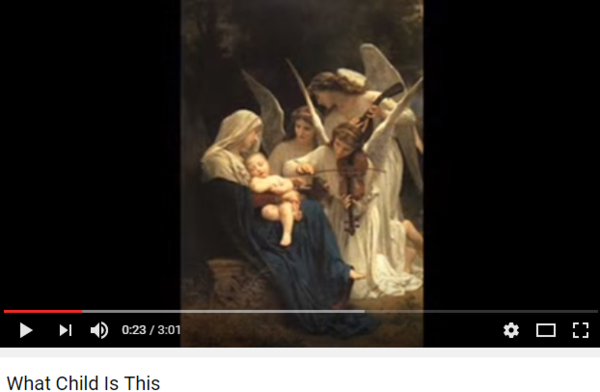
is a Christmas carol whose lyrics were written by William Chatterton Dix, in 1865. At the time of composing the carol, Dix worked as an insurance company manager and had been struck by a severe illness. While recovering, he underwent a spiritual renewal that led him to write several hymns, including lyrics to this carol that was subsequently set to the tune of "Greensleeves", a traditional English folk song.
Tinge(n)
Definition:To apply a trace of color to;
Badger(vt)
Definition:If you badger someone, you repeatedly tell them to do something or repeatedly ask them questions.
They badgered me into buying a new car .
Implore(v)

Definition:To appeal to in supplication;
They implored him to go.
Drudgery(n)
Definition:Tedious, menial, or unpleasant work.
The drudgery of everyday life.
Interminable(adj)

Definition:Being or seeming to be without an end;
The drive seemed interminable.
Perceive(vt)
Definition:To become aware of (something) directly through any of the senses, especially sight or hearing.
I perceived a number of changes
by 1620s of spices; by 1774 of language; past-participle adjective from garble (v.).
early 15c., "to inspect and remove the dirt and dross from (spices)," from Anglo-French garbeler "to sift" (late 14c.) and directly from Medieval Latin and Italian garbellare, from Arabic gharbala "to sift and select spices," related to kirbal "sieve," perhaps from Late Latin cribellum, diminutive of Latin cribrum "sieve" (see crisis). Apparently the word was widespread among Mediterranean traders (compare Italian garbellare, Spanish garbillare "to sift grain").
1530s, "fearful, timid," from Latin meticulosus "fearful, timid," literally "full of fear," from metus "fear, dread, apprehension, anxiety," of unknown origin. Sense of "fussy about details" is first recorded in English 1827, from French méticuleux "timorously fussy" [Fowler attributes this use in English to "literary critics"], from the Latin word. Related: Meticulosity.
1620s, back-formation from inundation, or else from Latin inundatus, past participle of inundare "to overflow, run over" (source also of Spanish inundar, French inonder). Related: Inundated; inundating.
early 15c., from Latin inundationem (nominative inundatio) "an overflowing," noun of action from past participle stem of inundare "to overflow," from in- "onto" (see in- (2)) + undare "to flow," from unda "a wave," from PIE *unda-, nasalized form of root *wed- (1) "water, wet" (see water (n.1)).
"containing much," 1610s, from French comprehénsif, from Late Latin comprehensivus, from comprehens-, past participle stem of Latin comprehendere (see comprehend). Related: Comprehensively (mid-15c.); comprehensiveness.
mid-14c., "to understand," from Latin comprehendere "to take together, to unite; include; seize" (of catching fire or the arrest of criminals); also "to comprehend, perceive" (to seize or take in the mind), from com "with, together," here "completely" (see com-) + prehendere "to catch hold of, seize" (see prehensile). Related: Comprehended; comprehending. Compare sense development in German begriefen, literally "to seize," but, through the writings of the 14c. mystics, "to seize with the mind, to comprehend."
"blood-red," late 14c. (late 12c. as a surname), from Old French sanguin (fem. sanguine), from Latin sanguineus "of blood," also "bloody, bloodthirsty," from sanguis (genitive sanguinis) "blood" (see sanguinary). Meaning "cheerful, hopeful, confident" first attested c. 1500, because these qualities were thought in medieval physiology to spring from an excess of blood as one of the four humors. Also in Middle English as a noun, "type of red cloth" (early 14c.).
"characterized by slaughter," 1620s, possibly from French sanguinaire, or directly from Latin sanguinarius "pertaining to blood," from sanguis (genitive sanguinis) "blood," of unknown origin. Latin distinguished sanguis, the generic word, from cruor "blood from a wound." The latter word is related to Greek kreas "meat," Sanskrit kravis- "raw flesh," Old English hreaw- "raw" (see raw).
cliche(n.)
1825, "electrotype, stereotype," from French cliché, a technical word in printer's jargon for "stereotype block," noun use of past participle of clicher "to click" (18c.), supposedly echoic of the sound of a mold striking molten metal. Figurative extension to "trite phrase, worn-out expression" is first attested 1888, following the course ofstereotype. Related: Cliched (1928).
genre(v.)
1770, "particular style of art," a French word in English (nativized from c. 1840), from French genre "kind, sort, style" (see gender (n.)). Used especially in French for "independent style." In painting, as an adjective, "depicting scenes of ordinary life" (a domestic interior or village scene, as compared to landscape, historical, etc.) from 1849.
candid(adj.)
1620s, "white," from Latin candidum "white; pure; sincere, honest, upright," from candere"to shine," from PIE root *kand- "to glow, to shine" (see candle). In English, metaphoric extension to "frank" first recorded 1670s (compare French candide "open, frank, ingenuous, sincere"). Of photography, 1929. Related: Candidly; candidness.
unsavory(adj.)
also unsavoury, early 13c., "tasteless, insipid," from un- (1) "not" + savory (adj.). Meaning "unpleasant or disagreeable to the taste" is attested from late 14c.; of persons, from c. 1400. Related: Unsavoriness.
degrade(v.)
late 14c., from Old French degrader (12c.) "degrade, deprive (of office, rank, etc.)," fromdes- "down" (see dis-) + Latin gradi "to walk, go, step" (see grade (n.)). Related:Degraded; degrading.
venial(adj.)
c. 1300, "pardonable," from Old French venial "pardonable, excusable" (13c.) and directly from Late Latin venialis "pardonable," from Latin venia "forgiveness, indulgence, pardon," related to venus "sexual love, desire" (see Venus). Related: Venially.
epitome(n.)
1520s, "an abstract; brief statement of the chief points of some writing," from Middle French épitomé (16c.), from Latin epitome "an abridgment," from Greek epitome "an abridgment, a cutting on the surface; brief summary," from epitemnein "cut short, abridge," from epi "into" (see epi-) + temnein "to cut" (see tome). Sense of "person or thing that typifies something" is first recorded c. 1600. Related: Epitomical.
dexterity(n.)
1520s, from Middle French dexterité (16c.), from Latin dexteritatem (nominativedexteritas) "readiness, skillfulness, prosperity," from dexter "skillful," also "right (hand)" (source of Old French destre, Spanish diestro, etc.), from PIE root *deks- "on the right hand," hence "south" to one facing east (source also of Sanskrit daksinah "on the right hand, southern, skillful;" Avestan dashina- "on the right hand;" Greek dexios "on the right hand," also "fortunate, clever;" Old Irish dess "on the right hand, southern;" Welsh deheu; Gaulish Dexsiva, name of a goddess of fortune; Gothic taihswa; Lithuanian desinas; Old Church Slavonic desnu, Russian desnoj). The Latin form is with the comparative suffix -ter, thus meaning etymologically "the better direction." Middle English dester meant "right hand," and in heraldry dexter means "on the right side."
grotesque(adj.)
"wildly formed, of irregular proportions, boldly odd," c. 1600s, originally a noun (1560s), from Middle French crotesque (16c., Modern French grotesque), from Italian grottesco, literally "of a cave," from grotta (see grotto). The explanation that the word first was used of paintings found on the walls of Roman ruins revealed by excavation (Italian pittura grottesca) is "intrinsically plausible," according to OED. Originally merely fanciful and fantastic, the sense became pejorative, "clownishly absurd, uncouth," after mid-18c. As the British name for a style of square-cut, sans-serif letter, from 1875. Related: Grotesquely;grotesqueness.
compassion(n.)
mid-14c., from Old French compassion "sympathy, pity" (12c.), from Late Latincompassionem (nominative compassio) "sympathy," noun of state from past participle stem of compati "to feel pity," from com "with, together" (see com-) + pati "to suffer" (seepassion).
Latin compassio is an ecclesiastical loan-translation of Greek sympatheia (see sympathy). An Old English loan-translation of compassion was efenðrowung.
repugnant(n.)
late 14c., "contrary, contradictory," from Old French repugnant "contradictory, opposing" or directly from Latin repugnantem (nominative repugnans), present participle ofrepugnare "to resist, fight back, oppose; disagree, be incompatible," from re- "back" (seere-) + pugnare "to fight" (see pugnacious). Meaning "distasteful, objectionable" is from 1777.
acme(n.)
"highest point," 1560s, from Greek akme "(highest) point, edge; peak of anything," hence "prime (of life, etc.), the best time," from PIE *ak-ma-, suffixed form of root *ak- "be sharp" (see acro-). In English it was written in Greek letters until c. 1620. The U.S. grocery store chain was founded 1891 in Philadelphia, Pennsylvania.
copious(adj.)
mid-14c., from Latin copiosus "plentiful," from copia "an abundance, ample supply, profusion, plenty," from com- "with" (see com-) + ops (genitive opis) "power, wealth, resources," from PIE root *op- (1) "to work, produce in abundance," (see opus). Related:Copiously.
vehemently(adv.)
early 15c., from Middle French vehement, veement "impetuous, ardent" (12c.), from Latinvehementem (nominative vehemens) "impetuous, eager, violent, furious, ardent, carried away," perhaps [Barnhart] from a lost present middle participle of vehere "to carry" (seevehicle). The other theory is that it represents vehe- "lacking, wanting" + mens "mind." Related: Vehement.
depict(v.)
early 15c., from Latin depictus, past participle of depingere "to portray, paint, sketch; describe, imagine," from de- "down" (see de-) + pingere "to paint" (see paint (v.)). Related:Depicted; depicting.
naive(adj.)
1650s, "natural, simple, artless," from French naïve, fem. of naïf, from Old French naif"naive, natural, genuine; just born; foolish, innocent; unspoiled, unworked" (13c.), from Latin nativus "not artificial," also "native, rustic," literally "born, innate, natural" (seenative (adj.)). Related: Naively.
perfidious(adj.)
1590s, from Latin perfidiosus "treacherous," from perfidia (see perfidy). Related:Perfidiously; perfidiousness.
covet(v.)
mid-13c., from Old French coveitier "covet, desire, lust after" (12c., Modern Frenchconvoiter, influenced by con- words), probably ultimately from Latin cupiditas "passionate desire, eagerness, ambition," from cupidus "very desirous," from cupere "long for, desire" (see cupidity). Related: Coveted; coveting.
ingratiate(v.)
1620s, possibly via 16c. Italian ingraziarsi "to bring (oneself) into favor," or an unrecorded Medieval Latin *ingratiatus, from Latin phrase in gratiam "for the favor of," from in "in" (see in- (2)) + gratia "favor, grace" (see grace (n.)). Related: Ingratiated; ingratiating.
penury(n.)
c. 1400, from Latin penuria "want, need; scarcity," related to paene "scarcely."
ignominious(adj.)
early 15c., from Middle French *ignominieus or directly from Latin ignominiosus"disgraceful, shameful," from ignominia "disgrace, infamy, loss of a (good) name," from assimilated form of in- "not, opposite of" (see in- (1)) + nomen (genitive nominis) "name" (see name (n.)). The Latin spelling perhaps influenced by words from Old Latin gnoscere"come to know." Related: Ignominiously; ignominiousness.
限會員,要發表迴響,請先登入


