Do not go gentle into that good night
Dylan Thomas, 1914 - 1953
Do not go gentle into that good night,
Old age should burn and rave at close of day;
Rage, rage against the dying of the light.
Though wise men at their end know dark is right,
Because their words had forked no lightning they
Do not go gentle into that good night.
Good men, the last wave by, crying how bright
Their frail deeds might have danced in a green bay,
Rage, rage against the dying of the light.
Wild men who caught and sang the sun in flight,
And learn, too late, they grieved it on its way,
Do not go gentle into that good night.
Grave men, near death, who see with blinding sight
Blind eyes could blaze like meteors and be gay,
Rage, rage against the dying of the light.
And you, my father, there on the sad height,
Curse, bless, me now with your fierce tears, I pray.
Do not go gentle into that good night.
Rage, rage against the dying of the light.
Fra
Definition:Easily broken, damaged, or destroyed.
He remains the anchor of the country's fragile political balance.
Definition:The condition or quality of being completely forgotten.
He just drank himself into oblivion.
De-
Delayed(v)

Definition:To postpone until a later time.
I was delayed — something came up at home.
Decline(v)
Definition:To express polite refusal.
He criticised the government for failing to halt economic decline.

Definition:To lessen the price or value of.
We must not depreciate the work she has done.
Departure(n)

Definition:The act of leaving.
Just phone in your order three or more days prior to departure.

Definition:Of or relating to a condition that is present at birth, as a result of either heredity or environmental influences.
a congenital inability to tell the truth .
Sym-with together
Definition:Of, expressing, feeling, or resulting from sympathy.
Build her up with kindness and a sympathetic ear.
Definition:Having or exhibiting wisdom and calm judgment.
I was grateful for the old man's sage advice.
Paradox(n)
A statement that seems to contradict itself but may nonetheless be true:
She was a paradox—a loner who loved to chat to strangers.
Realm(n)

A community or territory over which a sovereign rules;
Defence ofthe realm is crucial.
Annals(n)
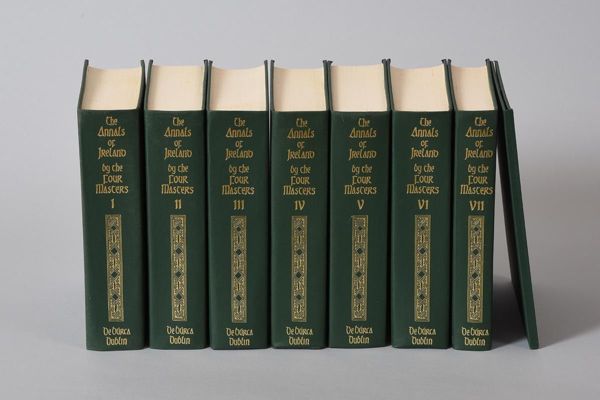
A chronological record of the events of successive years.
He has become alegend in the annals of military history.
Compound(v)
To combine so as to form a whole
His anxiety was compounded by her crying.
unmitigated(adj.)
1590s, from un- (1) "not" + past participle of mitigate (v.).
commodious(adj.)
early 15c., "beneficial, convenient," from Medieval Latin commodiosus "convenient, useful," from Latin commodus "proper, fit, appropriate, convenient, satisfactory" (seecommode). Meaning "roomy, spacious" first attested 1550s. Related: Commodiously;commodiousness.
antiquated(adj.)
1620s, past participle adjective from antiquate (1530s) "to make old or obsolete," from Latin antiquatus, past participle of antiquare (see antique (adj.)). An older adjective in the same sense was antiquate (early 15c.), from Latin.
disheveled(adj.)
also dishevelled, early 15c., "without dressed hair," parallel form of dishevel (adj.); see dishevel. General sense of "with disordered dress" is from c. 1600.
tenacious(adj.)
c. 1600, from Latin stem of tenacity + -ous. Related: Tenaciously; tenaciousness.
façade(n.)
1650s, "front of a building," from French façade (16c.), from Italian facciata "the front of a building," from faccia "face," from Vulgar Latin *facia (see face (n.)). Figurative use by 1845.
asinine(adj.)
c. 1600, "obstinate, stupid," from Latin asininus "stupid," literally "like an ass," fromasinus "ass," also "dolt, blockhead" (see ass (n.1)). The literal sense in English is recorded from 1620s.
grimace(v.)
1707, from French grimacer, from grimace "grotesque face" (see grimace (n.)). Related: Grimaced; grimacing.
(n.)
1650s, from French grimace (15c.) "grotesque face, ugly mug," possibly from Frankish or another Germanic source (compare Old Saxon grima "face mask," Old English grima "mask, helmet"), from the same root as grim (adj.). With pejorative suffix -azo (from Latin -aceus).
calumny(n.)
"False & malicious misrepresentation of the words or actions of others, calculated to injure their reputation" [Fowler], mid-15c., from Middle French calomnie (15c.), from Latin calumnia "trickery, subterfuge, misrepresentation, malicious charge," from calvi"to trick, deceive," from PIE root *kel- (6) "to deceive, confuse" (source also of Greekkelein "to bewitch, seduce, beguile," Gothic holon "to deceive," Old Norse hol "praise, flattery," Old English hol "slander," holian "to slander").
pittance(n.)
c. 1200, "pious donation to a religious house or order to provide extra food; the extra food provided," also "a small portion, scanty rations," from Old French pitance "pity, mercy, compassion; refreshment, nourishment; portion of food allowed a monk or poor person by a pious bequest," apparently literally "pity," from pitié (see pity). Meaning "small amount, portion" first recorded 1560s.
au courant(adj.)
"aware of current events," 1762, French, literally "with the current" (see current (n.)).
fastidious(adj.)
mid-15c., "full of pride," from Latin fastidiosus "disdainful, squeamish, exacting," from fastidium "loathing, squeamishness; dislike, aversion; excessive nicety," which is of uncertain origin; perhaps from *fastu-taidiom, a compound of fastus "contempt, arrogance, pride," and taedium "aversion, disgust." Fastus is possibly from PIE*bhars- (1) "projection, bristle, point," on the notion of "prickliness" (Watkins) or "a semantic shift from 'top' to 'haughtiness' which is conceivable, but the u-stem is not attested independently" [de Vaan], who adds that "fastidium would be a tautology." Early use in English was both in passive and active senses. Meaning "squeamish, over-nice" in English emerged 1610s. Related: Fastidiously; fastidiousness.
noisome(adj.)
late 14c., "harmful, noxious," from noye "harm, misfortune," shortened form of anoi"annoyance" (from Old French anoier, see annoy) + -some (1). Meaning "bad-smelling" first recorded 1570s. Related: Noisomeness.
unkempt(adj.)
1570s, from un- (1) "not" + kempt "well-combed, neat," from variant past participle of Middle English kemben "to comb," from Old English cemban "to comb," from Proto-Germanic *kambijan, from *kamb- "comb" (see comb (n.)). Form unkembed is recorded from late 14c. The verb kemb is rare after 1400s, but its negative past participle form endures.
parable(n.)
mid-13c., parabol, modern form from early 14c., "saying or story in which something is expressed in terms of something else," from Old French parable "parable, parabolic style in writing" (13c.), from Latin parabola "comparison," from Greek parabole "a comparison, parable," literally "a throwing beside," hence "a juxtaposition," frompara- "alongside" (see para- (1)) + bole "a throwing, casting, beam, ray," related toballein "to throw" (see ballistics).
Replaced Old English bispell. In Vulgar Latin, parabola took on the meaning "word," hence Italian parlare, French parler "to speak" (see parley (n.)).
whimsical(adj.)
1650s, from whimsy + -ical. Related: Whimsically.
限會員,要發表迴響,請先登入


