
Tragedy is a form of drama based on human suffering that invokes an accompanying catharsis or pleasure in audiences. While many cultures have developed forms that provoke this paradoxical response, the term tragedy often refers to a specific tradition of drama that has played a unique and important role historically in the self-definition of Western civilisation.

Drama is the specific mode of fiction represented in performance. The two masks associated with drama represent the traditional generic division between comedy and tragedy. They are symbols of the ancient Greek Muses, Thalia, and Melpomene. Thalia was the Muse of comedy (the laughing face), while Melpomene was the Muse of tragedy (the weeping face). Considered as a genre of poetry in general, the dramatic mode has been contrasted with the epic and the lyrical modes ever since Aristotle's Poetics (c. 335 BCE)—the earliest work of dramatic theory.

In a modern sense, comedy refers to any discourse or work generally intended to be humorous or amusing by inducing laughter, especially in theatre, television, film, and stand-up comedy. The origins of the term are found in Ancient Greece. In the Athenian democracy, the public opinion of voters was influenced by the political satire performed by the comic poets at the theaters.
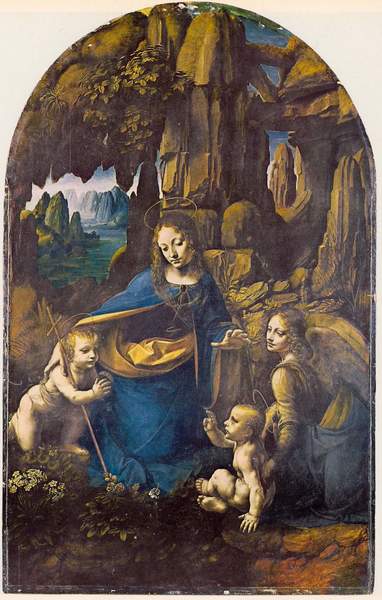
The Virgin of the Rocks (sometimes the Madonna of the Rocks) is the name used for two paintings by Leonardo da Vinci, of the same subject, and of a composition which is identical except for several significant details. The version generally considered the prime version, that is the earlier of the two, hangs in The Louvre in Paris and the other in the National Gallery, London. The paintings are both nearly 2 metres (over 6 feet) high and are painted in oils. Both were painted on wooden panel; that in the Louvre has been transferred to canvas.
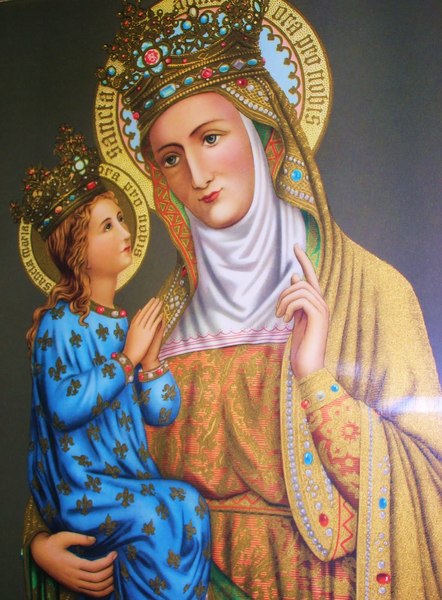
Saint Anne (also known as Ann or Anna) of David's house and line, was the mother of the Mary and grandmother of Jesus according to apocryphal Christian and Islamic tradition. Mary's mother is not named in the canonical gospels, nor in the Quran. Anne's name and that of her husband Joachim come only from New Testament apocrypha, of which the Gospel of James (written perhaps around 150) seems to be the earliest that mentions them.

Throughout history, various groups of people have considered themselves to be chosen people by a deity for a purpose, such as to act as the deity's agent on earth. In monotheistic faiths references to God are used in constructs such as "God's Chosen People". The phenomenon of a "chosen people" is particularly common in the Abrahamic tradition, where it originally referred to the Israelites.Others claim a "spiritual" chosenness, including most Christian denominations, who traditionally believe the church has replaced Israel as the People of God.
限會員,要發表迴響,請先登入


