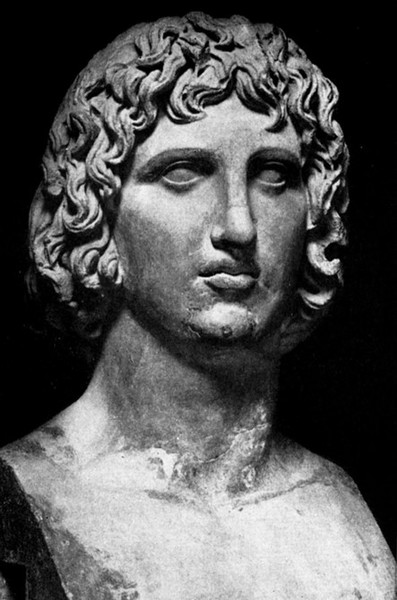
Publius Vergilius Maro , usually called Virgil or Vergil in English, was an ancient Roman poet of the Augustan period. He is known for three acclaimed works of Latin literature, the Eclogues (or Bucolics), the Georgics, and the epic Aeneid. A number of minor poems, collected in the Appendix Vergiliana, are sometimes attributed to him.

A young British girl born and raised in India loses her neglectful parents in an earthquake. She is returned to England to live at her uncle's estate. Her uncle is very distant due to the loss of his wife ten years before. Neglected once again, she begins exploring the estate and discovers a garden that has been locked and neglected. Aided by one of the servants' brothers, she begins restoring the garden, and eventually discovers some other secrets of the manor.
Definition:Existing or resulting in essence or effect though not in actual fact, form, or name.
One day virtual reality will revolutionize the entertainment industry.
Definition:The quality or state of being actual or true.
He came across as streetwise, but in reality he was not.
Definition:False or counterfeit.
Her care for the poor is completely pseudo.
Definition:An enterprise is something new, difficult, or important that you do or try to do.
Horse breeding is indeed a risky enterprise.
5. Entrepreneur(n)

Definition:An entrepreneur is a person who sets up businesses and business deals.
What this company needs is a real entrepreneur.

Definition:Video content, especially short programs, created for or distributed through such a system
She turned the television on and flicked around the channels.
7. Telephone(n)

To make or try to make a telephone connection with
I had to telephone him to say I was sorry.
8. Telegraph(n)
A message transmitted by telegraph.
He telegraphed me an urgent message.

Definition:Someone's confidant is a man who they are able to discuss their private problems with.
He is a close confidant of the president.
10. Confident(adj)

Definition:Feeling or showing certainty, as of success
I am confident that everything will comeout right in time.
11. Fake(adj)
Definition:One that is not authentic or genuine
a fake American accent
lampoon(v.)
1650s, from lampoon (n.), or else from French lamponner, from the Middle French noun. Related: Lampooned; lampooning.
(n.)
"A personal satire; abuse; censure written not to reform but to vex" [Johnson], 1640s, from French lampon (17c.), a word of unknown origin, said by French etymologists to be from lampons "let us drink," which is said to have been a popular refrain for scurrilous songs, in which case it would be originally a drinking song. French lamponsis from lamper "to drink, guzzle," a nasalized form of laper "to lap," from a Germanic source akin to lap (v.). Also see -oon.
countenance(v.)
late 15c., "to behave or act," from countenance (n.). Sense of "to favor, patronize" is from 1560s, from notion of "to look upon with sanction or smiles." Related:Countenanced; countenancing.
(n.)
mid-13c., from Old French contenance "demeanor, bearing, conduct," from Latincontinentia "restraint, abstemiousness, moderation," literally "way one contains oneself," from continentem, present participle of continere (see contain). Meaning evolving Middle English from "appearance" to "facial expression betraying a state of mind," to "face" itself (late 14c.).
sanctimonious(adj.)
c. 1600 (in "Measure for Measure," with the disparaging sense "making a show of sanctity, affecting an appearance of holiness"), from sanctimony + -ous. The un-ironic, literal sense was used occasionally in English from c. 1600 to c. 1800. Related:Sanctimoniously; sanctimoniousness.
equanimity(n.)
c. 1600, "fairness, impartiality," from French équanimité, from Latin aequanimitatem(nominative aequanimitas) "evenness of mind, calmness; good-will, kindness," fromaequanimis "mild, kind," literally "even-minded," from aequus "even, level" (seeequal (adj.)) + animus "mind, spirit" (see animus). Meaning "evenness of temper" in English is from 1610s.
effrontery(n.)
"shamelessness, impudence, boldness in transgressing the bounds of modesty and propriety," 1715, from French effronterie, from effronté "shameless," from Old Frenchesfronte "shameless, brazen," probably from Late Latin effrontem (nominativeeffrons) "barefaced, shameless," from assimilated form of Latin ex "out" (see ex-) +frontem (nominative frons) "brow" (see front (n.)). Also compare affront.
Latin frontus had a sense of "ability to blush," but the literal sense of effrontery often has been taken to be "putting forth the forehead." Forehead in Johnson's Dictionary (1755) has a secondary sense of "impudence; confidence; assurance; audaciousness; audacity." English had an earlier verb effront "treat with effrontery" (17c.).
nonentity(n.)
also nonentity, c. 1600, "something which does not exist," from non- + entity. Meaning "a person or thing of no importance" is attested from 1710.
flabbergasted(adj.)
1772, flabbergasted, mentioned (with bored) in a magazine article that year as a new vogue word, of uncertain origin. Perhaps from some dialect (in 1823 flabbergast was noted as a Sussex word), perhaps ultimately an arbitrary formation alluding to flabbyor flapper and aghast. "Like many other popular words expressing intensity of action, ... not separable into definite elements or traceable to a definite origin" [Century Dictionary]. Related: Flabbergasted; flabbergasting; flabbergastation.
debacle(n.)
"disaster," 1848, from French débâcle "downfall, collapse, disaster" (17c.), a figurative use, literally "breaking up (of ice on a river)," extended to the violent flood that follows when the river ice melts in spring; from débâcler "to free," from Middle French desbacler "to unbar," from des- "off" + bacler "to bar," from Vulgar Latin*bacculare, from Latin baculum "stick" (see bacillus). Sense of "disaster" was present in French before English borrowed the word.
vivacious(adj.)
1640s, from Latin vivax (genitive vivacis) "lively, vigorous" (see vivacity) + -ous. Related: Vivaciously.
gaunt(adj.)
"lean and haggard," from or as if from hunger, mid-15c. (as a surname from mid-13c.), from Middle French gant, of uncertain origin; perhaps from a Scandinavian source (compare Old Norse gand "a thin stick," also "a tall thin man") and somehow connected with the root of gander. Connection also has been suggested to Old Frenchjaunet "yellowish" [Middle English Dictionary].
mien(n.)
"facial expression," 1510s, probably a shortening of Middle English demean "bearing, demeanor" (see demeanor) and influenced by Middle French mine "appearance, facial expression," which is of unknown origin, possibly Celtic (compare Breton min "beak, muzzle, nose," Irish men "mouth").
hirsute(adj.)
"hairy," 1620s, from Latin hirsutus "rough, shaggy, bristly," figuratively "rude, unpolished," related to hirtus "shaggy," and possibly to horrere "to bristle with fear" (see horror).
refute(v.)
1510s, "refuse, reject," from Middle French réfuter (16c.) and directly from Latinrefutare "drive back; rebut, disprove; repress, repel, resist, oppose," from re- "back" (see re-) + -futare "to beat," probably from PIE root *bhau- "to strike down" (see bat(n.1)).
Meaning "prove wrong" dates from 1540s. Since c. 1964 linguists have frowned on the subtle shift in meaning towards "to deny," as it is used in connection withallegation. Related: Refuted; refuting.
pensive(adj.)
late 14c., from Old French pensif "thoughtful, distracted, musing" (11c.), from penser"to think," from Latin pensare "weigh, consider," frequentative of pendere "weigh" (see pendant). Related: Pensively; pensiveness.
whet(v.)
Old English hwettan "to whet, sharpen," figuratively "incite, encourage," from Proto-Germanic *hwatjan (source also of Old Norse hvetja "to sharpen, encourage," Middle Low German, Middle Dutch wetten, Old High German wezzan, German wetzen "to sharpen," Gothic ga-hvatjan "to sharpen, incite"), from PIE root *kwed- "to sharpen" (source also of Sanskrit codati "incites," literally "sharpens;" Old English hwæt"brave, bold," Old Saxon hwat "sharp").
stupor(n.)
late 14c., from Latin stupor "insensibility, numbness, dullness," from stupere "be stunned" (see stupid).
wince(v) c. 1300, wincen; mid-13c. winchen, "to recoil suddenly," from Anglo-French*wenchir, Old North French *wenchier (Old French guenchir) "to turn aside, avoid," from Frankish *wenkjan, from Proto-Germanic *wankjan (source also of Old High German wankon "to stagger, totter," Old Norse vakka "to stray, hover;" see wink (v.)). Originally of horses. Modern form is attested from late 13c. Related: Winced;wincing.
限會員,要發表迴響,請先登入


