
In the 19th century, manifest destiny was a widely held belief in the United States that its settlers were destined to expand across North America. There are three basic themes to manifest destiny:
l The special virtues of the American people and their institutions
l The mission of the United States to redeem and remake the west in the image of agrarian America
l An irresistible destiny to accomplish this essential duty
Historian Frederick Merk says this concept was born out of "a sense of mission to redeem the Old World by high example ... generated by the potentialities of a new earth for building a new heaven".

"In God We Trust" is the official motto of the United States. It was adopted as the nation's motto in 1956 as an alternative or replacement to the unofficial motto of E pluribus unum, which was adopted when the Great Seal of the United States was created and adopted in 1782.

Emeritus , in its current usage, is an adjective used to designate a retired professor, pastor, bishop, pope, president, prime minister, or other personages.
In some cases the term is conferred automatically upon all persons who retire at a given rank, but in others it remains a mark of distinguished service, awarded to only a few on retirement.
Evolution is change in the heritable characteristics of biological populations over successive generations.Evolutionary processes give rise to biodiversity at every level of biological organisation, including the levels of species, individual organisms, and molecules.
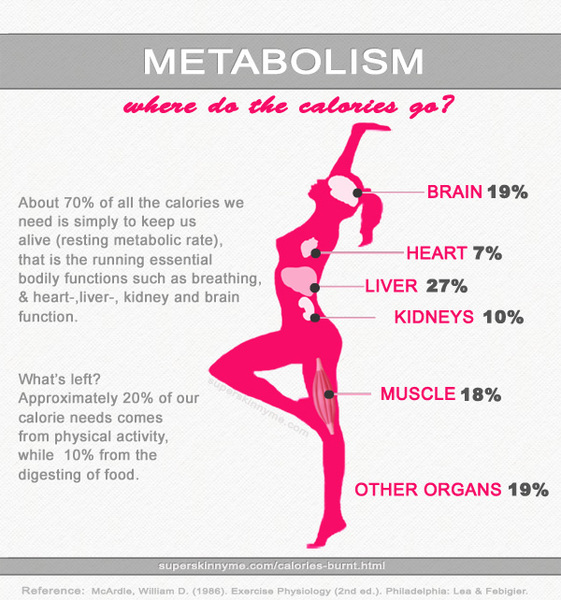
Metabolism is the set of life-sustaining chemical transformations within the cells of living organisms. The three main purposes of metabolism are the conversion of food/fuel to energy to run cellular processes, the conversion of food/fuel to building blocks for proteins, lipids, nucleic acids, and some carbohydrates, and the elimination of nitrogenous wastes. These enzyme-catalyzed reactions allow organisms to grow and reproduce, maintain their structures, and respond to their environments.
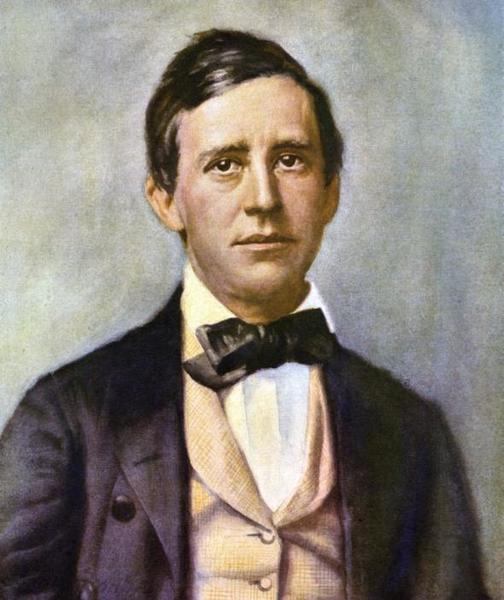
Stephen Collins Foster , known as "the father of American music", was an American songwriter primarily known for his parlor and minstrel music. Foster wrote over 200 songs; among his best-known are "Oh! Susanna", "Hard Times Come Again No More" , "Camptown Races", "Old Folks at Home" ("Swanee River"), "My Old Kentucky Home", "Jeanie with the Light Brown Hair", "Old Black Joe", and "Beautiful Dreamer". Many of his compositions remain popular more than 150 years after he wrote them. His compositions are thought to be autobiographical. He has been identified as "the most famous songwriter of the nineteenth century" and may be the most recognizable American composer in other countries.
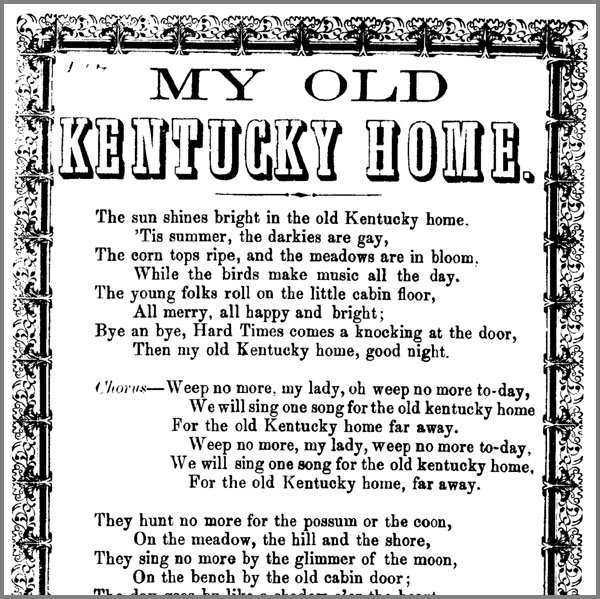
"My Old Kentucky Home, Good-Night!" is an anti-slavery ballad originally written by Stephen Foster, probably composed in 1852. It was published as in January 1853 by Firth, Pond, & Co. of New York. Foster likely composed the song after having been inspired by the narrative of popular anti-slavery novelist Harriet Beecher Stowe's "Uncle Tom's Cabin", while likely referencing imagery witnessed on his visits to the Bardstown, Kentucky farm called Federal Hill. In Foster's sketchbook, the song was originally entitled "Poor Uncle Tom, Good-Night!", but was altered by Foster as "My Old Kentucky Home, Good-Night!"
Jeannie with the light brown hair
I dream of Jeanie with the light brown hair
Borne like a vapor, on the summer's air
I see her tripping where the bright streams play
Happy as the daisies that dance on her way
Many were the wild notes her merry voice would pour
Many were the blithe birds that warbled them o'er
I dream of Jeanie with the light brown hair
Floating, like a vapor on the soft summer air
I long for Jeanie with the day dawn smile
Radiant in gladness, warm winning guile
I hear her melodies, like joys gone by
Sighing round my heart o'er the fond hopes that die
Sighing like the night wind and sobbing like the rain
Wailing for the lost one that comes not again
I long for Jeanie and my heart bows low
Nevermore to find her where the bright waters flow

An engagement, betrothal, or fiancer is a promise to wed, and also the period of time between a marriage proposal and a marriage. During this period, a couple is said to be betrothed, intended, affianced, engaged to be married, or simply engaged. Future brides and grooms may be called the betrothed, a wife-to-be or husband-to-be, fiancée or fiancé, respectively (from the French word fiancer). The duration of the courtship varies vastly, and is largely dependent on cultural norms or upon the agreement of the parties involved.
A student loan is a type of loan designed to help students pay for post-secondary education and the associated fees, such as tuition, books and supplies, and living expenses. It may differ from other types of loans in that the interest rate may be substantially lower and the repayment schedule may be deferred while the student is still in school. It also differs in many countries in the strict laws regulating renegotiating and bankruptcy. This article highlights the differences of the student loan system in several major countries.

Mary Ann Evans , known by her pen name George Eliot, was an English novelist, poet, journalist, translator and one of the leading writers of the Victorian era. She is the author of seven novels, including Adam Bede (1859), The Mill on the Floss (1860), Silas Marner (1861), Felix Holt, the Radical (1866), Middlemarch (1871–72), and Daniel Deronda (1876), most of which are set in provincial England and known for their realism and psychological insight.
1. Degrade(vt)
Definition:To lower in quality or value;
You degrade yourself when you tell a lie.
2. Morgue(n)
Definition:A place in which the bodies of persons found dead are kept until identified and claimed or until arrangements for burial have been made.
When I arrived, I saw a car from the morgue.
3. Mortgage(n)

Definition:A loan for the purchase of real property, secured by a lien on the property.
Jennie took in a lodger to help with the mortgage.
4. Benevolent(adj)
Definition:Characterized by or given to doing good.
They believe that the country needs a benevolent dictator.
5. Malevolent(adj)
Definition:Having or exhibiting ill will.
We must thwart his malevolent schemes.
6. Malicious gossip

Definition:disgraceful gossip about the private lives of other people.
That might merely have been malicious gossip.
7. malignant tumor
Definition:a tumor that is malignant and tends to spread to other parts of the body.
The malignant tumor does not recur.
"economical in use," 1590s, from Middle French frugal, from Latin frugalis, from undeclined adjective frugi "useful, proper, worthy, honest; temperate, economical," originally dative of frux (plural fruges) "fruit, produce," figuratively "value, result, success," related to fructus (see fruit), from PIE *bhrug- "agricultural produce," also "to enjoy." Sense evolved in Latin from "useful" to "profitable" to "economical." Related: Frugally.
1797, "hiding place," from French Canadian trappers' slang, "hiding place for stores" (1660s), a back-formation from French cacher "to hide, conceal" (13c., Old French cachier), from Vulgar Latin *coacticare "store up, collect, compress," frequentative of Latin coactare "constrain," from coactus, past participle of cogere "to collect" (see cogent). Sense extended by 1830s to "anything stored in a hiding place."
1590s, enterloper, "unauthorized trader trespassing on privileges of chartered companies," probably a hybrid from inter- "between" + -loper (from landloper "vagabond, adventurer," also, according to Johnson, "a term of reproach used by seamen of those who pass their lives on shore"); perhaps from a dialectal form of leap, or from Middle Dutch loper "runner, rover," from lopen "to run," from Proto-Germanic *hlaupan "to leap" (see leap (v.)).
late 14c., from Latin temeritatem (nominative temeritas) "blind chance, accident; rashness, indiscretion, foolhardiness," from temere "by chance, at random; indiscreetly, rashly," related to tenebrae "darkness," from PIE root *teme- "dark" (source also of Sanskrit tamas- "darkness," tamsrah "dark;" Avestan temah "darkness;" Lithuanian tamsa "darkness," tamsus "dark;" Old Church Slavonic tima "darkness;" Old High German dinstar "dark;" Old Irish temel "darkness"). The connecting notion is "blindly, without foreseeing."
mid-15c., from Anglo-French cupidite, Middle French cupidité, from Latin cupiditatem (nominative cupiditas) "passionate desire, lust; ambition," from cupidus "eager, passionate," from cupere "to desire" (perhaps cognate with Sanskrit kupyati "bubbles up, becomes agitated," Old Church Slavonic kypeti "to boil," Lithuanian kupeti "to boil over"). Despite the primarily erotic sense of the Latin word, in English cupidity originally, and still especially, means "desire for wealth."
ostensible (adj.)
1762, "capable of being shown, presentable," from French ostensible, from Latin ostens-, past participle stem of ostendere "to show, expose to view; to stretch out, spread before; exhibit, display," from ob "in front of" (see ob-) + tendere "to stretch" (see tenet). Meaning "apparent, professed" is from 1771.
fervid (adj.)
1590s, "burning, glowing, hot," from Latin fervidus "glowing, burning; vehement, fervid," from fervere "to boil, glow" (see brew (v.)). Figurative sense of "impassioned" is from 1650s. Related: Fervidly; fervidness.
spurious (adj.)
1590s, "born out of wedlock," from Latin spurius "illegitimate, false" (source also of Italian spurio, Spanish espurio), from spurius (n.) "illegitimate child," probably from Etruscan spural "public." Sense of "having an irregular origin, not properly constituted" is from c. 1600; that of "false, sham" is from 1610s; of writing, etc., "not proceeding from the source pretended, 1620s. Related: Spuriously; spuriousness.
propagate (v.)
1560s, "to cause to multiply," from Latin propagatus, past participle of propagare "to set forward, extend, procreate" (see propagation). Intransitive sense "reproduce one's kind" is from c. 1600. Related: Propagated; propagating.
anomaly (n.)
1570s, from Latin anomalia, from Greek anomalia "inequality," noun of quality from anomalos "uneven, irregular," from an-, privative prefix, "not" (see an- (1)) + homalos "even," from homos "same" (see same).
innocuous (adj.)
1590s, from Latin innocuus "harmless; innocent; inoffensive," from in- "not" (see in- (1)) + nocuus "hurtful," from root of nocere "to injure, harm," from *nok-s-, suffixed form of PIE root *nek- (1) "death" (see necro-). Related: Innocuously; innocuousness.
surfeit (n.) early 14c., "excess quantity;" late 14c., "overindulgence," from Old French sorfet "excess; arrogance" (Modern French surfait), noun use of past participle of surfaire "overdo," from sur- "over" (see sur- (1)) + faire "do," from Latin facere "to make, do" (see factitious).
(v.)
late 14c., intransitive, "indulge or feed to excess," from surfeit (n.). Related: Surfeited; surfeiting. Transitive sense from 1590s.
milieu (n.) "surroundings," 1877, from French milieu, "middle, medium, mean," literally "middle place" (12c.), from mi "middle" (from Latin medius; see medial (adj.)) + lieu "place" (see lieu).
strident (adj.)
1650s, from French strident (16c.) and directly from Latin stridentem (nominative stridens), present participle of stridere "utter an inarticulate sound, grate, screech," from PIE *(s)trei-, possibly of imitative origin (source also of Greek trismos "a grinding, scream"). Related: Stridently; stridence; stridency.
concomitant (adj.)
c. 1600, from French concomitant, from Late Latin concomitantem (nominative concomitans), present participle of concomitari "accompany, attend," from com "with, together" (see com-) + comitari "join as a companion," from comes (genitive comitis) "companion" (see coun
lassitude (n.)
early 15c., from Latin lassitudinem (nominative lassitudo) "faintness, weariness," from lassus "faint, tired, weary," from PIE *led-to-, suffixed form of *led- "slow, weary" (source also of Old English lt "sluggish, slow;" see late (adj.)), from root *le- (2) "to let go, slacken" (see lenient).
deleterious (adj.)
1640s, from Medieval Latin deleterius, from Greek deleterios "noxious," from deleter "destroyer," from deleisthai "to hurt, injure." Related: Deleteriously; deleteriousness.
dissent (v.)
early 15c., from Latin dissentire "differ in sentiments, disagree, be at odds, contradict, quarrel," from dis- "differently" (see dis-) + sentire "to feel, think" (see sense (n.)). Related: Dissented; dissenting. The noun is 1580s, from the verb.
Has there ever been a society which has died of dissent? Several have died of conformity in our lifetime. [Jacob Bronowski "Science and Human Values," 1956]
ferment (v.)
late 14c. (intransitive), from Old French fermenter (13c.) and directly from Latin fermentare "to leaven, cause to rise or ferment," from fermentum "substance causing fermentation, leaven, drink made of fermented barley," perhaps contracted from *fervimentum, from root of fervere "to boil, seethe" (see brew (v.)). Transitive use from 1670s. Figurative use from 1650s. Related: Fermented; fermenting.
(n.)
early 15c., from Middle French ferment (14c.), from Latin fermentum "leaven, yeast; drink made of fermented barley;" figuratively "anger, passion" (see ferment (v.)). Figurative sense of "anger, passion, commotion" in English is from 1670s.
attenuated (v.)
"to make thin, to make less," 1520s, from Latin attenuatus "enfeebled, weak," past participle of attenuare "to make thin, lessen, diminish," from ad "to" (see ad-) + tenuare "make thin," from tenuis "thin" (see tenet). Related: Attenuated; attenuating. Earlier was Middle English attenuen "to make thin (in consistency)," early 15c.
arbiter (n.) late 14c., from Old French arbitre or directly from Latin arbiter "one who goes somewhere (as witness or judge)," in classical Latin used of spectators and eye-witnesses, in law, "he who hears and decides a case, a judge, umpire, mediator;" from ad- "to" (see ad-) + baetere "to come, go." The specific sense of "one chosen by two disputing parties to decide the matter" is from 1540s. The earliest form of the word attested in English is the fem. noun arbitress (mid-14c.) "a woman who settles disputes."
incumbent (n.)
early 15c., "person holding a church position," from Medieval Latin incumbentem (nominative incumbens) "holder of a church position," noun use of present participle of incumbere "to obtain or possess," from Latin incumbere "recline on," figuratively "apply oneself to," from in- "on" (see in- (2)) + -cumbere "lie down," related to cubare "to lie" (see cubicle). Extended to holders of any office from 1670s.
(adj.) Look up incumbent at Dictionary.com
1560s, in relation to duties or obligations, from Medieval Latin incumbentem (nominative incumbens), present participle of incumbere (see incumbent (n.)). The literal, physical sense "lying or resting on something" is rare in English and first attested 1620s.
profound (adj.)
c. 1300, "characterized by intellectual depth," from Old French profund (12c., Modern French profond), from Latin profundus "deep, bottomless, vast," also "obscure; profound; immoderate," from pro "forth" (see pro-) + fundus "bottom" (see fund (n.)). The literal and figurative senses both were in Latin, but English, having already deep, employed this word primarily in its figurative sense. Related: Profoundly.
alleviate (v.)
early 15c., " to mitigate, relieve (sorrows, suffering, etc.)," from Late Latin alleviatus, past participle of alleviare "lift up, raise," figuratively "to lighten (a burden), comfort, console," from Latin ad "to" (see ad-) + levis "light" in weight (see lever). Related: Alleviated; alleviating.
限會員,要發表迴響,請先登入


