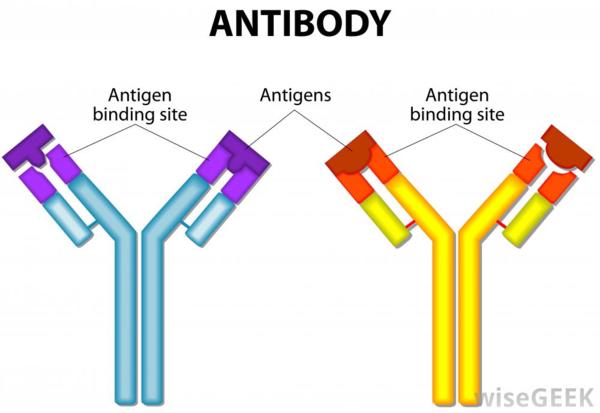
An antibody (Ab), also known as an immunoglobulin (Ig). Depending on the antigen, the binding may impede the biological process causing the disease or may activate macrophages to destroy the foreign substance. The ability of an antibody to communicate with the other components of the immune system is mediated via its Fc region (located at the base of the "Y"), which contains a conserved glycosylation site involved in these interactions. The production of antibodies is the main function of the humoral immune system.
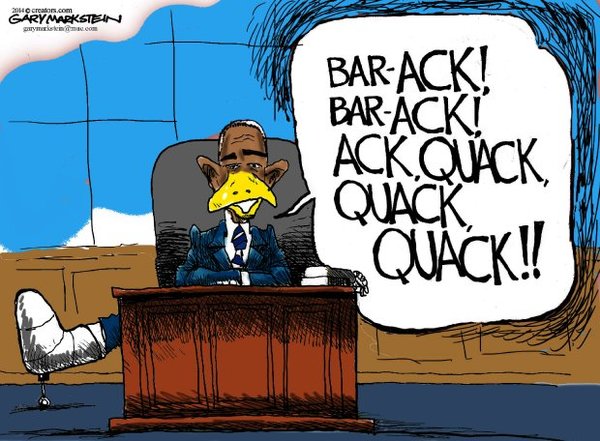
A lame duck, in politics, is an elected official whose successor has already been elected. The official is often seen as having less influence with other politicians due to their limited time left in office. Conversely, a lame duck is free to make decisions that exercise their standard powers with little fear of consequence, such as issuing executive orders, pardons, or other controversial edicts.

In the United States, Super Tuesday, in general, refers informally to one or more Tuesdays early in a United States presidential primary season when the greatest number of U.S. states hold primary elections and caucuses. More delegates to the presidential nominating conventions can be won on Super Tuesday than on any other single day of the primary calendar. Thus, candidates seeking the presidency traditionally must do well on this day to help secure their party's nomination.
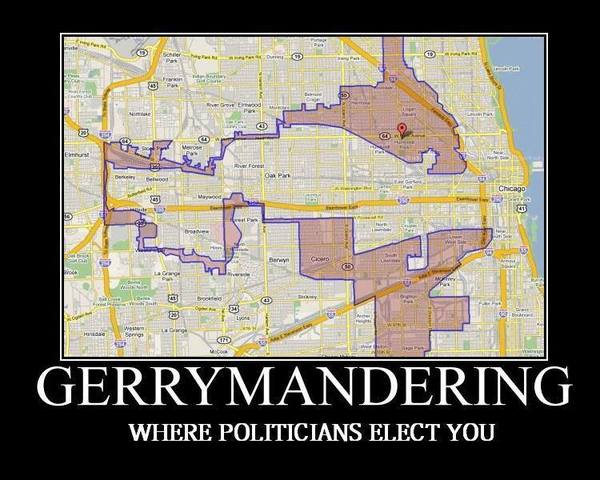
In the process of setting electoral districts, gerrymandering is a practice intended to establish a political advantage for a particular party or group by manipulating district boundaries. The resulting district is known as a gerrymander ; however, that word can also refer to the process.

A red herring is something that misleads or distracts from a relevant or important issue. It may be either a logical fallacy or a literary device that leads readers or audiences towards a false conclusion. A red herring might be intentionally used, such as in mystery fiction or as part of rhetorical strategies (e.g. in politics), or it could be inadvertently used during argumentation.
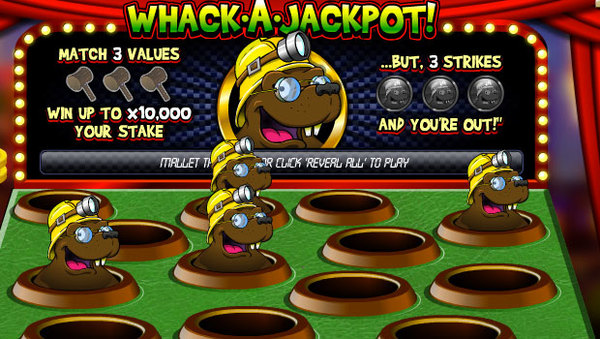
Whac-A-Mole is a popular arcade redemption game invented in 1976 by Aaron Fechter of Creative Engineering, Inc..
In Japan, もぐら退治 (mogura taiji, "Mole Buster") is a popular arcade game invented in 1975 by Kazuo Yamada of TOGO, based on ten of the designer's pencil sketches from 1974, licensed to Bandai in 1977. It can also be commonly found at Japanese festivals.

Elite Systems is a UK video game developer and publisher established in 1984 as Richard Wilcox Software. They are best known for producing home computer conversions of popular arcade games.
 Successful vs successive
As adjectives the difference between successful and successive is that successful is resulting in success; assuring, or promotive of, success; accomplishing what was proposed; having the desired effect; prosperous; fortunate; happy while successive is coming one after the other in a series.
 A quarter is one-fourth, ¼
3/8 three-eighth 2/3 two-third

Anarchy is the condition of a society, entity, group of people, or a single person that rejects hierarchy. The term originally meant leaderlessness, but in 1840, Pierre-Joseph Proudhon adopted the term in his treatise What Is Property? to refer to a new political philosophy, anarchism, which advocates stateless societies based on voluntary associations. In practical terms, anarchy can refer to the curtailment or abolition of traditional forms of government.
Apply(vi)
Definition:If you apply for something such as a job or membership of an organization, you write a letter or fill in a form in order to ask formally for it.
You will need to apply three coats of varnish.
Applicant(n)

Definition:An applicant for something such as a job or a place at a college is someone who makes a formal written request to be given it.
Not every applicant had a degree.
Attendant(n)
Definition:One who attends or waits on another.
The girl attendant has set about cleaning the room.
Accountant(n)

Definition:One that keeps, audits, and inspects the financial records of individuals or business concerns and prepares financial and tax reports.
Accountant John Talbot is a wizard with numbers.
Predecessor(n)
Definition:One who precedes another in time, especially in holding an office or position.
His style could scarcely be further removed from that of his predecessor.
Ratify(v)

Definition: To approve and give formal sanction to.
The heads of two governments met to ratify the peace treaty.
1807, from resource + -ful. Related: Resourcefully; resourcefulness.
1610s, "means of supplying a want or deficiency," from French resourse "a source, spring," noun use of fem. past participle of Old French resourdre "to rally, raise again," from Latin resurgere "rise again" (see resurgent). Resources "a country's wealth" first recorded 1779.
c. 1400, laberynthe (late 14c. in Latinate form laborintus) "labyrinth, maze, great building with many corridors and turns," figuratively "bewildering arguments," from Latin labyrinthus, from Greek labyrinthos "maze, large building with intricate passages," especially the structure built by Daedelus to hold the Minotaur, near Knossos in Crete, a word of unknown origin.
c. 1300, from Latin extortionem (nominative extortio) "a twisting out, extorting," noun of action from past participle stem of extorquere "wrench out, wrest away, to obtain by force," from ex "out" (see ex-) + torquere "to twist" (see torque (n.)).
"one who organizes public entertainments," 1746, from Italian impresario "operatic manager," literally "undertaker (of a business)," from impresa "undertaking, enterprise, attempt," fem. of impreso, past participle of imprendere "undertake," from Vulgar Latin imprendere, from assimilated form of in- "into, in, on, onto" (see in- (2)) + prehendere "to grasp" (see prehensile).
限會員,要發表迴響,請先登入


