
Les Misérables is a 2012 British-American musical drama film directed by Tom Hooper and scripted by William Nicholson, Alain Boublil, Claude-Michel Schönberg, and Herbert Kretzmer, based on the musical of the same name by Alain Boublil and Claude-Michel Schönberg which is in turn based on the 1862 French novel by Victor Hugo.

George Walker Bush (born July 6, 1946) is an American politician who was the 43rd President of the United States from 2001 to 2009 and 46th Governor of Texas from 1995 to 2000. The eldest son of Barbara and George H. W. Bush, he was born in New Haven, Connecticut. After graduating from Yale University in 1968 and Harvard Business School in 1975, he worked in oil businesses. He married Laura Welch in 1977 and ran unsuccessfully for the House of Representatives shortly thereafter.
CNN - Ex-President George W. Bush's Post 9/11 Speech

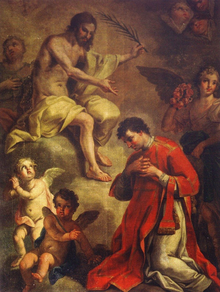
Vincent is a male given name derived from the Roman name Vincentius, which is derived from the Latin word "vincere" (to conquer).
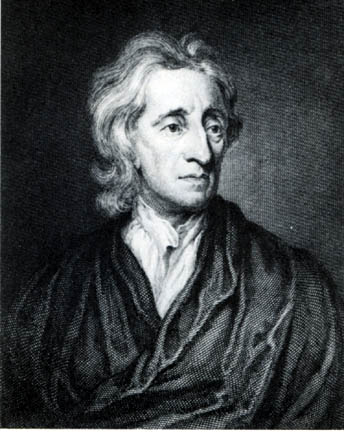
John Locke FRS was an English philosopher and physician, widely regarded as one of the most influential of Enlightenment thinkers and commonly known as the "Father of Liberalism".
Declaration of the Rights of Man and of the Citizen
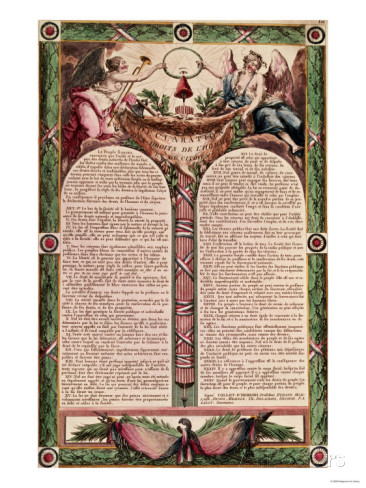
The Declaration of the Rights of Man and of the Citizen , passed by France's National Constituent Assembly in August 1789, is a fundamental document of the French Revolution and in the history of human and civil rights.The Declaration was directly influenced by Thomas Jefferson, working with General Lafayette, who introduced it.
Vanity(n)
Definition: Excessive pride in one's appearance or accomplishments.
Men who use steroids are motivated by sheer vanity.
Vanish(vi)

Definition:If someone or something vanishes, they disappear suddenly or in a way that cannot be explained.
All your troubles will vanish away when he returns safely.
Ability(n)

Definition:The quality of being able to do something, especially the physical, mental, financial, or legal power to accomplish something.
The public never had faith in his ability to handle the job.
Abandon(vt)
Definition: To withdraw one's support or help from, especially in spite of duty, allegiance, or responsibility.
The market might abandon the stock, and knock down its price.
Abstract(adj)

Definition: Considered apart from concrete existence.
His painting went through both representational and abstract periods.
Absent(adj)
Definition: Not present.
Carol was absent-minded and a little slow on the uptake.
1530s, from Latin assiduus "attending; continually present, incessant; busy; constant," from assidere "to sit down to" (thus "be constantly occupied" at one's work); from assimilated form of ad "to" (see ad-) + sedere "to sit" (see sedentary).
The word acquired a taint of "servility" in 18c. Related: Assiduously; assiduousness.
1590s, "remaining in one place," from Middle French sédentaire (16c.) and directly from Latin sedentarius "sitting, remaining in one place," from sedentem (nominative sedens), present participle of sedere "to sit; occupy an official seat, preside; sit still, remain; be fixed or settled," from PIE root *sed- (1) "to sit" (source also of Sanskrit a-sadat "sat down," sidati "sits;" Old Persian hadis "abode;" Greek ezesthai "to sit," hedra "seat, chair, face of a geometric solid;" Old Irish suide "seat, sitting;" Welsh sedd "seat," eistedd "sitting;" Old Church Slavonic sežda, sedeti "to sit;" Lithuanian sedmi "to sit;" Russian sad "garden," Lithuanian soditi "to plant;" Gothic sitan, Old English sittan "to sit;" see sit). Of persons, the sense "not in the habit of exercise" is recorded from 1660s.
1530s, from Latin assiduus "attending; continually present, incessant; busy; constant," from assidere "to sit down to" (thus "be constantly occupied" at one's work); from assimilated form of ad "to" (see ad-) + sedere "to sit" (see sedentary). The word acquired a taint of "servility" in 18c. Related: Assiduously; assiduousness.
1807, from resource + -ful. Related: Resourcefully; resourcefulness.
1610s, "means of supplying a want or deficiency," from French resourse "a source, spring," noun use of fem. past participle of Old French resourdre "to rally, raise again," from Latin resurgere "rise again" (see resurgent). Resources "a country's wealth" first recorded 1779.
1660s, from Greek baros "weight," from suffixed form of PIE root *gwere- (2) "heavy" (see grave (adj.)) + -meter. Probably coined (and certainly popularized) by English scientist Robert Boyle (1627-1691).
1560s (attested in Anglo-Latin from late 13c.), from Late Latin itinerantem (nominative itinerans), present participle of itinerare "to travel," from Latin iter (genitive itineris) "a journey," from ire "go" (see ion). Originally in reference to circuit courts. As a noun from 1640s. Related: Itinerancy. Middle English had itineral "having to do with travel" (late 15c.).
1550s, from Middle French myriade and directly from Late Latin myrias (genitive myriadis) "ten thousand," from Greek myrias (genitive myriados) "a number of ten thousand, countless numbers," from myrios (plural myrioi) "innumerable, countless, infinite; boundless," as a definite number, "ten thousand" ("the greatest number in Greek expressed by one word," Liddell & Scott say), of unknown origin; perhaps from PIE *meue- "abundant" (source also of Hittite muri- "cluster of grapes," Latin muto "penis," Middle Irish moth "penis"). Specific use is usually in translations from Greek or Latin.
Old English deman "to judge, condemn, think, compute," from root of dom (see doom (n.)). Originally "to pronounce judgment" as well as "to form an opinion." The two judges of the Isle of Man were called deemsters in 17c., a title formerly common throughout England and Scotland and preserved in the surname Dempster.
1530s, "fit one thing to another," from Latin accomodatus "suitable, fit, appropriate to," past participle of accomodare "make fit, make fit for, adapt, fit one thing to another," from ad "to" (see ad-) + commodare "make fit," from commodus ""proper, fit, appropriate, convenient, satisfactory" (see commode). From late 16c. as "make suitable," also "furnish (someone) with what is wanted," especially "furnish with suitable room and comfort" (1712). Related: Accommodated; accommodating.
"obliging, disposed to yield to the desires of others," 1771, present participle adjective from accommodate. Related: Accomodatingly. Accomodable is from c. 1600 as "suitable."
c. 1200, "a Roman legion," from Old French legion "squad, band, company, Roman legion" from Latin legionem (nominative legio) "Roman legion, body of soldiers, a levy of troops," from legere "to gather; to choose, pick out, select" (also "to read;" see lecture (n.)). Tucker writes that "The common sense is 'pick,'" but it is unclear whether the use here is "picking up or picking out." Roughly 3,000 to 6,000 men, under Marius usually with attached cavalry. "The legions were numbered in the order of their levy, but were often known by particular names" [Lewis].
Old English underwritan "write at the foot of; subscribe;" see under + write (v.). A loan-translation of Latin subscribere (see subscribe). Used literally at first; modern sense of "to accept the risk of insurance" (1620s) is from notion of signing a marine insurance policy. Meaning "to support by a guarantee of money" is recorded from 1890.
Old English rife "abundant, common, prevalent," from Proto-Germanic *rif- (source also of Old Norse rifr, Swedish river, Norwegian riv, Middle Dutch riif, Middle Low German rive "abundant, generous"), said to be from PIE root *rei- "to scratch, tear, cut" "The prevalence of the word in early southern texts is in favour of its being native in English, rather than an adoption from Scandinavian." [OED]
Old English balca "ridge, bank," from or influenced by Old Norse balkr "ridge of land," especially between two plowed furrows, both from Proto-Germanic *balkon- (source also of Old Saxon balko, Danish bjelke, Old Frisian balka, Old High German balcho, German Balken "beam, rafter"), from PIE *bhelg- "beam, plank" (source also of Latin fulcire "to prop up, support," fulcrum "bedpost;" Lithuanian balziena "cross-bar;" and possibly Greek phalanx "trunk, log, line of battle"). Modern senses are figurative, representing the balk as a hindrance or obstruction (see balk (v.)). Baseball sense is first attested 1845.
late 14c., "to leave an unplowed ridge when plowing," from balk (n.). Extended meaning "to omit, intentionally neglect" is mid-15c. Most modern senses are figurative, from the notion of a balk in the fields as a hindrance or obstruction: sense of "stop short" (as a horse confronted with an obstacle) is late 15c.; that of "to refuse" is 1580s. Related: Balked; balking.
限會員,要發表迴響,請先登入


