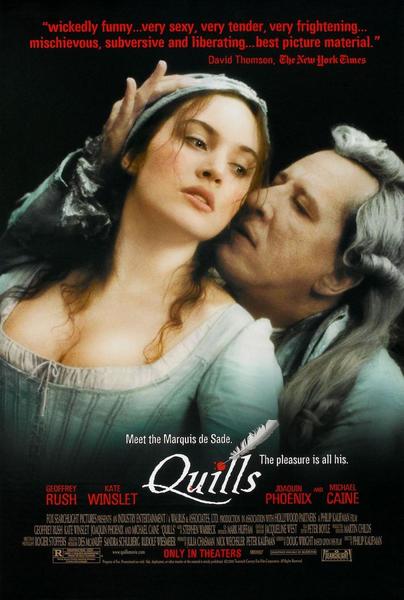
Quills is a 2000 American-British-German period film directed by Philip Kaufman and adapted from the Obie award-winning play by Doug Wright, who also wrote the original screenplay.\ Inspired by the life and work of the Marquis de Sade, Quills re-imagines the last years of the Marquis' incarceration in the insane asylum at Charenton.
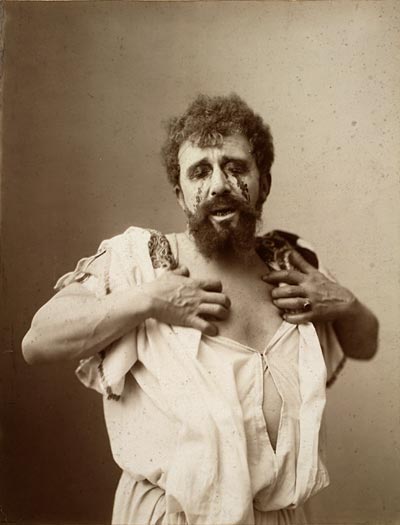
Oedipus was a mythical Greek king of Thebes. A tragic hero in Greek mythology, Oedipus accidentally fulfilled a prophecy that he would end up killing his father and marrying his mother, thereby bringing disaster to his city and family.
The story of Oedipus is the subject of Sophocles' tragedy Oedipus the King, which was followed by Oedipus at Colonus and then Antigone. Together, these plays make up Sophocles' three Theban plays. Oedipus represents two enduring themes of Greek myth and drama: the flawed nature of humanity and an individual's role in the course of destiny in a harsh universe.
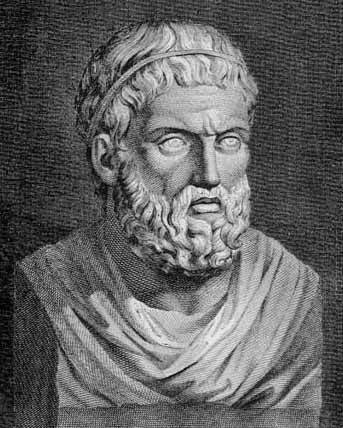
Sophocles is one of three ancient Greek tragedians whose plays have survived. His first plays were written later than those of Aeschylus, and earlier than or contemporary with those of Euripides. Sophocles wrote 120 plays during the course of his life, but only seven have survived in a complete form: Ajax, Antigone, The Women of Trachis, Oedipus the King, Electra, Philoctetes and Oedipus at Colonus.For almost 50 years, Sophocles was the most celebrated playwright in the dramatic competitions of the city-state of Athens that took place during the religious festivals of the Lenaea and the Dionysia.
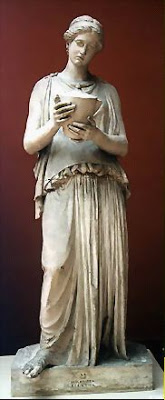
In Greek mythology, Electra was the daughter of King Agamemnon and Queen Clytemnestra, and thus princess of Argos.She and her brother Orestes plotted revenge against their mother Clytemnestra and stepfather Aegisthus for the murder of their father, Agamemnon.
Electra is one of the most popular mythological characters in tragedies.[1] She is the main character in two Greek tragedies, Electra by Sophocles and Electra by Euripides. She is also the central figure in plays by Aeschylus, Alfieri, Voltaire, Hofmannsthal, and Eugene O'Neill.
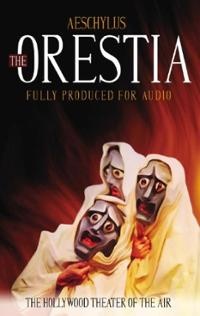
In Greek mythology, Orestes was the son of Clytemnestra and Agamemnon. He is the subject of several Ancient Greek plays and of various myths connected with his madness and purification, which retain obscure threads of much older ones.
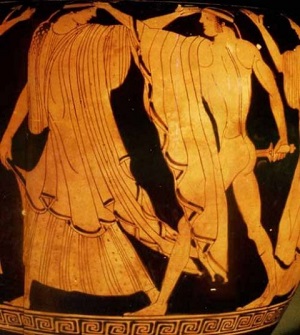
Clytemnestra was the wife of Agamemnon and queen of Mycenae in ancient Greek legend. In the Oresteia by Aeschylus, she murdered Agamemnon – said by Euripides to be her second husband – and the Trojan princess Cassandra, whom he had taken as war prize following the sack of Troy; however, in Homer's Odyssey, her role in Agamemnon's death is unclear and her character is significantly more subdued.
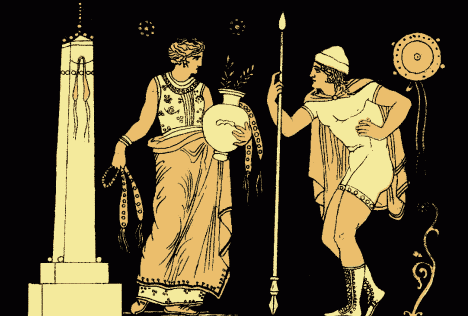
In Neo-Freudian psychology, the Electra complex, as proposed by Carl Gustav Jung, is a girl's psychosexual competition with her mother for possession of her father. In the course of her psychosexual development, the complex is the girl's phallic stage; formation of a discrete sexual identity, a boy's analogous experience is the Oedipus complex.
Ancience greece-a moment of excellence(decamentary)
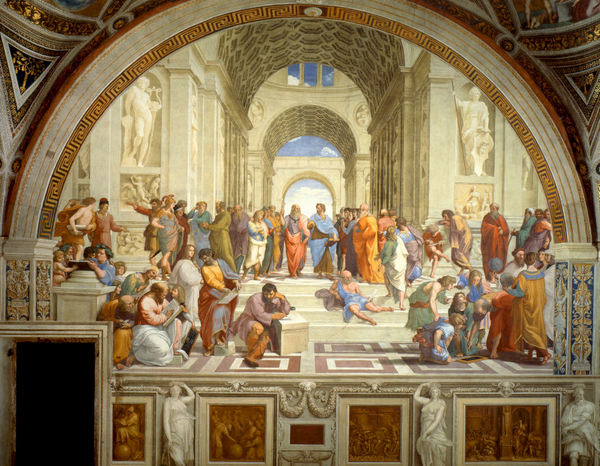
The School of Athens is one of the most famous frescoes by the Italian Renaissance artist Raphael. It was painted between 1509 and 1511 as a part of Raphael's commission to decorate the rooms now known as the Stanze di Raffaello, in the Apostolic Palace in the Vatican. The Stanza della Segnatura was the first of the rooms to be decorated, and The School of Athens, representing Philosophy, was probably the second painting to be finished there, after La Disputa (Theology) on the opposite wall, and the Parnassus (Literature). The picture has long been seen as "Raphael's masterpiece and the perfect embodiment of the classical spirit of the Renaissance".
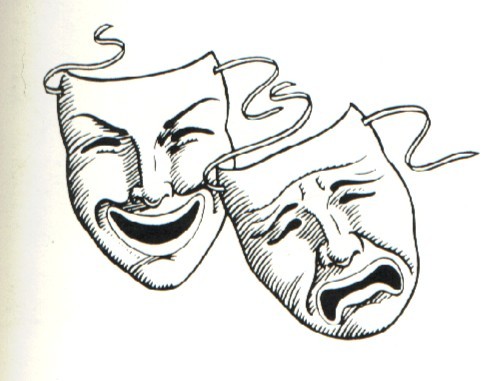
Tragedy is a form of drama based on human suffering that invokes an accompanying catharsis or pleasure in audiences. While many cultures have developed forms that provoke this paradoxical response, the term tragedy often refers to a specific tradition of drama that has played a unique and important role historically in the self-definition of Western civilisation.
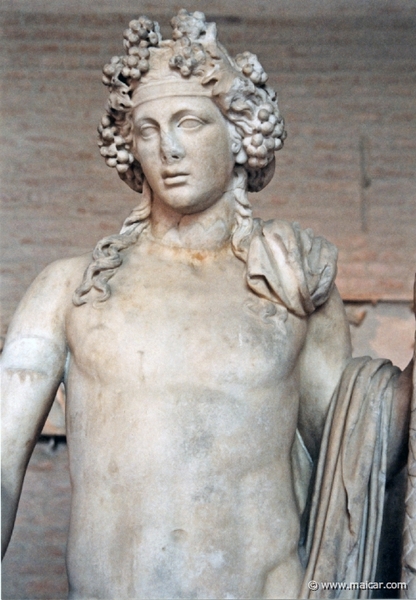
Dionysus is the god of the grape harvest, winemaking and wine, of ritual madness, fertility, theatre and religious ecstasy in ancient Greek religion and myth. Wine played an important role in Greek culture, and the cult of Dionysus was the main religious focus for its unrestrained consumption. He may have been worshipped as early as c. 1500–1100 BC by Mycenean Greeks; traces of Dionysian-type cult have also been found in ancient Minoan Crete.
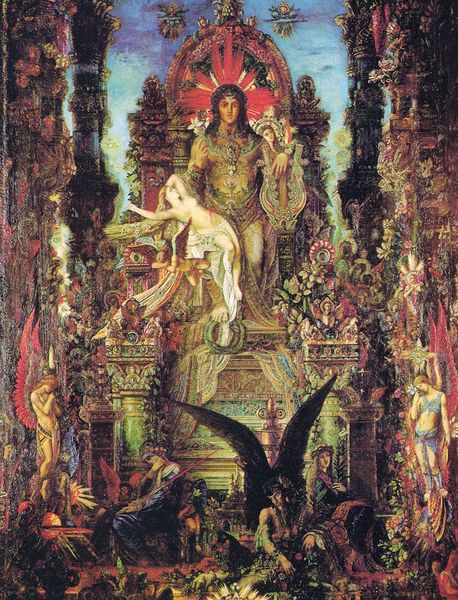
Semele in Greek mythology, daughter of the Boeotian hero Cadmus and Harmonia, was the mortal mother of Dionysus by Zeus in one of his many origin myths.
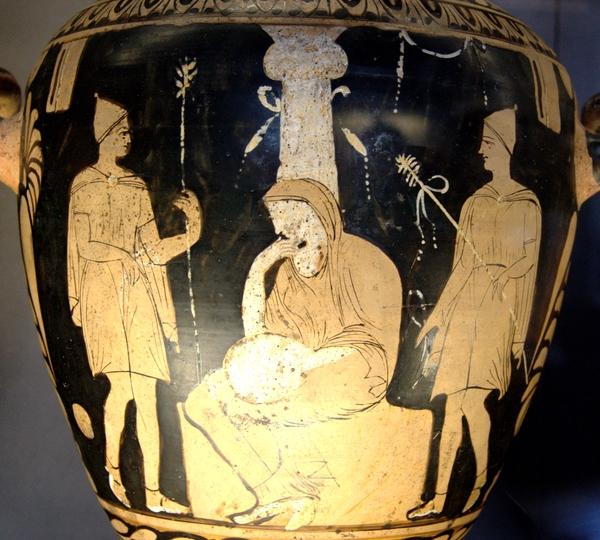
The Oresteia is a trilogy of Greek tragedies written by Aeschylus concerning the murder of Agamemnon by Clytaemnestra, the murder of Clytaemnestra by Orestes, the trial of Orestes, and end of the curse on the House of Atreus. This trilogy also shows how the Greek gods interacted with the characters and influenced their decisions pertaining to events and disputes. The only extant example of an ancient Greek theater trilogy, the Oresteia won first prize at the Dionysia festival in 458 BC. Many consider the Oresteia to be Aeschylus' finest work. The principal themes of the trilogy include the contrast between revenge and justice, as well as the transition from personal vendetta to organized litigation.
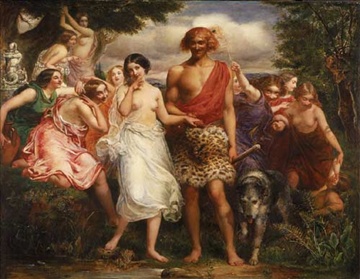
In Greek mythology, Iphigenia was a daughter of King Agamemnon and Queen Clytemnestra, and thus a princess of Argos. Agamemnon offends the goddess Artemis, who retaliates by commanding him to kill Iphigenia as a sacrifice so his ships can sail to Troy. In some versions, Iphigenia is sacrificed at Aulis, but in others, Artemis rescues her.In the version where she is saved, she goes to the Taurians and meets her brother Orestes.
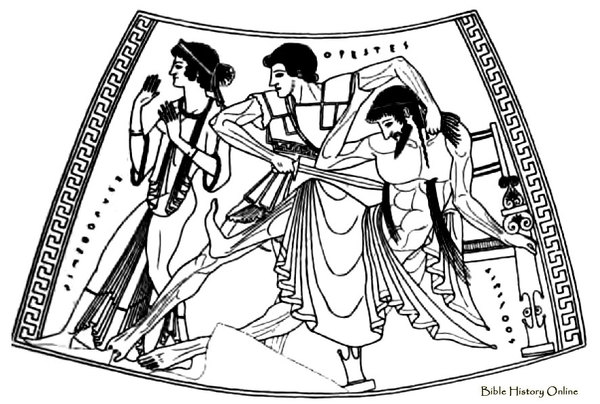
Aegisthusis a figure in Greek mythology. He was the son of Thyestes and his daughter, Pelopia. The product of an incestuous union motivated by his father's rivalry with the house of Atreus for the throne of Mycenae, Aegisthus murdered Atreus to restore his father to power. Later, he lost the throne to Atreus's son Agamemnon.
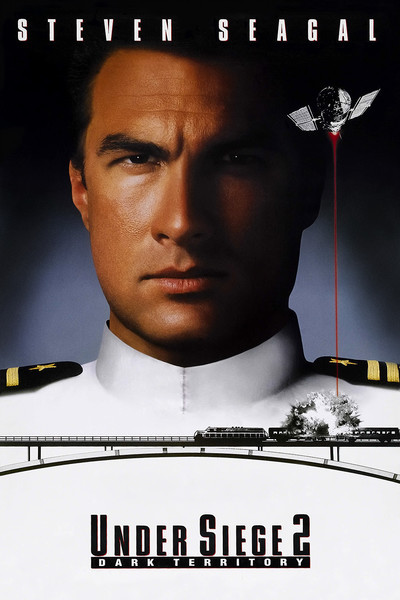
Under Siege is a 1992 American action-thriller film directed by Andrew Davis and written by J.F. Lawton. It stars Steven Seagal as an ex-Navy SEAL who must stop a group of mercenaries, led by Tommy Lee Jones and Gary Busey, on the U.S. Navy USS Missouri battleship. It is Seagal's most successful film in critical and financial terms, including two Academy Award nominations for sound production. The musical score was composed by Gary Chang. It was followed by a 1995 sequel, Under Siege 2: Dark Territory.
限會員,要發表迴響,請先登入


