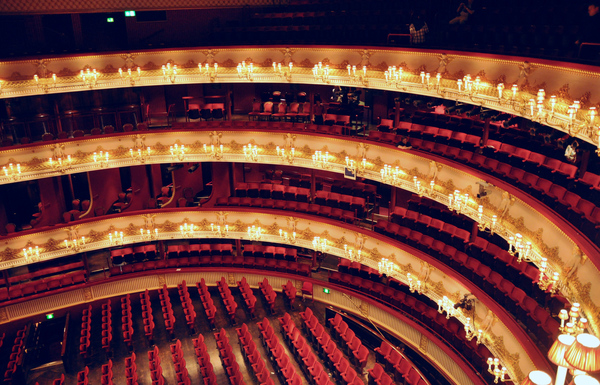
An auditorium is a room built to enable an audience to hear and watch performances at venues such as theatres. For movie theatres, the number of auditoriums is expressed as the number of screens. Auditoria can be found in entertainment venues, community halls, and theaters, and may be used for rehearsal, presentation, performing arts productions, or as a learning space.
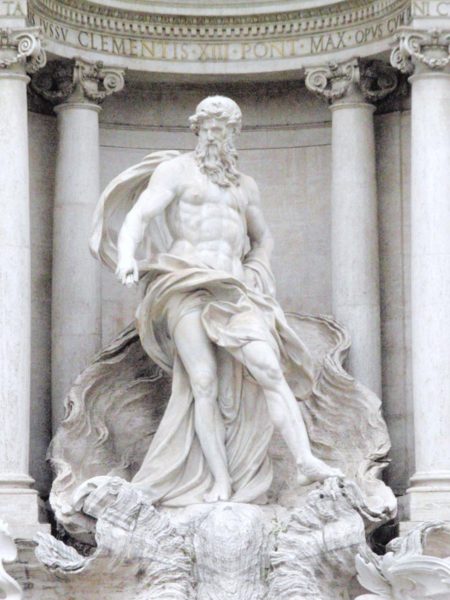
Uranus was the primal Greek god personifying the sky. His name in Roman mythology was Caelus. In Ancient Greek literature, Uranus or Father Sky was the son and husband of Gaia, Mother Earth. According to Hesiod's Theogony, Uranus was conceived by Gaia alone, but other sources cite Aether as his father.Uranus and Gaia were the parents of the first generation of Titans, and the ancestors of most of the Greek gods, but no cult addressed directly to Uranus survived into Classical times, and Uranus does not appear among the usual themes of Greek painted pottery. Elemental Earth, Sky and Styx might be joined, however, in a solemn invocation in Homeric epic.
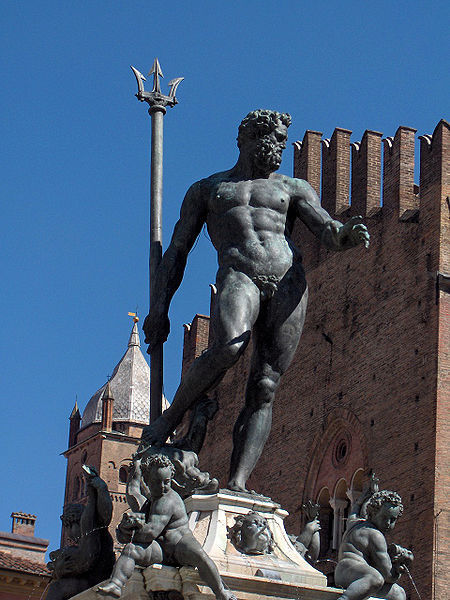
Neptune was the god of freshwater and the sea in Roman religion. He is the counterpart of the Greek god Poseidon. In the Greek-influenced tradition, Neptune was the brother of Jupiter and Pluto; the brothers presided over the realms of Heaven, the earthly world, and the Underworld. Salacia was his consort.
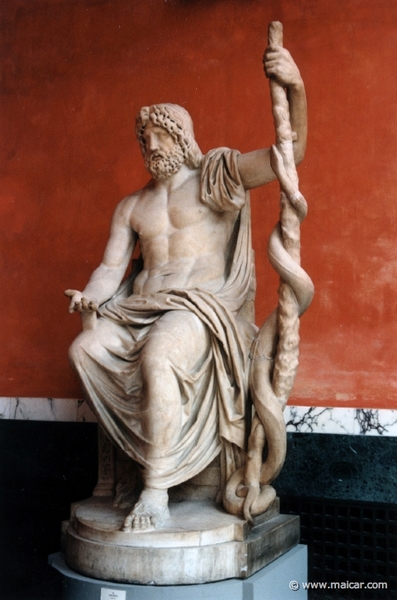
Asclepius was a hero and god of medicine in ancient Greek religion and mythology. Asclepius represents the healing aspect of the medical arts; He was associated with the Roman/Etruscan god Vediovis and the Egyptian Imhotep.[1] He was one of Apollo's sons, sharing with Apollo the epithet Paean ("the Healer"). The rod of Asclepius, a snake-entwined staff, remains a symbol of medicine today. Those physicians and attendants who served this god were known as the Therapeutae of Asclepius.
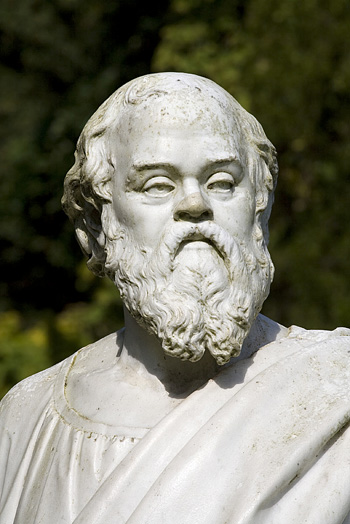
The Apology of Socrates, by Plato, is the Socratic dialogue that presents the speech of legal self-defence, which Socrates presented at his trial for impiety and corruption, in 399 BC.
Specifically the Apology of Socrates is a defence against the charges of “corrupting the young” and “not believing in the gods in whom the city believes, but in other daimonia that are novel” to Athens (24b).
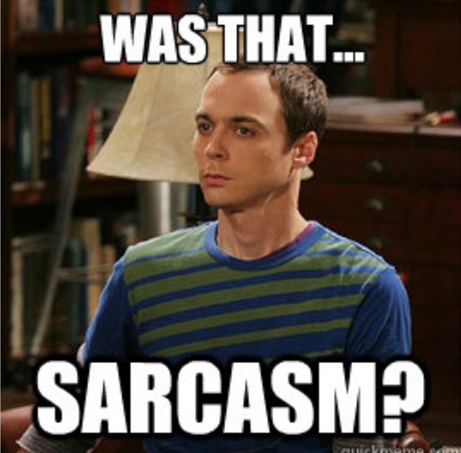
Sarcasm is "a sharp, bitter, or cutting expression or remark; a bitter gibe or taunt." Sarcasm may employ ambivalence, although sarcasm is not necessarily ironic."The distinctive quality of sarcasm is present in the spoken word and manifested chiefly by vocal inflections". The sarcastic content of a statement will be dependent upon the context in which it appears.
限會員,要發表迴響,請先登入


