Allusion is a figure of speech, in which one refers covertly or indirectly to an object or circumstance from an external context. where the connection is directly and explicitly stated (as opposed to indirectly implied) by the author, an allusion is instead usually termed a reference.In the arts, a literary allusion puts the alluded text in a new context under which it assumes new meanings and denotations. It is not possible to predetermine the nature of all the new meanings and inter-textual patterns that an allusion will generate.
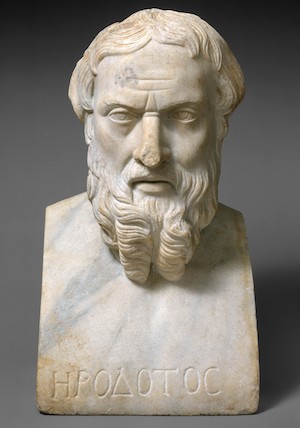
Herodotus was a Greek historian who was born in Halicarnassus in the Persian Empire and lived in the fifth century BC , a contemporary of Socrates. He is widely referred to as "The Father of History" (first conferred by Cicero); he was the first historian known to have broken from Homeric tradition to treat historical subjects as a method of investigation—specifically, by collecting his materials systematically and critically, and then arranging them into a historiographic narrative.
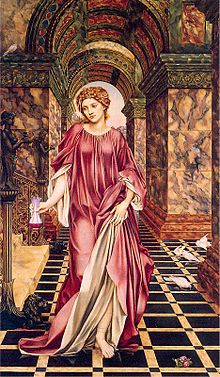
Medea is an ancient Greek tragedy written by Euripides, based upon the myth of Jason and Medea and first produced in 431 BC. The plot centers on the actions of Medea, a former princess of the "barbarian" kingdom of Colchis, and the wife of Jason; she finds her position in the Greek world threatened as Jason leaves her for a Greek princess of Corinth. Medea takes vengeance on Jason by killing Jason's new wife as well as her own children with him, after which she escapes to Athens to start a new life.
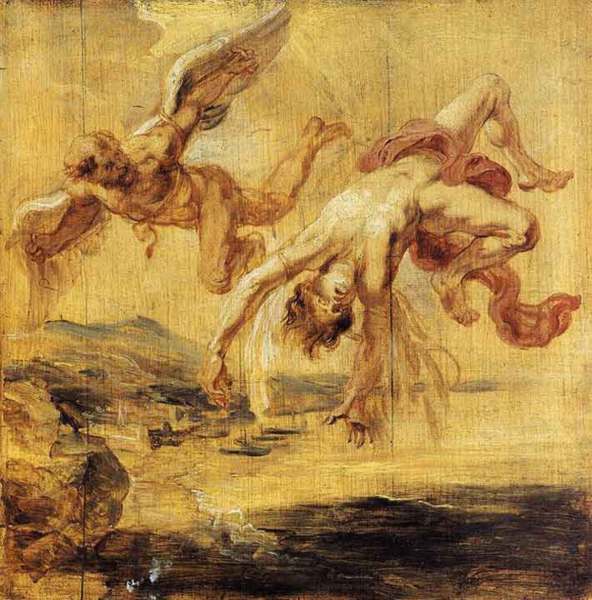
In Greek mythology, Icarus is the son of the master craftsman Daedalus, the creator of the Labyrinth. Often depicted in art, Icarus and his father attempt to escape from Crete by means of wings that his father constructed from feathers and wax. Icarus' father warns him first of complacency and then of hubris, asking that he fly neither too low nor too high, so the sea's dampness would not clog his wings or the sun's heat melt them. Icarus ignored his father's instructions not to fly too close to the sun, when the wax in his wings melted and he fell into the sea.
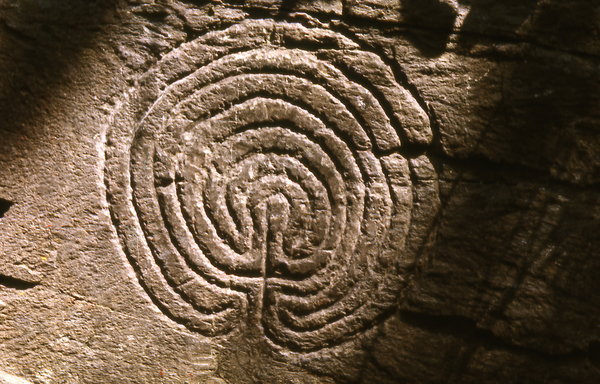
In Greek mythology, the labyrinth was an elaborate structure designed and built by the legendary artificer Daedalus for King Minos of Crete at Knossos. Its function was to hold the Minotaur eventually killed by the hero Theseus. Daedalus had so cunningly made the Labyrinth that he could barely escape it after he built it.
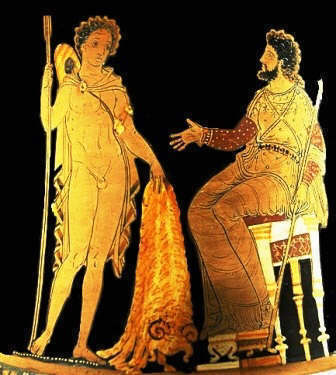
In Greek mythology, the Golden Fleece is the fleece of the gold-hair winged ram, which was held in Colchis. The fleece is a symbol of authority and kingship. It figures in the tale of the hero Jason and his band of Argonauts, who set out on a quest for the fleece by order of King Pelias, in order to place Jason rightfully on the throne of Iolcus in Thessaly. Through the help of Medea, they acquire the Golden Fleece. The story is of great antiquity and was current in the time of Homer (eighth century BC). It survives in various forms, among which the details vary.
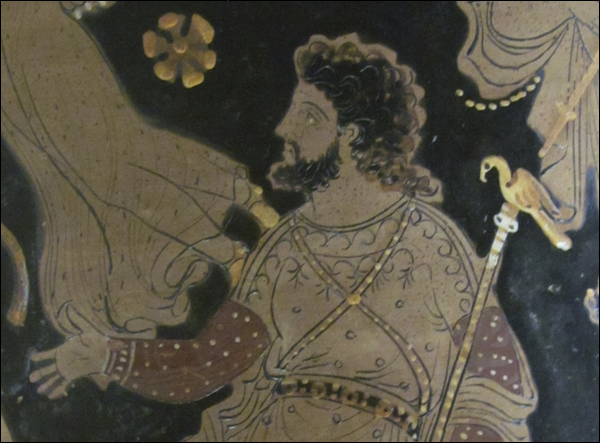
Pelias was king of Iolcus in Greek mythology, the son of Tyro and Poseidon. His wife is recorded as either Anaxibia, daughter of Bias, or Phylomache, daughter of Amphion. He was the father of Acastus, Pisidice, Alcestis, Pelopia, Hippothoe, Amphinome, Evadne, Asteropeia, and Antinoe.

"Mary Had a Little Lamb" is an English language nursery rhyme of nineteenth-century American origin. It has a Roud Folk Song Index number of 7622.
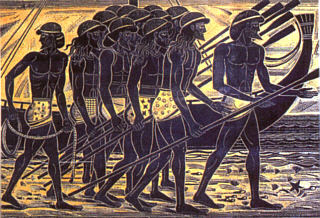
The Argonauts were a band of heroes in Greek mythology, who in the years before the Trojan War, around 1300 BC, accompanied Jason to Colchis in his quest to find the Golden Fleece. Their name comes from their ship, Argo, named after its builder, Argus. "Argonauts" literally means "Argo sailors".
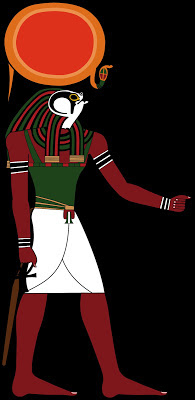
A solar deity is a sky deity who represents the Sun, or an aspect of it, usually by its perceived power and strength. Solar deities and sun worship can be found throughout most of recorded history in various forms. The Sun is sometimes referred to by its Latin name Sol or by its Greek name Helios.

Patronage is the support, encouragement, privilege, or financial aid that an organization or individual bestows to another. In the history of art, arts patronage refers to the support that kings, popes, and the wealthy have provided to artists such as musicians, painters, and sculptors. It can also refer to the right of bestowing offices or church benefices, the business given to a store by a regular customer, and the guardianship of saints.

Hubris describes a personality quality of extreme or foolish pride or dangerous over-confidence.In its ancient Greek context, it typically describes behavior that defies the norms of behavior or challenges the gods, and which in turn brings about the downfall, or nemesis, of the perpetrator of hubris.
限會員,要發表迴響,請先登入


