Introduction – Company Background
GuangXin Industrial Co., Ltd. is a specialized manufacturer dedicated to the development and production of high-quality insoles.
With a strong foundation in material science and footwear ergonomics, we serve as a trusted partner for global brands seeking reliable insole solutions that combine comfort, functionality, and design.
With years of experience in insole production and OEM/ODM services, GuangXin has successfully supported a wide range of clients across various industries—including sportswear, health & wellness, orthopedic care, and daily footwear.
From initial prototyping to mass production, we provide comprehensive support tailored to each client’s market and application needs.
At GuangXin, we are committed to quality, innovation, and sustainable development. Every insole we produce reflects our dedication to precision craftsmanship, forward-thinking design, and ESG-driven practices.
By integrating eco-friendly materials, clean production processes, and responsible sourcing, we help our partners meet both market demand and environmental goals.

Core Strengths in Insole Manufacturing
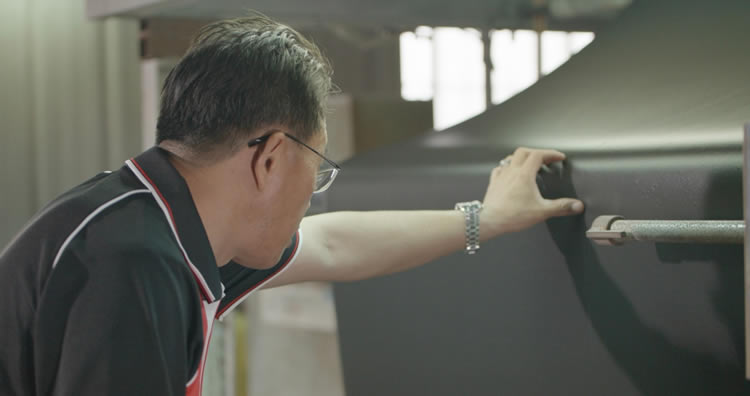
At GuangXin Industrial, our core strength lies in our deep expertise and versatility in insole and pillow manufacturing. We specialize in working with a wide range of materials, including PU (polyurethane), natural latex, and advanced graphene composites, to develop insoles and pillows that meet diverse performance, comfort, and health-support needs.
Whether it's cushioning, support, breathability, or antibacterial function, we tailor material selection to the exact requirements of each project-whether for foot wellness or ergonomic sleep products.
We provide end-to-end manufacturing capabilities under one roof—covering every stage from material sourcing and foaming, to precision molding, lamination, cutting, sewing, and strict quality control. This full-process control not only ensures product consistency and durability, but also allows for faster lead times and better customization flexibility.
With our flexible production capacity, we accommodate both small batch custom orders and high-volume mass production with equal efficiency. Whether you're a startup launching your first insole or pillow line, or a global brand scaling up to meet market demand, GuangXin is equipped to deliver reliable OEM/ODM solutions that grow with your business.
Customization & OEM/ODM Flexibility
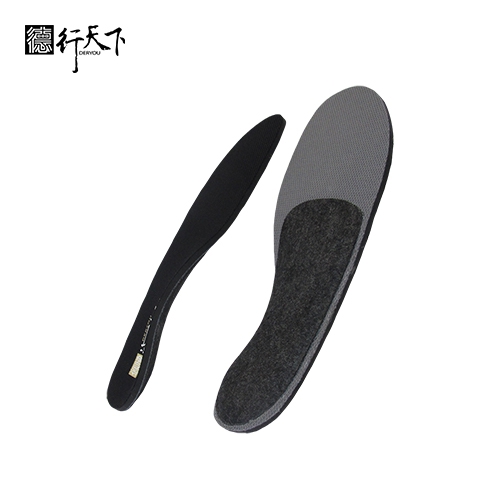
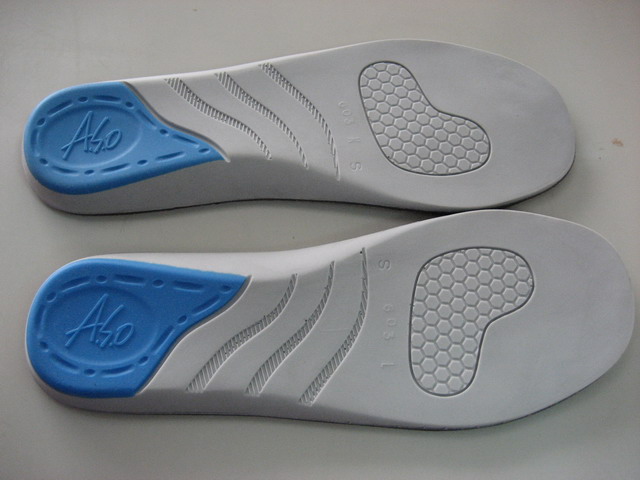
GuangXin offers exceptional flexibility in customization and OEM/ODM services, empowering our partners to create insole products that truly align with their brand identity and target market. We develop insoles tailored to specific foot shapes, end-user needs, and regional market preferences, ensuring optimal fit and functionality.
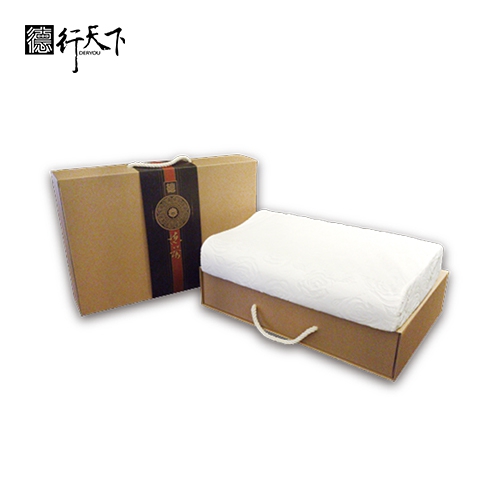
Our team supports comprehensive branding solutions, including logo printing, custom packaging, and product integration support for marketing campaigns. Whether you're launching a new product line or upgrading an existing one, we help your vision come to life with attention to detail and consistent brand presentation.
With fast prototyping services and efficient lead times, GuangXin helps reduce your time-to-market and respond quickly to evolving trends or seasonal demands. From concept to final production, we offer agile support that keeps you ahead of the competition.
Quality Assurance & Certifications
Quality is at the heart of everything we do. GuangXin implements a rigorous quality control system at every stage of production—ensuring that each insole meets the highest standards of consistency, comfort, and durability.
We provide a variety of in-house and third-party testing options, including antibacterial performance, odor control, durability testing, and eco-safety verification, to meet the specific needs of our clients and markets.
Our products are fully compliant with international safety and environmental standards, such as REACH, RoHS, and other applicable export regulations. This ensures seamless entry into global markets while supporting your ESG and product safety commitments.
ESG-Oriented Sustainable Production
At GuangXin Industrial, we are committed to integrating ESG (Environmental, Social, and Governance) values into every step of our manufacturing process. We actively pursue eco-conscious practices by utilizing eco-friendly materials and adopting low-carbon production methods to reduce environmental impact.
To support circular economy goals, we offer recycled and upcycled material options, including innovative applications such as recycled glass and repurposed LCD panel glass. These materials are processed using advanced techniques to retain performance while reducing waste—contributing to a more sustainable supply chain.
We also work closely with our partners to support their ESG compliance and sustainability reporting needs, providing documentation, traceability, and material data upon request. Whether you're aiming to meet corporate sustainability targets or align with global green regulations, GuangXin is your trusted manufacturing ally in building a better, greener future.
Let’s Build Your Next Insole Success Together
Looking for a reliable insole manufacturing partner that understands customization, quality, and flexibility? GuangXin Industrial Co., Ltd. specializes in high-performance insole production, offering tailored solutions for brands across the globe. Whether you're launching a new insole collection or expanding your existing product line, we provide OEM/ODM services built around your unique design and performance goals.
From small-batch custom orders to full-scale mass production, our flexible insole manufacturing capabilities adapt to your business needs. With expertise in PU, latex, and graphene insole materials, we turn ideas into functional, comfortable, and market-ready insoles that deliver value.
Contact us today to discuss your next insole project. Let GuangXin help you create custom insoles that stand out, perform better, and reflect your brand’s commitment to comfort, quality, and sustainability.
🔗 Learn more or get in touch:
🌐 Website: https://www.deryou-tw.com/
📧 Email: shela.a9119@msa.hinet.net
📘 Facebook: facebook.com/deryou.tw
📷 Instagram: instagram.com/deryou.tw
Indonesia eco-friendly graphene material processing
Are you looking for a trusted and experienced manufacturing partner that can bring your comfort-focused product ideas to life? GuangXin Industrial Co., Ltd. is your ideal OEM/ODM supplier, specializing in insole production, pillow manufacturing, and advanced graphene product design.
With decades of experience in insole OEM/ODM, we provide full-service manufacturing—from PU and latex to cutting-edge graphene-infused insoles—customized to meet your performance, support, and breathability requirements. Our production process is vertically integrated, covering everything from material sourcing and foaming to molding, cutting, and strict quality control.China OEM factory for footwear and bedding
Beyond insoles, GuangXin also offers pillow OEM/ODM services with a focus on ergonomic comfort and functional innovation. Whether you need memory foam, latex, or smart material integration for neck and sleep support, we deliver tailor-made solutions that reflect your brand’s values.
We are especially proud to lead the way in ESG-driven insole development. Through the use of recycled materials—such as repurposed LCD glass—and low-carbon production processes, we help our partners meet sustainability goals without compromising product quality. Our ESG insole solutions are designed not only for comfort but also for compliance with global environmental standards.Orthopedic pillow OEM solutions Indonesia
At GuangXin, we don’t just manufacture products—we create long-term value for your brand. Whether you're developing your first product line or scaling up globally, our flexible production capabilities and collaborative approach will help you go further, faster.Indonesia insole OEM manufacturer
📩 Contact us today to learn how our insole OEM, pillow ODM, and graphene product design services can elevate your product offering—while aligning with the sustainability expectations of modern consumers.Orthopedic pillow OEM solutions Thailand
Researchers have discovered that specific commensal bacteria in the human intestine produce compounds that inhibit SARS-CoV-2. Researchers from Yonsei University in South Korea have found that certain commensal bacteria that reside in the human intestine produce compounds that inhibit SARS-CoV-2. The research will be presented on June 20 at World Microbe Forum, an online meeting of the American Society for Microbiology (ASM), the Federation of European Microbiological Societies (FEMS), and several other societies that will take place online June 20-24. Previous clinical findings have shown that some patients with moderate to severe COVID-19 have gastro-intestinal symptoms, while others showed signs of infection solely in the lungs. “We wondered whether gut resident bacteria could protect the intestine from invasion of the virus,” said Mohammed Ali, a Ph.D. student in Medicine at Yonsei University, Seoul, South Korea. To investigate this hypothesis, the researchers screened dominant bacteria inhabiting the gut for activity against SARS-CoV-2. Their search revealed that Bifidobacteria, which have previously been shown to suppress other bacteria such as H. pylori and have proven active against irritable bowel syndrome, had such activity, said Ali. The investigators also used machine learning to search for potential illness-fighting compounds in databases containing microbially produced molecules, discovering some that might also prove useful against SARS-CoV-2. “To train our model we leveraged previous coronavirus datasets in which several compounds were tested against targets from coronaviruses,” said Mr. Ali. “This approach seems to be significant as those targets share features in common with SARS-CoV-2.” Ali emphasized the ecological nature of his approach to this work, observing that many existing antibiotics and cancer therapies are compounds that bacteria use to compete with each other within the gastrointestinal tract, and that these were initially purified from microbial secretions. “Finding microbes that secrete anti-coronavirus molecules will be a promising method to develop natural or engineered probiotics to expand our therapeutics prevention techniques, to provide a more sustainable way to combat the viral infection,” said Ali. Junebeom Kim, a master’s candidate, also contributed to this research. Ali and Kim were supervised by Sang Sun Yoon, Professor, Department of Microbiology and Immunology, Brain Korea 21 Project for Medical Sciences, Yonsei University College of Medicine, Seoul, South Korea. World Microbe Forum is a collaboration between the American Society for Microbiology (ASM), the Federation of European Microbiological Societies (FEMS), and several other societies, which is breaking barriers to share science and address the most pressing challenges facing humankind today.
A new study proposes that statistical noise, not biological differences, may explain why evolution seems faster over shorter time frames, challenging long-standing assumptions about evolutionary rates. Researchers in biological sciences suggest that statistical “noise” causes the apparent acceleration of evolutionary rates over short time scales. For decades, researchers have noticed that the pace of evolution tends to speed up over shorter time frames, such as five million years compared to fifty million years. This general trend indicates that “younger” groups of organisms, in evolutionary terms, tend to exhibit higher rates of speciation, extinction, and body size evolution, among other differences from older groups. Evolutionary processes appear to operate at different time scales, perhaps necessitating the need for a new theory linking microevolution and macroevolution. The larger question has tantalized scientists: why? There are plausible explanations. A new species may inhabit a new island chain, allowing for more variation as it spreads into new niches. An asteroid may hit the earth, increasing extinction rates. Perhaps species evolve to an “optimal” trait value and then plateau. A New Explanation: Statistical Noise A paper published in PLOS Computational Biology now proposes an entirely new explanation for understanding this evolutionary pattern: statistical “noise.” The paper was written by Brian C. O’Meara, a professor in the Department of Ecology and Evolutionary Biology at the University of Tennessee, and Jeremy M. Beaulieu, an associate professor of in the Department of Biological Sciences at the University of Arkansas. Jeremy Beaulieu. Credit: University Relations The authors note that “by employing a novel statistical approach, we found that this time-independent noise, often overlooked as inconsequential, creates a misleading hyperbolic pattern, making it seem like evolutionary rates increase over shorter time frames when, in fact, they do not. In other words, our findings suggest that smaller, younger clades [groups with common ancestors] appear to evolve faster not due to intrinsic properties but because of statistical noise.” Challenging a Long-Held Assumption The study blends math, statistics, and biology to show that this long-held hyperbolic pattern is an anomaly because it doesn’t account for the fact that all species on earth are defined as much by their unique traits as the variation that exists in those traits. It’s a common principle in science that the simplest possible explanation to fit the data is usually the right one. Evolution taking place on completely different time scales is far less likely than noise in the numbers. Ultimately, the study underscores the critical importance of accounting for inherent biases and errors in interpreting biodiversity patterns across both shallow and deep time scales. In an unpublished summary of their work, the authors note that “[o]ur results might be seen as upsetting: a pattern that could have launched a thousand papers with really interesting biological hypotheses can be explained as an artifact. “However, this is actually progress – we have explained a common pattern we see in the world. Biology is rich in mysteries: actually answering one lets us move on to the next. There are still many questions about biological rates, but the current paradigm of plotting rates against time should probably end.” Reference: “Noise leads to the perceived increase in evolutionary rates over short time scales” by Brian C. O’Meara and Jeremy M. Beaulieu, 13 September 2024, PLOS Computational Biology. DOI: 10.1371/journal.pcbi.1012458
The study’s lead author, Assistant Project Scientist Swetha Godavarthi, and colleagues investigated neurotransmitter expression in the medial prefrontal cortex, a brain area often affected in individuals diagnosed with ASD. Credit: Erik Jepsen/UC San Diego Communications Researchers found that altering neurotransmitters in early development could prevent autism spectrum disorders in mice, indicating potential early interventions for ASD. Autism spectrum disorders (ASD) are characterized by mild to severe impairment of social, behavioral, and communication abilities. These disorders can have a debilitating impact on academic performance, employment, and other life areas. Recently, there has been a notable increase in the number of ASD diagnoses. However, researchers lack knowledge about how these disorders emerge at early stages of development. Groundbreaking Research on ASD Neurobiologists from the University of California San Diego have found evidence of altered development of the nervous system in mouse models of autism spectrum disorders. In their study, recently published in the Proceedings of the National Academy of Sciences, they linked environmentally induced forms of ASD to changes in neurotransmitters, the chemical messengers that allow neurons to communicate with each other. They also discovered that manipulating these neurotransmitters at early stages of development can prevent the appearance of autistic-like behaviors. Neurotransmitter switching: Mouse models highlight excitatory neurons (red cells) that express the neurotransmitter glutamate while inhibitory neurons (green cells) express the neurotransmitter GABA. Yellow arrowheads indicate inhibitory neurons that have switched their neurotransmitter from GABA to glutamate. Credit: Spitzer Lab, UC San Diego “In seeking the root causes of autism spectrum disorder behaviors in the brain, we found an early change in neurotransmitters that is a good candidate to be the primary cause,” said School of Biological Sciences Professor Nicholas Spitzer of the Department of Neurobiology and Kavli Institute for Brain and Mind. “Getting a handle on the early events that trigger ASD may allow development of new forms of intervention to prevent the appearance of these behaviors.” Neurotransmitter Dynamics in ASD Although ASD diagnoses have been ramping up in recent years, how these disorders manifest at the critical cellular and molecular levels has not been well understood. The study’s lead author, Assistant Project Scientist Swetha Godavarthi, and colleagues investigated neurotransmitter expression in the medial prefrontal cortex, a brain area often affected in individuals diagnosed with ASD. They tested the hypothesis that changes in the type of neurotransmitter expressed by neurons in the prefrontal cortex could be responsible for a chemical imbalance that causes ASD-like behaviors. Nick Spitzer Lab, UC San Diego. Credit: Erik Jepsen/UC San Diego Communications Previous studies had shown an increase in the incidence of ASD in offspring when pregnant women had a heightened immune response or were exposed to certain drugs during the first trimester (environmental forms of ASD). The researchers reproduced ASD in mice by administering mice in utero with these environmental agents. These agents caused the brief loss of the “GABA” neurotransmitter, which is inhibitory, and the gain of the “glutamate” neurotransmitter, which is excitatory, in neonatal mice. Although this GABA-to-glutamate transmitter switch reversed spontaneously after a few weeks, adult mice exhibited altered behaviors of repetitive grooming and diminished social interaction. Overriding this brief early transmitter switch in neonatal mice prevented the development of these autistic-like behaviors in adults. Implications of Early Neurotransmitter Changes “Driving expression of GABA in the neurons that have replaced GABA with glutamate prevents the appearance of stereotyped repetitive behavior and reduced social interaction,” said Spitzer. “These findings demonstrate that changing electrical activity and inappropriately exciting neurons at early stages of development can alter the assembly of the nervous system.” Alterations in neurotransmitter expression at an early stage of development carry implications for other behavioral issues at later stages in life, since the rest of the nervous system is then built upon a platform of defective wiring, similar to a house constructed on an unstable foundation. “Neurotransmitter switching can change the assembly of the nervous system and have a profound impact downstream,” said Spitzer. The researchers say the new results are consistent with other evidence that altering signaling in the nervous system during the early stages of development can later carry negative consequences as the brain matures. Reference: “Embryonic exposure to environmental factors drives transmitter switching in the neonatal mouse cortex causing autistic-like adult behavior” by Swetha K. Godavarthi, Hui-quan Li, Marta Pratelli and Nicholas C. Spitzer, 23 August 2024, Proceedings of the National Academy of Sciences. DOI: 10.1073/pnas.2406928121
DVDV1551RTWW78V
Memory foam pillow OEM factory Taiwan 》simplifying complex ideas into market-ready productsCustomized sports insole ODM Vietnam 》the smart choice for brands seeking quality and customizationEco-friendly pillow OEM manufacturer Vietnam 》committed to ESG, comfort, and your brand is success
下一則: Breathable insole ODM development Indonesia 》where
限會員,要發表迴響,請先登入


