Fascination Tango/ El Choclo
(England)
Song Title: El Choclo
Lyrics: Instrumental track without lyrics
Composer: Ángel Villoldo
Dance Name: Fascination Tango
Choreographer: Fred Holmes, early British Old Time Sequence Dance
Chinese Dance Name: 也爵克
Formation: Partner dance, closed position, single circle, man facing Line of Dance (LOD)
The original choreography of this routine belongs to the early British Old Time Sequence Dance genre, with its original title designated as Fascination Tango. Speaking of British Old Time Dance and Sequence Dance, I analyzed this entire framework several years ago in "Teacher Frog’s Den" when breaking down the dynamics of the Lola Tango, Midnight Tango, Tango Waltz, and Elena Waltz, noting that dancers could retroactively access those entries for review. However, pragmatically speaking, I hypothesize that out of ten dancers, nine will choose not to track down those past records, while the remaining one will fail to locate them. Therefore, to minimize transactional friction and optimize cognitive efficiency, I will re-verify and restate the analytical foundations directly within this section.
This dance belongs to British Old Tyme Dance. In Taiwan, the dance terminology of the National Academy for Educational Research translates it as "British Old Tyme Dance," while Teacher Chang Ching-san translated it as "British Early Social Dance." These two terms differ by a couple of words, one being "early" and the other being "old time." In the UK, both spellings are used by people, referring to the exact same dance genre. Speaking of this, fellow dancers might still be a bit confused about what Early Social Dance is, and what Sequence Dance and Classical Dance are. Teacher Frog once specially sent a letter to the Old Time Dance Society in the UK to ask this question for all of you, and the society replied as follows:
Old time is a type of sequence dance where we dance 16 or 32 bar sequences. All dances which use ballet foot positions such as Fascination Tango are old time. Blues swings Saunters are old time now known as classical by idta etc. Old time must not use modern ballroom figures.
Most dances before 1950 are old time. The Tango Waltz of ,1919 is Old Time or Old Time Sequence Dance instead of Modern Sequence Dance.
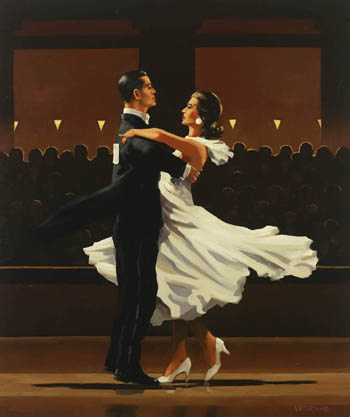
Image Source:https://www.wikidancesport.com/
Did you all comprehend the analytical framework presented above? It is highly probable that you have synthesized this core concept: early British social dance and Old Time dance are systematically categorized under the exact same dance classification by the International Dance Teachers Association (IDTA). Consequently, our next logical objective is to clarify the definitive formulation of "Sequence Dance" and rigorously map the precise relational correlation between Sequence Dance and Old Time Dance.
Let us first isolate and analyze the term "Sequence Dance." This specific dance nomenclature is notably absent from the official academic terminology database of the National Academy for Educational Research (NAER). Historically, pioneer folk dance instructors did not establish a standardized translation for it, while the International Ballroom Dance domain employs the translation "System Dance," which is functionally awkward and fails to convey the underlying semantic essence. To optimize linguistic alignment, I have personally translated this term as "Sequence Dance" (序列舞 in Chinese), derived from the concept of a fixed choreography "sequence" arranged in a deterministic structural "lineup." This nomenclature perfectly matches the original mathematical and systematic definition of "sequence" as an ordered progression or series. Moving forward, it is my sincere aspiration that fellow dancers within the folk dance community universally adopt this translation established here at the Teacher Frog’s Den.
The British Old Time Dance Society defines Sequence Dance as pre-arranged choreography with fixed music where everyone follows the set pattern. While this contrasts with freestyle dance, and folk dance shares the characteristic of following a set sequence and music, folk dances are generally much longer than 16 bars and carry traditional origins and meanings, whereas sequence dances primarily serve a social function.
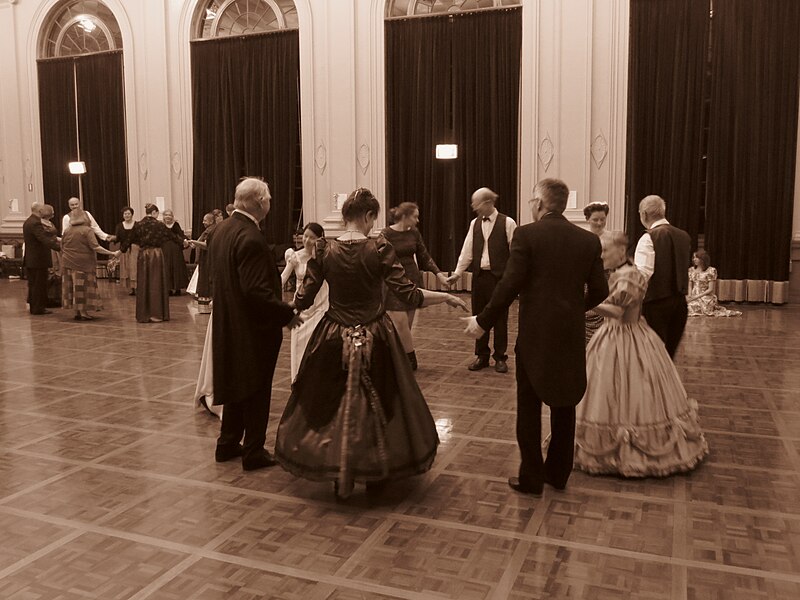
In the 19th century, most social dances were either couple dances like the Waltz, Polka, and Schottische, or group dances such as the Quadrille (a square dance for four couples, not American square dance) or Contra dance (dances with partners in long lines like St. John River or Voice of Virginia). The choreography of these dances was usually improvised and not fixed, which often caused a hectic scramble when changing movements.
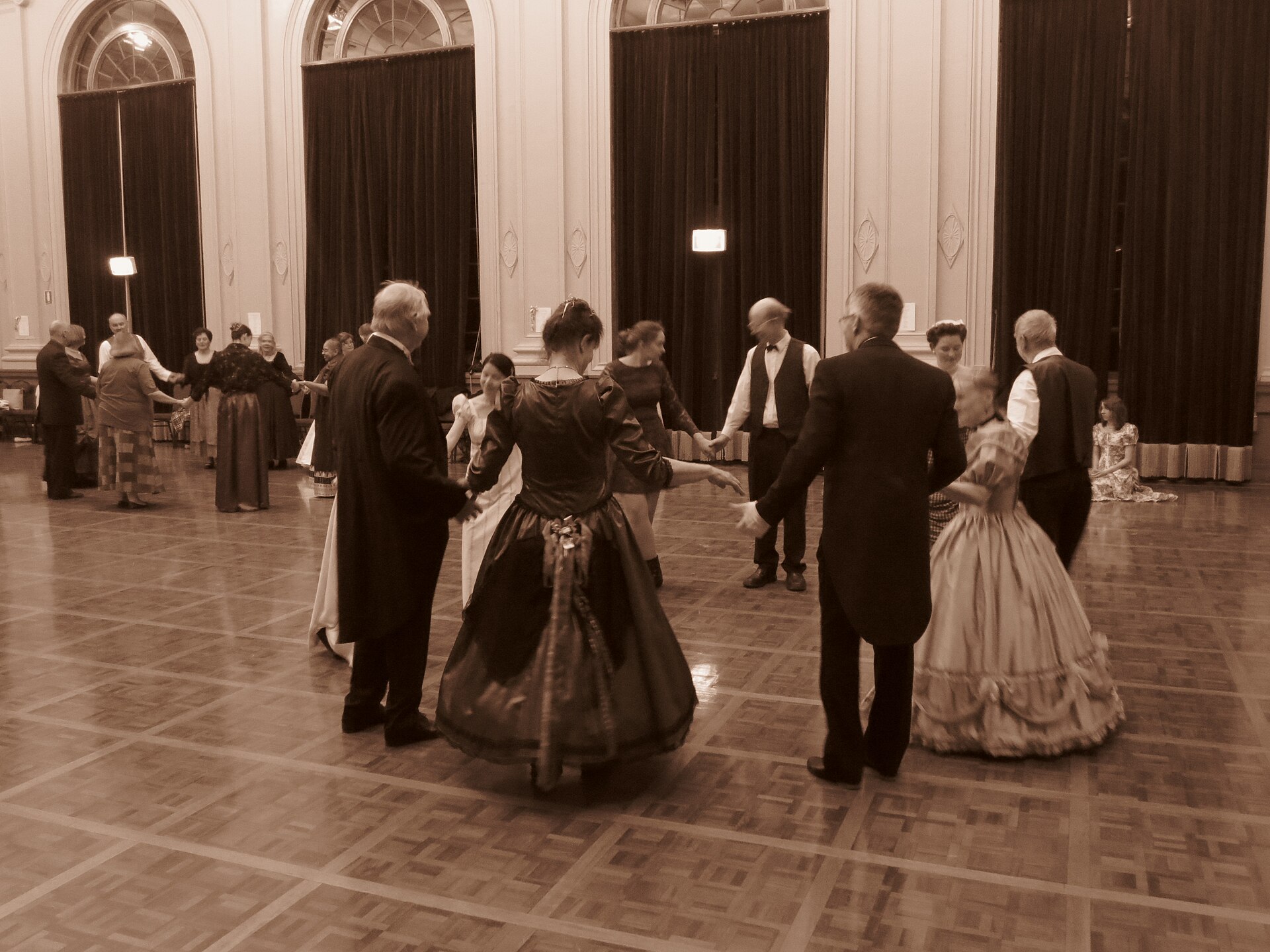
Image Source:http://www.wikidancesport.com/
By the late 19th century, dance academy instructors began arranging fixed sequences for steps, such as William Lamb’s 1896 St. George’s Waltz-pioneering London sequence dances-and Arthur Morris’s 1900 Veleta, memorized by hundreds of thousands of dancers. This trend expanded beyond waltzes to include pieces like S.W. Painter’s 1904 Eva Three-Step, followed later by the One-Step, Two-Step, Tango, and Saunter.
The St. George’s Waltz choreographed by Teacher William Lamb in 1896:
The Veleta choreographed by Teacher Arthur Morris in 1900:
The subsequent evolution took a rather unexpected turn. Dancers from different groups naturally developed distinct preferences, leading to a clear divide by 1910 AD between upper-class Londoners in core districts and working-class citizens in peripheral areas. One faction performed fixed sequence dances, while the other preferred unstructured freestyle dancing. I wonder if you, like me, guessed wrong; I assumed London’s elite would suit up in grand ballrooms to dance noble, elegant sequence dances, while working-class citizens would prefer freestyle. Surprisingly, it was the exact opposite: upper-class Londoners favored freestyle dance, whereas ordinary working-class citizens enjoyed elegant sequence dances. This surprised me. Because ordinary citizens were the majority, they organized regular weekly dance events drawing hundreds of participants, which expanded the popularity of sequence dancing.
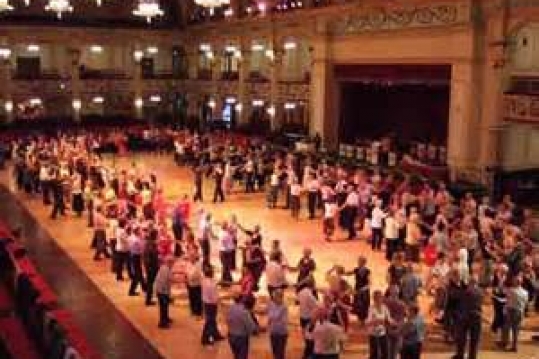
Image Source:http://www.msdworld.plus.com/
Next, Teacher Frog will organize and explain the vast amount of information, allowing fellow dancers to more clearly understand the evolution and transformation of modern social dance.
1.Brief History
In medieval Europe, due to the immense power of kings and nobles, aristocratic life was luxurious, extravagant, and colorful. Their dances became increasingly solemn and elegant, flourishing for a time as what is known as "Court Dance." Afterward, two different forms of dance split from court dance: one was ballet, a dance specifically for performance appreciation, and the other was a dance for everyone to dance together when gathering. These two dances developed and continued individually until today. Later, court dance evolved into general social dance. The reason and foundation why anyone can dance today’s social dance should be based on the popularization of dance and its evolution from complexity to simplicity.
Court dance in 18th-century France: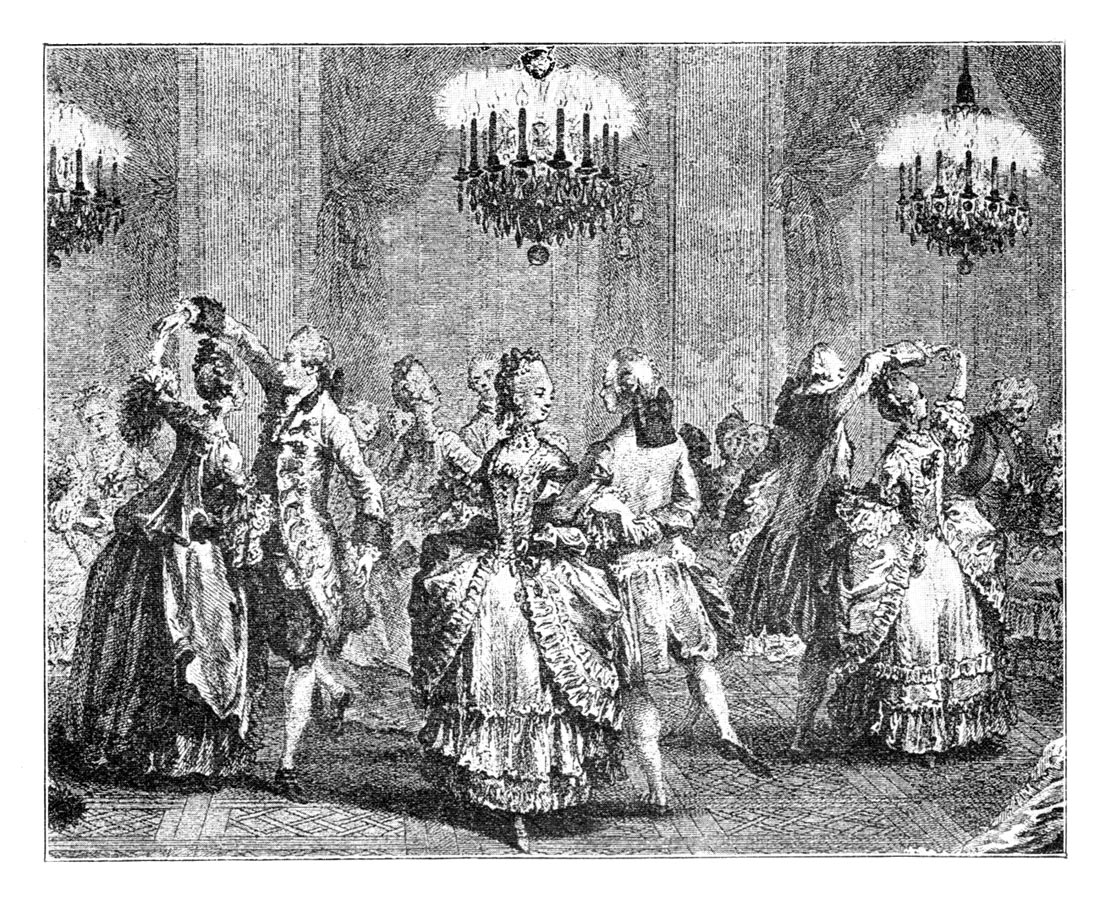
Image Source:https://commons.wikimedia.org/
2.Origin of Names and Evolution
2_1. Old Time Dancing, Classical Dance:
This refers to pre-WWI social dance before styles like the Tango, Waltz, and Foxtrot were fully standardized, featuring genres such as the Waltz, Gavotte, and Tango, which later transitioned into modern dance forms.
Classical Dance Gavotte: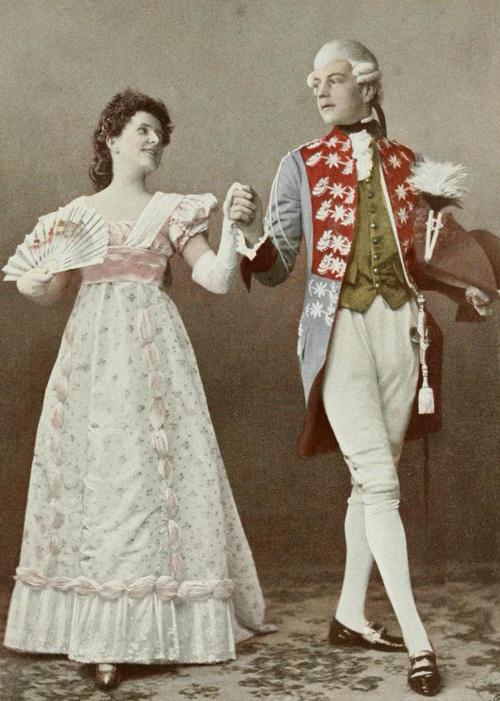
Image Source:https://artopedia.wordpress.com
2_2. Sequence Dancing: Characterized by regularized 16-bar musical phrases and corresponding step sequences, this tradition extends into modern sequence dancing.
Image Source:https://www.regencydances.org/ (image courtesy of the New York Public Library.)
2_3. Social Dancing:
The term "Social Dancing" became popular in the 1950s of the 20th century, and it is also known as "ballroom dancing" in Taiwan. The dance content mainly consists of the Waltz, Tango, Viennese Waltz (also abbreviated by some as the Quick Waltz), Blues, Cha Cha Cha, Rumba, and Jitterbug. Different countries also have their own preferred types of dance, such as Americans favoring the Mambo and Samba, while the British prefer the Foxtrot and Quickstep. Since it is for social purposes, it does not pay much attention to dance skills and elaborate figures, utilizing only a few basic steps.
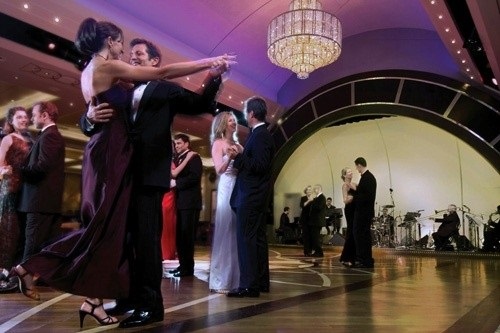
Image Source:https://blog.udn.com/paulhsu333/124519866
2_4. Standard Dancing:
Standard Dancing is a standardized form of social dance organized by the UKs Imperial Society of Teachers of Dancing (ISTD) to unify varying global step methods.

2_5. Competitive Dancing: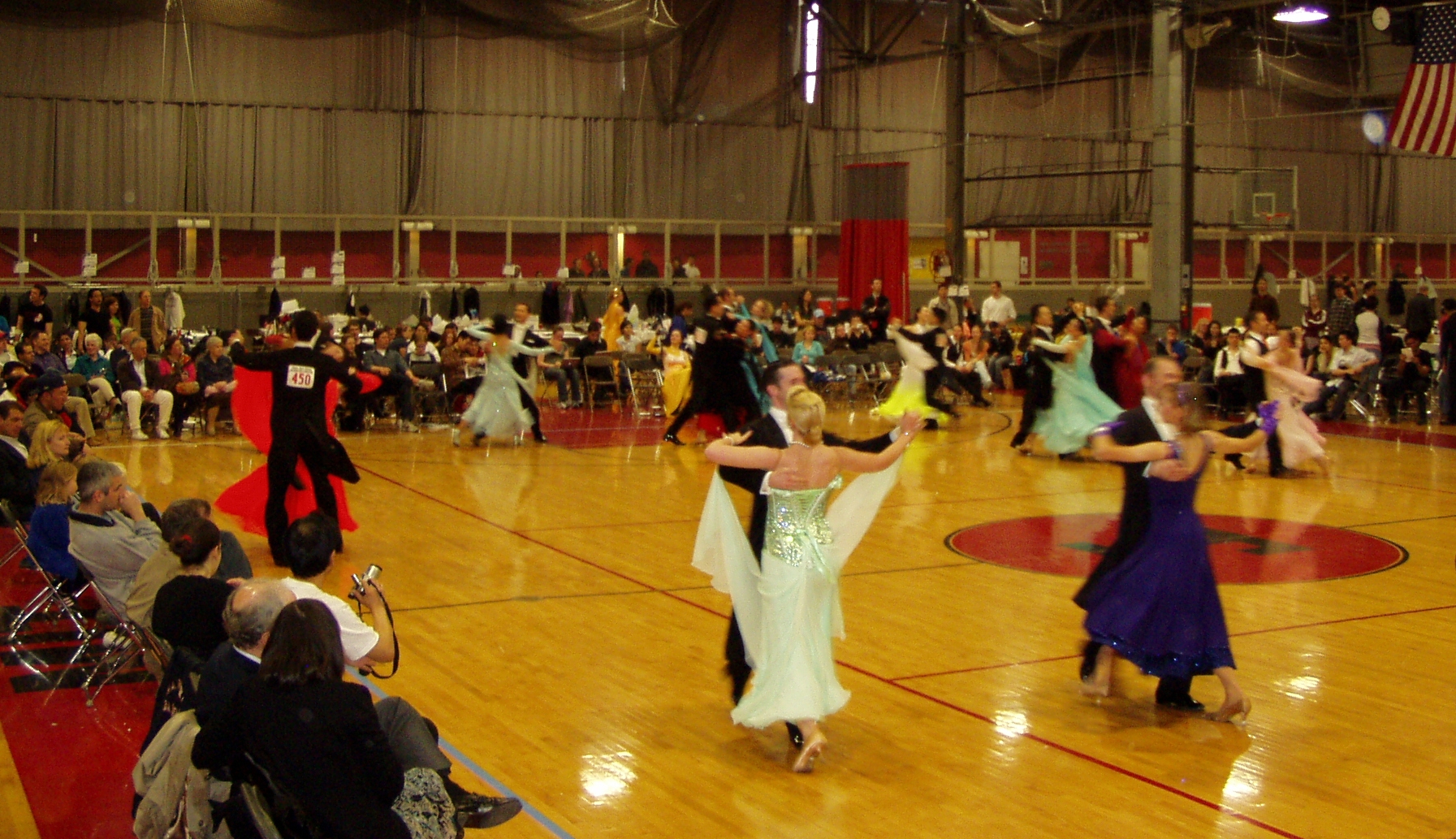
Image Source:https://commons.wikimedia.org/
2_6. Dancesport:
Basically, competitive dance is what we now call Dancesport, which originated in 1909 AD with the first "informal" World Championship. Dancesport competitions consist of two major categories: International Standard and International Latin. In the UK, it is customary to refer to International Standard simply as Modern; to distinguish it from Modern Dance, the word "Dance" is omitted after Modern, calling it simply "Modern" to avoid confusion.
The specific disciplines of these two competitive dance styles are outlined below:
|
Modern |
Latin |
|
1. Waltz, in 3/4 meter, at 30 bars/min |
1. Cha Cha Cha, in 4/4 meter, at 30-32 bars/min |
|
2. Foxtrot, in 4/4 meter, at 30 bars/min |
2. Rumba, in 4/4 meter, at 27-29 bars/min |
|
3. Quickstep, in 4/4 meter, at 50 bars/min |
3. Samba, in 2/4 meter, at 52-54 bars/min |
|
4. Tango, in 2/4 meter, at 30-34 bars/min |
4. Jive, in 4/4 meter, at 42-44 bars/min |
|
5. Viennese Waltz, in 3/4 meter, at 56 bars/ min |
5. Paso Doble, in 2/4 meter, at 60-62 bars/min |
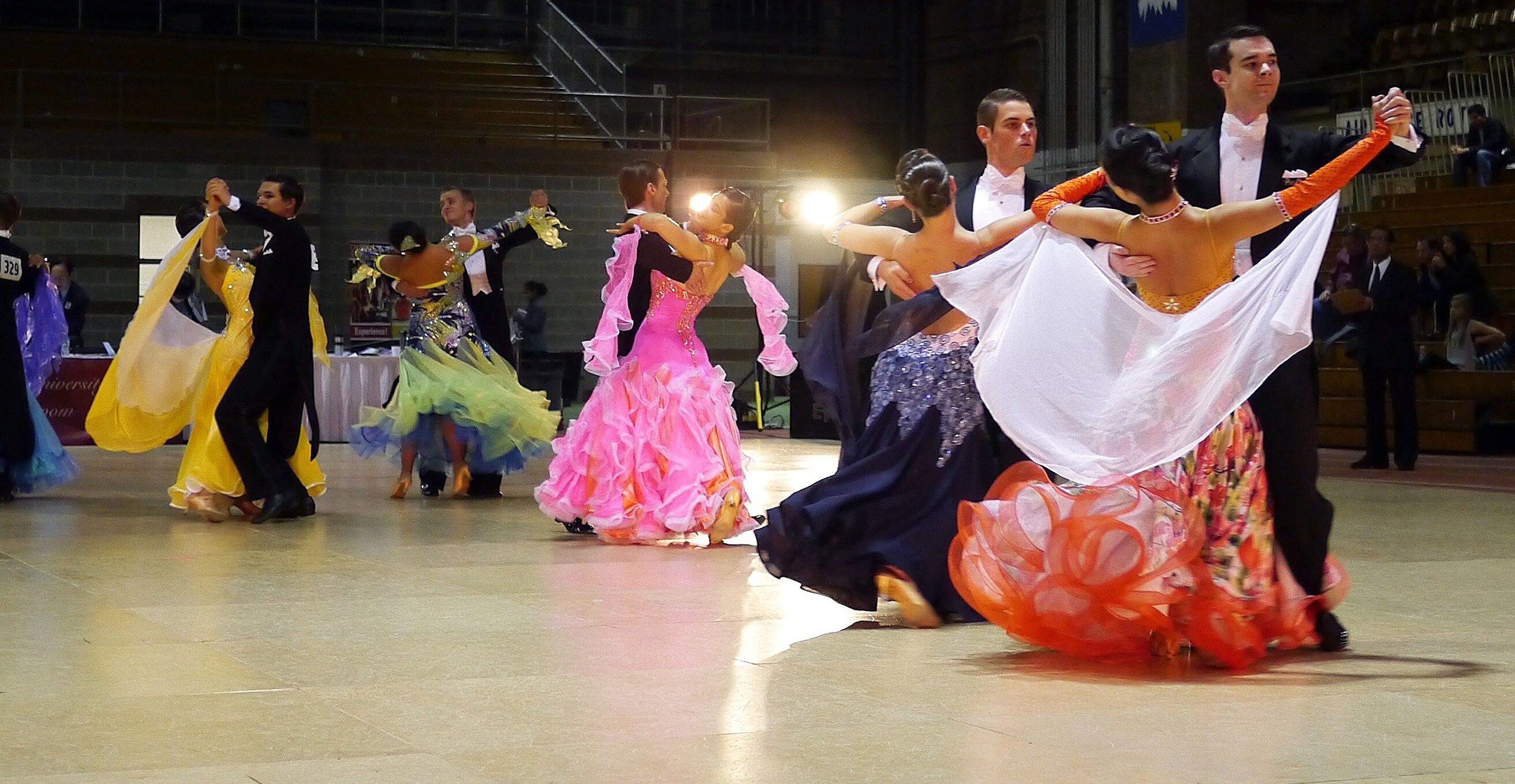
2_7. Popular Dance:
Popular dance originally referred to localized regional dances nurtured naturally across various areas, but with the rapid exchange of information globally today, a popular dance might spread worldwide within a very short time. In addition to the aforementioned styles, high-energy forms favored by youth such as Free Style Disco, New Wave, Punk, Breaking, and Street Dance fall into this category.
Based on the previous comprehensive contextual foundation of this dance genre, we shall now formally introduce this specific routine. This dance was choreographed in 1946 by Fred and Ada Holmes in the United Kingdom. In 1952, the California Folk Dance Federation invited instructor Lucile K. Czarnowski to teach this routine in the United States. Subsequently, prominent sequence dance masters such as Victor Silvester, Bill Botham, and Richard Powers introduced minor modifications to the structure. Regarding the acoustic framework, any 32-bar tango composition is applicable to this choreography.
The boss (it’s me, Teacher Frog) treats with the original dance notation of this dance: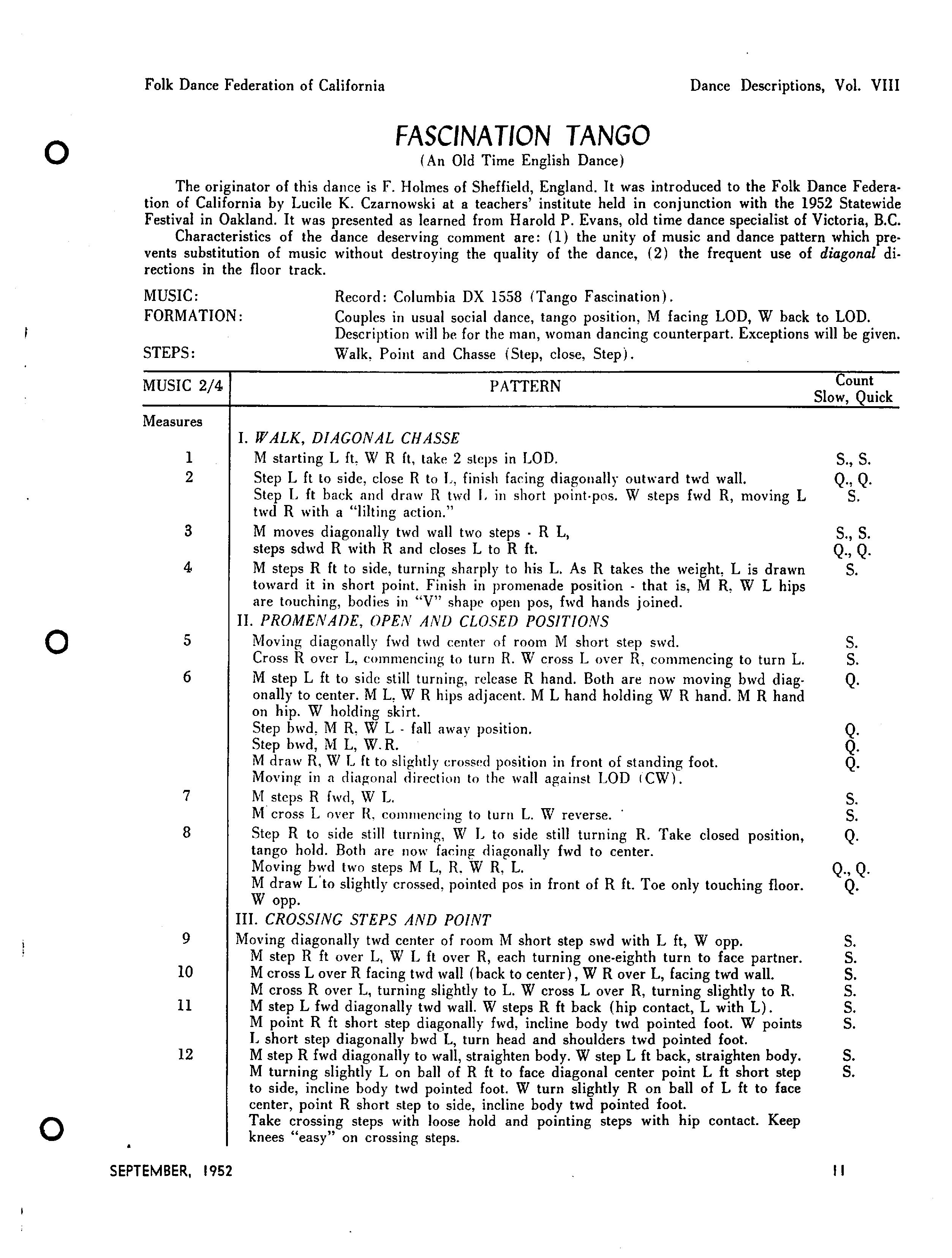
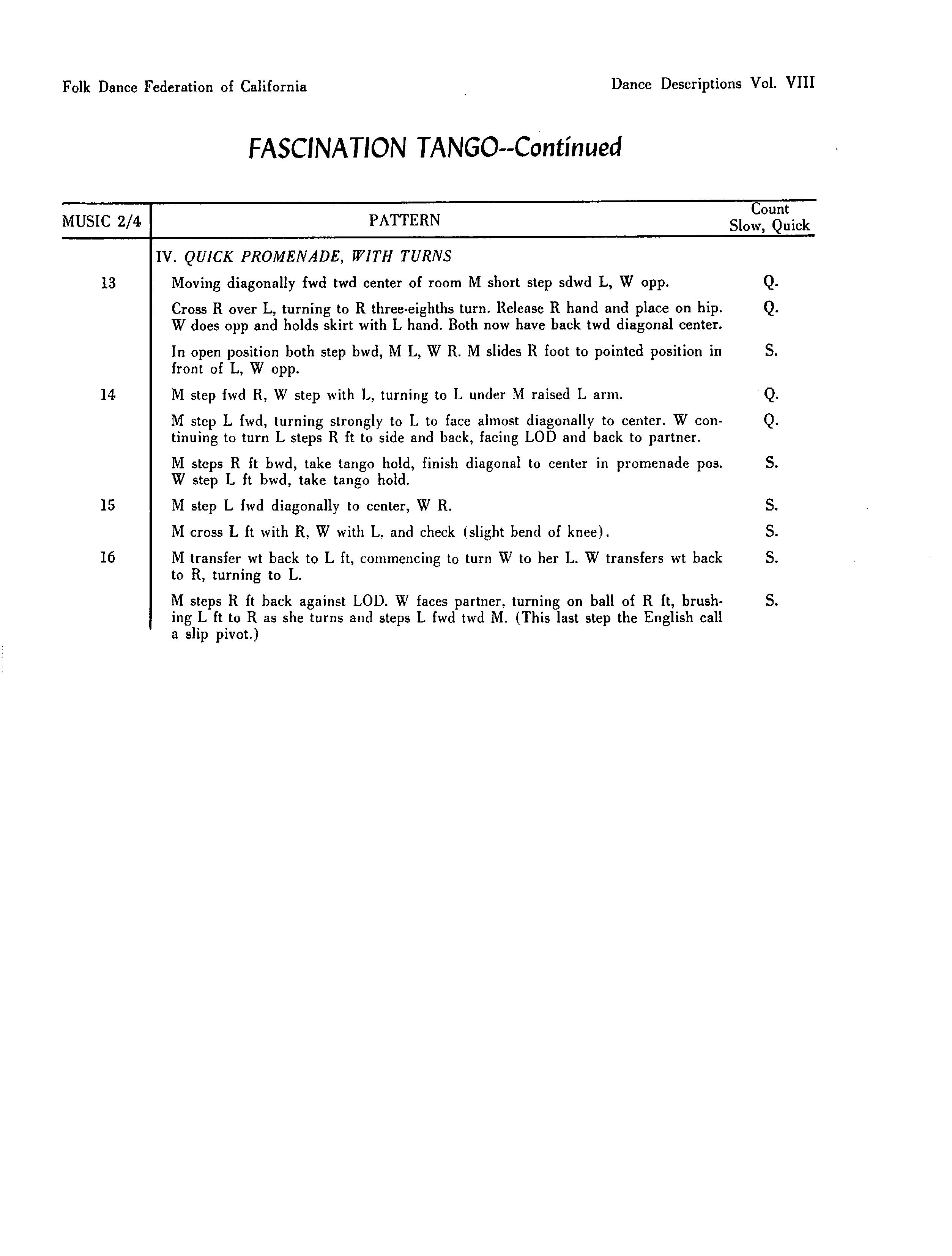
Data Source: California Folk Dance Federation, USA
Dancers who analytically cross-referenced the versions of the choreography listed above will likely deduce that the contemporary execution deviates slightly from historical records. Specifically regarding spatial orientation, why do the older texts contain several additional 45-degree direction changes compared to our current practice? I hypothesize that this discrepancy is a logical consequence of cumulative modifications made by various American instructors across different eras. To address this, the house provides the reference instructional and demonstration videos from the British Sequence Dance Association below, allowing dancers to precisely observe the initial, unaltered mechanics of this dance.
British Sequence Dance Association: Slow Motion Breakdown by Instructors Shannah and Phil:
British Sequence Dance Association: Demonstration with Music by Instructors Shannah and Phil:
Stockton Folk Dance Camp, USA: Instructional Demonstration by Instructor Richard Powers in 2016:
Moving on to the musical components, early British sequence dancing did not mandate a specific piece of music, meaning any 32-bar composition could be systematically applied. The music we utilize deviates significantly from the tracks shown in the preceding videos; it is neither British nor even European in origin. The track title is El Choclo, which is clearly Spanish rather than English. El Choclo was composed by the Spanish composer Ángel Villoldo in 1903 (with alternative historical records pointing to 1898). It is documented that this music was dedicated to a nightclub owner who was a personal friend of his, whose nickname was "Choclo," meaning a corn cob. Mechanically speaking, a corn cob refers to the remaining fertile spike of the maize plant after stripping away the outer husks.
Corn Cob: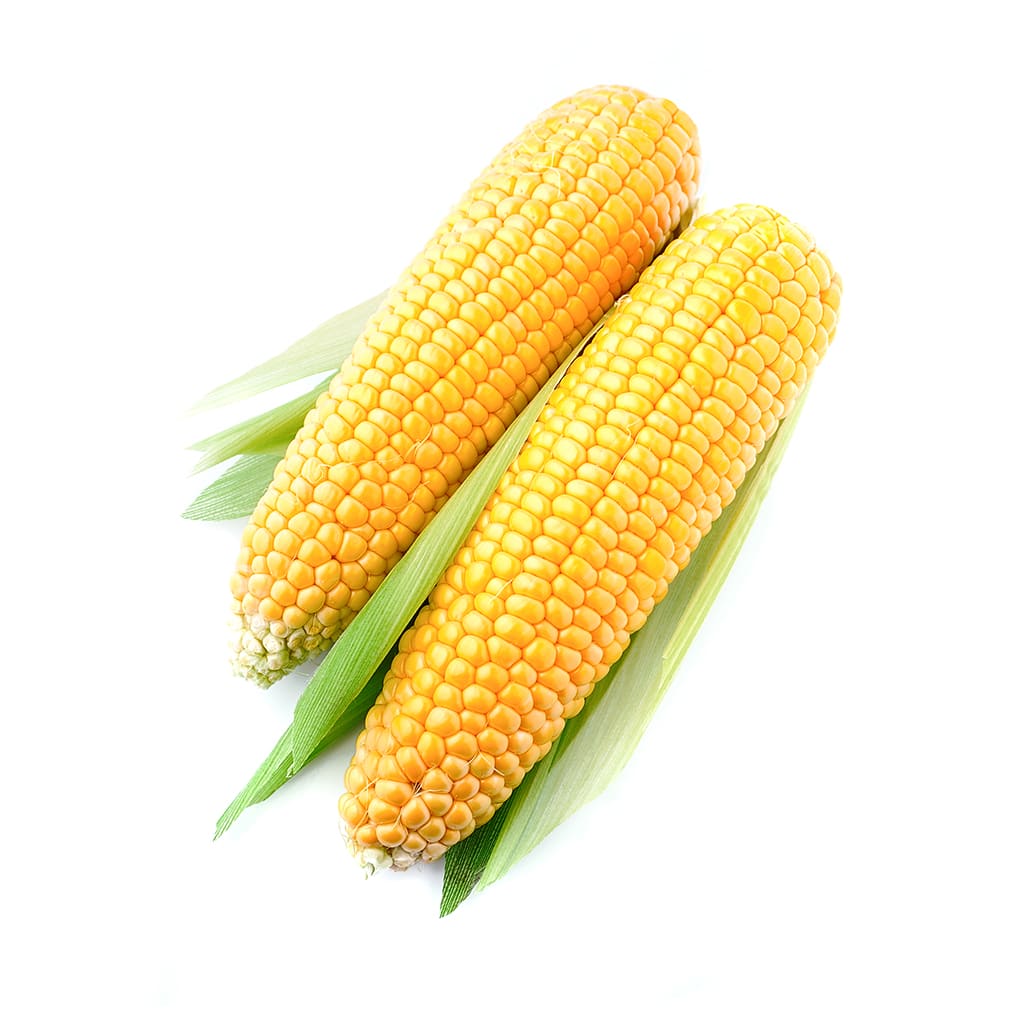
El Choclo, 1903:
The melody of El Choclo migrated to the United States in 1952, where lyrics were subsequently integrated for vocal performance. Veteran dancers are likely familiar with the vintage English song "Kiss of Fire," which is an adaptation synthesized directly from this exact composition. Within the vast repertoire of American vocals, I have selected the specific rendition performed by female vocalist Georgia Gibbs for your analytical appreciation:
To conclude, the boss provides the earliest available online recording of El Choclo, performed by the Banda Española orchestra in January 1906, for your historical observation:
Reference
1.Complete Encyclopedia of World Folk Dance: Authored by Instructor Chang Ching-san
2.Sequel to the Complete Encyclopedia of World Folk Dance: Authored by Instructor Chang Ching-san
3.Complete Collection of World Folk Dances: Authored by Instructor Chen Ji
4.English Edition of Wikipedia


