Tino Mori
(Macedonia)

Song Title: Tino Mori
Lyricist: Macedonian folk song
Composer: Macedonian folk song
Vocalist: Various artists
Dance Title: Same as the song title
Chinese Dance Title: 新嫁娘
First Taught by: Atanas Kolarovski, November 1966.
Promoted by: Ruth Ruling, July 1967 A.D., at the 20th Annual Stockton Folk Dance Camp
Formation: Circle dance, open circle, holding hands with neighbors at shoulder height in W-mount position (the original dance description states it should be a bit higher, almost at head height).
The dance title Tino Mori is the same as the song title. Tino is a girls name, and the meaning of Mori is relatively abstract, colloquially translated as "you" or "you, girl." Here, we can connect the context together and translate it with a modal particle as "Tino, dear." (The girls name Tino is similar to Tina in English.)
The song originates from a folklore in the Lake Dojran region of southeastern Macedonia, telling the tragic story of Tino, a young woman married off to Gevgelija. However, her newlywed husband Deljo was severely ill and was about to pass away soon, so Tino lived a very hard and sad life after marriage.
Gevgelija Location: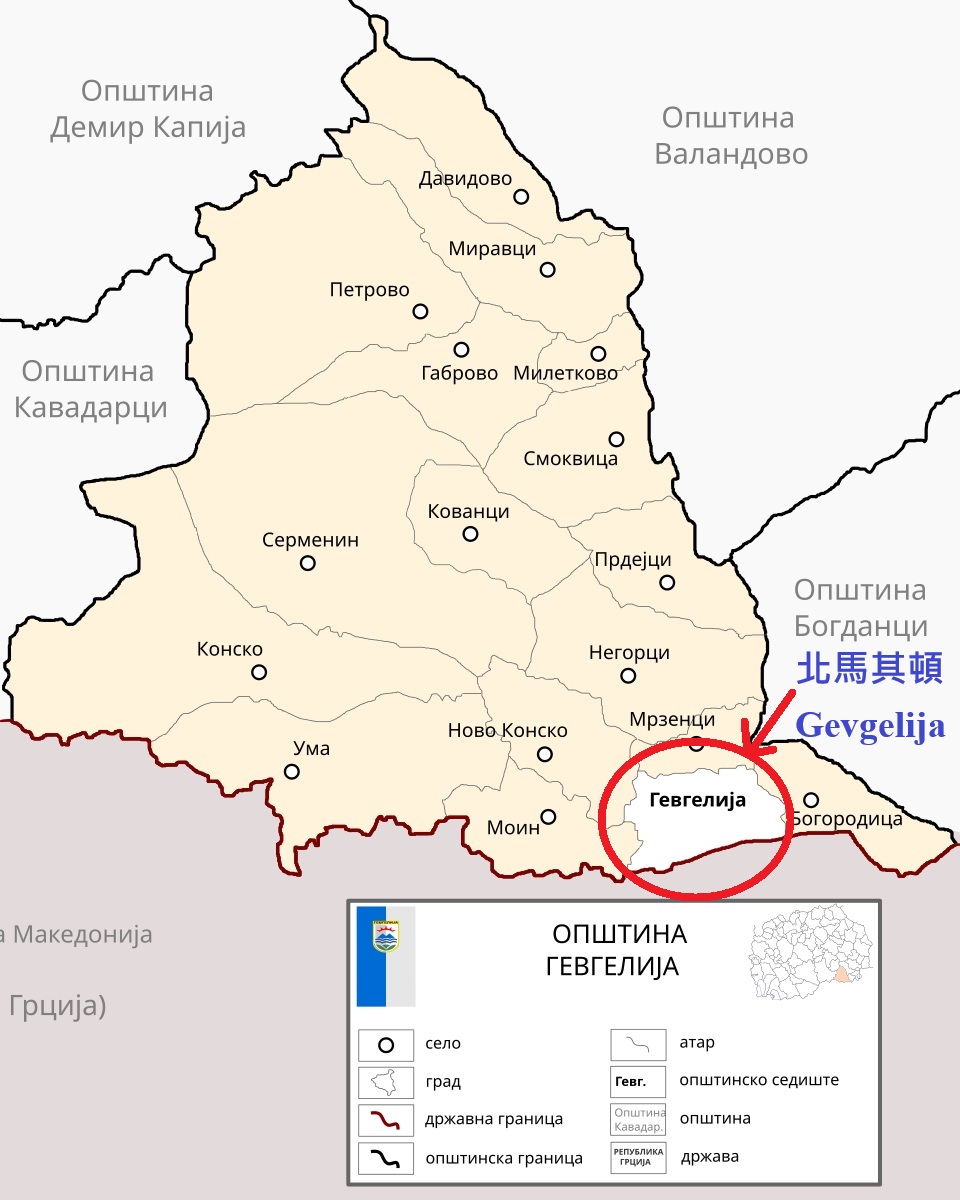
Image Source: English Wikipedia
Lake Dojran & Gevgelija Map: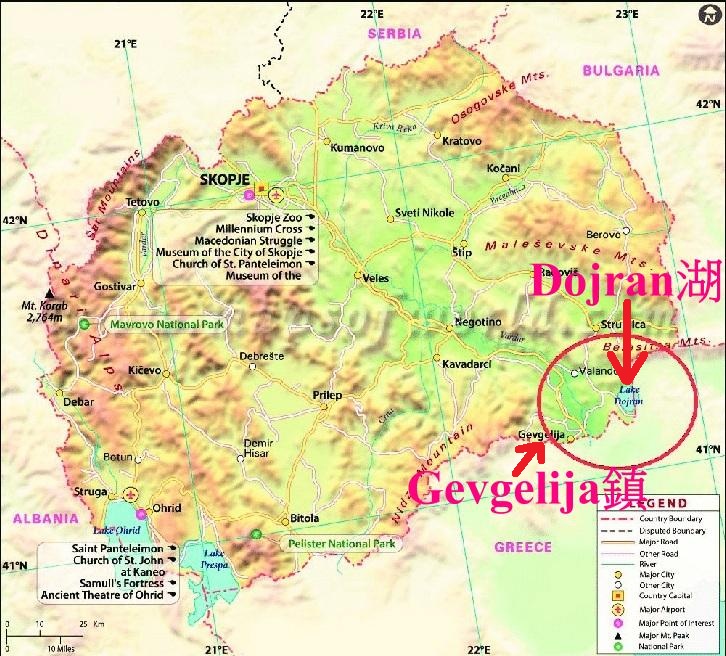
Image source:https://www.researchgate.net/
Lake Dojran Border Info: Shared between North Macedonia and Greece 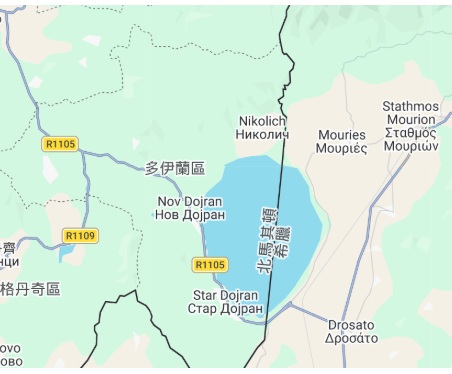
Image Source:Google Maps
Macedonian Lyrics:
1.
Бог да бие, Тино мори,
Тино, мори, твојта стара мајка
Тино, мори, Тино мори,
твојот стари татко деј.
2.
Што ми те армаса, Тино
Тино, мори, мошне надалеку
Тино, мори, Тино, мори
дур на Гевгелија, деј.
3.
Дур на Гевгелија, Тино
Тино, мори, за Дељо Турунџула
Тино мори, Тино мори
за Дељо Турунџула, деј.
4.
Дељо болен лежи, Тино
Тино, мори, Дељо ќе да умре.
Тино, мори, Тино, мори
Дељо ќе да умре, деј.
5.
Бог да бие Тино мори,
Тино мори, твојот стари татко,
Тино мори, Тино мори
твојот стари татко, деј.
Lyrics Transliteration:
1.
Bog da bie, Tino mori,
Tino mori tvojta stara majka,
Tino mori, Tino mori,
Tvojot stari tatko de.
2.
Sto mi te armasaja,
Tino, Tino mori, mnogu na daleku,
Tino mori, Tino mori,
Dur na Gevgelija de.
3.
Dur na Gevgelija, Tino,
Tino mori za Deljo Turundzula,
Tino mori, Tino mori,
Za Deljo Turundzula de.
4.
Deljo bolen lezi, Tino,
Tino mori Deljo ke da umri,
Tino mori, Tino mori,
Deljo ke da umri de.
5.
Nad glava mu stoji,
Tino, Tino mori trujca ikindzii,
Tino mori, Tino mori,
Trujca ikindzii de.
Chinese Translation of the Lyrics:
1.
願神眷顧你,Tino
Tino,你的媽媽
哦,Tino,
還有你的爸爸
2.
他們把妳嫁掉了
Tino,把妳嫁到那麼遠的地方
哦,Tino
他們把妳嫁到遙遠的Gevgelija
3.
他們把妳嫁到遙遠的Gevgelija
Tino,他們把妳嫁給Deljo Turundzula
哦,Tino
他們把妳嫁給Deljo Turundzula
4.
Deljo生重病,病懨懨的躺在床上
Tino,Deljo快要病死了
哦,Tino
Deljo快要病死了
5.
願神眷顧Tino
Tino,你的老父親
哦,Tino
你的老父親
Next, dancers, please enjoy the folk dance version of the original music; this version is a 1950s recording by the Tanec National Folklore Ensemble of Macedonia:
This Old Macedonian Folk Song is by Tanec and it is recorded in the 1950s in Macedonia.
This dance was originally a repertoire piece performed on stage by the Macedonian National Folklore Ensemble (Tanec) in the 1950s, and was later introduced to the public for the first time by the ensembles former artistic director and lead dancer, Instructor Atanas Kolarovski, in November 1966 at the Kolo Festival in San Francisco, USA; in the following year, which was 1967, it was taught by Instructor Ruth Ruling at the 20th Annual Stockton Folk Dance Camp.
The 20th Annual Stockton Folk Dance Camp Syllabus Cover, 1967: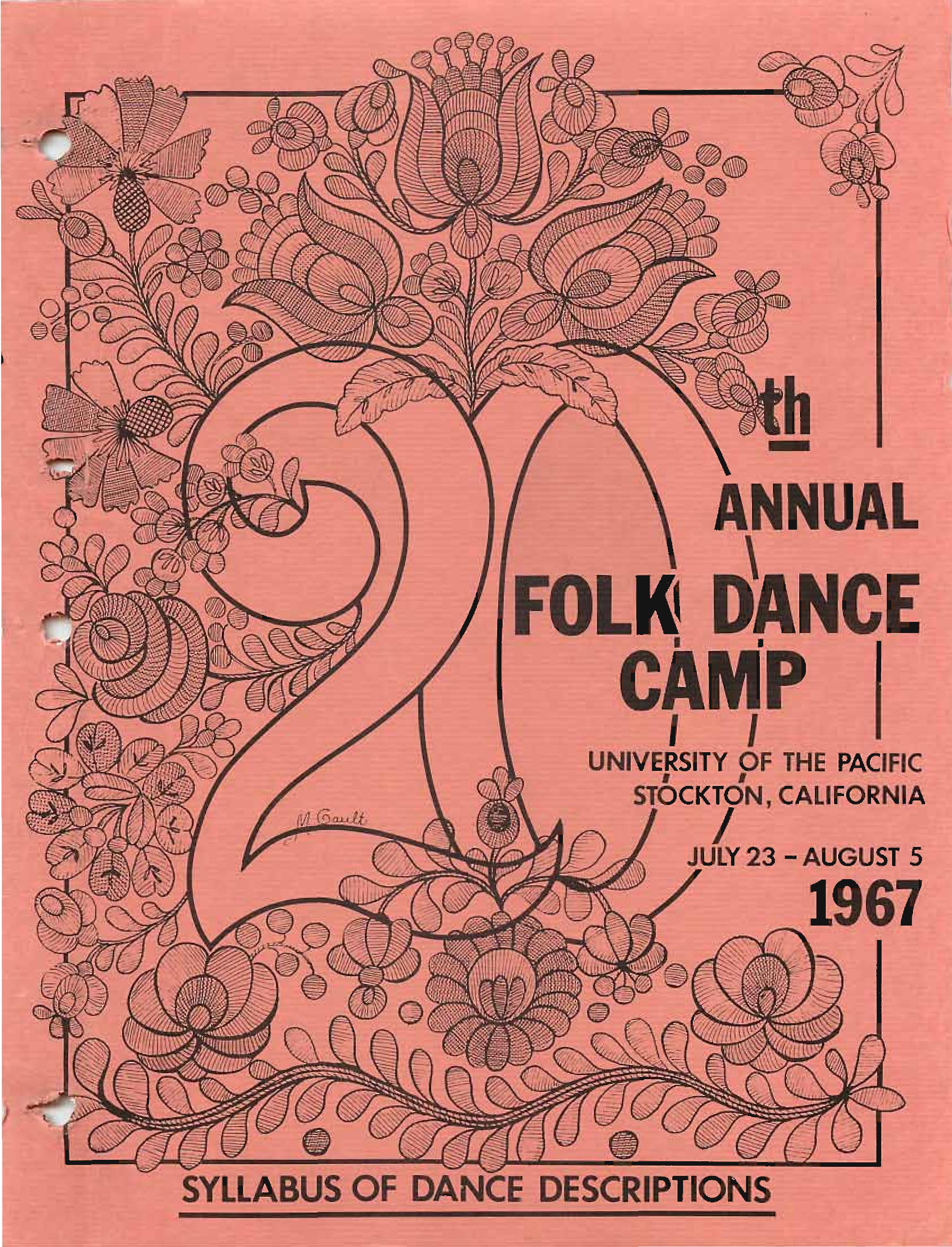
The 20th Annual Stockton Folk Dance Camp Syllabus Table of Contents, 1967: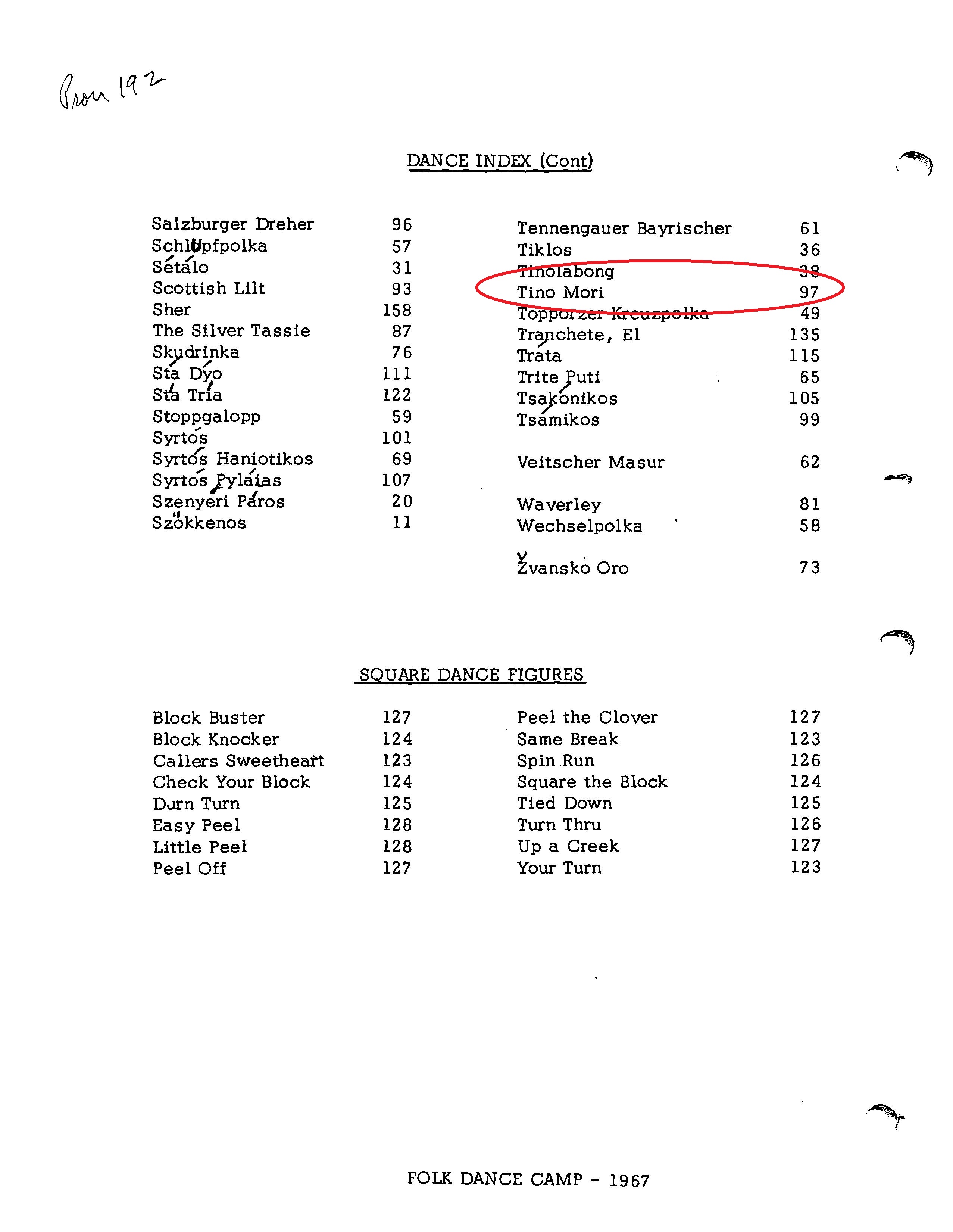
The heroic bearing of Instructor Atanas Kolarovski in his youth: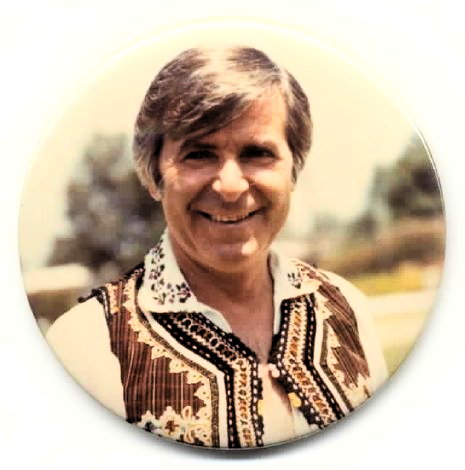
Image source: Folk Dance Federation of California, South, Inc., USA
The handsome Instructor Atanas Kolarovski: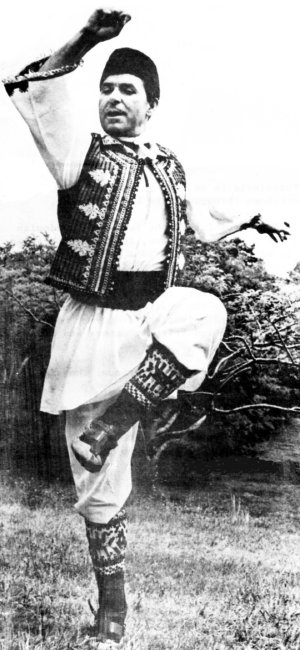
Image source: Folk Dance Federation of California, South, Inc., USA
Instructor Atanas Kolarovski in his later years: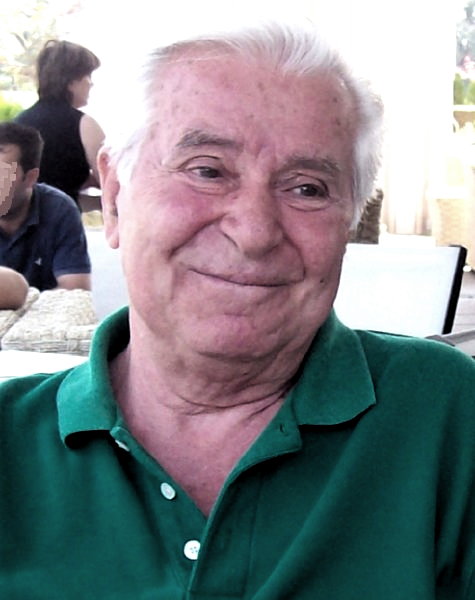
Image source: Folk Dance Federation of California, South, Inc., USA
Atanas Kolarovski visited Taiwan many times to teach dances; the following is a list of dances he taught that we have danced:
Staro Tikveshko Oro
Dedo Mili Dedo
Lesnoto(Makedonsko Devojce)
Janino
Vrni se Vrni
Imate Li Vino
Jovano Jovanke
Kumanovsko Oro
Ivanica
Kopacka
Berovsko Za Pojas
Rokoko
Banjsko
Dafino
Teskata Masko
…
…
Unfortunately, heaven did not grant him more years; Instructor Atanas Kolarovski passed away peacefully at home four years ago on March 3, 2022, and the world folk dance community has lost yet another brilliant star.
Next, moving on to the dance itself, first of all, the rhythm of this dance is a typical Balkan dance 7/8 meter. The 7/8 meter is commonly found in traditional folk dances of the Balkan Peninsula, the Middle East, Greece, and among other regions.
The 7/8 meter is a fascinating rhythm; each measure is composed of seven eighth notes. Its asymmetrical and irregular compound meter generates dance steps of varying lengths, bringing an exquisite sense of movement and bounce. Based on different rhythmic combinations, it can generally be divided into the following three types of dynamics:
1. 3+2+2: Slow, Quick, Quick (S, Q, Q): Traditional dances in the Balkan Peninsula, Kalamatianos (ranking first among the six national dances of Greece), and Karamfil from Bulgaria... dancers can easily find plenty of examples.
2. 2+2+3: Quick, Quick, Slow (Q, Q, S): This is also a common rhythm in traditional Balkan dances, with typical examples such as the Rûčenica (Ruchenitsa, Bulgarian Handkerchief Dance), etc.
3. 2+3+2: Quick, Slow, Quick (Q, S, Q): This rhythm is relatively unique and is commonly seen in certain folk dances of Armenia and Macedonia. Its feature is that the dancers extend their bodies or turn during the middle long beat (S).
The boss (It’s me, Teacher Frog) treats you to the original English dance description of this dance:
(The key to interpreting this dance lies in showcasing an extremely soft style, expressing the delicateness and elegant temperament of traditional southern Macedonian womens dances.)
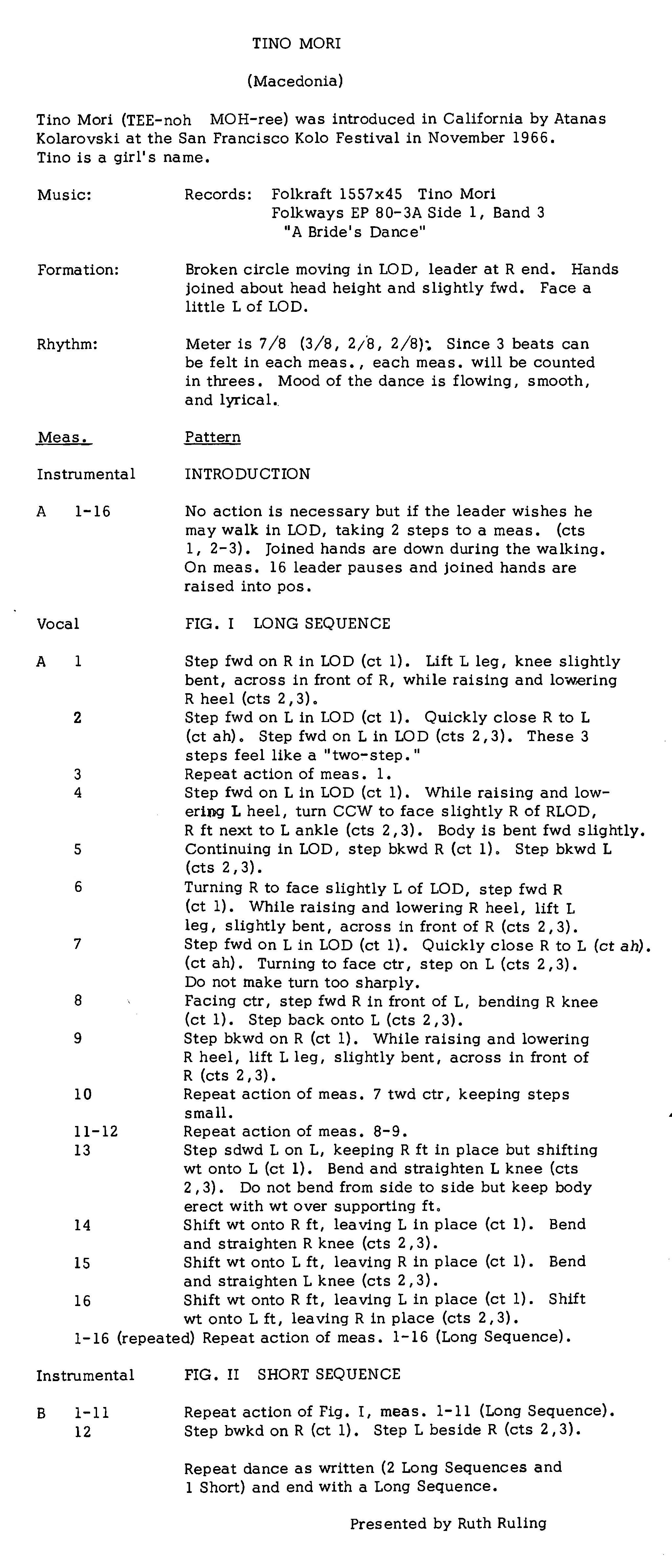
Finally, reference videos from various international folk dance organizations include:
1. Denver International Folk Dancers (USA)
2. Demonstration by Bill and Karen Faust from Fayetteville Folk Dancers, hosted by The Tucson Folk Dance Club (USA):
3. Surrey International Folk Dancers (Canada):
4. Instructional video from Rokdim (Israel) — Note from Teacher Frog: The instruction is very clear, but note that in the second measure after the left-foot change-step toward the center, the handhold does not swing down when the right foot steps forward and rocks. Not all online videos are completely accurate.
Reference:
1. Stockton Folk Dance Camp Syllabus (20th Annual, July 1967)
2. American Folk Dance Notes Website
3. The 7th Asian Folk Dance Camp Syllabus
4. Xian Ge Magazine, Issue 66
5. Macedonian Folk Songs Website
6. Folk Dance Musings Website (USA)


