Karamfil
(Bulgaria)

Song Title: Карамфил (Transliteration: Karamfil; English translation: Carnation.)
Lyrics: Anonymous (Traditional Folk Song)
Composer: Traditional Folk Song
Vocalist: Dimitur Kolarov
Dance Title: Same as the song title
Presented by: Jaap Leegwater, 1984 (Learned by Jaap in 1979 from Georgi Ginov, a dancer of the Pirin Ensemble, during his research and collection of traditional dances in Bulgaria)
Chinese Dance Title: 康乃馨
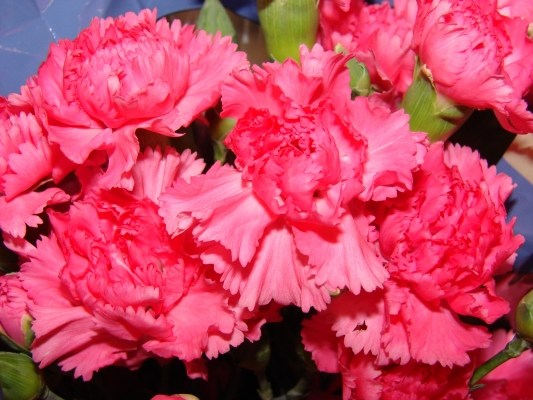
When I first started learning this dance, as soon as I heard its title "Carnation," a warm and cozy feeling involuntarily welled up from the bottom of my heart, making me think that this dance must have a significant connection with mothers.
Later, after seeing the lyrics and the dance introduction, I began to feel confused again. Had I fallen into a happy accident caused by language and cultural barriers once more? .
.
Let’s start with the song first. This is a deeply ancient Bulgarian song, a folk song that no one can say for sure when it actually began. The content of the lyrics also seems to be related to the growth of the carnation. All of this appears to be as perfectly normal as normal can be.
Карамфил:
However, in the original dance notation introduction, a very intriguing word appeared in the brief description of this dance: Haiduk (rebel).
With further exploration, the Bulgarian original Карамфил, which is transliterationally Karamfil, seems to have three different meanings. Could we have fallen into the whirlpool of foreign cultural puns once again?
Карамфил has three meanings in Bulgarian:
1.Place name: It is the name of a town in southern Bulgaria; it is also the name of an administrative district (larger than a province). (Postal code: 6826)
2.Person’s name: A rebel leader in the mid-19th century.
3.Flower name: Carnation (Chinese name: 康乃馨, as dance name in Chinese)
However, the original dance introduction mentions that this dance comes from the Pirin province of Bulgaria, and Karamfil is the name of a Haiduk (rebel): (Haiduk is a variant of many words, including Hajduk, Hayduk..., all meaning bandits or rebels.)
Pirin province is located in southwestern Bulgaria, bordering Macedonia to the west and Greece to the south: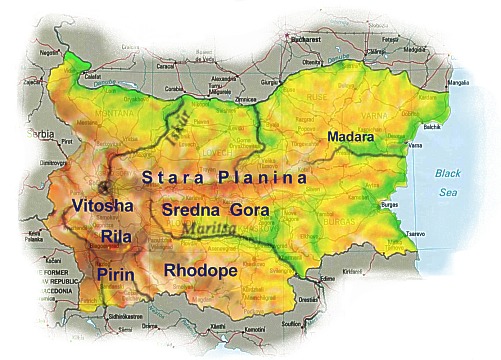

This makes things a bit tricky, let’s look at the lyrics first... At first glance, the lyrics look perfectly normal as well, describing the growth environment and expectations of the carnation... Wait a minute, the third and last stanza seems to have a bit of a metaphor? Or am I being overly suspicious? Here, Hajduk appears (which is synonymous with Haiduk). The word Hajduk has another story in Bulgaria. After cross-referencing it with the third stanza of the lyrics, could it be implying this ancient Bulgarian legend?
Whether it is a far-fetched interpretation or if it truly contains such implied meaning, I will briefly tell the ancient Bulgarian story anyway:
The word Hajduk exists in many countries across Europe (especially in Southern Europe), including Armenia, Bulgaria, Romania, Poland, Greece, Hungary, Ukraine, Slovakia, Bosnia, Croatia, Serbia... and other regions, though the meanings are not exactly the same. However, most of them mean bandits, robbers, rebels, or freedom fighters... and so on. Their contents all tell similar stories, spanning roughly from the late 16th century to the end of the 19th century, about how these rebels led the righteous people to fight against tyranny, from the Ottoman Empire to the Habsburg Monarchy.
Hajduk in 1703 AD:
There are also such legendary stories in Bulgaria. In ancient times, there was a Hajduk (whose name was just Hajduk, his real name can no longer be verified; later, after the 16th century, most Hajduks had known names), who led the righteous people to strike against the wealthy and unscrupulous elites, stealing or robbing their gold, silver, jewelry, and property to relieve the poor citizens, just like the 16th-century English heroic outlaw Robin Hood, robbing the poor to give to the rich... Ah, I said it backward, it should be robbing the rich to give to the poor.
In Bulgarian history, the deeds of these Hajduks have always been passed down, and famous Hajduks have left their names in history. For example, Delyo, who led the people in 1720 to avenge 200 Bulgarians killed because they refused to convert from Christianity to Islam.
The tomb of Delyo remains in the town of Zlatograd (Golden Town) in southern Bulgaria:
The earliest deed of a Hajduk that I can currently find is Chavdar Voyvoda, who led a volunteer army in 1595 AD to attack Sofia (the capital of Bulgaria) under the occupation of the Ottoman Turks. Bulgaria’s national poet, Hristo Botev, also wrote a poem in 1871 AD praising Chavdar Voyvoda as the greatest Hajduk in Bulgarian history. There are many Bulgarian folk songs that praise and extol this great man of the nation. (Could the song used for this dance we are doing be praising this very Hajduk? )
The poem written by Hristo Botev, with the original Bulgarian text as follows: (It’s so long. )
)
“Я надуй, дядо, кавала,
след теб да викна – запея
песни юнашки, хайдушки,
песни за вехти войводи -
за Чавдар страшен хайдутин,
за Чавдар вехта войвода -
синът на Петка Страшника!
Да чуят моми и момци
по сборове и по седенки;
юнаци по планините,
и мъже в хладни механи:
какви е деца раждала,
раждала, ражда и сега
българска майка юнашка;
какви е момци хранила,
хранила, храни и днеска
нашата земя хубава!
Ах, че мен, дядо, додея
любовни песни да слушам,
а сам за тегло да пея,
за тегло, дядо, сюрмашко,
и за свойте си кахъри,
кахъри, черни ядове!
Тъжно ми й, дядо, жално ми й,
ала засвири - не бой се, -
аз нося сърце юнашко,
глас имам меден загорски,
та’ко ме никой не чуе,
песента ще се пронесе
по гори и по долища -
горите ще я поемат,
долища ще я повторят,
и тъгата ми ще мине,
тъгата, дядо, от сърце!
Пък който иска, та тегли -
тежко му нима ще кажа?
Юнакът тегло не търпи -
ала съм думал и думам:
Блазе му, който умее
за чест и воля да мъсти -
доброму добро да прави,
лошия с ножа по глава, -
пък ще си викна песента!
I
Кой не знай Чавдар войвода,
кой не е слушал за него?
Чорбаджия ли изедник,
или турските сердари?
Овчар ли по планината,
или пък клети сюрмаси!
Водил бе Чавдар дружина
тъкмо до двайсет години
и страшен беше хайдутин
за чорбаджии и турци;
ала за клети сюрмаси
крило бе Чавдар войвода!
Затуй му пее песента
на Странджа баир гората,
на Ирин-Пирин тревата;
меден им кавал приглаша
от Цариграда до Сръбско
и с ясен ми глас жътварка
от Бяло море до Дунав -
по румелийски полета...
Един бе Чавдар войвода -
един на баща и майка,
един на вярна дружина;
мъничък майка остави,
глупав от татка отдели,
без сестра, Чавдар, без братец,
ни нийде някой роднина -
един сал вуйка изедник
и деветмина дружина!...
Хлапак дванайсетгодишен,
овчар го даде майка му,
по чужди врата да ходи,
на чужд хляб да се научи;
но стоя Чавдар, що стоя -
стоял ми й от ден до пладня!
И какво да ми спечели?
Голям армаган на майка -
тез тежки думи отровни:
"Що ме си, майко, продала
на чуждо село аргатин:
овци и кози да паса,
да ми се смеят хората
и да ми думат в очите:
да имам баща войвода
над толкозмина дружина,
три кази да е наплашил,
да владей Стара планина,
а аз при вуйча да седя -
при тоз сюрмашки изедник!
копилето му да бавя;
час по час да ме нахоква,
че съм се и аз увълчил,
че човек няма да стана,
а ще да гния в тъмница,
и ще ми капнат месата
на Кара баир на кола!...
Проклет бил човек вуйка ми!
Проклет е, майко - казвам ти,
не ща при него да седя,
копилето му да бавя
и крастите да му завръщам.
Яли ги свраки и псета!
При татка искам да ида,
при татка в Стара планина;
татко ми да ме научи
на к’ъвто иска занаят."
Зави се майка, замая -
камък и падна на сърце;
гледа си в очи Чавдара,
във очи черни, големи,
глади му глава къдрава
и ръда клета, та плаче.
Чавдар я плахо изгледа,
и с сълзи и той на очи,
майка си бърже попита:
"Кажи ми, мале, що плачеш?
Да не са татка хванали,
хванали или убили,
та ти си, мале, остала
сирота, гладна и жъдна?"...
Прегърна майка Чавдара,
в очи го черни целуна,
въздъхна, та му продума:
"За тебе плача, Чавдаре,
за тебе, дете хубаво,
писано още шарено:
ти ми си, синко, едничък,
едничък още мъничък,
а лоши думи хортуваш; -
как ще те майка прежали,
да идеш, синко, с татка си,
хайдутин като ще станеш!
Татко ти й снощи доходял,
за тебе, синко, да пита -
много ме й съдил и хокал,
що съм те, синко, пратила
при вуйча ти, а не при него -
да види и той, че има
хубаво дете юначе;
далеч ли да го проводи,
на книга да се изучи,
или хайдутин направи,
по планината да ходи.
Триста й заръци заръчал,
в неделя да те проводя
на хайдушкото сборище...
Ще идеш, синко Чавдаре,
едничко чедо на майка!
Ще идеш утре при него;
ала те клетва заклинам,
ако ти й мила майка ти,
да плачеш, синко, да искаш,
с дружина да те не води,
а да те далеч проводи,
на книга да се изучиш -
майци си писма да пишеш,
кога на гурбет отидеш..."
Рипна ми Чавдар от радост,
че при татка си ще иде,
страшни хайдути да види
на хайдушкото сборище;
а майка ядна, жалостна,
дете си мило прегърна
и... пак заръда, заплака!...”
The last Hajduk in Bulgaria was Ilyo Voyvoda. After he passed away in 1898 at the ripe old age of 93, there were no more Hajduks in Bulgarian history.
The last Hajduk in Bulgaria: Ilyo Voyvoda
No matter which source this song comes from, it is certain that this folk song has been circulating in Bulgaria for a very long time. As for which legend it is based on, I think everyone will have their own different interpretations after reading the lyrics translation.
Original Bulgarian lyrics:
1.
Кажи, ми кажи, млади ле момко,
кажи ми, ален Карамфил,
де расна момко расна порасна,
сила и хубост кой ли ти даде ?
Chorus.
Ей, ей, Карамфил,
Партизански майко, славен командир
(Short Interlude)
2.
Аз верен син съм, син на Балкана
и Розолата Долина.
Сила и хубост дар ми дариха,
как да се боря теме учиха.
Chorus.
Ей, ей, Карамфил,
Партизански майко, славен командир
(Short Interlude)
3.
Горо ле горо, горо хайдушка
и ти гранитен наш Балкан,
днес нийе раснем млади юнаци
на Карамфила верни потомци.
Chorus.
Ей, ей, Карамфил,
Партизански майко, славен командир
(2S)
Transliterated lyrics:
1.
Kaži, mi kaži, mladi le momko,
kaži mi, alen Karamfil,
de rasna momko rasna porasna,
sila i hubost koj li ti dade ?
Chorus.
Ej, ej, Karamfil,
Partizanski majko, slaven komandir
(Short Interlude)
2.
Az veren sin sâm, sin na Balkana
i Rozovata Dolina.
Sila i hubost dar mi dariha,
kak da se borja teme učiha.
Chorus.
Ej, ej, Karamfil,
Partizanski majko, slaven komandir
(Short Interlude)
3.
Goro le goro, goro hajduška
i ti graniten naš Balkan,
dnes nije rasnem mladi junaci
na Karamfila verni potomci.
Chorus.
Ej, ej, Karamfil,
Partizanski majko, slaven komandir
(2S)
Translated Chinese lyrics:
1.
告訴我,告訴我, 年輕人
告訴我,紅色的康乃馨
你是在哪裡長大的?
誰讓你長得那麼的有力量和漂亮?
和.
Eh, eh,康乃馨(青蛙註:Karamfil,也翻成:義勇軍.)
是我堅強游擊隊的母親,我的領導人.
(短間奏)
2.
我是一個真正的巴爾幹群山
和充滿玫瑰的山谷之子
我的力量與我的美麗都是他們給予我的
是他們教我如何戰鬥
和.
Eh, eh,康乃馨
是我堅強游擊隊的母親,我的領導人.
(短間奏)
3.
森林,義勇軍(Hajduks)的森林
還有你,我堅強的巴爾幹
今日,我們推崇你的的英雄們
是康乃馨(Karamfil也翻成:義勇軍)真正的傳人.
和.
Eh, eh,康乃馨
是我堅強游擊隊的母親,我的領導人.
(2S)
The rhythm of this dance is in 7/8 meter, 3+2+2=7. When we memorize the dance, we usually use "slow, quick, quick." to remember it, but the "slow" here is only 1.5 times the duration of the "quick," not 2 times; this point must be noted. Another point to note is that when dancing to the "chorus," it is highly recommended that everyone sings along together:
“Ej, ej, Karamfil,
Partizanski majko, slaven komandir”
If you don’t know how to sing it, at the very least, this line "Ej, ej, Karamfil" must be sung out.
This dance was taught in 1984 AD by the Bulgarian dance teacher Jaap Leegwater at the 37th Stockton Folk Dance Camp in the United States.
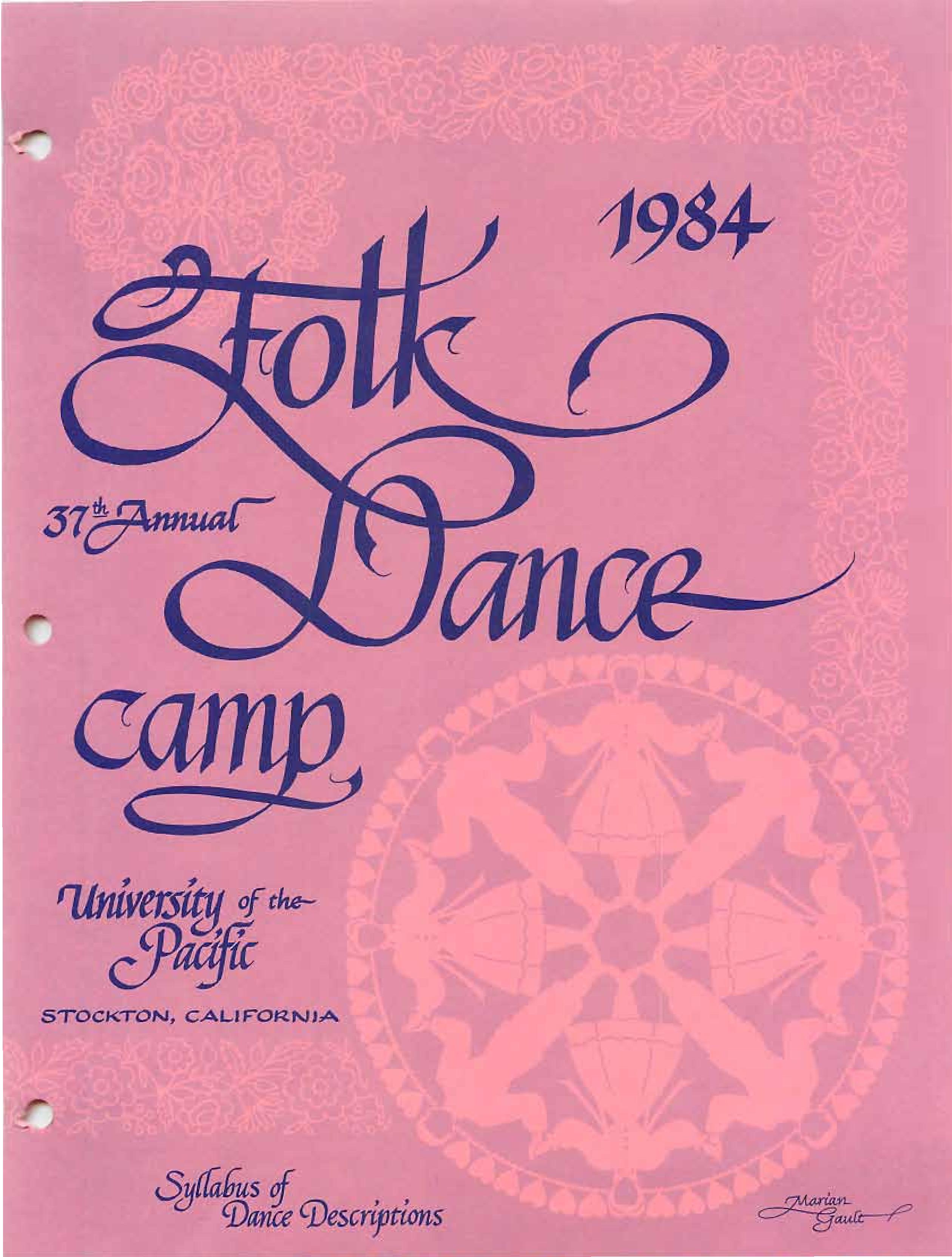
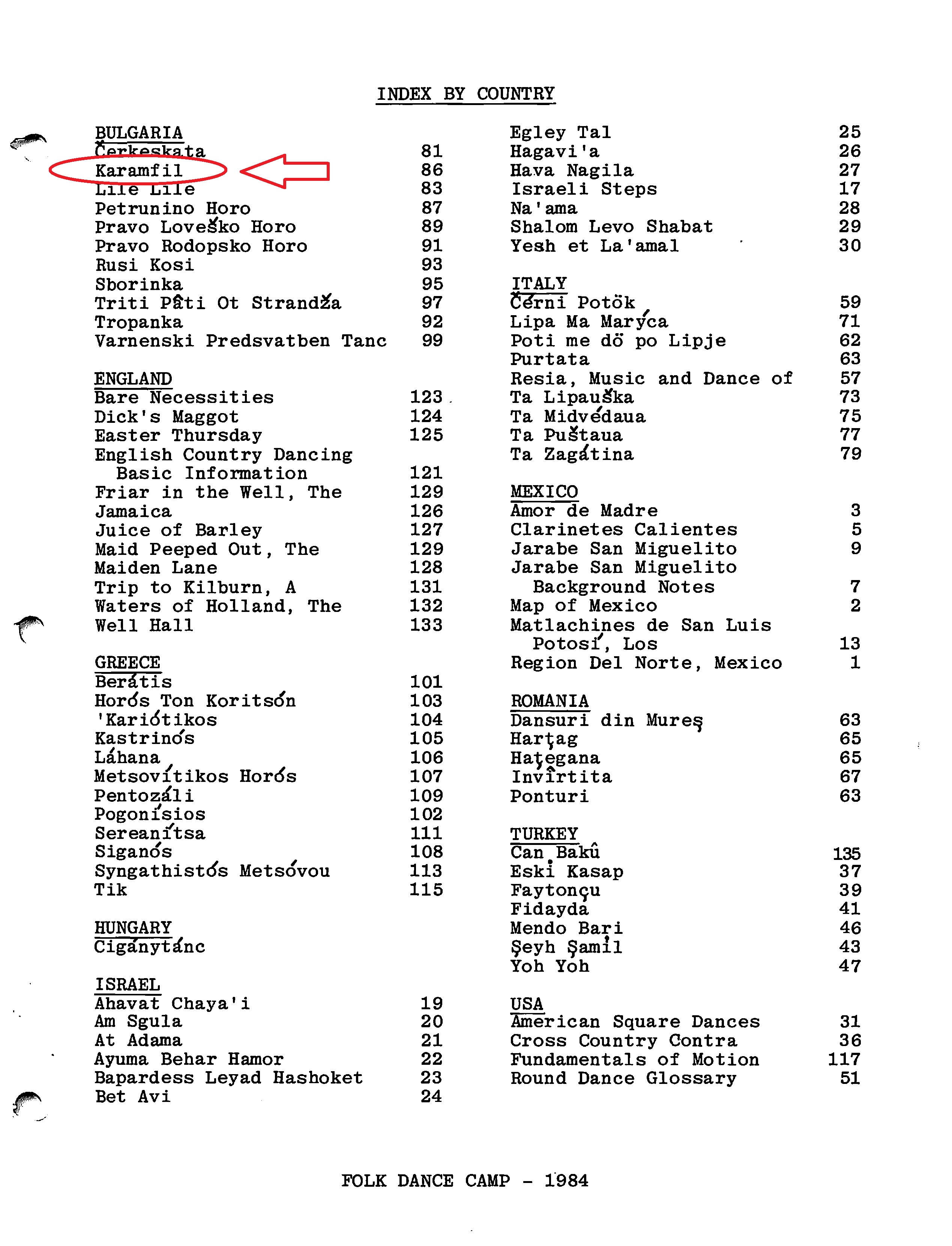
The boss (it’s me, Teacher Frog!) treats: the original dance notation: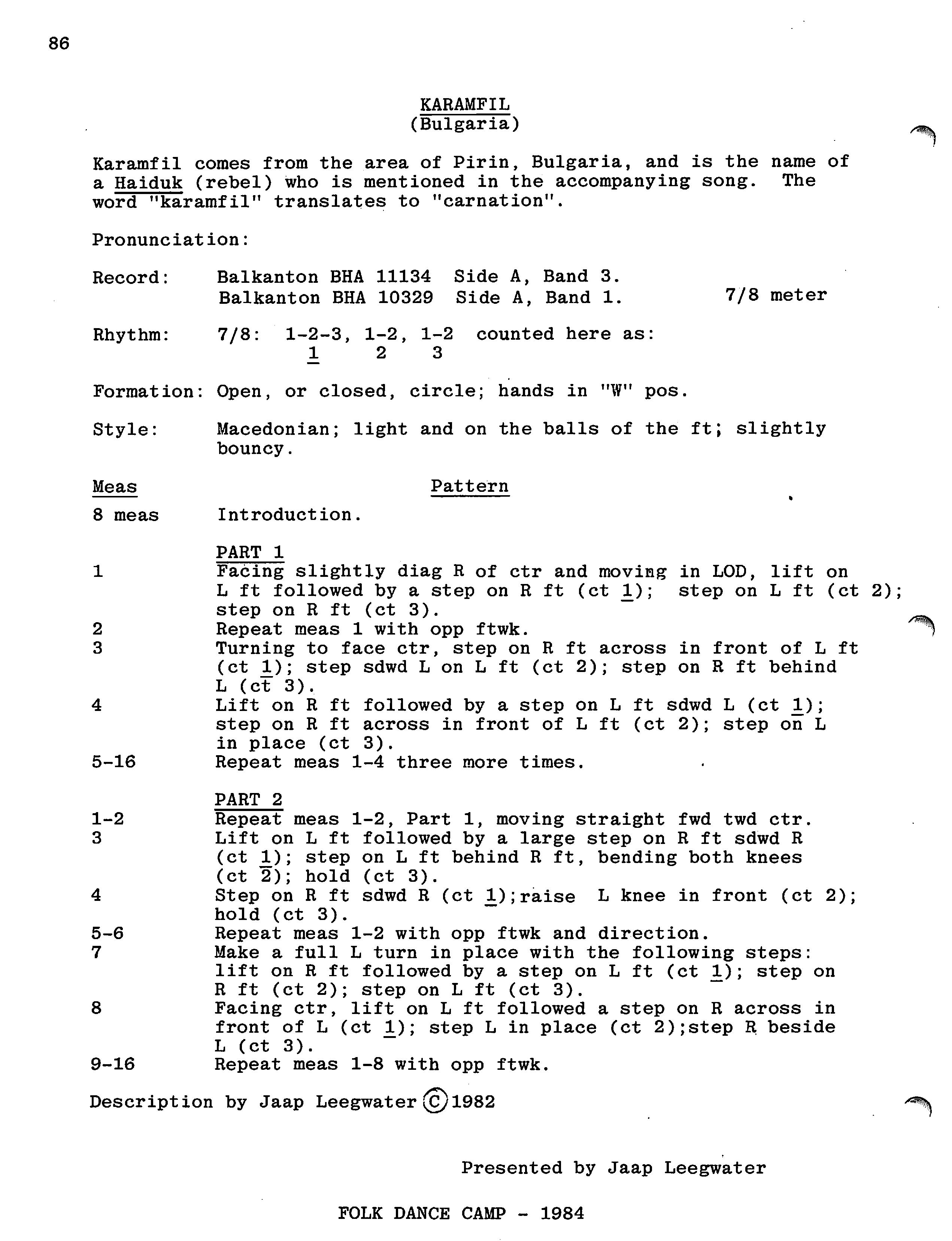
After reading the introduction in the original English dance notation, the truth comes to light. Just as Frog Teacher said earlier, it has a direct relationship with the Bulgarian volunteer army (Hajduk). Therefore, when dance friends introduce this dance in the future, you can directly reference Frog Teacher’s research. 
Finally, the boss treats, please enjoy the live singing and live dancing of "Karamfil":


