Lola Tango
(England)
Song Title: La Gitana (Meaning: Gypsy woman)
Lyrics: Instrumental track, no lyrics
Composer: Verdez
Performer: Sidney Bowman and His Old Tyme Orchestra, 1962
Dance Title: Lola Tango
Choreographer: Arthur Wantling, 1923; reconstructed and slightly modified by Richard Powers
Chinese Dance Title: 羅拉探戈
Formation: Couple dance, Closed Position, Single Circle, Man facing LOD (Line of Direction)
This dance belongs to British Old Tyme Dance. In Taiwan, the dance terminology of the National Academy for Educational Research translates it as "British Old Tyme Dance," while Teacher Chang Ching-san translated it as "British Early Social Dance." These two terms differ by a couple of words, one being "early" and the other being "old time." In the UK, both spellings are used by people, referring to the exact same dance genre. Speaking of this, fellow dancers might still be a bit confused about what Early Social Dance is, and what Sequence Dance and Classical Dance are. Teacher Frog once specially sent a letter to the Old Time Dance Society in the UK to ask this question for all of you, and the society replied as follows:
Old time is a type of sequence dance where we dance 16 or 32 bar sequences. All dances which use ballet foot positions such as Veleta are old time. Blues swings Saunters are old time now known as classical by idta etc. Old time must not use modern ballroom figures.
Most dances before 1950 are old time. The Tango Waltz of ,1919 is Old Time or Old Time Sequence Dance instead of Modern Sequence Dance.
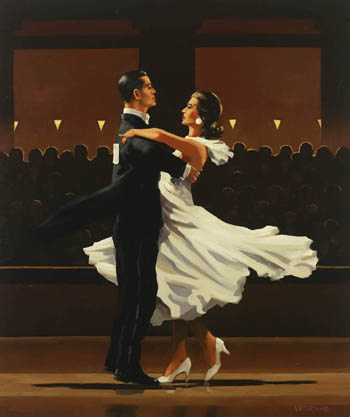
Image Source:http://www.wikidancesport.com/
The British Old Time Dance Society defines Sequence Dance as pre-arranged choreography with fixed music where everyone follows the set pattern. While this contrasts with freestyle dance, and folk dance shares the characteristic of following a set sequence and music, folk dances are generally much longer than 16 bars and carry traditional origins and meanings, whereas sequence dances primarily serve a social function.
In the 19th century, most social dances were either couple daces like the Waltz, Polka, and Schottische, or group dances such as the Quadrille (a square dance for four couples, not American square dance) or Contra dance (dances with partners in long lines like St. John River or Voice of Virginia). The choreography of these dances was usually improvised and not fixed, which often caused a hectic scramble when changing movements.

Image Source:http://www.wikidancesport.com/
By the late 19th century, dance academy instructors began arranging fixed sequences for steps, such as William Lamb’s 1896 St. George’s Waltz—pioneering London sequence dances—and Arthur Morris’s 1900 Veleta, memorized by hundreds of thousands of dancers. This trend expanded beyond waltzes to include pieces like S.W. Painter’s 1904 Eva Three-Step, followed later by the One-Step, Two-Step, Tango, and Saunter.
The St. George’s Waltz choreographed by Teacher William Lamb in 1896:
The Veleta choreographed by Teacher Arthur Morris in 1900:
The subsequent evolution took a rather unexpected turn. Dancers from different groups naturally developed distinct preferences, leading to a clear divide by 1910 AD between upper-class Londoners in core districts and working-class citizens in peripheral areas. One faction performed fixed sequence dances, while the other preferred unstructured freestyle dancing. I wonder if you, like me, guessed wrong; I assumed Londons elite would suit up in grand ballrooms to dance noble, elegant sequence dances, while working-class citizens would prefer freestyle. Surprisingly, it was the exact opposite: upper-class Londoners favored freestyle dance, whereas ordinary working-class citizens enjoyed elegant sequence dances. This surprised me. Because ordinary citizens were the majority, they organized regular weekly dance events drawing hundreds of participants, which expanded the popularity of sequence dancing.
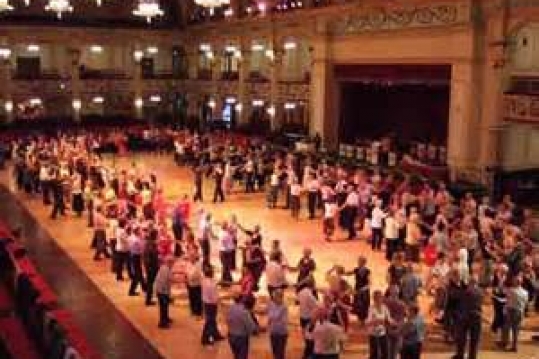
Image Source:http://www.msdworld.plus.com/
Next, Teacher Frog will organize and explain the vast amount of information, allowing fellow dancers to more clearly understand the evolution and transformation of modern social dance.
1.Brief History
In medieval Europe, due to the immense power of kings and nobles, aristocratic life was luxurious, extravagant, and colorful. Their dances became increasingly solemn and elegant, flourishing for a time as what is known as "Court Dance." Afterward, two different forms of dance split from court dance: one was ballet, a dance specifically for performance appreciation, and the other was a dance for everyone to dance together when gathering. These two dances developed and continued individually until today. Later, court dance evolved into general social dance. The reason and foundation why anyone can dance todays social dance should be based on the popularization of dance and its evolution from complexity to simplicity.
Court dance in 18th-century France:
Image Source:https://commons.wikimedia.org/
2.Origin of Names and Evolution
2_1. Old Time Dancing, Classical Dance:
This refers to pre-WWI social dance before styles like the Tango, Waltz, and Foxtrot were fully standardized, featuring genres such as the Waltz, Gavotte, and Tango, which later transitioned into modern dance forms.
Classical Dance Gavotte:
Image Source:https://artopedia.wordpress.com
2_2. Sequence Dancing: Characterized by regularized 16-bar musical phrases and corresponding step sequences, this tradition extends into modern sequence dancing.
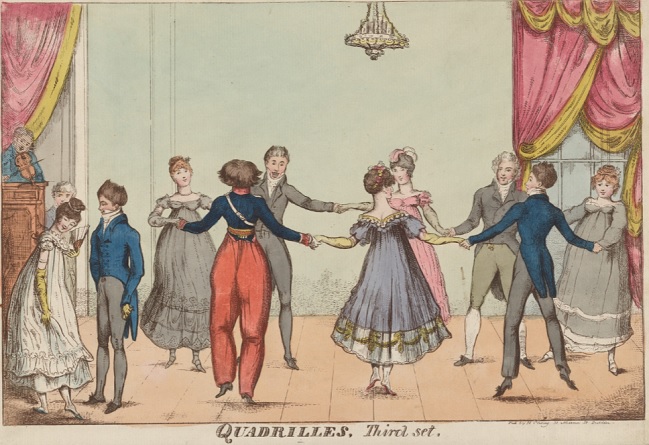
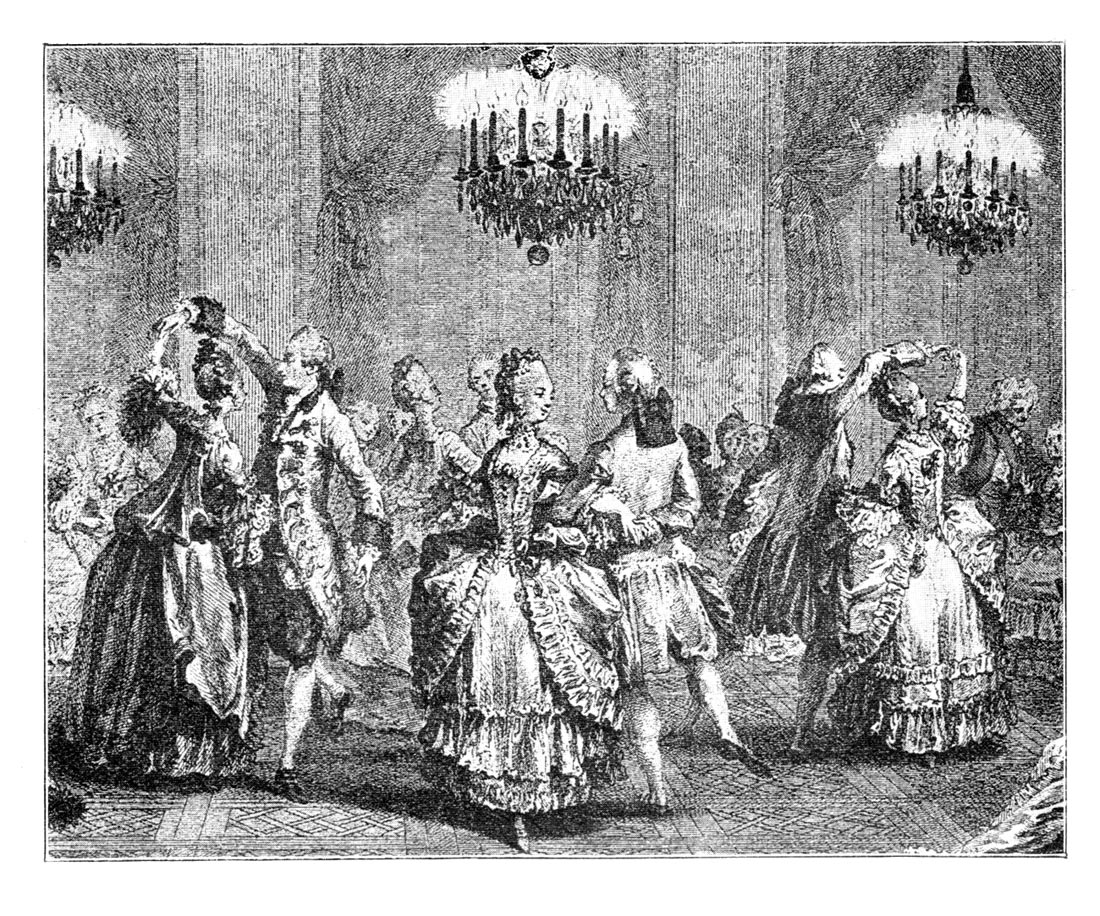
Image Source:https://www.regencydances.org/ (image courtesy of the New York Public Library.)
2_3. Social Dancing:
The term "Social Dancing" became popular in the 1950s of the 20th century, and it is also known as "ballroom dancing" in Taiwan. The dance content mainly consists of the Waltz, Tango, Viennese Waltz (also abbreviated by some as the Quick Waltz), Blues, Cha Cha Cha, Rumba, and Jitterbug. Different countries also have their own preferred types of dance, such as Americans favoring the Mambo and Samba, while the British prefer the Foxtrot and Quickstep. Since it is for social purposes, it does not pay much attention to dance skills and elaborate figures, utilizing only a few basic steps.
Image Source:https://blog.udn.com/paulhsu333/124519866
2_4. Standard Dancing:
Standard Dancing is a standardized form of social dance organized by the UKs Imperial Society of Teachers of Dancing (ISTD) to unify varying global step methods.

2_5. Competitive Dancing:
Competitive dancing meant that any dance that can be used for competition counts as competitive dancing, so dances like ballet, modern dance, tap dance, street dance, cheerleading dance... can all be called competitive dancing, as long as you are in a competition state.
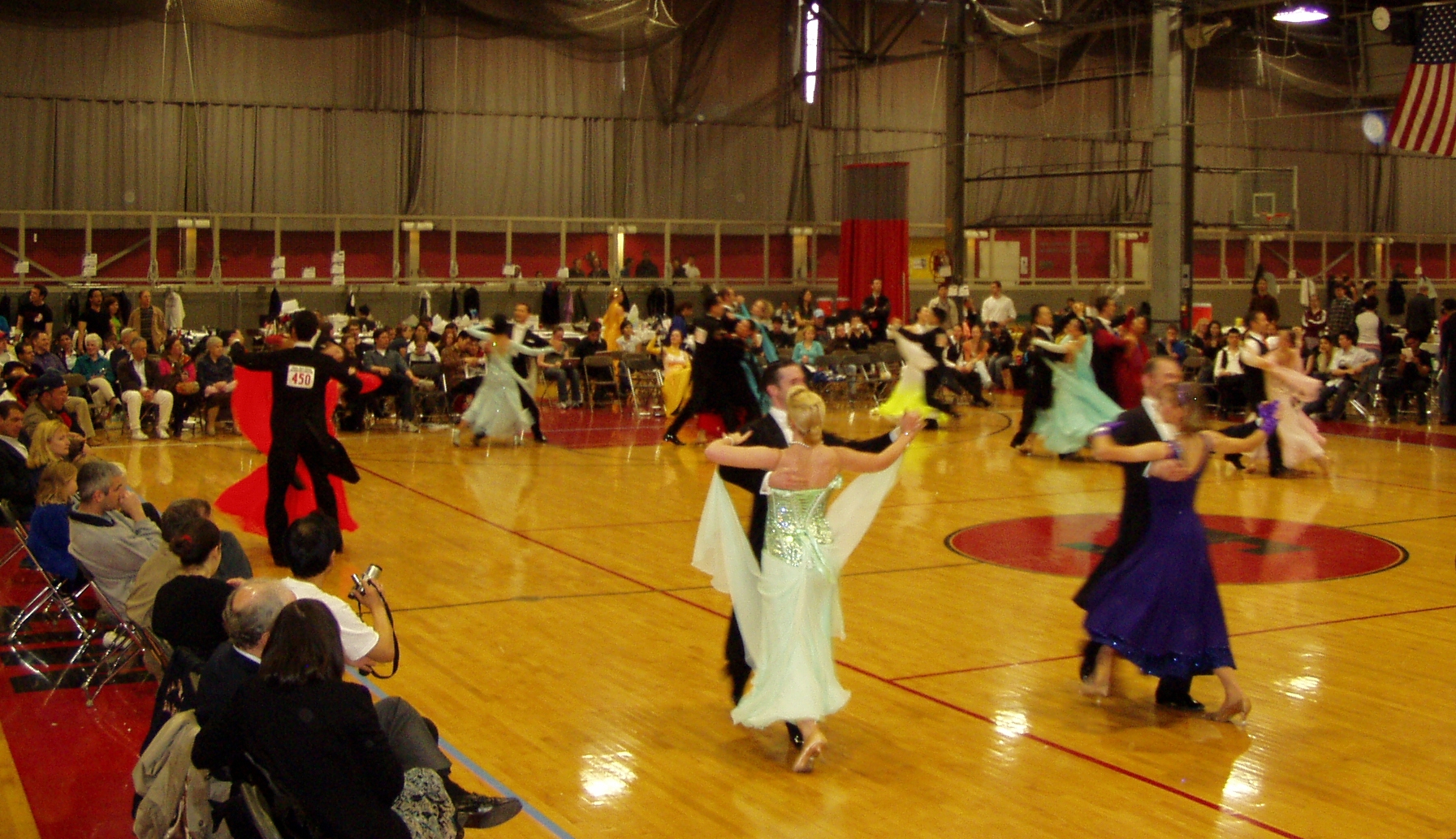
Image Source:https://commons.wikimedia.org/
2_6. Dancesport:
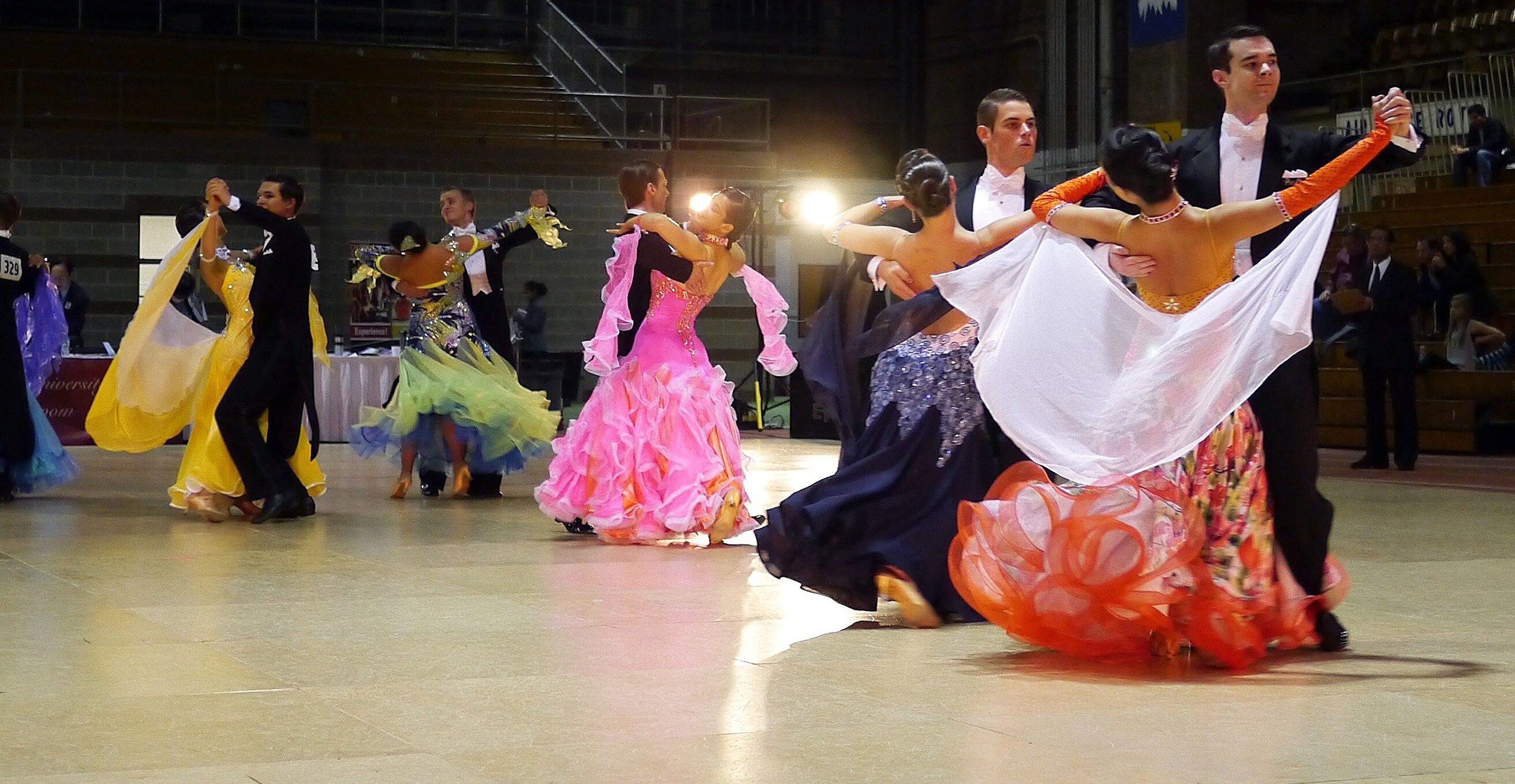
Basically, competitive dance is what we now call Dancesport, which originated in 1909 AD with the first "informal" World Championship. Dancesport competitions consist of two major categories: International Standard and International Latin. In the UK, it is customary to refer to International Standard simply as Modern; to distinguish it from Modern Dance, the word "Dance" is omitted after Modern, calling it simply "Modern" to avoid confusion.
The specific disciplines of these two competitive dance styles are outlined below:
|
Modern |
Latin |
|
1. Waltz, in 3/4 meter, at 30 bars/min |
1. Cha Cha Cha, in 4/4 meter, at 30-32 bars/min |
|
2. Foxtrot, in 4/4 meter, at 30 bars/min |
2. Rumba, in 4/4 meter, at 27-29 bars/min |
|
3. Quickstep, in 4/4 meter, at 50 bars/min |
3. Samba, in 2/4 meter, at 52-54 bars/min |
|
4. Tango, in 2/4 meter, at 30-34 bars/min |
4. Jive, in 4/4 meter, at 42-44 bars/min |
|
5. Viennese Waltz, in 3/4 meter, at 56 bars/ min |
5. Paso Doble, in 2/4 meter, at 60-62 bars/min |
2_7. Popular Dance:
Popular dance originally referred to localized regional dances nurtured naturally across various areas, but with the rapid exchange of information globally today, a popular dance might spread worldwide within a very short time. In addition to the aforementioned styles, high-energy forms favored by youth such as Free Style Disco, New Wave, Punk, Breaking, and Street Dance fall into this category.
Next, through the following video introducing Sequence Dance, I hope to give fellow dancers a general impression within a short time:
Having spent so much space introducing the dance genre of this dance, next we are going to introduce this dance itself. This dance was choreographed by Arthur Wantling in 1923 AD, and was reconstructed and slightly modified by Richard Powers. As for the music part, any 32-bar tango tune can be applied.
The music title used in the folk dance version is La Gitana, performed by Sidney Bowman and His Old Tyme Orchestra. Many of the early social dance tunes in our folk dance repertoire are sourced from versions performed by Sidney Bowman and His Old Tyme Orchestra, specifically Track 4 on Side B of the album "The Best of the Olde Tyme Dancing" published in 1962.
The album cover of The Best Of The Olde Tyme Dancing: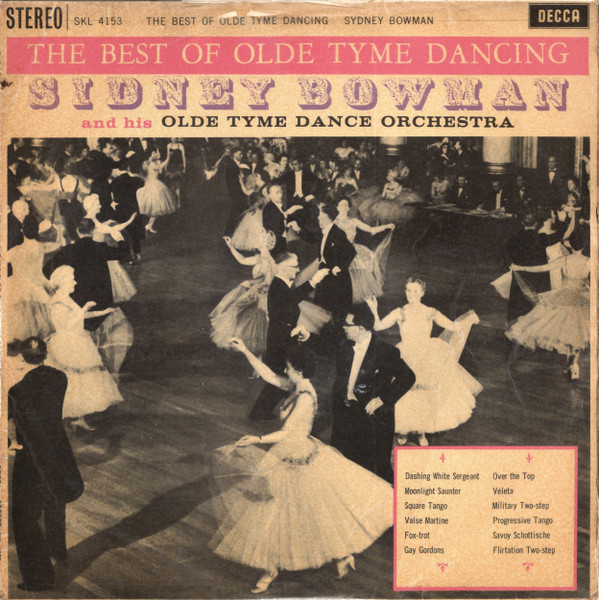
The album back cover of The Best Of The Olde Tyme Dancing: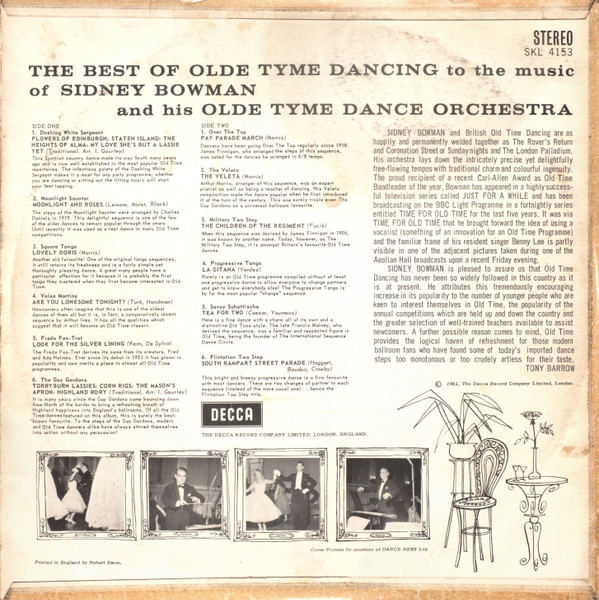
Side B of the album The Best Of The Olde Tyme Dancing: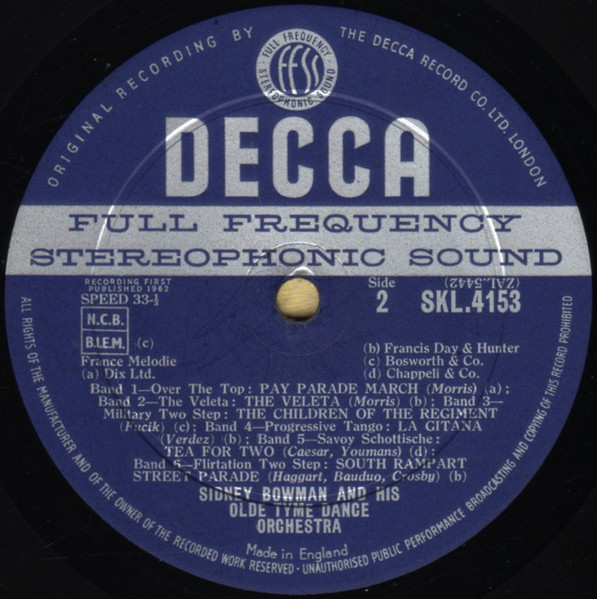
Next, the boss (it’s me, Teacher Frog) treats with the original dance notation of this dance: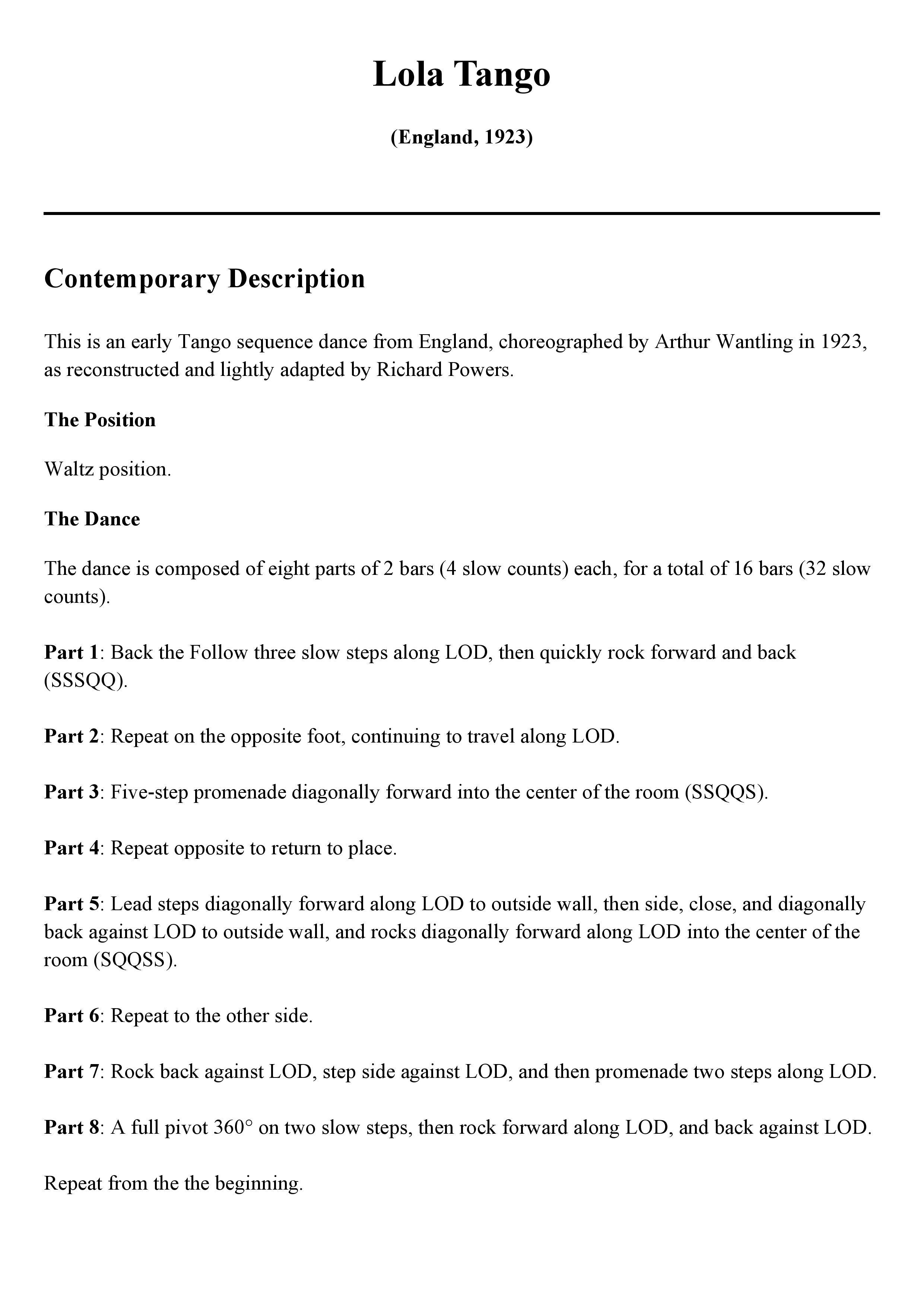
The boss treats with the demonstration video of this dance:
Next, the boss treats with the Competitive Dancing version of this dance for fellow dancers reference. The movements in the video have already been adapted by ballroom dancing in the later period, showing a slight difference in style compared to the early Old Tyme Dance, though the dance method remains the same. Here, Teacher Frog will not judge which one is superior or inferior, because there is inherently no issue of superiority or correctness. However, Teacher Frog will emphasize the origin and the chronological order-who is the root, and who is the branch-and one must not put the cart before the horse. And the answer is exactly that large section of historical origins introduced above in this article.
Next, the boss treats with the Chinese dance notation of this dance: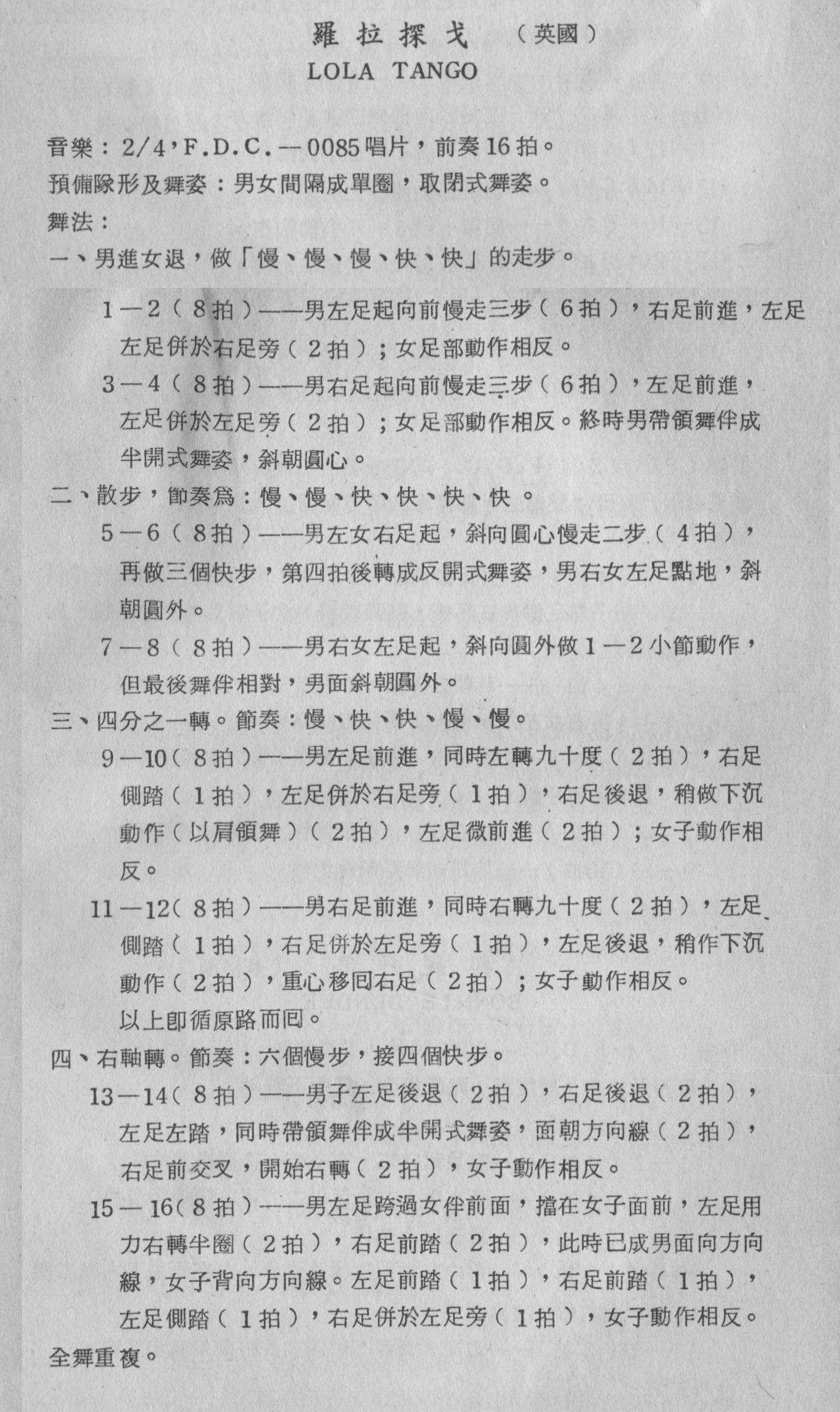
Finally, special thanks to Teacher Chang Chen-chun ( the younger sister of Teacher Chang Ching-san) of the Dance Sport Promotion Association of the R.O.C. for graciously allowing the use of the associations folk dance teaching materials, and to Teacher Chien Chi-cheng and Teacher Yu Chiu-mei for demonstrating this dance. My gratitude goes to all the aforementioned teachers.
References:
1.Library of Dance, UK
2.Old Time Dance Society, UK, and their official reply
3.English version of the Dancesport Encyclopedia
4.Stanford University, USA: A Brief History of Dance
5.Stanford University Music Library, USA
6.Fu Jen Catholic University International Ballroom Dance Course Syllabus
7.Complete Collection of the Folk Dance World, compiled by Teacher Chang Ching-san
8.Folk Dance Teaching Materials of the Dance Sport Promotion Association of the R.O.C.


